





Free written scope consultation - allowances, timeline, and change-order rules on paper before a single trade is scheduled
Styles & brands we work with
- Kitchen remodeling
- Bathroom remodeling
- Home additions & ADU
- Roofing
- Windows & doors
- Driveway & pavers
- Fence
See the difference
 Before
 After
 Before
 After
 Before
 After
Roof Hail Damage Signs in Downey, CA: What to Actually Look For
The signs of roof hail damage in Downey are hairline spider-cracks across the crowns of concrete tiles and randomly scattered circular patches of granule loss on asphalt shingles, not the big bruised dents you see in generic storm-damage photos. Hail that reaches southeast LA County is usually small and fast, so it damages the top surface of a roof rather than punching visible holes. If you suspect your roof took a hit, call (888) 255-8179 and we’ll take a look before the damage is hard to spot from the ground.
Downey is a built-out, largely post-WWII inner-ring suburb, and most of its housing stock is 1940s through 1960s single-story ranch and Spanish-eclectic tract homes on tight lots. That matters for hail because the dominant roof materials here are concrete tile and aging asphalt shingle, and the damage signatures on each look nothing alike. It also matters because so little new construction happens in Downey. Contractors spend their time working on older structures, which means a roof that’s already 40 or 50 years old has less margin for the kind of slow, hidden wear hail sets off.
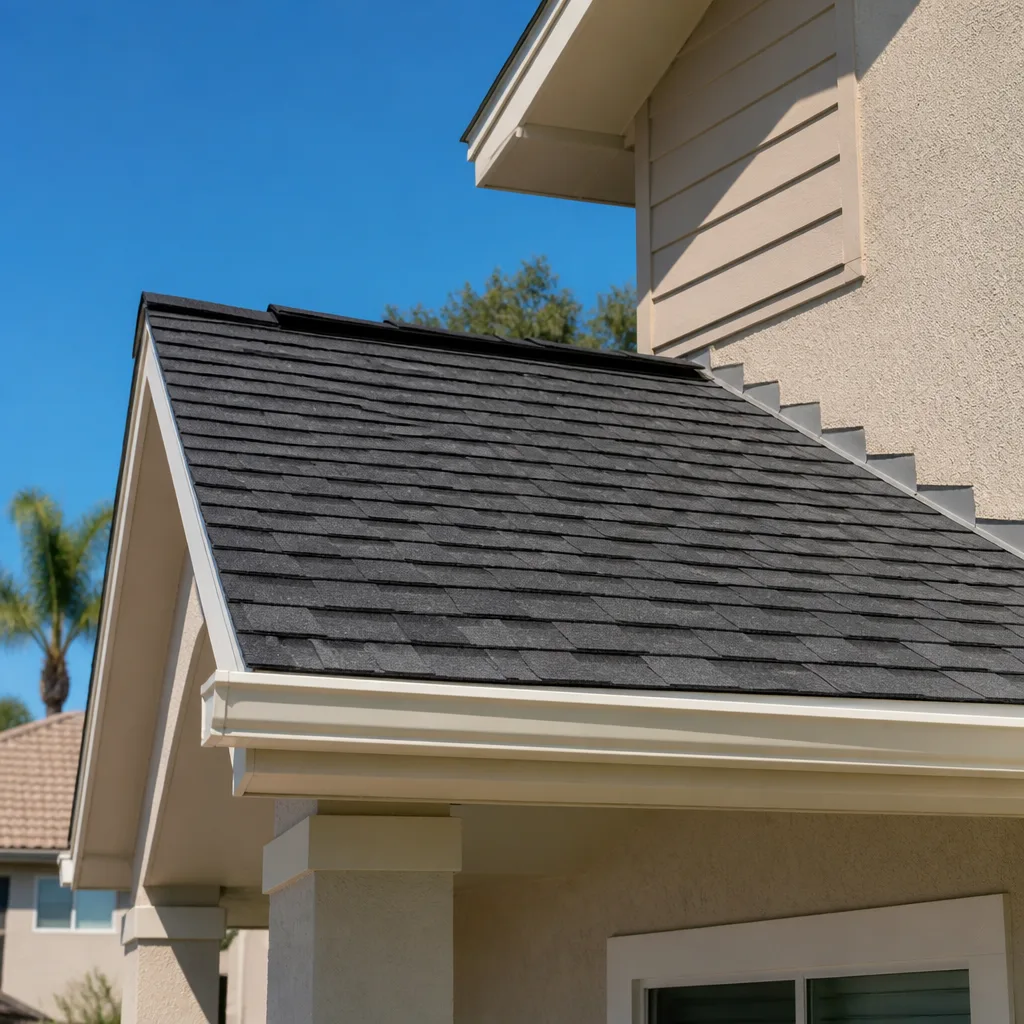
What Hail Damage Looks Like on Concrete Tile vs. Asphalt Shingle
Concrete tile is everywhere on Downey’s Spanish-eclectic homes, and it hides hail impacts extraordinarily well. A tile doesn’t need a visible hole to be compromised. What you’re looking for is a network of fine cracks radiating from the crown of the tile, often no wider than a hair, which let water wick into the tile body rather than shedding off. From the ground those tiles look perfect. Up close, they tell a different story. On the roof, our technicians trace those cracks by hand and by eye because they sit right at the wear point where sun and thermal cycling do the most damage.
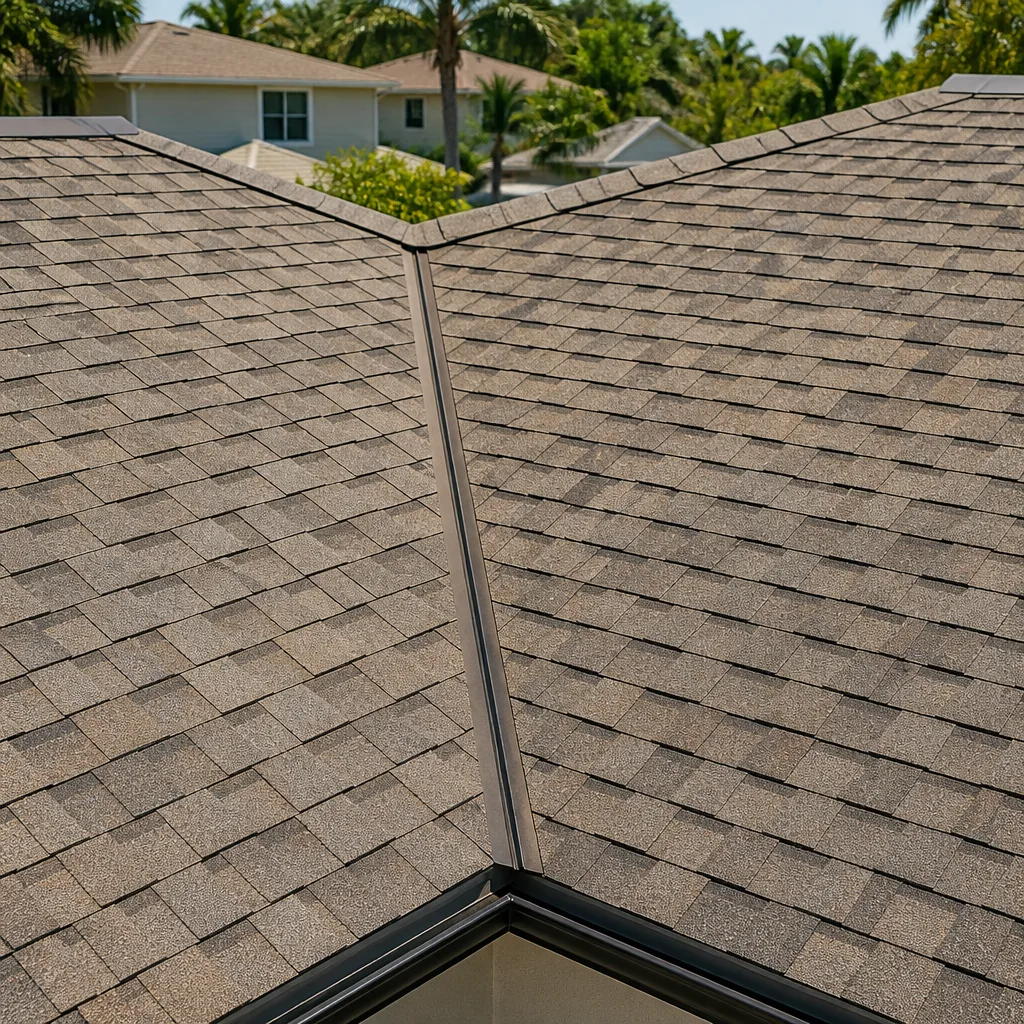
Asphalt shingles fail in a completely different way. Hail knocks granules off the mat in a circular pattern, and the giveaway is the placement: true hail strikes are random and clustered, while the granule loss on an old heat-baked shingle runs in lines that follow normal wear. Downey’s inland heat is brutal on 15- and 20-year shingles, so a roof past retirement age sheds granules all on its own. Telling the two apart is the whole game. A hail pattern is scattered and roughly circular; a wear pattern is directional and follows the sun and the slope.
- Concrete tile: spider-cracks at the crown, chipped corners, loosened tiles, and no visible hole. The danger is water wicking, not a leak you can see.
- Asphalt shingle: circular patches of exposed mat, random placement, and granules collecting below the impact zone.
- Soft spots and dimpling: run your hand across an asphalt roof and hail impacts feel like shallow dents. That’s a hands-on check, not a binoculars-from-the-driveway check.
- Gutter and downspout evidence: this is your first DIY diagnostic, and it’s free. Cover the next section on the flush test.
The Gutter Flush Test: A Free First Check Downey Homeowners Can Do
If you suspect hail hit your roof, flush your gutters and watch what comes out of the downspouts. A heavy, sustained flush of granules from the discharge outlet means shingle surface was lost in volume, which is the strongest ground-level signal that your asphalt roof took real impact. A few granules are normal on any aging roof. A rush of them after a storm is worth a call.
A few details make the test useful. Do it on a dry day at least several days after the storm, so you’re measuring what the roof is still shedding, not what the rain knocked loose all at once. Collect the discharge in a bucket or against a clean surface so you can judge volume and pattern rather than guessing from a glance. If granules are pitch-black, sharp, and gritty, that’s fresh shingle surface. If they’re dull and mixed with pale mat fibers, that’s your roof coming apart. Either way, a flush test tells you whether it’s worth getting on a ladder. It won’t tell you what material you’re looking at, so if your home has concrete tile, skip the flush test and get an inspection.
We don’t recommend homeowners climb onto a roof to check for hail damage themselves. Ladders, loose tile, and a surface you can’t fully see are a bad combination, and most of what matters is invisible from a safe distance anyway. Have it looked at on the ground or with a trained eye on the roof.
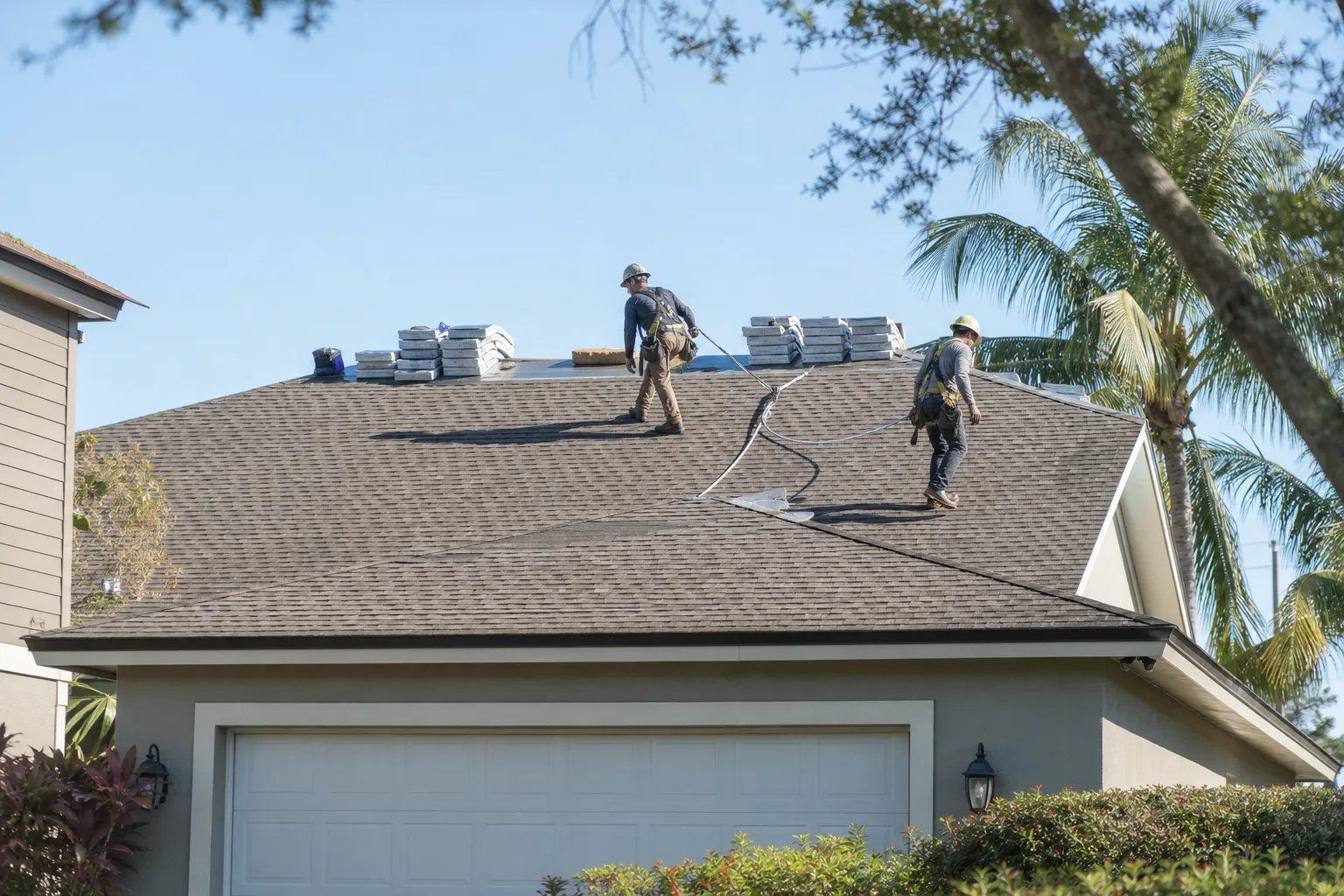
Why Hail Damage Doesn’t Leak Right Away
Hail-cracked concrete tile and bruised asphalt often perform fine for a season or two before the damage turns into water intrusion. The crack lets a little moisture in, the sun bakes it, thermal cycling widens it, and UV breaks down the mat or the tile at the impact point. It’s the slow acceleration that matters. By the time you see a ceiling stain, the failure has usually been building for 12 to 24 months. That’s the case for a prompt inspection even when your roof isn’t leaking. Waiting for a leak means waiting for damage that’s far past the point a repair would have handled it.
We watch for exactly this. Our technicians have up to 12 years of experience, they’re background-checked, and they arrive in uniform, so when you call for a post-storm inspection you know who’s showing up. That matters more than it sounds. Storm events draw roof-chasing crews who run insurance claims and vanish, and Downey homeowners who’ve been through one too many storms know the difference between a real assessment and a sales pitch. If anything turns up, all of our work is covered by our 730-Day Done Right Promise: if it isn’t done right, we make it right.
What a Roof Inspection and Repair Costs in Downey
Roof repair in Downey runs $400 to $1,800, and tile roof repair specifically sits at $600 to $2,500. If hail damage is extensive enough that repair stops making sense, a full roof replacement runs $8,000 to $20,000. We give you upfront pricing: the number you see is the number you pay. Here’s how the ranges break down for the materials common on Downey roofs:
| Service | Typical Downey Range |
|---|---|
| Roof repair | $400 - $1,800 |
| Tile roof repair | $600 - $2,500 |
| Roof replacement | $8,000 - $20,000 |
| Metal roof installation | $15,000 - $40,000 |
Our roofing work is built on GAF and CertainTeed systems, so a post-hail repair or replacement goes back on with materials that hold up to another storm. Financing is available at 0% for 18 months, and we take $1,000 off projects over $10,000. Our Roofing page covers replacement and repair in more detail.
How to Tell Hail Damage From Age and Storm-Chaser Sellers
The hardest call isn’t spotting damage. It’s knowing whether what you’re seeing is actually hail. Downey’s heat ages shingles fast, and plenty of roofs show wear that a door-to-door seller will happily call hail. Three questions separate the real thing:
- Is the granule loss random and circular, or does it follow the slope and the sun? Wear is directional; hail is scattered.
- Do the concrete tiles have spider-cracks at the crown, or just cracks along the valleys and edges where the tile was cut? Cut-tile cracks are installation and movement, not hail.
- Is there a downspout flush test showing volume loss? Real hail evidence comes off in the gutters.
If you get a clean answer to all three and the timing lines up with the storm, the damage is worth documenting. Our team handles that, and we do it in uniform with background-checked technicians, not an unmarked van running a claim on your behalf. For the wider picture of what we handle across the trade, the Downey service area page lays out how we work locally, and our home page is the place to start.
FAQs
Hail damage on concrete tile shows up as hairline spider-cracks at the crown of the tile, not as visible holes. The tiles can look perfect from the ground while the cracks let water wick in. If you have tile and suspect hail, call (888) 255-8179 for an inspection rather than climbing up yourself.
Yes. Hail-cracked concrete tile and bruised asphalt can perform adequately for one or two seasons before UV degradation and water infiltration make the damage obvious. The absence of a visible leak doesn’t mean the roof is fine.
Roof repair in Downey typically runs $400 to $1,800, and tile roof repair runs $600 to $2,500. A full replacement, if the damage is extensive, runs $8,000 to $20,000. Call (888) 255-8179 for an exact quote, and estimates are free.
We can usually get out quickly after a storm, and calls are answered live by a person 24/7, so you won’t hit voicemail. Reach us at (888) 255-8179 and we’ll set up a no-pressure assessment.
Get a Straight Answer About Your Roof
If you’d rather have it looked at than guess from the driveway, Groundwork Construction Co. of Downey offers a no-pressure assessment in Downey. We’ll tell you what we see, show you the evidence, and quote it upfront with no surprises. Call (888) 255-8179 to schedule a free estimate.
Written by the team at Groundwork Construction Co. of Downey, serving Downey, CA.


