





Free written scope consultation - allowances, timeline, and change-order rules on paper before a single trade is scheduled
Styles & brands we work with
- Kitchen remodeling
- Bathroom remodeling
- Home additions & ADU
- Roofing
- Windows & doors
- Driveway & pavers
- Fence
See the difference
 Before
 After
 Before
 After
 Before
 After
What Causes Roof Leaks in Downey, CA? The Three Culprits Most Inspectors Miss
The most common cause of roof leaks in Downey is not a missing shingle – it’s failed underlayment beneath intact tile, followed by step flashing that’s been silently opened by decades of seismic micro-movement, and cracked mortar on stucco parapet caps. Downey sits in a zone that logs 50+ minor seismic events a year, and over 60 years of small tremors do slow damage that a visual walk-around won’t reveal. If water is showing up on a ceiling or running down a wall and there’s no obvious hole, call (888) 255-8179 and we’ll diagnose it properly – with upfront pricing, no surprises.
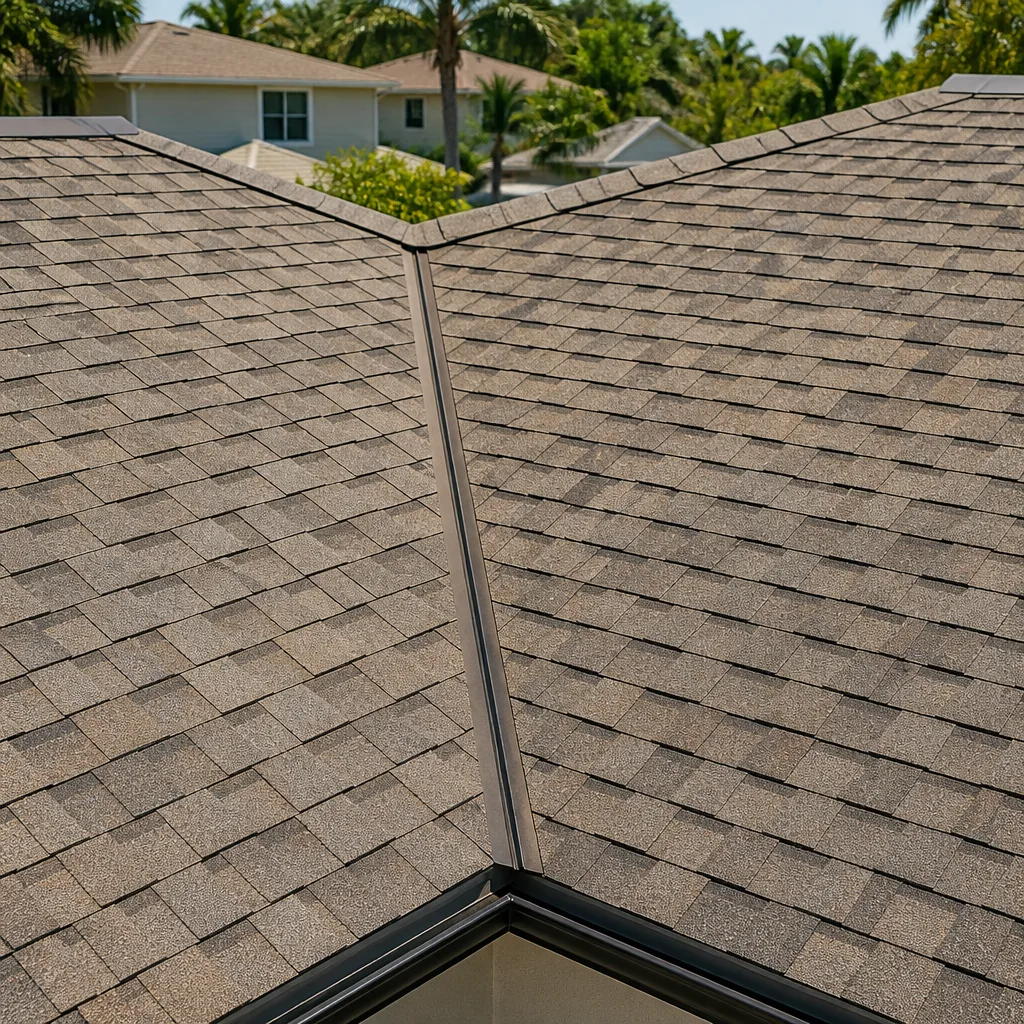
Why Downey Roofs Leak Differently Than the Generic Lists Suggest
Search “what causes roof leaks” and you’ll get the same answers everywhere: missing shingles, cracked flashing, clogged gutters. Those are real. But Downey isn’t a generic market. The city is a built-out, largely post-WWII inner-ring suburb, and most of the housing stock is 1940s-1960s single-story ranch and Spanish-eclectic tract homes. That means most of the leaks we investigate here are cumulative failures – things that worked fine in 1965 and have quietly given out since. Our technicians, who bring up to 12 years of experience to jobs like this, see the same three failure modes again and again. Here’s what each one looks like and why it fools people.
1. Seismic micro-movement on tile and stucco
Downey’s soil moves – not the dramatic shaking you see on the news, but constant small motion. Over six decades, that motion works mortar-set ridge and hip tiles loose, opens step flashing laps by fractions of an inch at a time, and cracks the mortar that seals parapet caps. None of it looks like damage. The tile is still sitting there. The flashing still visually overlaps. But once a lap opens even 1/16 inch and the next storm pushes water sideways, it wicks into the wall cavity instead of shedding. Nine times out of ten, the homeowner calls us after the second leak in the same ceiling spot – because the first repair patched the visible symptom and missed the movement that caused it.
2. Failed underlayment on 1960s-80s tile roofs
This one baffles homeowners and inexperienced roofers alike. On a tile roof from the 1960s through the 1980s, the tile body is often perfectly intact. The flashing looks fine. Yet water comes in during heavy rain – and there’s no visible surface cause anywhere. The culprit is almost always the hot-mop felt underlayment underneath the tile. That material has a thermal life of roughly 30 years, and on a Downey roof that’s spent decades baking in hot, dry inland summers (the marine layer burns off by late morning most days and the afternoons get brutal), it desiccates, cracks, and stops shedding. The tile was always the rain screen – the felt was the actual waterproof layer. When we get a call about a 55-year-old tile roof in Downey that “just started leaking with no reason,” the underlayment is our first suspect.
3. Stucco parapet cap failures
Downey’s Spanish-eclectic homes and flat-section additions frequently have a stucco parapet – the low wall that rises above the roofline. The top of that parapet is sealed with a mortar cap. When the mortar cracks (again, sometimes movement-related), water pools inside the parapet cavity instead of running off. It sits there, works its way down, and shows up as a stain on a living-room wall or a peeling paint patch – not a ceiling drip. Homeowners assume plumbing, assume a window, assume anything but the roof. Standard roof inspections rarely walk the parapet cap unless you specifically ask. Ours do, as a matter of course.
What About HVAC Penetrations on Downey Ranch Homes?
Added-on swamp coolers and later mini-split linesets are a leading modern leak source on 1960s ranch homes. The original roof penetration was often sealed – or resealed – with mastic, not a proper lead or metal flashing collar. Mastic has a service life of maybe 8-12 years in this climate before it dries, cracks, and pulls away from the pipe. The hole underneath is exactly pipe-sized. When the seasonal rains come, that’s a straight shot into the attic. If you’ve had a mini-split or swamp cooler line added in the last decade or two, we check every one of those penetrations during a leak investigation – and replace dried-out mastic with proper metal collars that hold up.
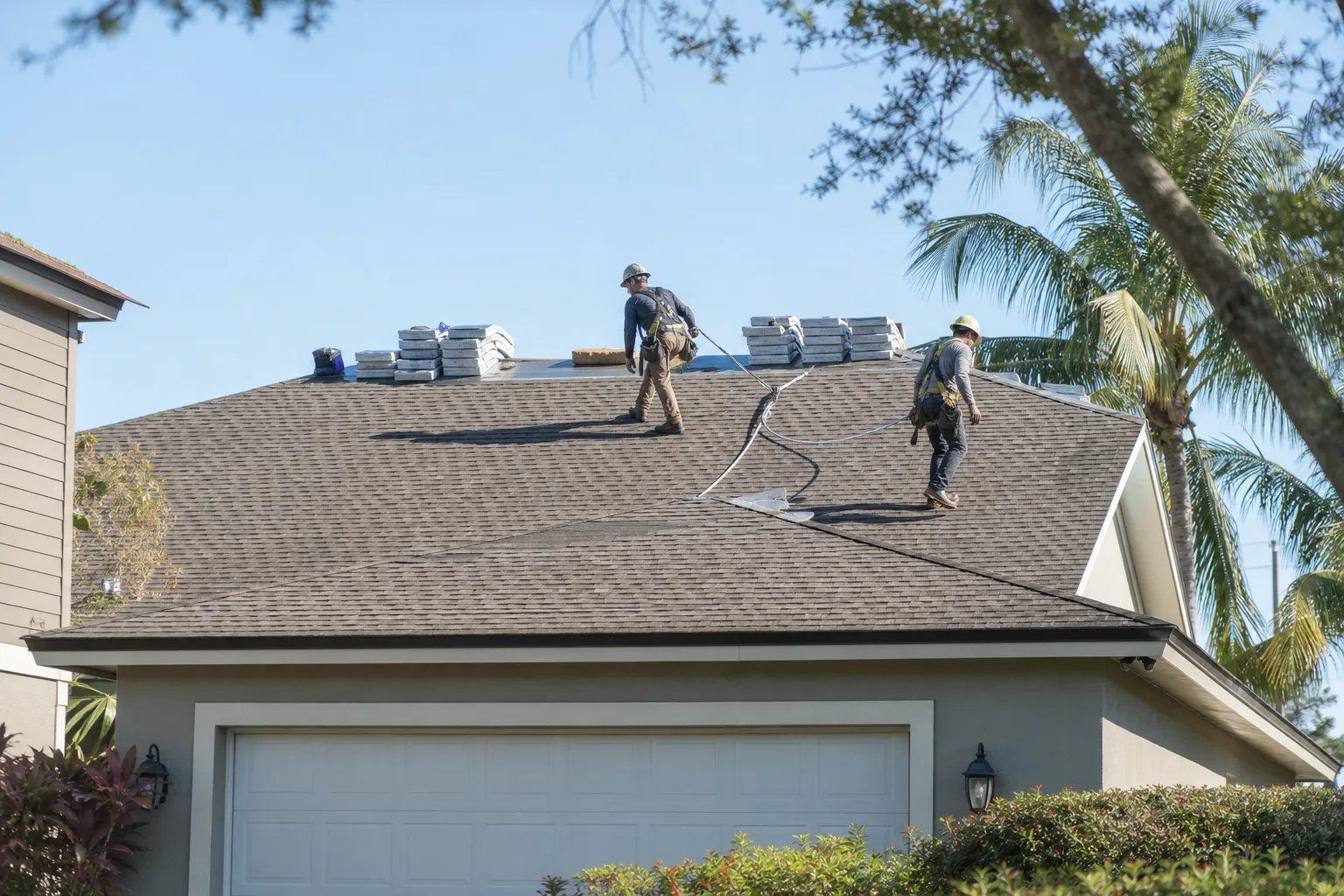
What a Proper Leak Investigation in Downey Should Include
Here’s where most quotes for “roof repair” fall short. A real investigation into what causes a roof leak in a Downey ranch home isn’t just a walk across the field shingles. It’s a check on the movement-related items and the hidden layers. Our written scope covers:
- The parapet cap – walked and probed for cracked or separated mortar, with the cavity inspected for pooled water
- All penetrations – HVAC, plumbing vents, swamp cooler lines, mini-split linesets – checked for mastic failure and improper collars
- Step and counter-flashing laps on stucco wall junctures, examined for seismic opening, not just visible damage
- Underlayment condition on tile roofs, judged by age, climate exposure, and the leak pattern (a no-cause surface leak is a red flag for felt failure)
- Ridge and hip mortar on tile roofs, probed for separation
That’s before we quote a fix. We use GAF and CertainTeed systems on replacement work where a full roof makes more sense than a repair, and we’ve built our process this way because patching the surface has burned too many Downey homeowners – and because our Roofing work is covered by the 730-Day Done Right Promise. If it’s not right, we make it right. That’s one of the longest workmanship guarantees in the residential construction space, and it’s in writing.
When Is It Cheaper to Repair vs. Replace?
If the leak traces to a single flashing point or a few cracked ridge tiles, a targeted repair usually wins. But once underlayment is spent, or the leak pattern suggests multiple failure points from age, patch repairs start chasing new leaks every season – and the money you spend patching tends to vanish. As a rough guide to the trade-specific costs in this market:
| Scope | Typical Downey Cost | When It Makes Sense |
|---|---|---|
| Targeted roof repair (flashing, penetrations, parapet cap) | $400-$1,800 | Isolated leak, roof otherwise sound |
| Tile roof repair (ridge/hip mortar, tile reset) | $600-$2,500 | Localized tile or mortar failure |
| Full roof replacement (with underlayment) | $8,000-$20,000 | Failed felt, pervasive age-related leaks |
| Metal roof install | $15,000-$40,000 | Long-horizon replacement, if you want it |
We price upfront – the number you see is the number you pay – and if you’d rather do a full replacement than keep repairing a 60-year-old roof, 0% financing for 18 months and $1,000 off projects over $10,000 are available so the decision isn’t purely about cash flow this month. If you want a straight look at whether you’re in repair territory or replacement territory, our Downey service area page has more on what we handle locally.
Why Homeowners in Downey Call Us on Leaks
Calls are answered by a live person 24/7 – no voicemail black hole, no waiting until Monday. Our technicians are background-checked and arrive in uniform, and every investigation ends in a written scope with the cost attached, so you’re not guessing at what’s being done or why. We’ve been in business since 2014 and proudly serve homeowners across our markets, and we built our diagnostics specifically for Downey housing stock because the generic walkaround simply misses what we described above. From foundation to finish line – and built to last, backed in writing – we handle the work as a full-scope partner rather than a patch-and-run.”
Frequently Asked Questions About Downey Roof Leaks
The most likely cause is failed underlayment beneath intact tile, or a stucco parapet cap that has cracked and is letting water pool inside the cavity. Neither shows as a surface defect, which is why a visual inspection can miss it entirely. Call (888) 255-8179 for an assessment that checks both – estimates are free.
Targeted roof repairs in Downey typically run $400-$1,800, with tile roof repairs at $600-$2,500, depending on the failure point. Full replacement runs $8,000-$20,000 when underlayment or age makes repair the wrong call. Call (888) 255-8179 for a written, upfront-priced scope before anything is done.
Yes – not the earthquake itself, but decades of small movement that loosens ridge mortar, opens step flashing laps, and cracks parapet cap mortar a fraction at a time. Downey logs 50+ minor events a year, and over 60 years the cumulative effect is enough to let water in. If your home is in an original 1950s-era tract, this is worth having checked.
Call us – we answer live 24/7 and can often get an emergency assessment scheduled quickly, though same-day timing depends on the day’s call volume. Don’t wait on an active leak: water in a wall cavity can turn into mold in a matter of days. Dial (888) 255-8179 and we’ll get eyes on it.
Get a Straight Answer on Your Downey Leak
If you’d rather have it looked at than keep guessing, Groundwork Construction Co. of Downey offers a no-pressure assessment in Downey – we check the parapet caps, the underlayment, and every penetration in the written scope, not just the surface field. Call (888) 255-8179 for a free estimate and design consult, with upfront pricing and no surprises.
Written by the team at Groundwork Construction Co. of Downey, serving Downey, CA.


