
Free written scope consultation - allowances, timeline, and change-order rules on paper before a single trade is scheduled
Styles & brands we work with
- Kitchen remodeling
- Bathroom remodeling
- Home additions & ADU
- Roofing
- Windows & doors
- Driveway & pavers
- Fence
See the difference
 Before
 After
 Before
 After
 Before
 After
Vinyl vs Wood Fence Cost in Downey, CA: Choose Wood Unless You Have a Pool or Daily Overspray
Wood is the better value for most Downey fence projects under 100 feet, and vinyl is the better choice for pool enclosures and spots where irrigation overspray hits the fence line every day. For a typical 60-80 foot run on a Downey lot, vinyl runs $3,500-$9,000 and pressure-treated wood lands well below that, which is usually a gap under $1,000. That gap doesn’t pay back on a short run in this climate. Call (888) 255-8179 for a side-by-side written number on both materials.
Every vinyl-vs-wood comparison you’ll read tells you vinyl wins on lifetime cost. That math assumes 15-year wood life and modest maintenance. In Downey, where UV is high, irrigation overspray is daily, and west-facing fence runs hit 100°F+ surface temps in summer, the real numbers look different.
Why the Standard 10-Year Cost Model Gets Downey Wrong
Most comparisons use a national-average maintenance schedule: stain every 3 to 5 years, replace a few boards around year 10, call it even. Downey sits in a hot, dry inland pocket where the marine layer burns off by late morning and the afternoon sun does real damage. That changes two numbers in the model.
- Wood maintenance cycle shortens. Instead of every 4 or 5 years, stain and seal is realistically every 3 years on sun-facing runs, and the horizontal top rail and cap take the worst of it.
- Irrigation overspray is daily, not seasonal. On tight post-WWII lots, sprinkler heads sit close to the fence line. Weathered wood wicks that moisture into the post base year after year.
- Vinyl’s thermal swing is bigger than the brochure says. Surface temps on a west-facing vinyl panel can swing from roughly 65°F in the morning to well past 100°F by afternoon in July and August.
Run those three adjustments through a 10-year model and the break-even point moves later. Vinyl’s upfront premium buys less than it does in a mild climate.
Downey’s 10-Year Cost Model, Side by Side
Here’s how the two materials actually stack up for a 70-foot, 6-foot-tall privacy fence on a typical Downey lot. These are market ranges, not quotes - an exact number depends on gates, corners, and how much old fence comes out.
| Cost Line | Wood (Pressure-Treated) | Vinyl |
|---|---|---|
| Upfront install | Lower material cost | $3,500-$9,000 for the run |
| Stain & seal | Every ~3 years in Downey sun | None |
| Board / picket replacement | Around year 7 for sun-facing boards | None unless impact damage |
| Post-base rot risk | Elevated with irrigation overspray | Low at the base, but panel movement is the issue |
| Panel warping / gapping | Not applicable | Real risk on south- and west-facing runs if installed without proper expansion allowance |
| 10-year outlook | Higher maintenance, lower entry cost | Higher entry cost, near-zero maintenance if installed right |
On a 70-foot run, the gap between the two materials is often under $1,000. That’s the number that matters in Downey. Once you’re comparing materials, it also helps to see how installation scope affects the total - our Fence Installation in Downey page breaks that down by project type.
The Vinyl Thermal Expansion Problem Nobody Tells You About
Vinyl fence panels expand and contract significantly with heat. In Downey’s summer, a west-facing panel can move noticeably between morning and late afternoon. Installed correctly, with the right post spacing and expansion allowance built in, that movement is harmless. Installed tight and fast, it shows up as rattling panels, gaps opening between sections, and, over a few seasons, hairline cracks at the fasteners.
This is an installation issue, not a vinyl-is-bad issue. We’ve seen poorly set vinyl runs on older Downey tracts come apart at the seams within 4 or 5 years. We’ve also seen vinyl hold up beautifully when the installer accounted for the heat swing. Ask your contractor how they handle expansion on south- and west-facing runs. The answer tells you a lot.
Where Wood Wins in Downey
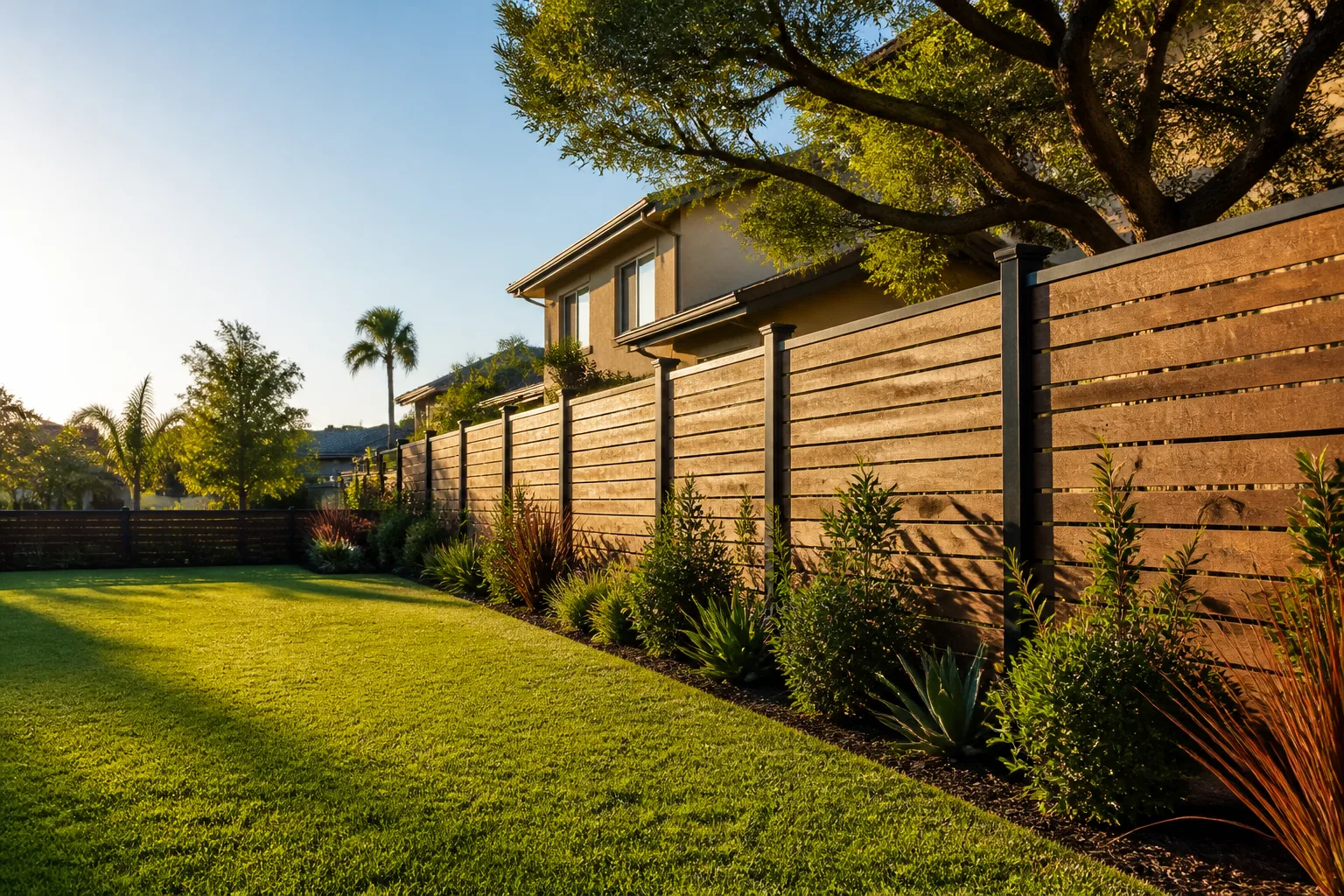
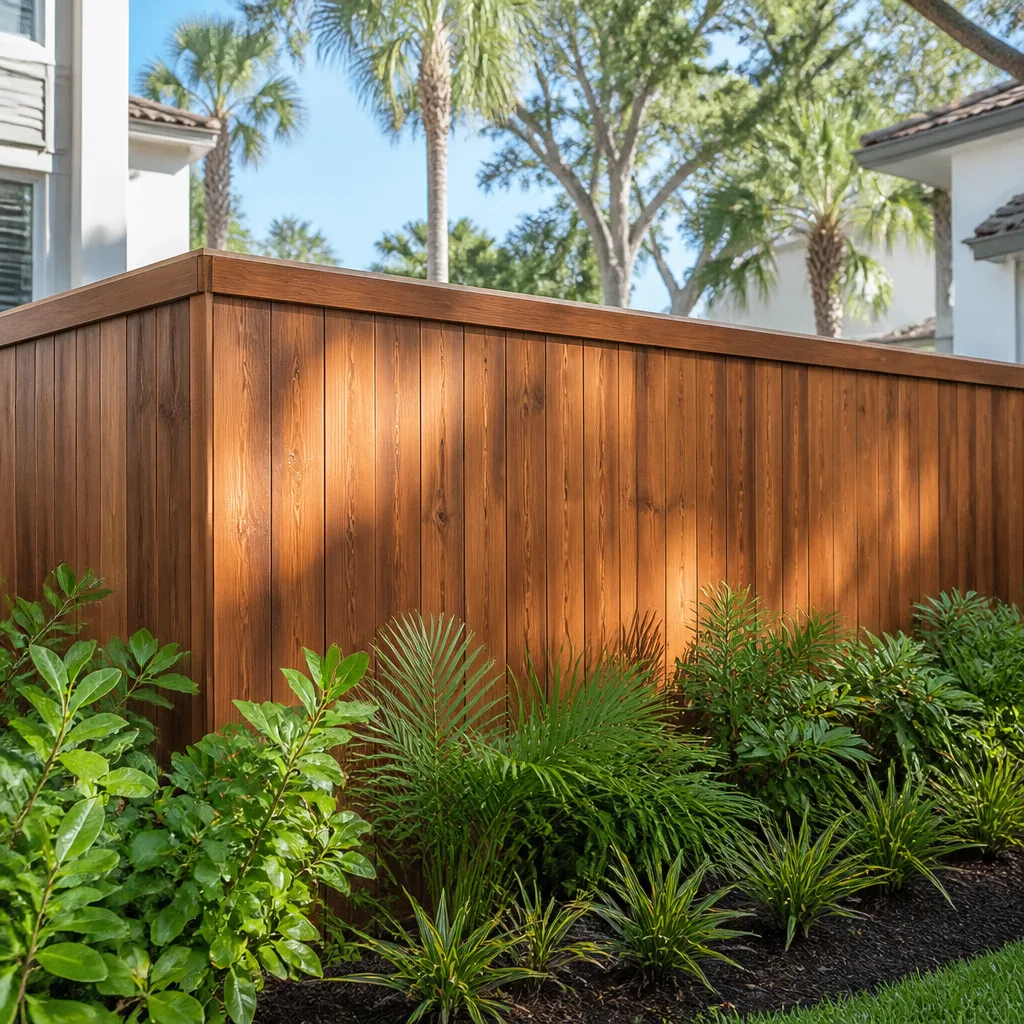
Most Downey lots are small, and most fence runs are short. The original ranch and Spanish-eclectic tract homes here sit on tight parcels, so a 60-80 foot run is typical - not the 150-plus foot runs a national cost calculator assumes. On a short run, the total material gap between wood and vinyl is often under $1,000. That’s not enough of a premium to justify vinyl for many homeowners, especially when a wood fence can be stained to match a stucco or Spanish tile exterior.
Wood is also easier to repair in sections. Replace a rotted post or a couple of sun-beaten boards and move on. Vinyl replacement means matching a panel profile and color that may change slightly by batch. If you want a material decision that leaves you easy repair options, wood is the safer call on a Downey lot. Our Fence Installation team walks through material options on-site before any number is written.
Where Vinyl Wins: Pools and Daily Overspray Zones
Vinyl earns its premium in two specific Downey situations. First, pool enclosures. A pool deck gets hosed, splashed, and sprayed constantly, and post-base rot is the dominant failure mode for wood. Vinyl doesn’t care. Second, properties where high-pressure irrigation hits the fence line every day - the same rot math applies, and appearance matters more than thermal performance.
In those spots, the maintenance savings are real and the thermal expansion issue is manageable with correct installation. Vinyl also holds color without staining, which matters on a pool deck where you want a clean look with zero upkeep.
How We Price This in Downey
Groundwork Construction Co. of Downey gives homeowners a side-by-side written number for both materials before they choose. Upfront pricing, no surprises: the number you see is the number you pay. Calls are answered by a live person 24/7, and every project is covered by our 730-Day Done Right Promise - the longest workmanship guarantee we offer, and one we stand behind in writing. We use material partners like GAF and CertainTeed across our exterior trades, so the brands behind your fence are ones you can look up. Every project is also eligible for 0% financing for 18 months and $1,000 off projects over $10,000.
FAQs
Wood is cheaper upfront and usually cheaper over 10 years on short runs. A typical 60-80 foot wood fence costs less than a vinyl run in the $3,500-$9,000 range, and the gap is often under $1,000. Call (888) 255-8179 for an exact side-by-side quote - estimates are free.
Expect 12-15 years with staining every 2-3 years in Downey’s sun, and less on west-facing runs with irrigation overspray. The heat and daily moisture cycle shorten the maintenance interval compared to milder climates. A properly installed vinyl fence avoids that upkeep entirely. Call (888) 255-8179 to walk through which material fits your lot.
Vinyl fence panels can warp, gap, or crack when installed without allowance for thermal expansion in Downey’s 65°F-to-100°F+ summer surface temperature swing. Correctly installed, it holds up well. The failure mode is poor installation, not the material. Call (888) 255-8179 and ask how we handle expansion on sun-facing runs.
Yes. Groundwork Construction Co. of Downey provides a side-by-side written comparison for vinyl and wood before you decide. No upselling, just the straight numbers so you can choose like a capable adult. Call (888) 255-8179 for a free estimate and design consult.
Ready to Compare Materials on Your Fence Line?
If you’d rather have it looked at, Groundwork Construction Co. of Downey offers a no-pressure assessment in Downey - call (888) 255-8179. We’ll measure the run, flag the sun- and overspray-exposed sections, and put both numbers in writing so you can decide with real information.
Written by the team at Groundwork Construction Co. of Downey, serving Downey, CA.


