
Free written scope consultation - allowances, timeline, and change-order rules on paper before a single trade is scheduled
Styles & brands we work with
- Kitchen remodeling
- Bathroom remodeling
- Home additions & ADU
- Roofing
- Windows & doors
- Driveway & pavers
- Fence
See the difference
 Before
 After
 Before
 After
 Before
 After
Chain Link vs Wood Fence in Downey, CA: Which One Belongs on Your Property Line?
Choose wood if the run faces your house, a neighbor’s yard, or the street and you want privacy and quiet. Choose chain-link if the run borders an alley, a commercial lot, or a rear property line where airflow and visibility matter more than looks. In Downey, the honest answer depends on which side of the lot the fence sits on, and most comparisons skip that part. For a free on-site assessment on your specific run, call Groundwork Construction Co. of Downey at (888) 255-8179.
Why the Usual “Chain Link Is Cheap, Wood Is Premium” Framing Falls Apart in Downey
Chain-link has a reputation problem. Walk through the older tracts near Furman Park and the original 1950s ranch blocks and you’ll find plenty of rear fences doing quiet, unglamorous work along alleys and against detached garages. On a 25-foot run with zero setback and daily alley traffic, the question isn’t which fence photographs better. It’s which one actually holds up.
Downey is a built-out, largely post-WWII inner-ring suburb. Lots are tight. Back fences often sit 18 inches from a neighbor’s block wall or hug the alley line. That geometry changes the physics of fence ownership. Wood traps heat and moisture in a narrow gap with no air movement. Chain-link doesn’t. On Downey’s hot, dry inland summers – the marine layer burning off by late morning – that trapped pocket is exactly where wood rot starts, usually at the bottom rail and the post bases, two or three seasons in.
We install both materials, so we have no reason to steer you toward a margin. What we do have is a pattern we see across Downey properties: the fence that fails first is almost always the wood privacy fence jammed into a tight rear gap with no airflow.
Use Case First: Where Each Fence Actually Wins
| Consideration | Chain-Link | Wood |
|---|---|---|
| Alley-adjacent rear run | Strong – airflow prevents trapped heat and moisture | Weaker – rot accelerates in zero-setback gaps |
| Dog containment | Strong – full visibility, no gaps to exploit | Strong – but boards loosen and dogs find gaps |
| Security on commercial-adjacent lines | Strong – 6-ft with tension wire, barbed-wire option | Weaker – boards kick in with one solid hit |
| Visual privacy | None | Full |
| Noise attenuation (street-facing) | Minimal | Substantial |
| Curb appeal | Low | High |
| Fire resistance | Non-combustible | Combustible |
Read that table by which side of the lot the fence faces. A rear run along an alley or a commercial property line is a different job than the side yard a neighbor looks at every morning. When a homeowner asks us to compare materials, this is the conversation we have – not a brochure about style.
Alley-Adjacent Runs and Airflow
This is where chain-link earns its keep in Downey. On rear lines where the fence sits against an alley, a neighbor’s detached garage, or a commercial building, air circulation is a functional requirement, not a luxury. Wood with no air gap keeps the bottom of the fence damp and shaded, and on older lots that means the posts go soft from the ground up. Chain-link lets the entire run breathe, dries out after a rain, and doesn’t create the trapped-heat pocket that pushes wood toward early failure.
Dog Containment
Both materials contain dogs, but for different reasons. Chain-link gives full visibility and continuous tension – no loose boards, no gaps a dog can work open. Wood works too, but a chewed or warped picket becomes an escape route over time, and on the tight rear lots common across Downey, a gap in the fence line becomes a neighbor problem fast. If you have a dog with a talent for testing boundaries, chain-link is the more reliable containment.
Security Near Commercial Property
A 6-foot chain-link fence with tension wire and a barbed-wire top is a meaningfully better deterrent than a wood privacy fence. Same height over the same run, but a wood fence hides an intruder from the street while a chain-link run doesn’t, and boards kicked in from an alley give way long before a stretched chain-link panel does. On properties that back up to a commercial lot or sit on an alley with regular foot traffic, that’s a real difference, not a theoretical one.
Downey Permit and Height Rules Apply Equally to Both
There’s a persistent myth that chain-link is a permit shortcut. It isn’t. Downey applies the same height limits and setback rules to both materials, and both are subject to the same permit review when a run crosses the allowed height or sits in a setback zone. If you’ve heard that chain-link “doesn’t need a permit,” that’s wrong – and it’s the kind of assumption that gets a homeowner a correction notice after the posts are already in the ground. We walk every Downey project through the same review, material regardless.
Where Wood Genuinely Earns Its Premium
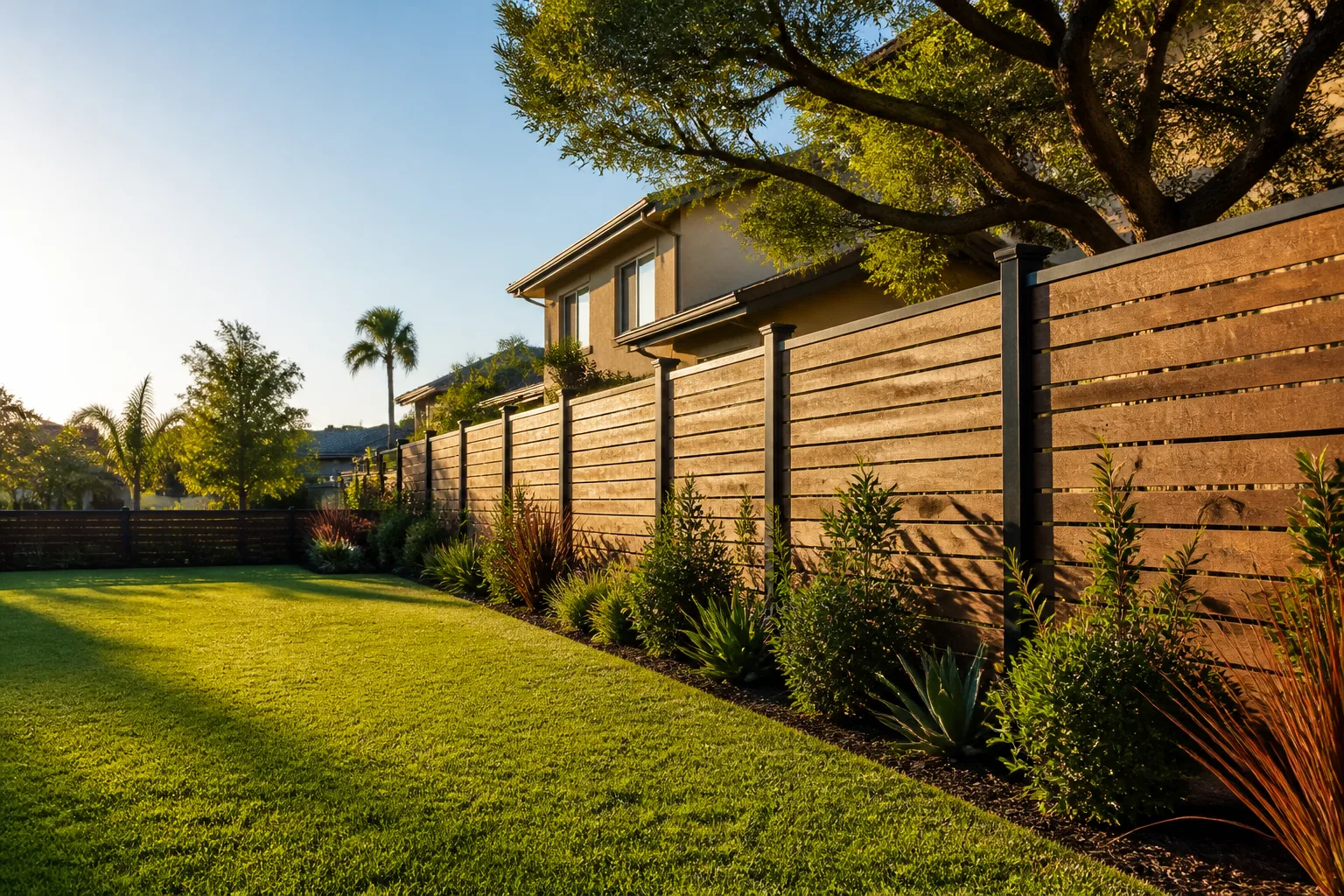
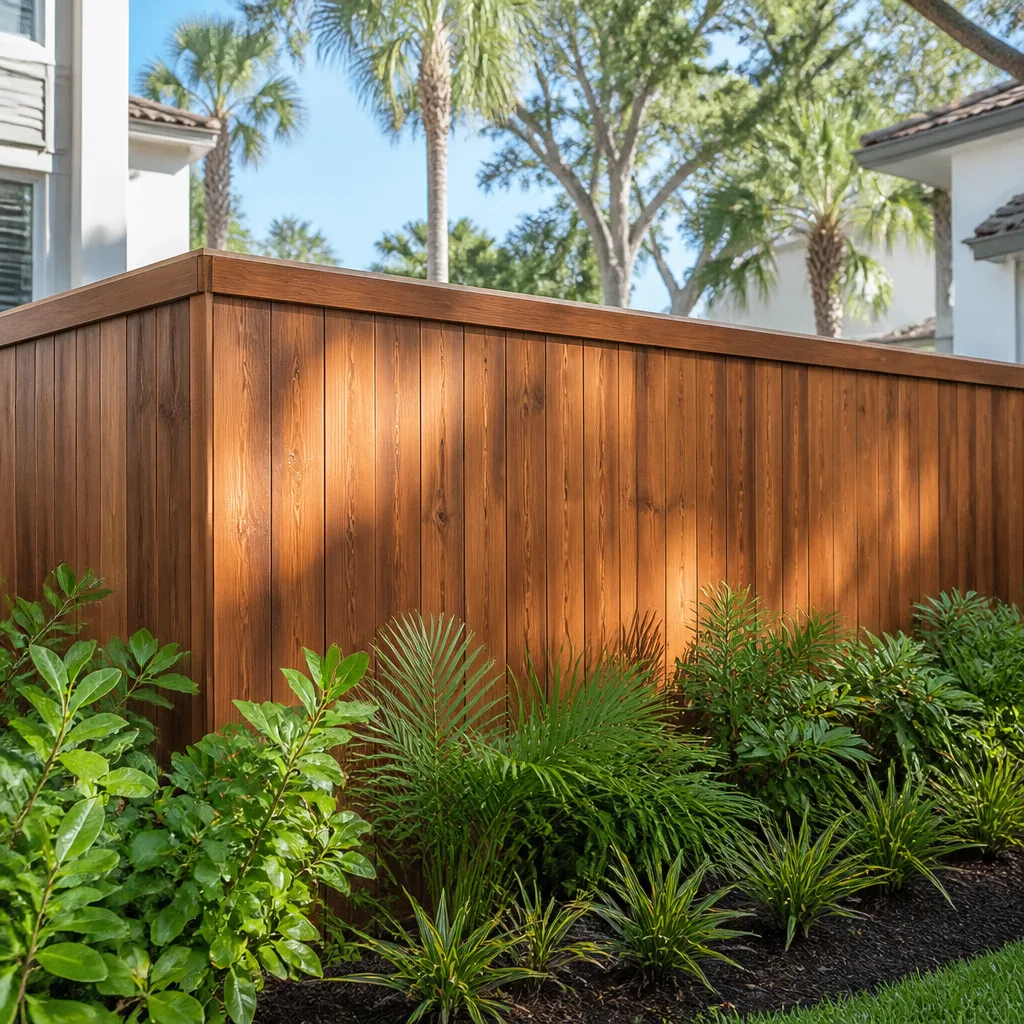
We’d be doing you a disservice to pretend wood is the wrong choice everywhere. On a side yard facing a neighbor’s living room, a street-facing run, or any line where the fence faces the house and contributes to how the property reads from the curb, wood wins, and it isn’t close. Wood delivers actual visual privacy, dramatically better noise attenuation on street-facing sides, and real curb-appeal value. On a busy Downey street, that noise difference matters – a wood fence turns down the traffic hum in a way chain-link never will. If the run is the one the whole world sees, pay for wood.
What Both Fences Cost in Downey
Fence installation in Downey typically runs $3,500 to $9,000 depending on material, linear footage, gate count, and how much tear-out and post replacement the run needs. Here’s how the line items break down:
- Standard vinyl or wood privacy fence run: $3,500-$9,000
- Aluminum (a step up in durability and look): $4,000-$10,000
- Chain-link (comparable or lower, including gates and tension hardware): priced within the same band, often at the lower half
- Tear-out and haul-away of an old run: folded into the estimate – we price it upfront
Groundwork quotes are upfront and fixed: the number you see is the number you pay. We also offer 0% financing for 18 months and $1,000 off projects over $10,000. Every installation is backed by our 730-Day Done Right Promise, and our technicians bring up to 12 years of experience to the run. See our Fence Installation page for the full scope, or dig into Fence Installation in Downey for neighborhood-specific detail.
How Groundwork Handles the Comparison
We install both materials, so the recommendation follows the run, not the margin. Before any commitment, you get a written comparison: what each material does on your specific property line, what it costs, and where we’d expect the fence to fail first. On a tight rear lot with an alley behind it, we’ll usually tell you chain-link does more of the work. On a yard your neighbors see, we’ll tell you wood is worth the premium. That’s the whole conversation – and it’s why homeowners in Downey call us back. For a wider view of what we build across the property, start at our home page.
FAQs
Chain-link is generally cheaper on the same run, and often lands in the lower half of the $3,500-$9,000 Downey fence range once gates and hardware are included. Wood costs more upfront on material and labor, though the gap narrows fast if a wood fence installed in a tight rear gap rots out early and needs replacing. Call (888) 255-8179 for an exact quote on your run – estimates are free.
Sometimes – and so does wood. Downey applies the same height and setback rules to both materials, so chain-link isn’t a permit shortcut. Whether your run triggers review depends on height, location, and setback, not material. We handle that review for you either way.
Chain-link is the more secure containment on alley-adjacent runs because it offers full visibility and continuous tension with no loose boards or gaps to work open. Wood works too, but warped or chewed pickets create escape routes over time. If your dog has already found a gap in an old fence, call us at (888) 255-8179 and we’ll assess the run.
A wood privacy fence in a well-ventilated spot can last a decade or more, but the same fence jammed into a zero-setback rear gap against an alley or a neighbor’s block wall often shows rot at the bottom rail and post bases within two to three seasons. Airflow is the deciding factor, not the wood itself.
If you’d rather have it looked at, Groundwork Construction Co. of Downey offers a no-pressure assessment in Downey – call (888) 255-8179. Live people answer around the clock, and you’ll get a written comparison before anyone picks up a post-hole digger.
Written by the team at Groundwork Construction Co. of Downey, serving Downey, CA.