
Free written scope consultation - allowances, timeline, and change-order rules on paper before a single trade is scheduled
Styles & brands we work with
- Kitchen remodeling
- Bathroom remodeling
- Home additions & ADU
- Roofing
- Windows & doors
- Driveway & pavers
- Fence
See the difference
 Before
 After
 Before
 After
 Before
 After
Window Design Pressure Ratings in Downey, CA: What the DP Number Actually Means
A design pressure (DP) rating is the wind load, measured in pounds per square foot (PSF), that a window is engineered to resist – both positive pressure pushing inward and negative pressure (suction) pulling outward. In Downey, the rating matters most the moment you pull a remodel, addition, or second-story permit: the city’s plan checkers compare your new windows against a required DP grade, and older homes with untested aluminum sliders often get flagged for an upgrade. If you’d rather have someone read your plans and window schedule with you, call Groundwork Construction Co. of Downey at (888) 255-8179.
Most homeowners don’t think about DP numbers until a permit application lands on a plan checker’s desk and comes back with red marks. Then the question becomes urgent: what does this number mean, what grade does Downey want, and which windows actually carry the stamp?
Why DP Ratings Come Up the Moment You Pull a Permit
If your Downey home was built before 1975, there’s a good chance your windows have never been tested to any design pressure standard at all. The original single-pane aluminum sliders common in the tract homes near Furman Park and the older ranch blocks were installed to a price point, not a performance spec, and nobody stamped a DP number on the frame because the standard wasn’t being enforced the way it is now.
That history catches up with you during a remodel. Downey is a built-out, largely post-WWII inner-ring suburb, so almost all construction here is remodel, addition, and second-story permitting on 1940s-1960s housing rather than new greenfield builds. When a plan checker reviews a rear addition or a second story, the adjacent existing windows usually come under scrutiny too, and the fix is code-compliant rated units throughout the affected scope. This is where we spend a lot of our time: reading the window schedule before a single unit is ordered, so you’re not discovering a spec mismatch after a field inspection.
The Three DP Grades, in Plain Terms
The DP rating itself is straightforward. The number represents the pressure a window resists in two directions:
- Positive pressure – wind pushing the glass and frame inward. This is the load most people picture.
- Negative pressure – suction pulling the window outward, which is often the more punishing load on a large slider or a picture window because the frame and seals take it on the way out.
Both directions matter structurally. A unit that handles the push but flexes under the pull will leak, rattle, and eventually fail its water test. The grade tells you which of three performance tiers the window was tested to:
- R (Residential) – the standard tier for single-family homes. This is the grade Downey’s building department typically expects on permitted remodel and addition work in single-family residential zones.
- LC (Light Commercial) – a step up in structural testing, used on low-rise commercial and some mixed-use scopes.
- C (Commercial) – the heaviest tier, built for taller buildings and higher wind exposures than a Downey ranch will ever see.
For a typical Downey single-family remodel, R is the grade you’re working toward, and the specific DP number within that tier is set by the wind exposure for your site and the size of the opening. A large picture window in a rear addition has a different number than a small bathroom unit, even in the same house.
How to Verify a Window’s Rating Before You Buy
This is where a lot of homeowners get stuck: the DP number isn’t on the sticker at the showroom, and it varies by product line and by size within that line. Andersen and Marvin both publish DP ratings per product family and per unit size, and two windows that look identical on a display floor can carry different ratings once you size them for your opening. The number you need lives in the product’s published performance data, not in a sales brochure’s headline.
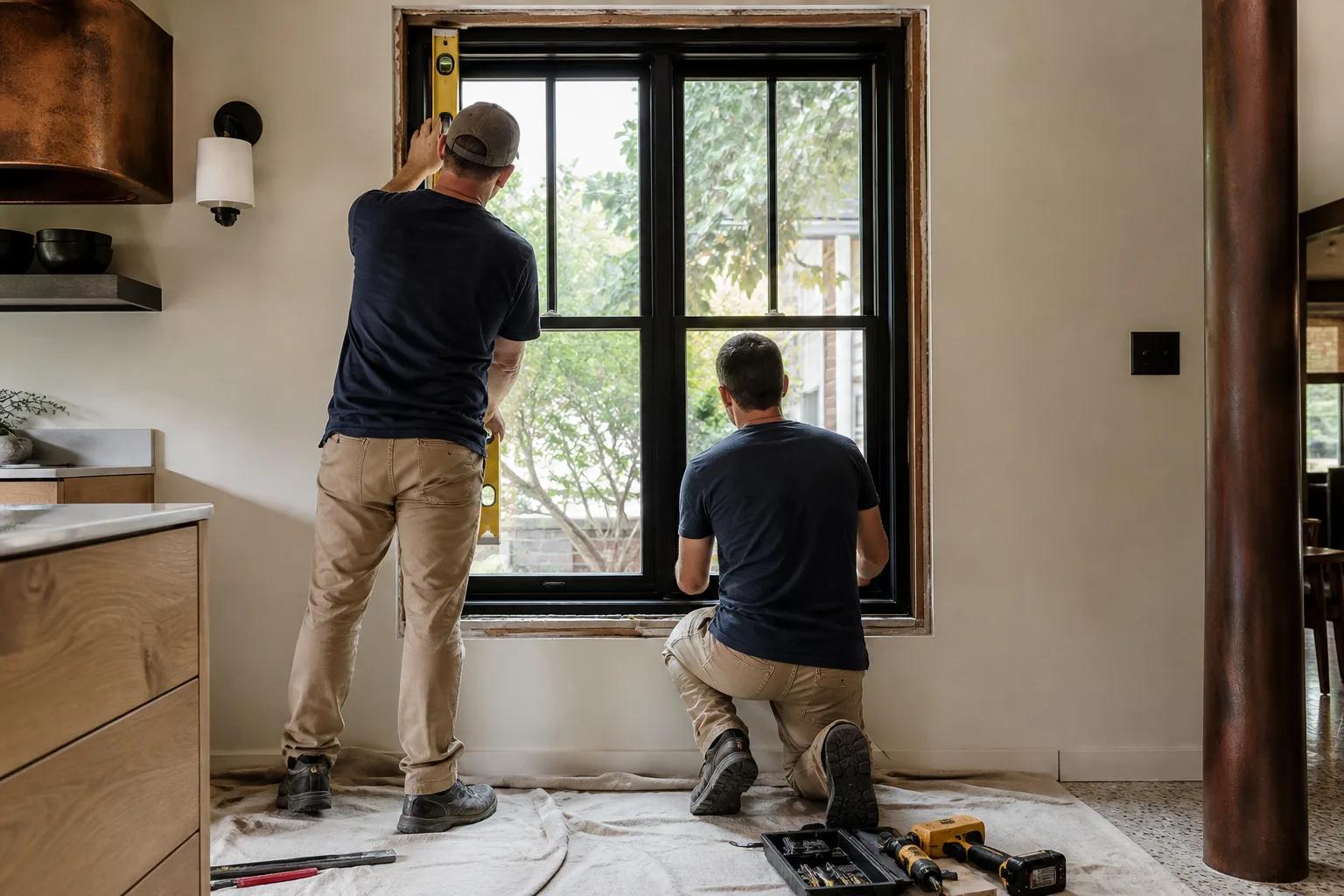
What we do on a Downey job is match the window schedule to the actual published rating for the exact size being ordered – before the order goes in. That sequence matters. Getting it right up front means the plan checker sees compliant specs and the field inspector sees units that match the approved drawings. Getting it wrong means a rejected inspection, a reorder, and weeks of delay on a job that was supposed to be done.
Here’s how the pricing on rated window work typically lines up in Downey, so you can budget alongside the spec conversation:
| Scope | Typical Downey Range |
|---|---|
| Window replacement (whole-home, standard units) | $4,500-$15,000 |
| Impact-rated window installation | $8,000-$25,000 |
| Home addition (often triggers adjacent window upgrades) | $45,000-$130,000 |
| ADU construction (full new envelope, rated openings) | $90,000-$220,000 |
Those ranges shift with how many openings fall inside the permitted scope, not just the windows you planned to replace. This is why we walk the whole affected area during the estimate. If you’re planning rated window work as part of a larger Windows & Doors project, the spec conversation should happen before pricing is final.
What Typically Goes Wrong on a Downey Job
We see the same failure modes repeat because Downey’s housing stock is so consistent. Original cast-iron drains and shallow stem-wall foundations show up the moment a homeowner pulls a second-story or rear-addition permit near the older tracts by Furman Park, and that foundation and under-slab upgrade often runs alongside the window upgrade. The window spec gets folded into a much bigger scope than the homeowner expected.
Here’s how we handle that so the surprises stay small:
- We read the window schedule against the approved drawings before ordering, and we confirm the DP rating on the exact size, not the product line’s best number.
- We flag any existing windows in the affected scope that will get pulled into the permit, so the budget reflects the real number.
- We use brand partners like Andersen and Marvin whose published performance data we can hand to the plan checker, not a verbal promise.
And the guarantee does real work here. Groundwork Construction Co. of Downey backs every project with the 730-Day Done Right Promise – if a window installation fails inspection or develops air or water infiltration within two years, we make it right. That’s a direct contrast to contractors who hand the inspection risk to the homeowner and disappear when the field inspector has questions. Our technicians bring up to 12 years of experience to each job, and every project carries upfront pricing so the number you see is the number you pay, plus 0% financing for 18 months and $1,000 off projects over $10,000 if the scope grows.
Downey’s climate shapes the install too. Hot, dry inland summers with the marine layer burning off by late morning mean stucco and sealant work wants an early start, and the region’s older soils and seismic requirements mean the window upgrade usually rides alongside other structural work. None of it is a dealbreaker – it just wants to be planned, not discovered. You can see how this plays out across our Downey service area.
FAQs
Not always, but the answer depends on whether the replacement pulls a permit and what the plan checker requires for your scope. Straight like-for-like swaps sometimes escape the stricter review, but a replacement folded into a remodel, addition, or second story almost always lands in the R-grade requirement. Call (888) 255-8179 and we’ll walk your specific scope before you order anything.
For permitted single-family residential work, Downey’s building department typically expects windows meeting the Residential (R) performance grade, with the specific DP number set by the wind exposure and the size of each opening. The exact figure belongs on your approved plan set, which is why we read the drawings before ordering. Estimates are free – call (888) 255-8179 for a quote.
You check the manufacturer’s published performance data for the exact product line and unit size – not the showroom sample, and not the product family’s best number. Both Andersen and Marvin publish DP ratings per size, and two visually identical units can carry different ratings once sized for your opening. We match your window schedule to that data before the order goes in. Call (888) 255-8179 if you want help reading it.
If a window fails inspection because of how we specified, ordered, or installed it, the 730-Day Done Right Promise covers it – we make it right. That’s the difference between hiring a contractor who owns the inspection risk and one who hands it to you. Call (888) 255-8179 to talk through your project.
If you’d rather have it looked at, Groundwork Construction Co. of Downey offers a no-pressure assessment in Downey – we’ll read your plans, confirm the DP rating your scope actually needs, and give you a real number. Call (888) 255-8179 for a free estimate.
Written by the team at Groundwork Construction Co. of Downey, serving Downey, CA.


