Free written scope consultation - allowances, timeline, and change-order rules on paper before a single trade is scheduled
Wood Fence in Bellflower, CA: What the Job Actually Takes
A wood fence in Bellflower, CA typically runs $3,500 – $9,000 for a standard residential run, and most jobs take two to four working days from tear-out to final walkthrough. That price covers removal of the old fence, new posts set in concrete, cedar or pressure-treated boards, and gates that actually swing true. Call (888) 255-8179 and we’ll walk your property line, confirm the footage, and hand you a written line-item estimate before anyone touches a shovel.
How We Build a Wood Fence Here, Stage by Stage
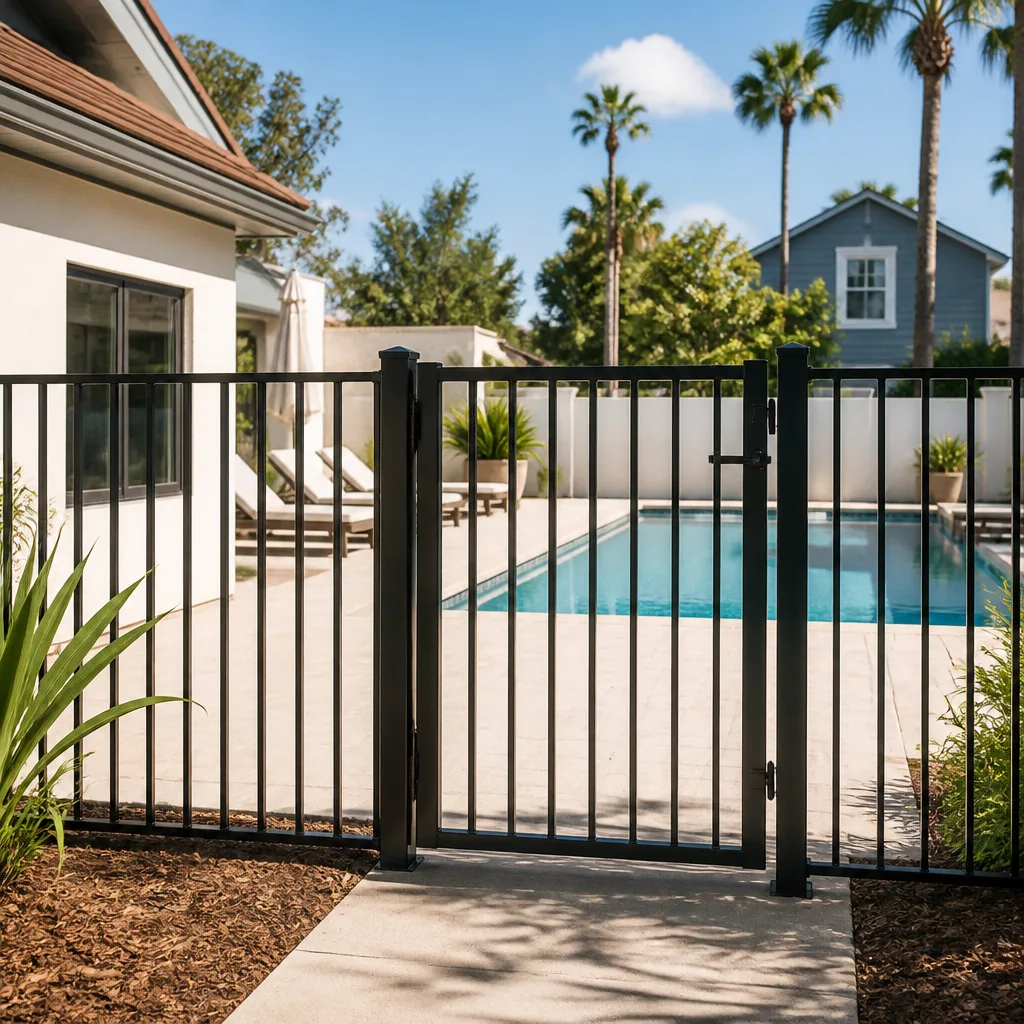
Wood fencing is not complicated, but it’s unforgiving. Skip a step and you’ll be resetting posts in three years. Here’s exactly how the work moves on a Bellflower job.
Stage 1: Property line and utility check (same-day, before demo)
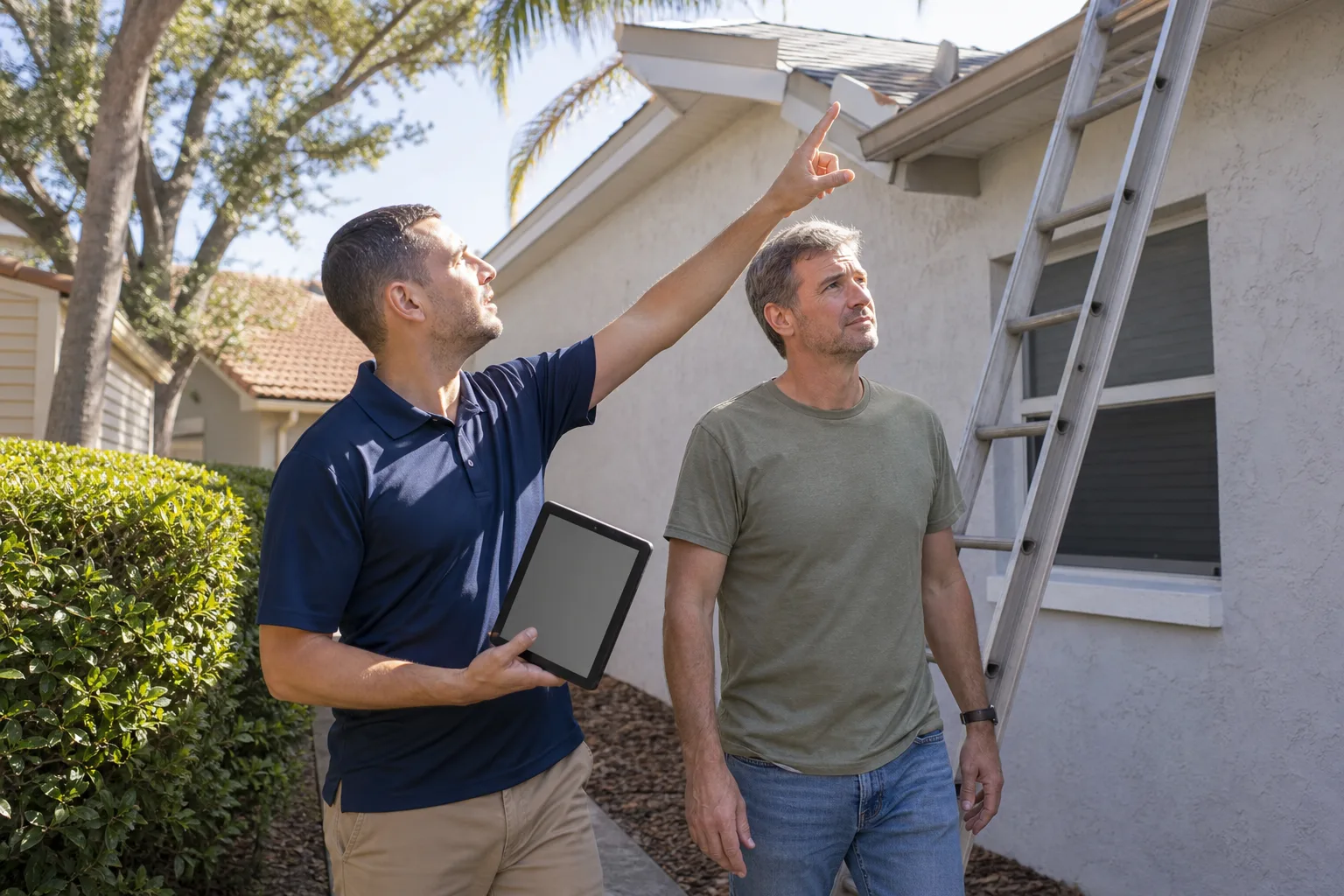
We start by confirming the lot line against your plat or a recent survey, because a fence built six inches onto a neighbor’s side becomes their fence in a dispute. On the same visit we call 811 for utility marking. Bellflower’s older blocks have aging laterals and irrigation lines running where you’d least expect them, and a post hole through a gas stub is an expensive afternoon. You decide the exact fence line and who owns which side of the fence before we cut anything.
Stage 2: Tear-out and disposal (half a day to a full day)
Old boards, rails, and posts come out, including the concrete footings. We haul it all off. On a 100-foot run this is usually a half day; dense, root-bound soil or a fence bolted into a retaining wall pushes it to a full day. You’ll see the bare ground at the end of this stage, which is the moment to flag anything you want changed about the run.
Stage 3: Post setting (day two, then cure)
Posts go into holes dug to depth and set in concrete, spaced on 6- or 8-foot centers depending on your board thickness and wind exposure. This is a decision point for you: 8-foot spacing saves money on posts and concrete but flexes more; 6-foot spacing costs more and stays rigid for decades. Concrete needs to cure before rails go on, so this is where a two-day build becomes a three-day build on bigger runs.
Stage 4: Rails, boards, and gates (one to two days)
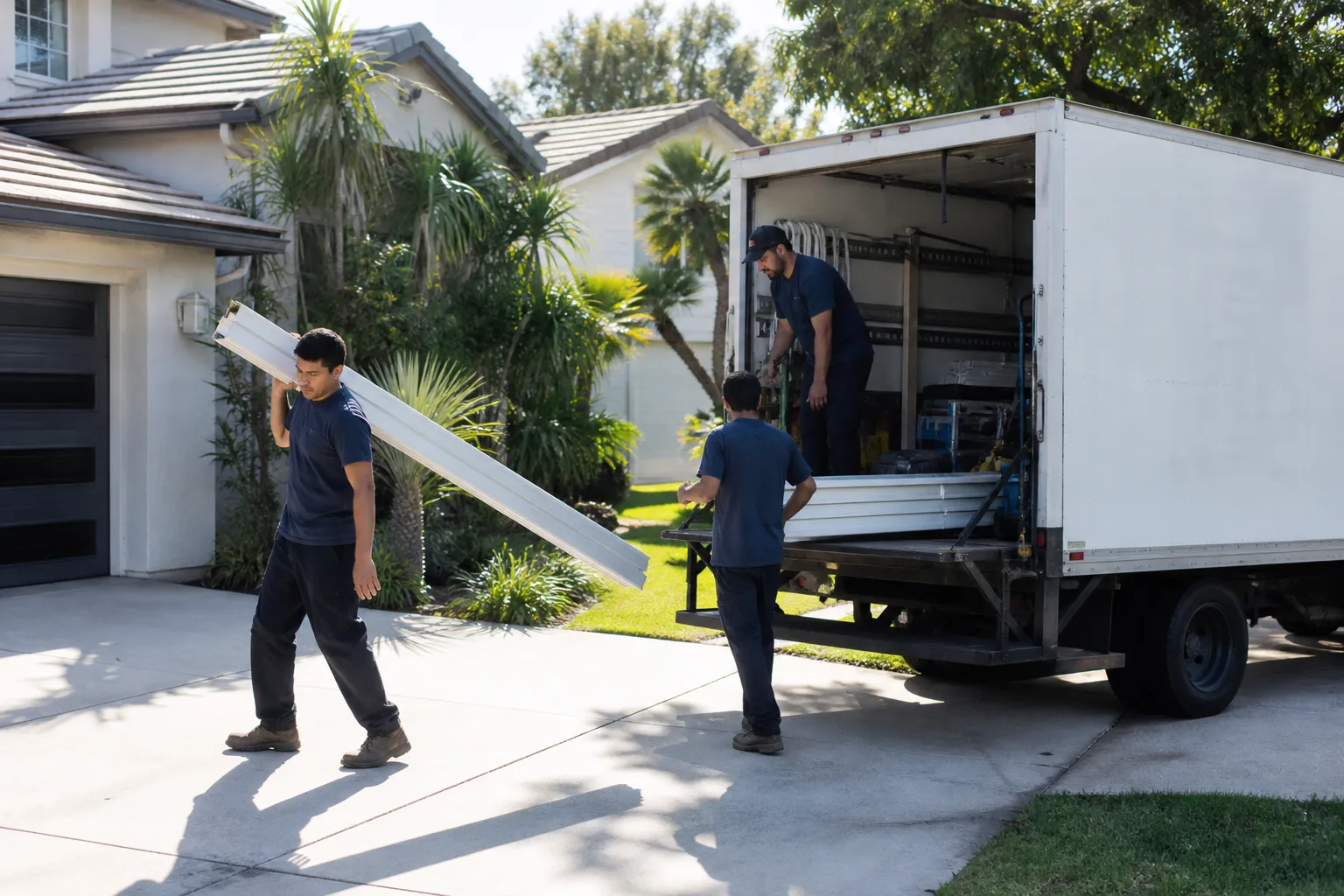
Rails, then pickets or boards, then the gates. Gate posts get extra concrete and heavier stock because a sagging gate is the number one call-back on wood fences. We hang gates on adjustable hinges so you can correct seasonal swelling without replacing hardware.
Stage 5: Walkthrough and finish (same day as completion)
We walk the whole run with you, check every gate swing, and confirm stain or sealant timing. Fresh lumber needs to dry before it takes a finish, usually two to four weeks depending on weather. That walkthrough is also where the 730-Day Done Right Promise gets explained in plain terms: if a post heaves or a gate sags within that window, we come back and make it right.
Styles & brands we work with
- Kitchen remodeling
- Bathroom remodeling
- Home additions & ADU
- Roofing
- Windows & doors
- Driveway & pavers
- Fence
The Wood Fence Options You’ll Actually Choose Between
Most homeowners spend their decision energy in four places. Here’s the honest trade-off on each.
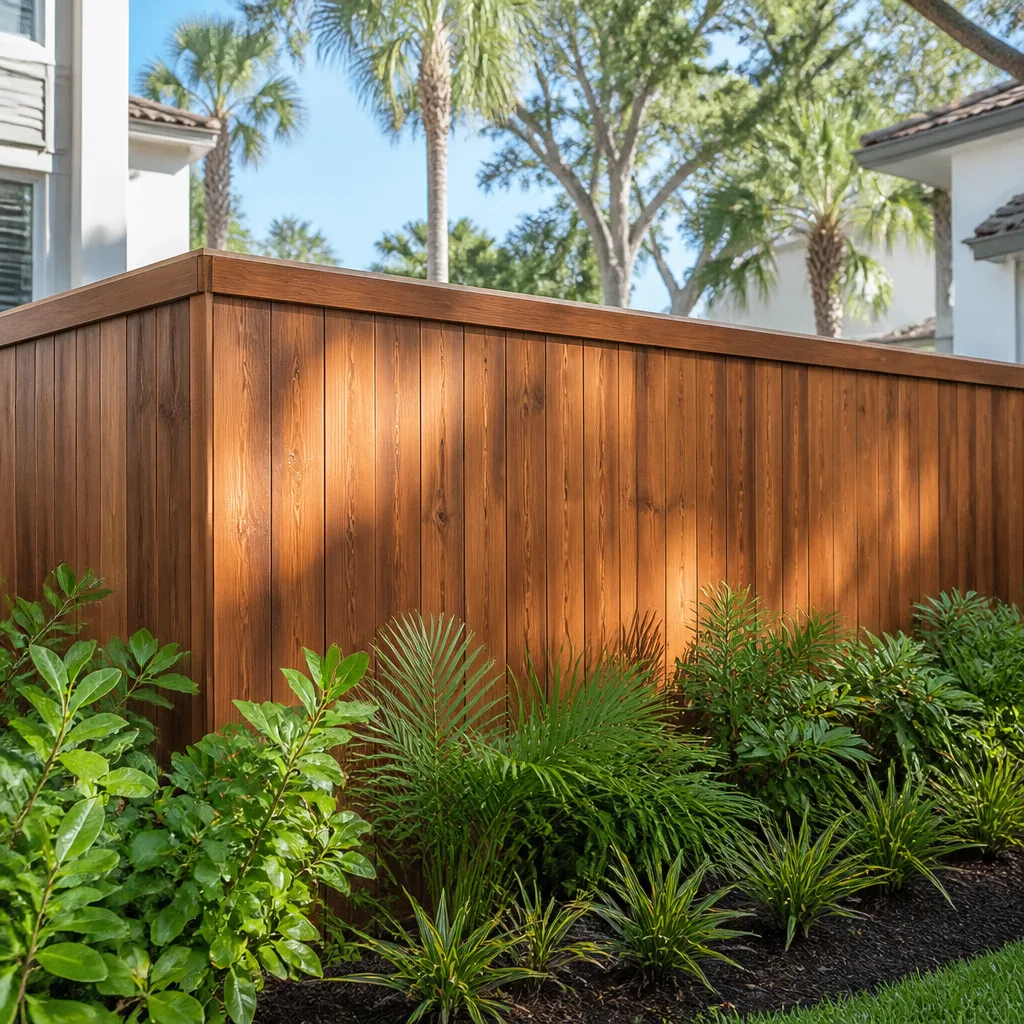
- Cedar vs. pressure-treated pine: Cedar resists rot and insects naturally, ages to a silver-gray if unstained, and costs roughly 20 – 30% more than pressure-treated. Pressure-treated pine is cheaper upfront and holds up fine when sealed, but it shrinks, warps, and checks more in Bellflower’s dry summers. Cedar suits visible front-yard runs; treated pine suits a long side or back property line where budget matters.
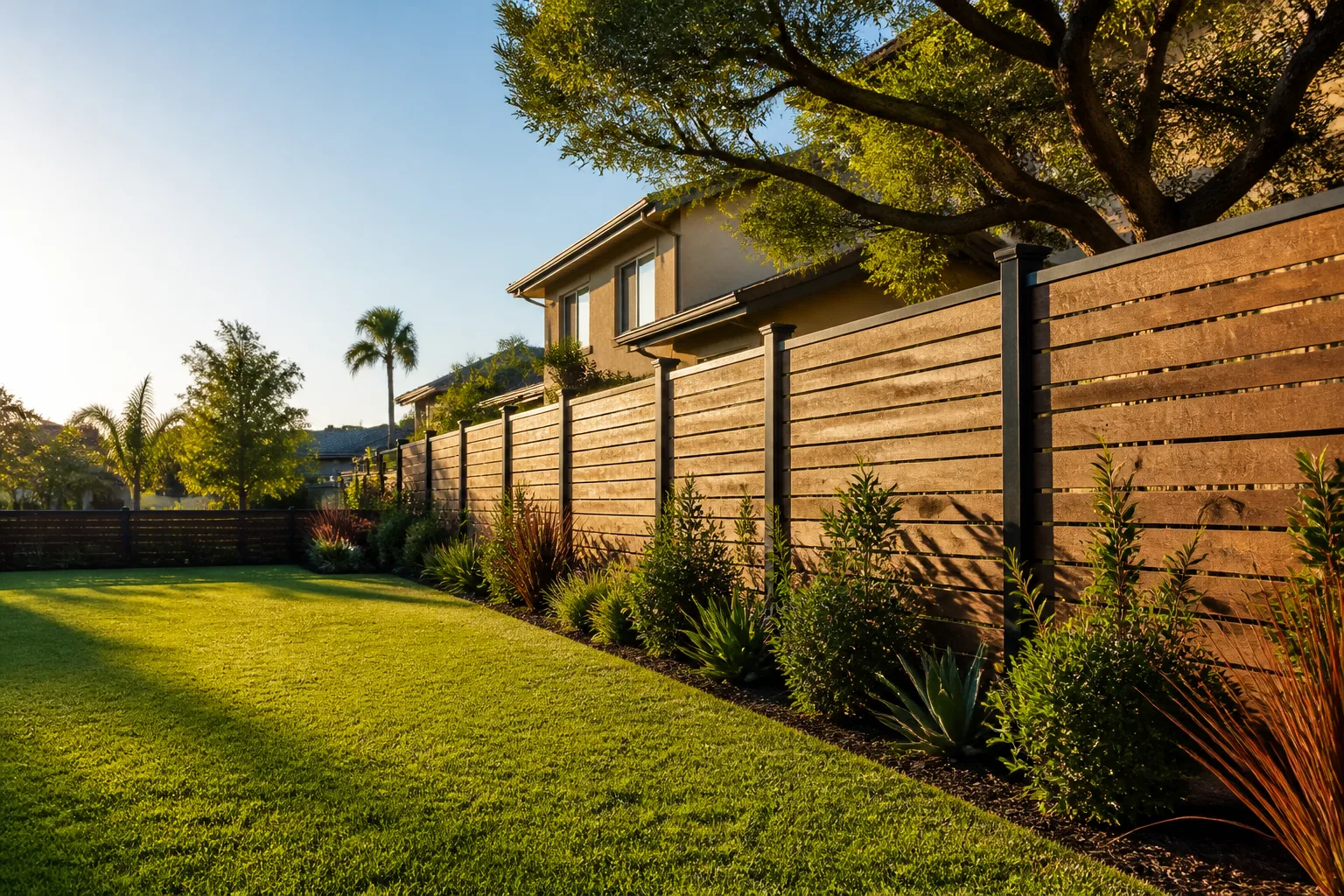
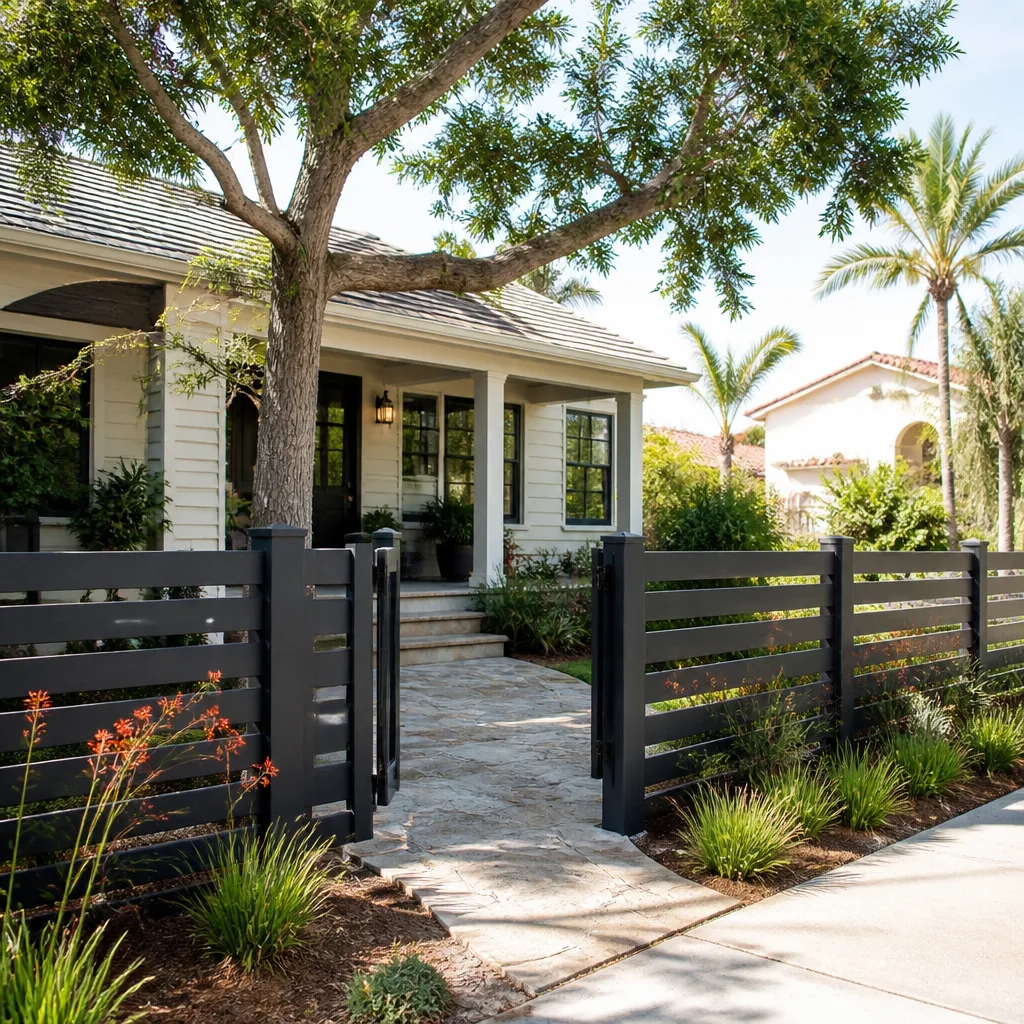
- Board style: Dog-ear pickets are the cheapest and most common. Flat-top and cap-and-trim styles cost more but hide the rail ends and read cleaner from the street. Board-on-board (alternating overlap) gives full privacy with no gaps and adds material cost.
- Height and spacing: Six feet is the standard for privacy. Anything over six feet in most of Bellflower triggers a height conversation with the city, so we confirm the limit during plan review rather than after the posts are in. Post spacing at 6 feet vs. 8 feet is the single biggest driver of long-term rigidity.
- Finish: A penetrating oil stain or a quality exterior sealant is the difference between a 12-year fence and a 20-year fence. We quote staining as a line item so you can decide whether to do it now or after the lumber dries.
What a Wood Fence Costs in Bellflower, CA
Plan on $3,500 – $9,000 for a typical residential wood fence in Bellflower. A short 60-foot side-yard run with basic dog-ear pickets sits near the bottom. A 150-foot perimeter with cedar, cap-and-trim, and two gates sits near the top. Those are the real market numbers, not a teaser.
Five things push a job from low end to high end:
- Linear footage: The biggest lever. Everything else is secondary to how many feet of fence you’re paying for.
- Access and tear-out: A fence line you can back a truck up to is cheaper than one a wheelbarrow has to reach through a side gate. Old concrete footings add labor.
- Material grade: Cedar over treated pine, board-on-board over picket, cap-and-trim over flat-top.
- Soil and grade: Sloped lots need stepped panels and deeper posts, and rocky or root-heavy soil slows every hole.
- Permits: Most fences under six feet don’t require one, but height, corner-lot sight lines, and any fence over six feet do. We pull what’s required and pass inspection rather than leaving it to chance.
Your written estimate lists footage, material grade, post spacing, gate count, tear-out, disposal, and permit fees as separate lines. What it typically doesn’t include: staining (quoted separately), landscape repair around removed plants, and any retaining wall work if the ground won’t hold a post.
See the difference
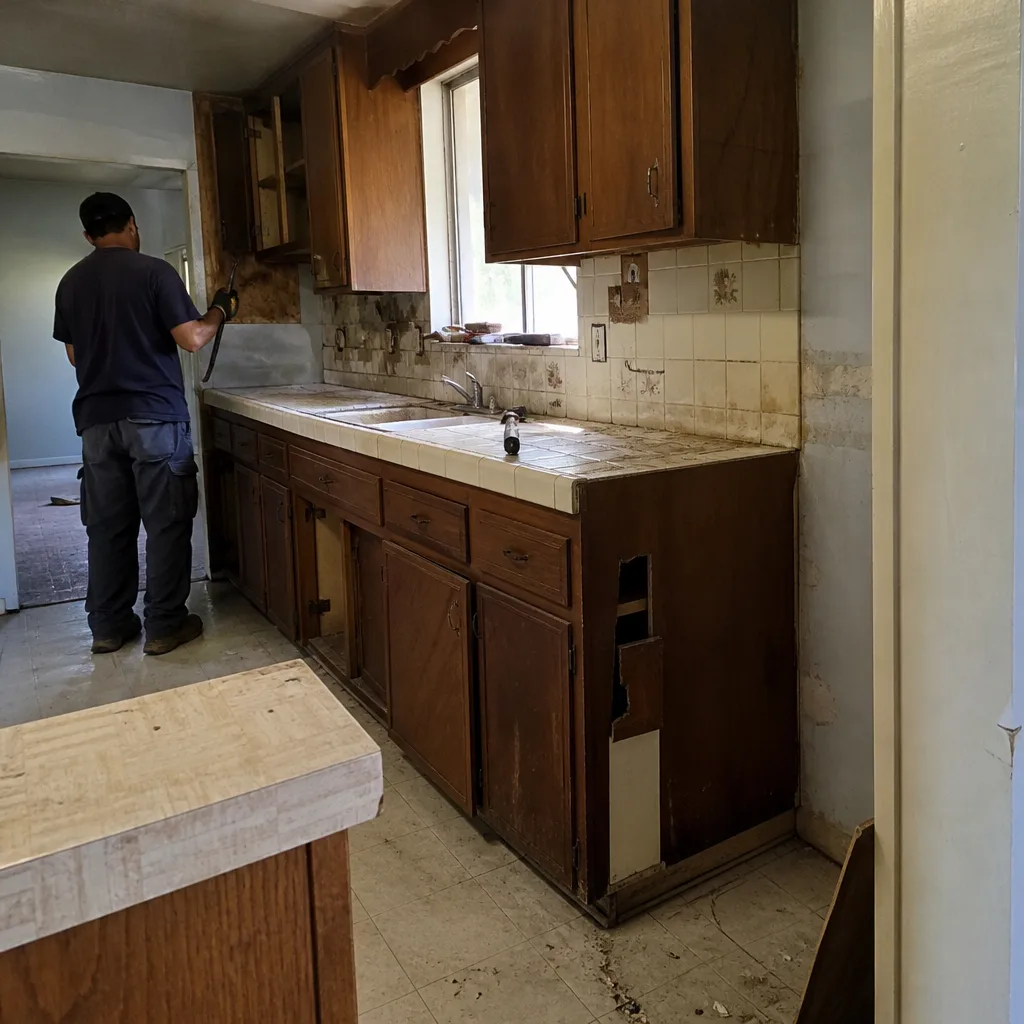 Before
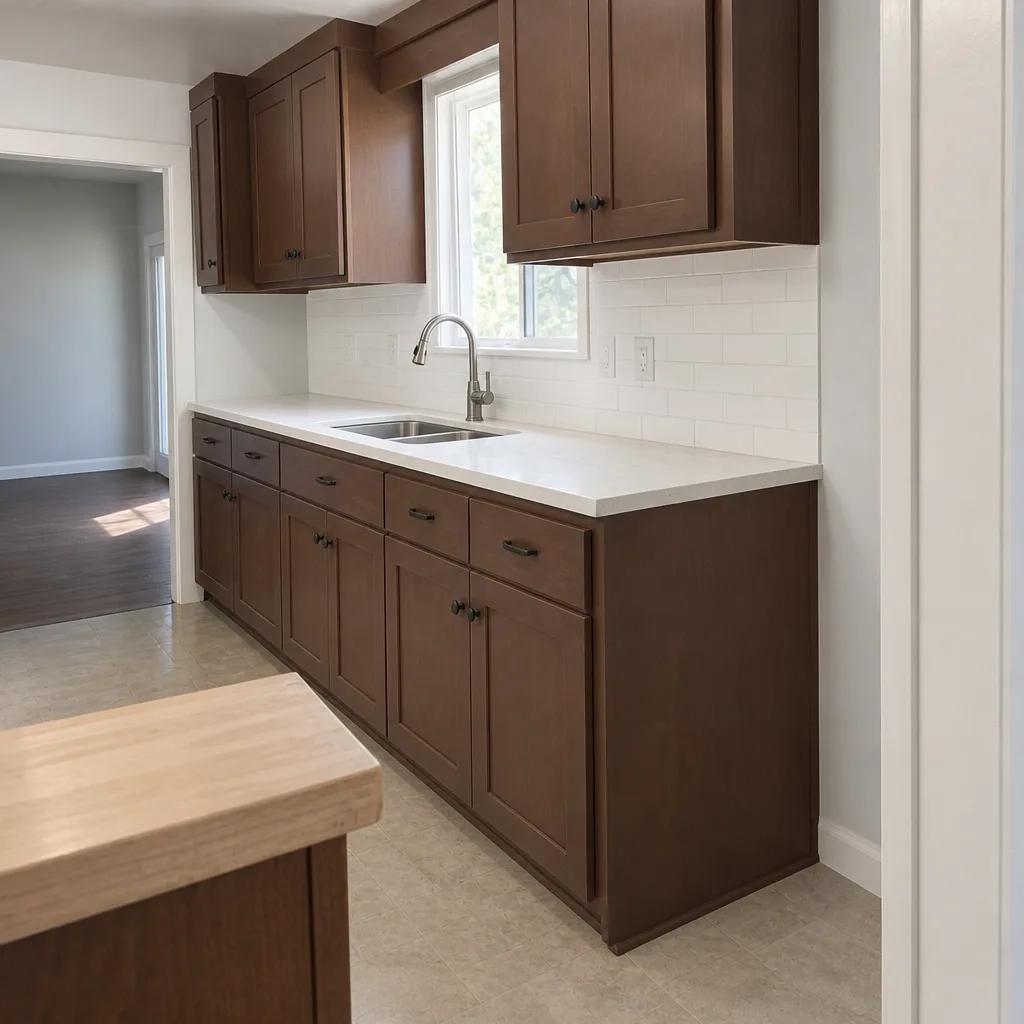 After
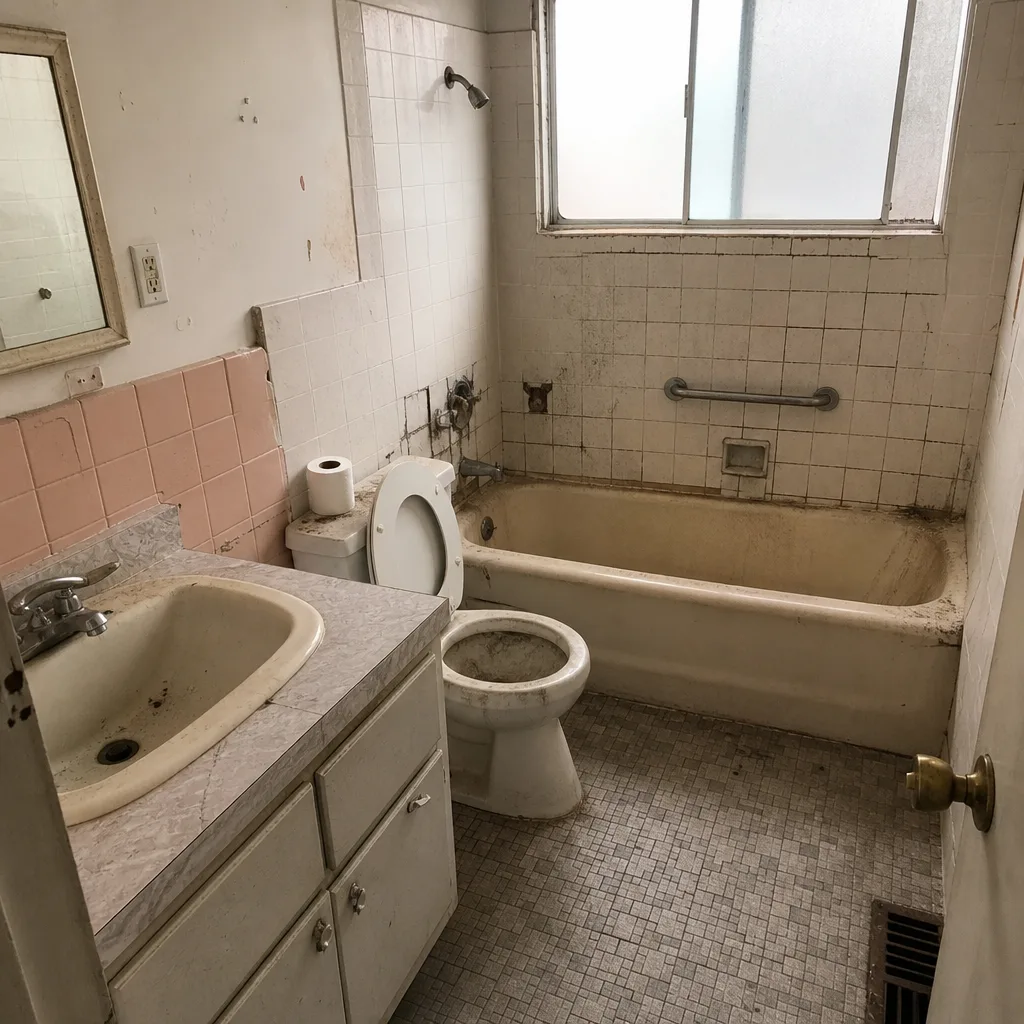 Before
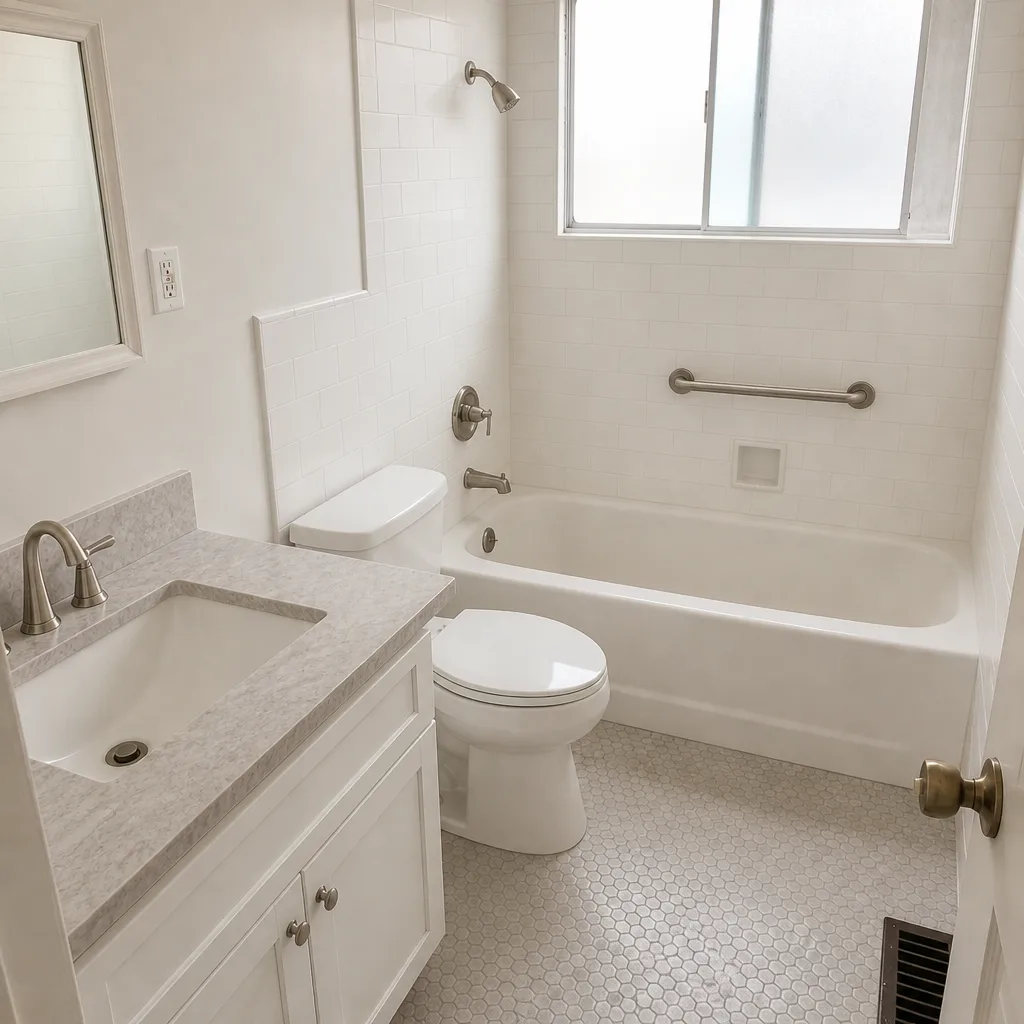 After
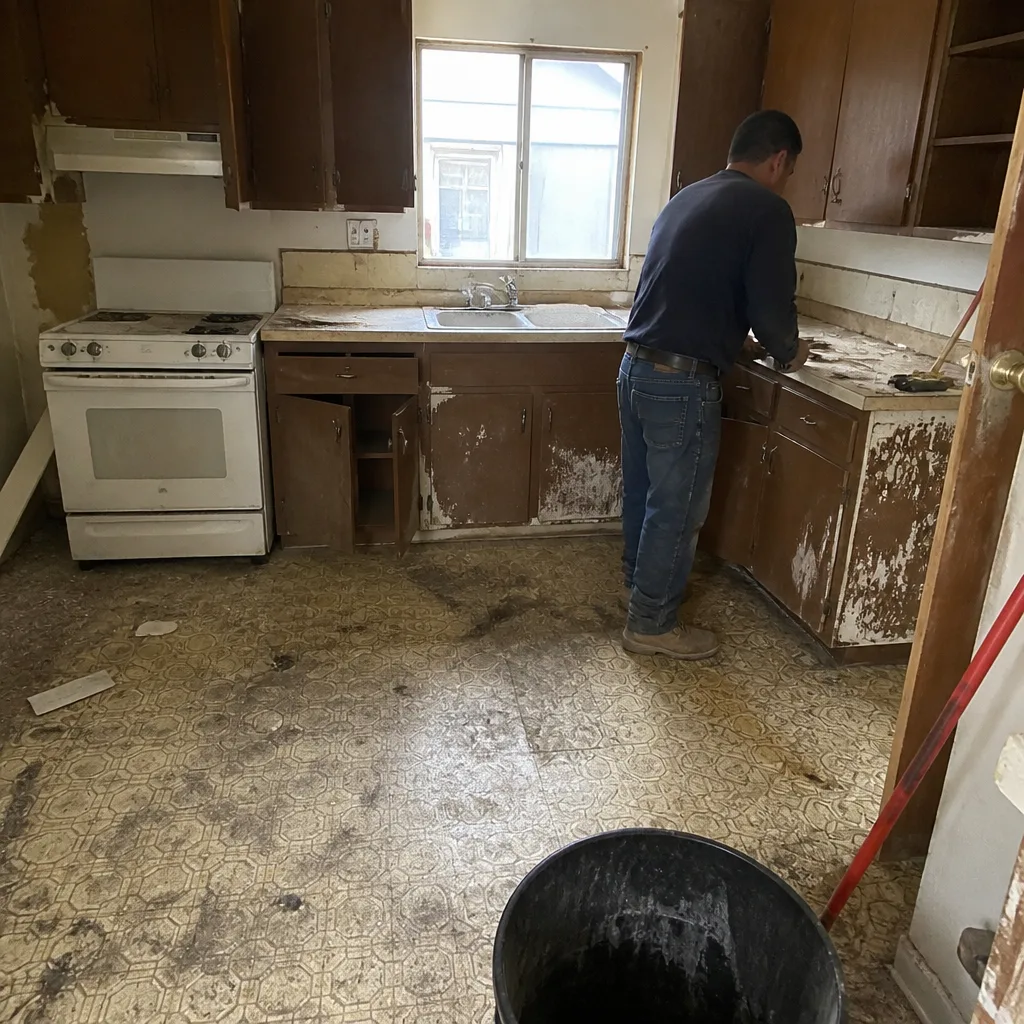 Before
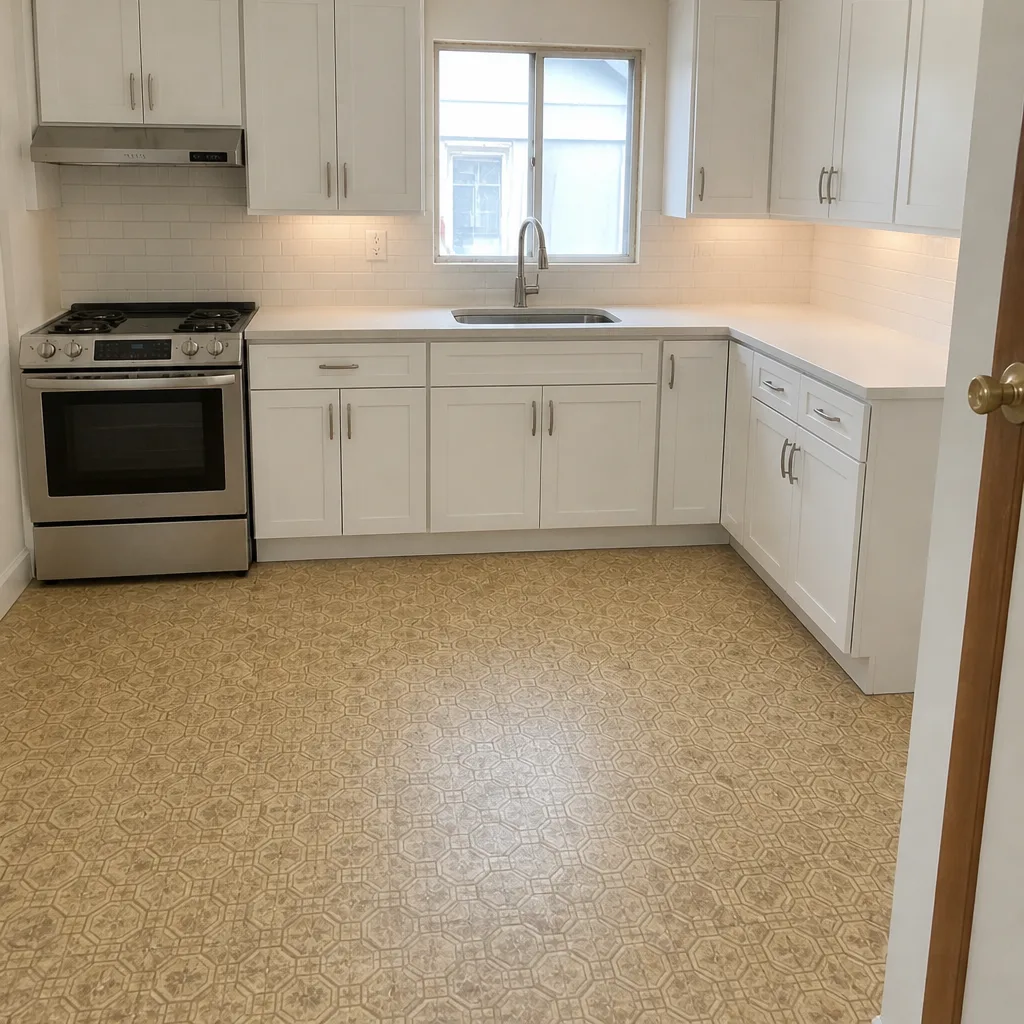 After
What Bellflower Homes Specifically Do to This Job
Bellflower is a built-out mid-century suburb, and that shapes fencing work here in ways it doesn’t in newer cities. Most of the housing stock is 1940s – 1960s single-story stucco on small, tight lots, with detached garages out back and decades of patchwork DIY behind them. That means we regularly find fence lines sitting on top of old irrigation runs, buried debris, and footings poured by a previous owner at whatever depth felt right. On a tight lot, a shared property line with a neighbor’s converted garage or shed bumps right up against your fence run, so the line-check stage matters more here than almost anywhere.
Bellflower’s hot, dry inland summers and mild rainy winters drive the main failure modes: sun-bleached and checked boards on south- and west-facing runs, dry-rot at the base where sprinklers keep the bottom rail wet, and termite damage in older untreated posts. Where the ground stays damp, we spec treated posts and a gravel base to keep the wood out of standing water. We also see a lot of unpermitted garage conversions on Bellflower’s older blocks, which occasionally puts a fence line against a structure the city has no record of – something we sort out during plan review, not after demolition.
Serving Bellflower, CA – Our Local Coverage Area
We serve Bellflower and nearby communities. Use the map below to see the area we cover. If you’re nearby, we can almost certainly help.
Frequently Asked: Wood Fence in Bellflower
Two to four working days for a standard residential run. Small runs finish in two; larger perimeters with multiple gates and stepped panels stretch to four. Call (888) 255-8179 and we’ll give you a realistic timeline for your footage on the estimate visit.
Most fences at six feet or under don’t require a permit in Bellflower, but fences over six feet, corner-lot sight lines, and some HOA requirements do. We confirm the limit during plan review and pull anything the city requires so the fence passes inspection the first time.
In most cases, yes. We call 811 for utility marking before digging so we know where the laterals run, then adjust post placement around them. If a post lands directly on a line, we shift spacing by a few inches rather than move the utility. Call (888) 255-8179 to schedule the estimate and we’ll flag anything unusual at your property.
Between $3,500 and $9,000 for a standard residential fence, depending on footage, material grade, and gate count. Cedar and cap-and-trim sit higher; treated pine and dog-ear pickets sit lower. Call (888) 255-8179 for an exact quote – estimates are free and there’s no change-order surprise once the number is in writing.
The 730-Day Done Right Promise covers workmanship for two full years. If a post heaves, a gate sags, or a panel comes loose within that window, we come back and make it right at no cost. Materials carry their own manufacturer coverage on top of that.
Get a Free Estimate for Your Wood Fence
Schedule a free on-site estimate for your wood fence in Bellflower. We’ll confirm the property line, call 811, measure the run, and hand you a written line-item quote with no change-order surprises. Calls are answered by a live person 24/7 at (888) 255-8179. Most jobs are scheduled within a few weeks, and the 730-Day Done Right Promise backs the work in writing.
Written by the team at Groundwork Construction Co.