
Free written scope consultation - allowances, timeline, and change-order rules on paper before a single trade is scheduled
Styles & brands we work with
- Kitchen remodeling
- Bathroom remodeling
- Home additions & ADU
- Roofing
- Windows & doors
- Driveway & pavers
- Fence
See the difference
 Before
 After
 Before
 After
 Before
 After
HVHZ Window Requirements Explained for Downey, CA Homeowners
HVHZ stands for High-Velocity Hurricane Zone - a regulatory designation inside the Florida Building Code covering Miami-Dade and Broward counties, not a national standard and not a California one. If you live in Downey, California, your address sits roughly 2,600 miles outside the HVHZ. What actually governs window installation at your house is California’s Building Code, ASCE 7 wind-load math for your exposure category, and seismic provisions for how the frame ties into the wall. Call (888) 255-8179 and we’ll walk you through which rules apply to your specific project.
Key Takeaways
- HVHZ is a Florida zone. It has no legal authority in Downey.
- California window permits hinge on CBC Chapter 24 glazing rules, ASCE 7 wind loads, and seismic anchorage.
- An AAMA label on the unit matters more than a hurricane-zone marketing sticker.
- Most “HVHZ-rated” language on a California quote is a production benchmark exported from the Florida market, not a code requirement.
What HVHZ Actually Means, and Why It Doesn’t Apply Here
The High-Velocity Hurricane Zone is a special section of the Florida Building Code with one job: keep buildings standing through Atlantic and Gulf hurricane events. Products sold into that zone have to pass large-missile impact testing (a 9-pound 2×4 fired at roughly 50 feet per second) plus cyclic pressure loading that mimics sustained hurricane-force wind pushing and pulling on the glass. Those tests are calibrated to a coastal storm environment. They tell you nothing useful about how a window will perform during a Downey summer afternoon or a seismic shake.
That doesn’t mean HVHZ compliance is meaningless. It means it’s a credential for a different geography. A window that passed Miami-Dade testing may be an excellent product, but the sticker is not what your plan checker in Downey is looking for.
Where you do see the term bleed into California marketing, there’s a simple explanation. Manufacturers who sell into Florida’s premium storm market run the same product lines through HVHZ testing as a quality benchmark, then let that language travel nationally. The product can be genuinely good. The credential just doesn’t transfer to Downey’s regulatory stack. If you’re shopping windows and want to know which labels actually matter here, our Windows & Doors page covers what we specify and why.
The California Code Stack That Actually Governs Your Downey Windows
Downey is a built-out inner-ring suburb, and most of the window work here is replacement and addition on 1940s-to-1960s ranch homes, often with original single-pane glass and shallow stem-wall foundations. That housing stock shapes what the city’s plan-check reviews. Here’s the stack your project actually answers to:
- CBC Chapter 24 (glass and glazing). Safety glazing requirements based on where the window sits - within 24 inches of a door, near a walking surface, or in a tub/shower enclosure all trigger different rules.
- ASCE 7 wind loads for Downey’s exposure category. Interior suburbs like Downey typically sit in a lower wind-exposure category than coastal or hilltop sites, so the design pressure on your window is calculated for your address, not a hurricane coast.
- CBC seismic provisions for frame-to-structure connections. This is where Downey’s older homes get interesting. Anchor type, embedment depth, and how the frame ties into a stem-wall or a 1950s addition all have to be on the drawings. On homes near Furman Park and the original 1950s tracts, we routinely find shallow stem-wall or slab conditions that change the anchorage detail the moment a rear addition or second story gets permitted.
- AAMA product certification. The unit itself should carry an AAMA label confirming it was tested and certified to the applicable performance standard - that’s the credential a Downey inspector will recognize.
The climate matters too. Downey’s hot, dry inland summers and mild winters mean window performance here is mostly about solar heat gain and air leakage, not storm impact. Expansive older soils and seismic code push the real engineering effort into the anchorage, not the glass.
What to Verify Before Your Downey Permit Goes In
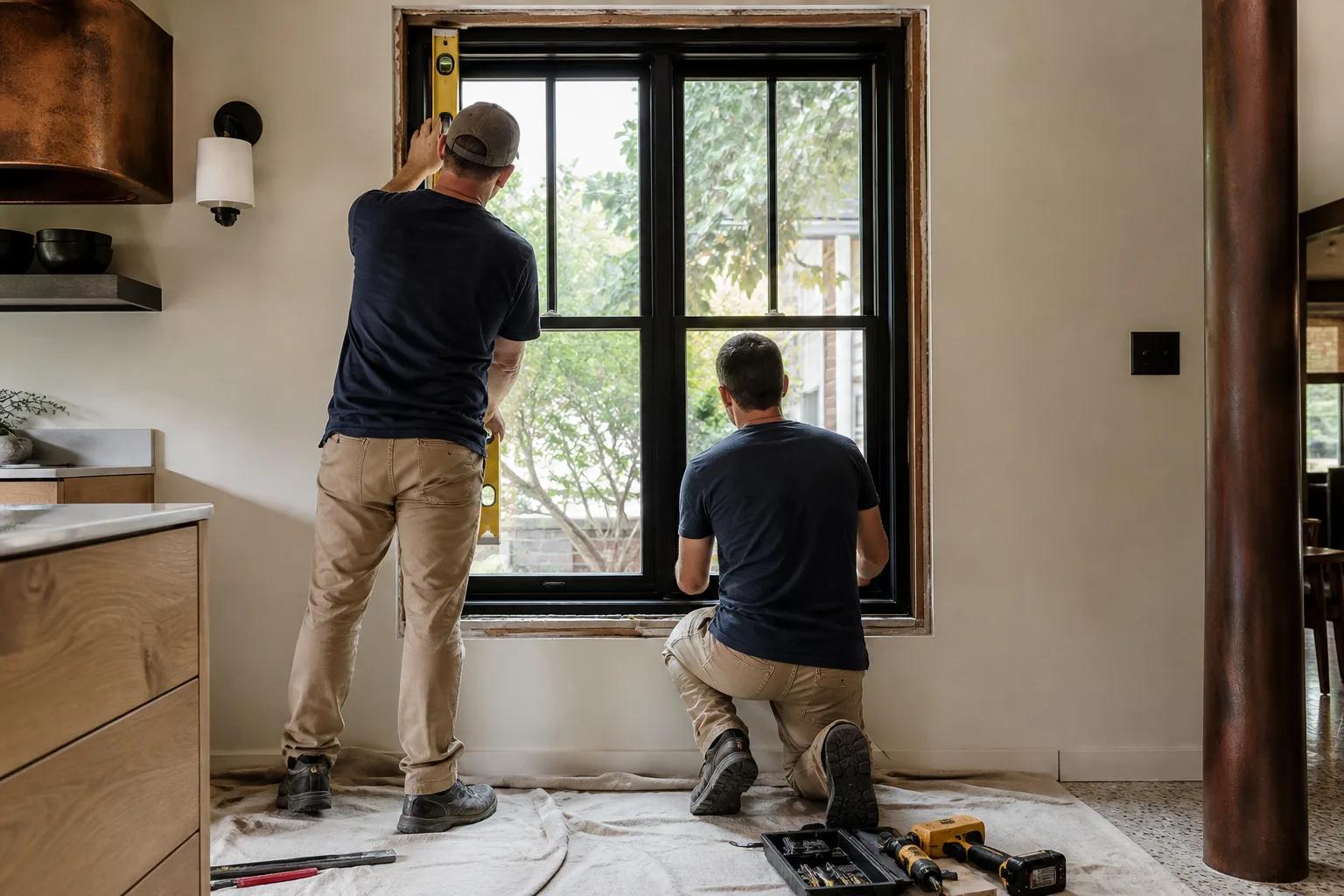
This is the practical part. Before a permit is submitted, check three things:
- That the window unit carries an AAMA label for the performance class and grade on the plans.
- That the installation drawings specify anchor type and embedment depth per California code - not a generic Florida detail.
- That the insulating glass unit meets CBC Chapter 24 safety glazing rules for its specific spot in the home (near a door, near a floor, in a bath).
Get those three right and Downey’s plan-check moves. Get them wrong and you’re resubmitting, which costs weeks. Groundwork Construction Co. of Downey runs window projects against the California code stack from the first drawing, which is what keeps a remodel from stalling at the counter.
What window work runs in Downey
| Project | Typical Downey range |
|---|---|
| Window Replacement | $4,500-$15,000 |
| Impact Window Installation | $8,000-$25,000 |
Prices depend on count, frame material, and whether the opening needs structural work on an older wall. Our Downey service area page has the fuller picture on scheduling and what to expect on older homes.
Why the Right Labels Beat the Right Marketing
A window that carries both an AAMA label and a manufacturer’s Florida-market line can be a superb choice - it just needs California documentation, not a hurricane sticker in the sales pitch. When we spec windows, brand partners like Andersen, Pella, and Marvin come up often because their certification documentation is complete and their performance data is easy to hand a plan checker. If you’re eyeing a modular or panelized addition at the same time, the window openings get set inside a manufactured wall system from companies like Abodu or Cover, which means the AAMA label and anchorage detail need to be verified at the factory drawing stage, not on site.
The 730-Day Done Right Promise backs every window we install, and background-checked, uniformed technicians handle the fit and finish. Calls get answered by a live person 24/7, so if a question about your window order comes up after hours, you’re not waiting until Monday. Upfront pricing means the number on the estimate is the number you pay. Financing at 0% for 18 months is available, and projects over $10,000 get $1,000 off. Our technicians bring up to 12 years of experience to the work, and our broader home services line covers the foundation and structural side when an older Downey wall needs more than a new frame.
FAQs About HVHZ Window Requirements
No. HVHZ is a Florida Building Code designation with no legal authority in California. California window permits rely on CBC Chapter 24, ASCE 7 wind-load calculations for Downey’s exposure category, seismic anchorage provisions, and AAMA product certification. Call (888) 255-8179 for an exact quote on your Downey window project - estimates are free.
Not inherently. HVHZ testing measures large-missile impact and cyclic hurricane pressure, which doesn’t match Downey’s seismic and heat-driven performance needs. A window’s AAMA certification and its performance data for your address matter more. If a quote leads with HVHZ as its selling point, ask for the AAMA label and the California installation detail - call us for a no-pressure review at (888) 255-8179.
Window replacement in Downey typically runs $4,500-$15,000 depending on the count and frame material, and impact-rated installation runs $8,000-$25,000. Older homes near Downey’s original 1950s tracts sometimes add structural work at the opening, which shifts the total. Call (888) 255-8179 for a free estimate with upfront pricing.
Confirm three things: the unit has an AAMA label, the installation drawings specify anchor type and embedment depth per California code, and the IGU meets CBC Chapter 24 safety glazing rules for its location in the home. Missing any of those is the most common cause of a plan-check resubmission. Call us at (888) 255-8179 and we’ll review your drawings before they go in.
Get Your Downey Windows Spec’d to the Right Standard
If you’d rather have it looked at, Groundwork Construction Co. of Downey offers a no-pressure assessment in Downey - we’ll check your window units, review the drawings against California code, and tell you what your permit actually needs. Call (888) 255-8179 for a free estimate and a straight answer.
Written by the team at Groundwork Construction Co. of Downey, serving Downey, CA.


