
Free written scope consultation - allowances, timeline, and change-order rules on paper before a single trade is scheduled
Styles & brands we work with
- Kitchen remodeling
- Bathroom remodeling
- Home additions & ADU
- Roofing
- Windows & doors
- Driveway & pavers
- Fence
See the difference
 Before
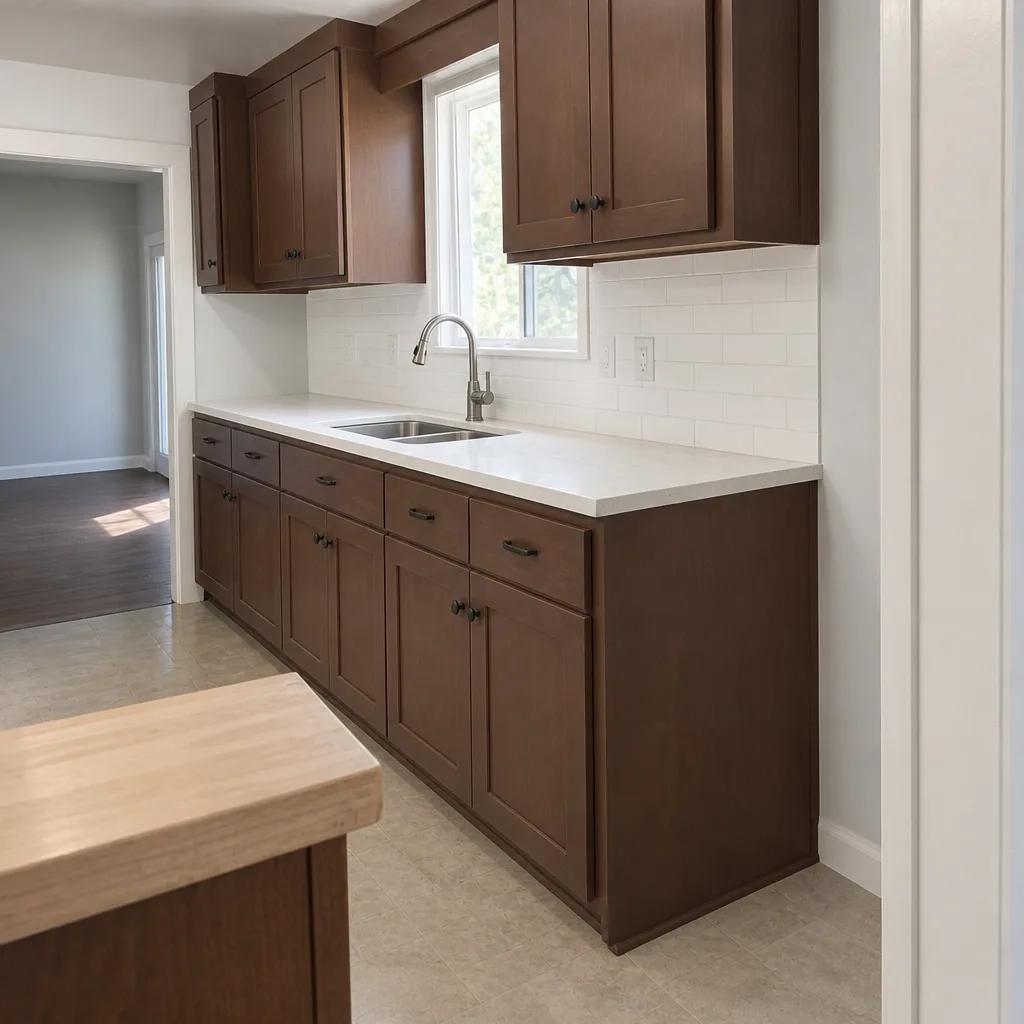 After
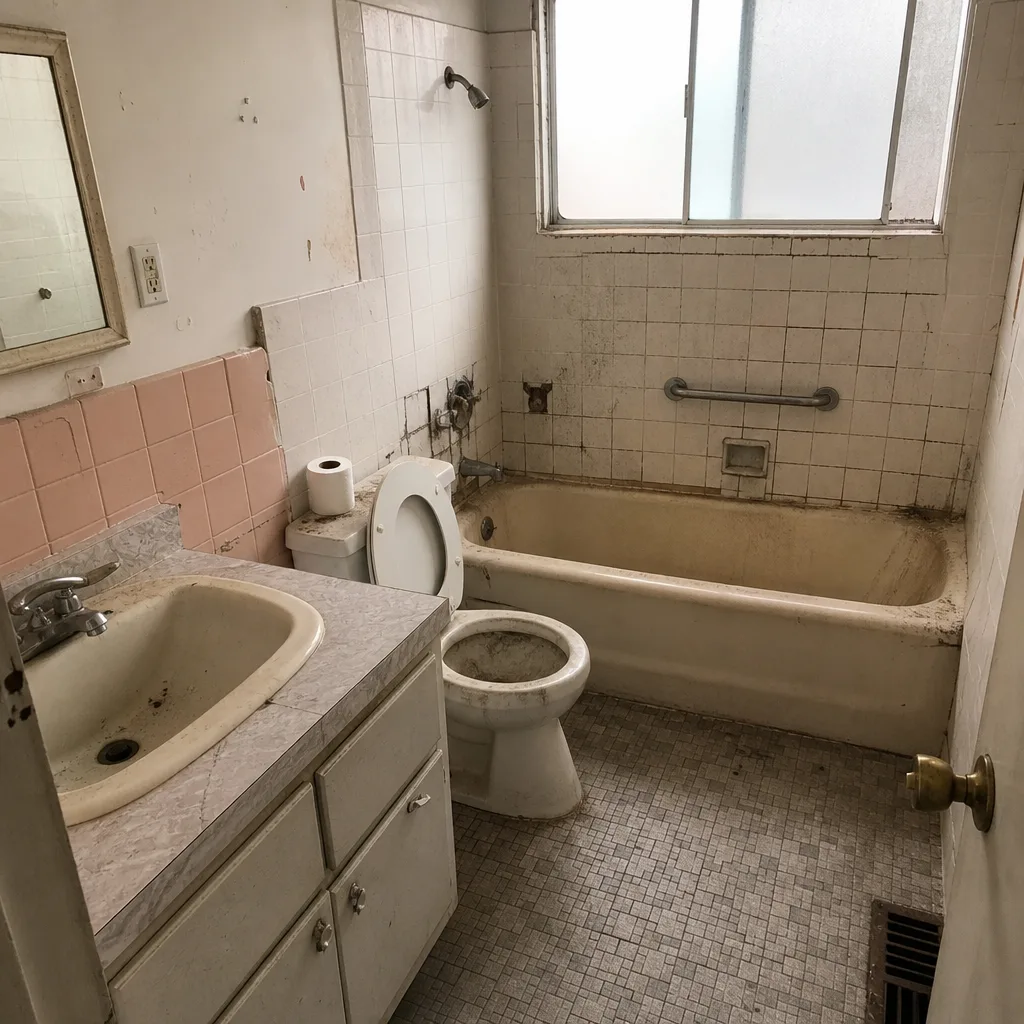 Before
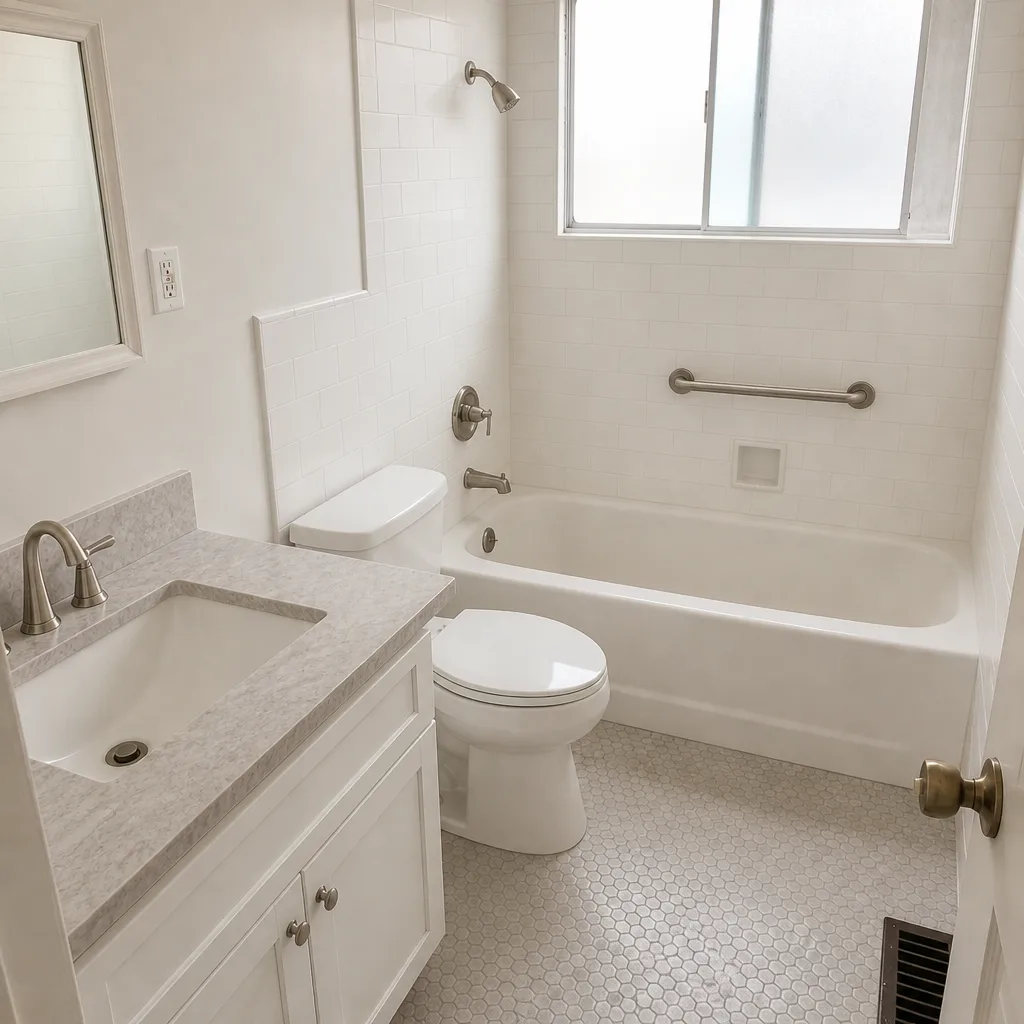 After
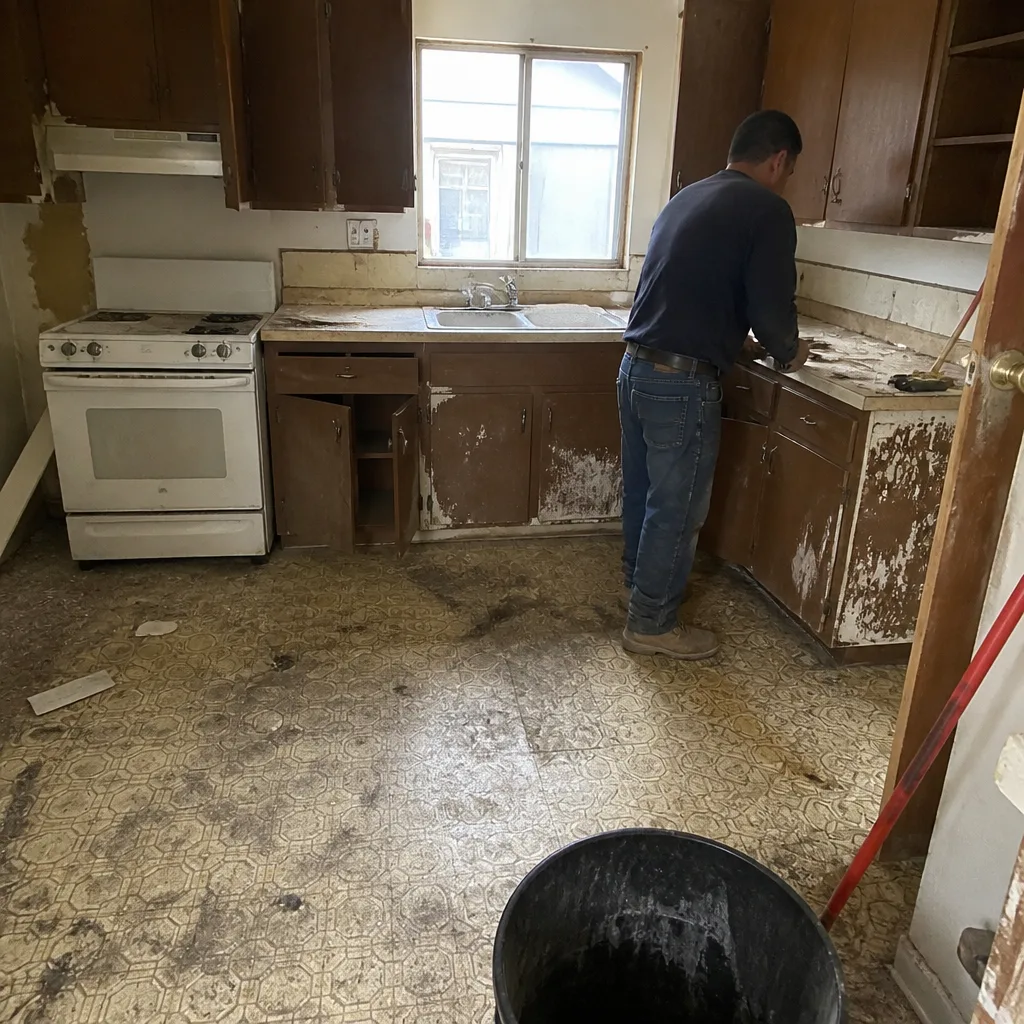 Before
 After
How Thick Should a Concrete Driveway Be in Downey, CA?
Four inches is the minimum, and for a Downey driveway that gets driven on every day, it’s usually not enough. The short answer: pour 5 inches with #3 rebar on 18-inch centers, or 4 inches with fiber mesh only if your sub-base is properly compacted and your soil is stable. On the older lots where the native soil runs to expansive silty clay, an unreinforced 4-inch slab will show map cracking within a few years. We spec driveways in Downey for the soil and the load, not a generic number. Call (888) 255-8179 for a free estimate and a written spec.
Why the Standard “4 Inches” Answer Falls Short Here
Most of what you’ll read online says 4 inches for cars and 5 to 6 for heavier loads. That guidance assumes stable, well-drained ground. Downey soil doesn’t always cooperate.
The city is a built-out, largely post-WWII inner-ring suburb, and the ground under those 1940s-1960s tracts varies from block to block. Some yards drain sandy loam. Others sit on expansive silty clay that swells when the winter rains come and shrinks through the hot, dry summers, when the marine layer burns off by mid-morning and the slab bakes all afternoon. Clay that moves pulls a thin, unreinforced slab apart from underneath. The surface cracks aren’t dramatic at first, just a web of lines, until a corner lifts and water gets under it.
That’s why we treat 4 inches as a floor, not a target:
- 4 inches with #3 rebar on 18-inch centers is our baseline for a standard residential driveway on stable soil. The steel holds the slab together when the ground shifts.
- 4 inches with fiber reinforcement can work on tighter budgets where the base is solid, but fiber helps with shrinkage, not structural load. It’s not a substitute for rebar over moving clay.
- 5 inches with rebar is the right call for expansive-soil lots and for driveways that see delivery trucks, full-size pickups with trailers, or an RV. Thin slabs are where you’ll see corner breaks first.
Sub-Base Depth Matters as Much as the Slab
Thickness gets all the attention, but most failed driveways in Downey we look at didn’t fail because the concrete was too thin. They failed because nobody compacted what was under it.
We require a minimum 4-inch compacted aggregate base under any slab we pour, and deeper where the native soil is soft or the lot drains poorly. That base spreads the load, gives water somewhere to go, and keeps the clay from pumping up into the concrete. Without it, a 6-inch slab will crack just as fast as a 4-inch one. Some bids skip the base because it’s the cheapest line to cut. It’s also the one that shows up as a cracked driveway two winters later.
Control Joints: The Detail Most Bids Leave Out
In Downey’s heat and seasonal temperature swings, concrete moves. Control joints give it a place to crack on purpose. The rule of thumb for joint spacing is roughly 2 to 3 times the slab thickness in feet, which puts a 4-inch slab at joints every 8 to 12 feet.
We set joints at 10-foot intervals on Downey driveways, not the 12 to 14 feet you’ll see on some bids. Tighter joints mean the cracks that do form follow the lines you cut, where they’re invisible, instead of splitting across the surface at random. It’s a small change in layout that makes a big difference in how the driveway looks after five summers.
What a Groundwork Driveway Estimate Includes
Every driveway estimate from Groundwork Construction Co. of Downey comes with a written material-and-method specification, so you can compare bids on the actual engineering, not just the bottom line. It covers:
- Slab thickness and the reinforcement spec (rebar size and spacing, or fiber)
- Base depth and compaction requirements
- Control joint layout, including spacing and edge conditions
- Concrete strength and finish
That document matters because two bids can look identical on price and be completely different jobs. One crew pours 5 inches over 6 inches of compacted base with rebar. Another pours a 4-inch slab over scraped dirt. The spec sheet tells you which one you’re getting. Every project is also backed by our 730-Day Done Right Promise: if a driveway develops structural cracking within two years, we make it right. That’s a guarantee we can only offer because the spec is built to hold.
What It Costs in Downey
Concrete driveway installation in Downey typically runs $4,500-$12,000, depending on square footage, slab thickness, base prep, and whether old concrete has to come out. A full replacement, including demolition and haul-away, lands at $5,000-$14,000. Sealing later runs $250-$700.
| Driveway Work | Typical Downey Cost |
|---|---|
| Concrete driveway installation | $4,500-$12,000 |
| Concrete driveway replacement | $5,000-$14,000 |
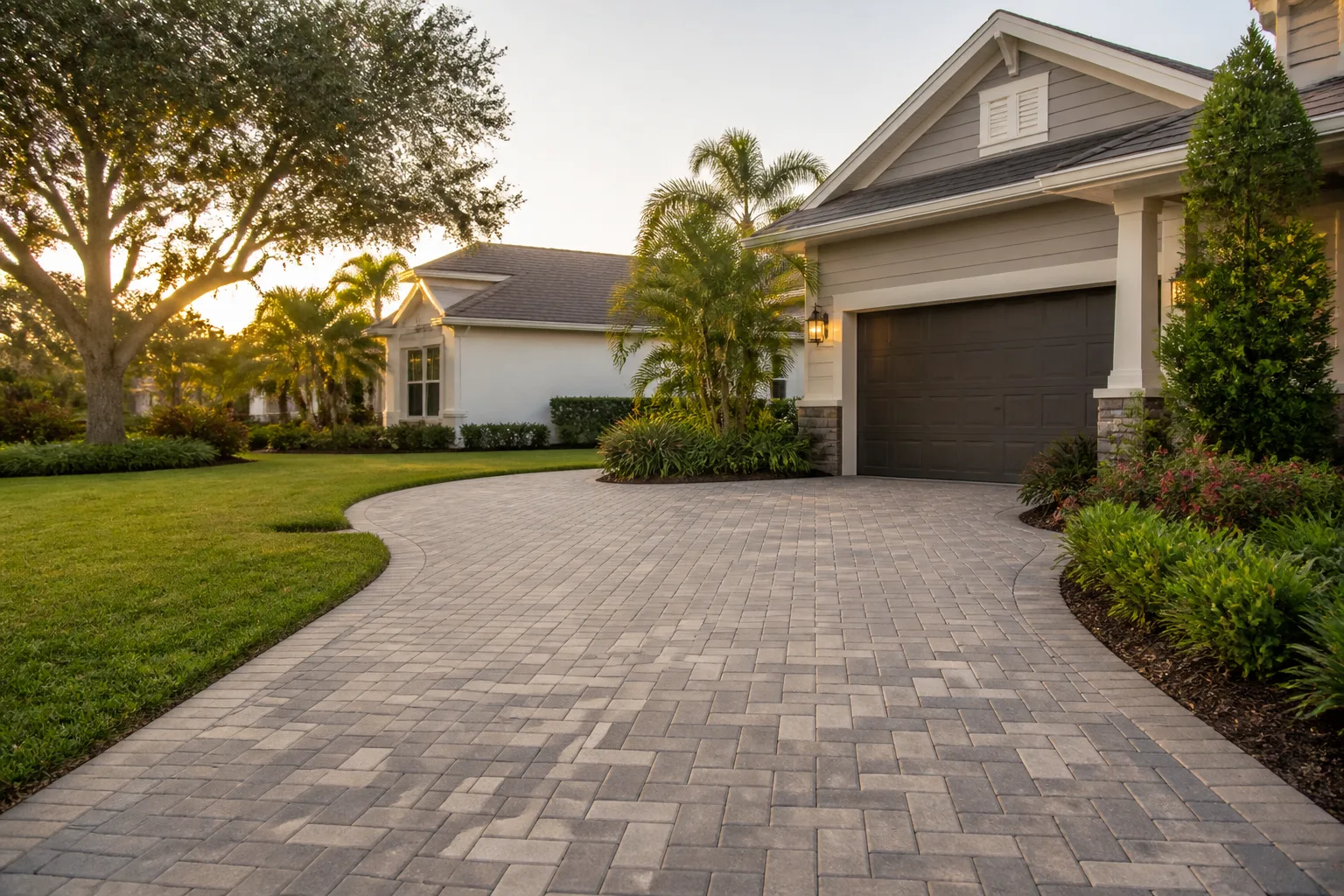
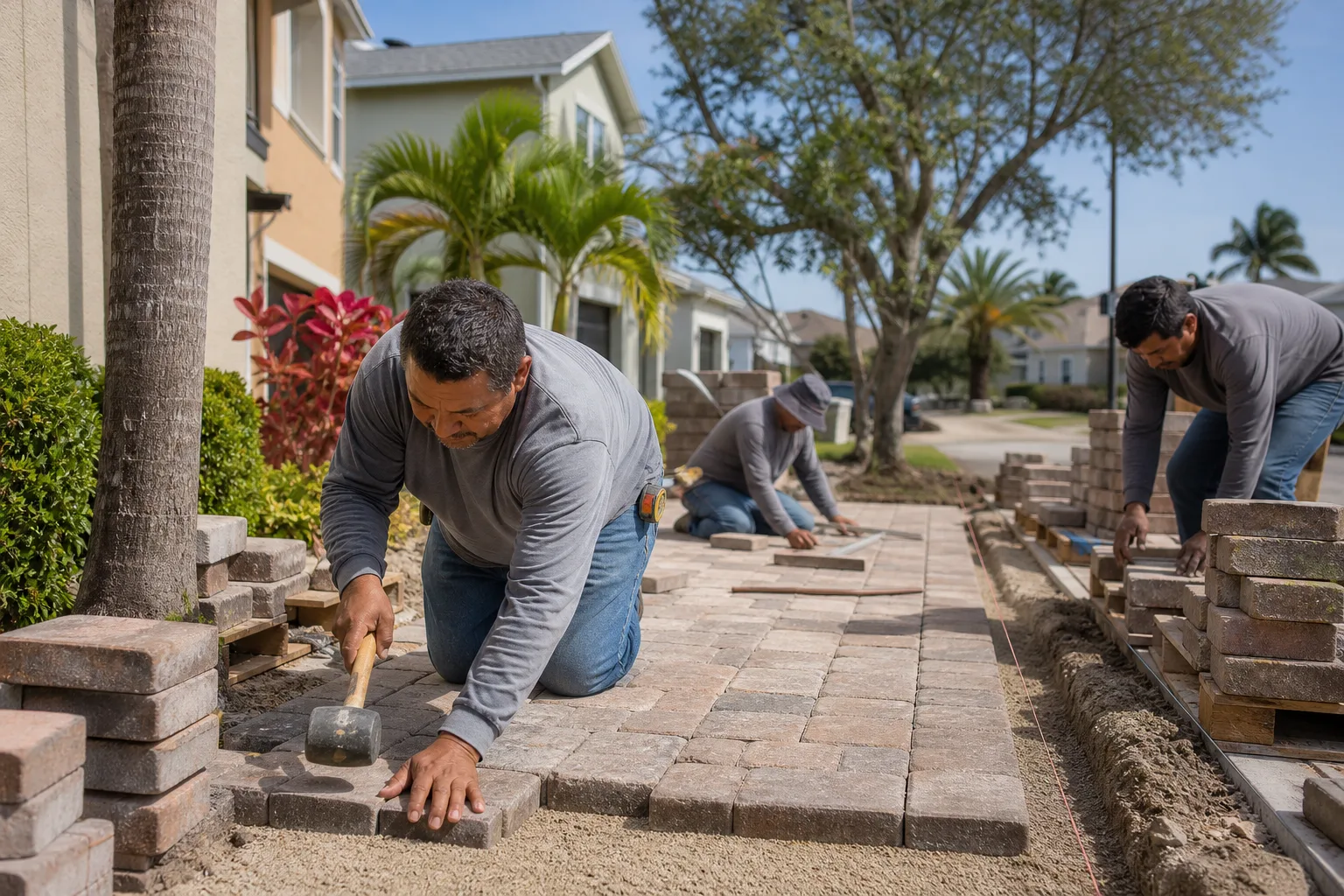
| Paver driveway installation | $7,000-$18,000 |
| Driveway sealing | $250-$700 |
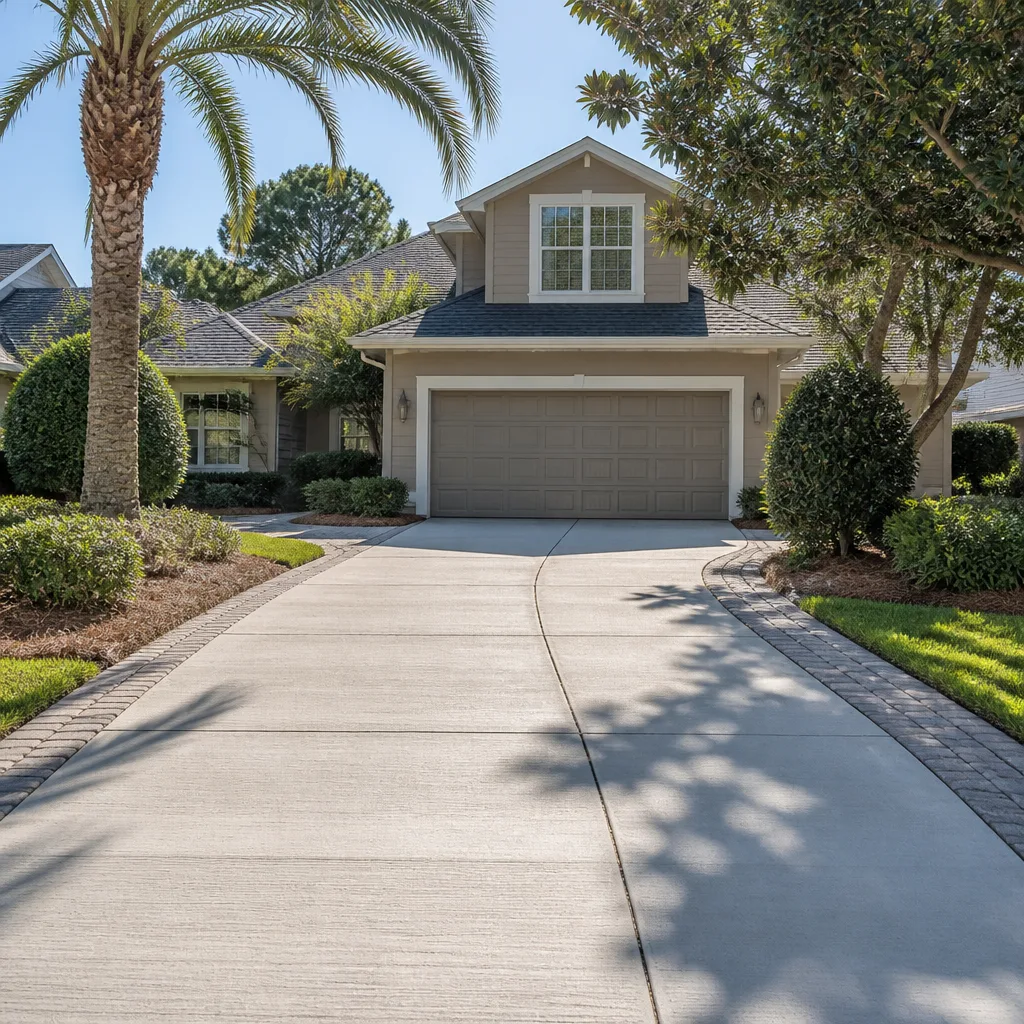
If you’re weighing pavers against concrete, our Driveway & Pavers page walks through both options in more detail. For a closer look at how we handle the material choices and prep work for a Downey property, see Driveway & Pavers in Downey. We also offer upfront pricing so the number you see is the number you pay, plus 0% financing for 18 months and $1,000 off projects over $10,000.
Common Scenarios We See on Downey Lots
Driveways here don’t fail in one way. A few patterns come up again and again.
The 1950s tract driveway that’s never been replaced. On the original ranch lots, especially around the older neighborhoods near Furman Park, the driveway is often the original pour, cracked and settling. Heavy equipment or a rear addition that requires getting a truck and materials onto the property can finish off a slab that was already on borrowed time. If you’re planning a larger project, that driveway may need replacing as part of the access plan.
The “cheapest bid” job from ten years ago. Often a 4-inch slab on scraped dirt with no base and no rebar. That’s usually the driveway with the spider-web cracking and a sunken corner that pools water.
The RV or heavy-trailer driveway. If a full-size pickup and trailer sit on the slab, or a heavy delivery truck comes up the drive, we pour 5 inches with rebar on a deeper compacted base. Thinner than that and the first heavy load starts the cracking.
FAQs
For most Downey homes, 5 inches with #3 rebar on 18-inch centers is the right spec. A 4-inch reinforced slab can work on stable soil with solid base prep, but on the expansive clay lots we see across the city, 5 inches holds up far better. Anything thinner than 4 inches isn’t recommended for regular vehicle loads. Call (888) 255-8179 for an exact spec and quote for your property.
Fiber helps control shrinkage cracks, but it doesn’t carry structural load across moving clay the way rebar does. On stable soil with a properly compacted base, a 4-inch fiber slab can work for a light-use driveway. On expansive soil or if heavy vehicles use the drive, we recommend rebar. Call (888) 255-8179 and we’ll tell you which spec fits your lot – the estimate is free.
Concrete driveway installation in Downey usually runs $4,500-$12,000, and a full replacement with demolition runs $5,000-$14,000. Thickness, base prep, and reinforcement all affect the total, which is why a written spec is worth asking for. Every Groundwork estimate includes one. Call (888) 255-8179 for an exact number – estimates and design consults are free.
On an unreinforced 4-inch slab over Downey’s clay, expect map cracking within 3-5 years, sometimes sooner after a wet winter. A properly specced slab with rebar, a compacted base, and joints at 10-foot intervals should stay structurally sound for decades. If your driveway is already cracking, call (888) 255-8179 and we’ll take a look before it gets worse.
If you’d rather have it looked at than figure out the spec yourself, Groundwork Construction Co. of Downey offers a no-pressure assessment in Downey. We’ll measure, check the base, and give you a written spec and price – call (888) 255-8179.
Written by the team at Groundwork Construction Co. of Downey, serving Downey, CA.