
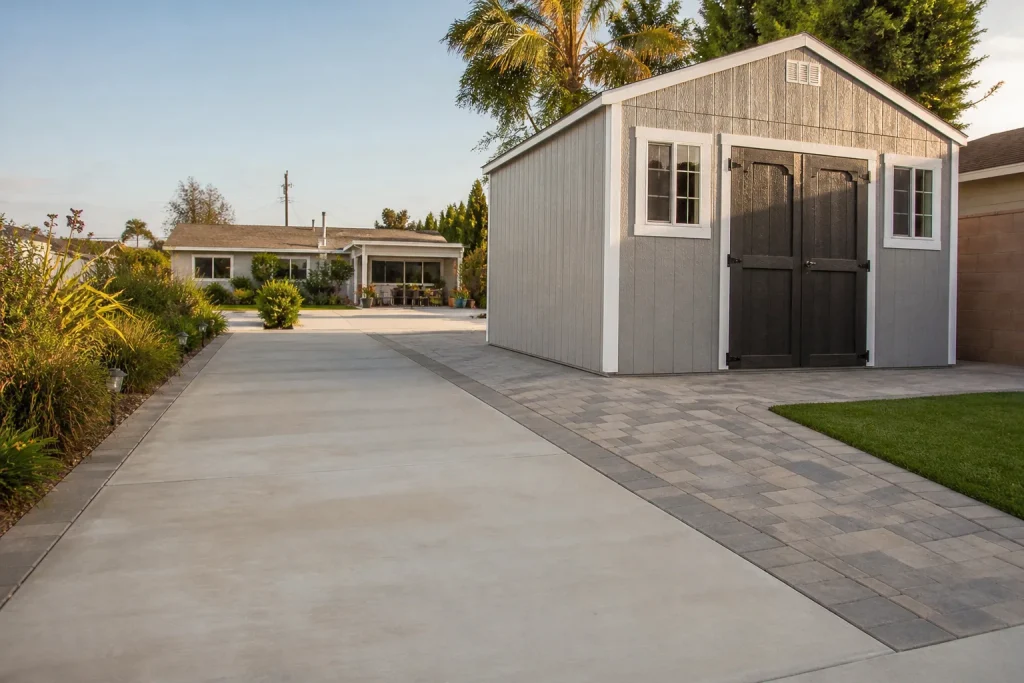
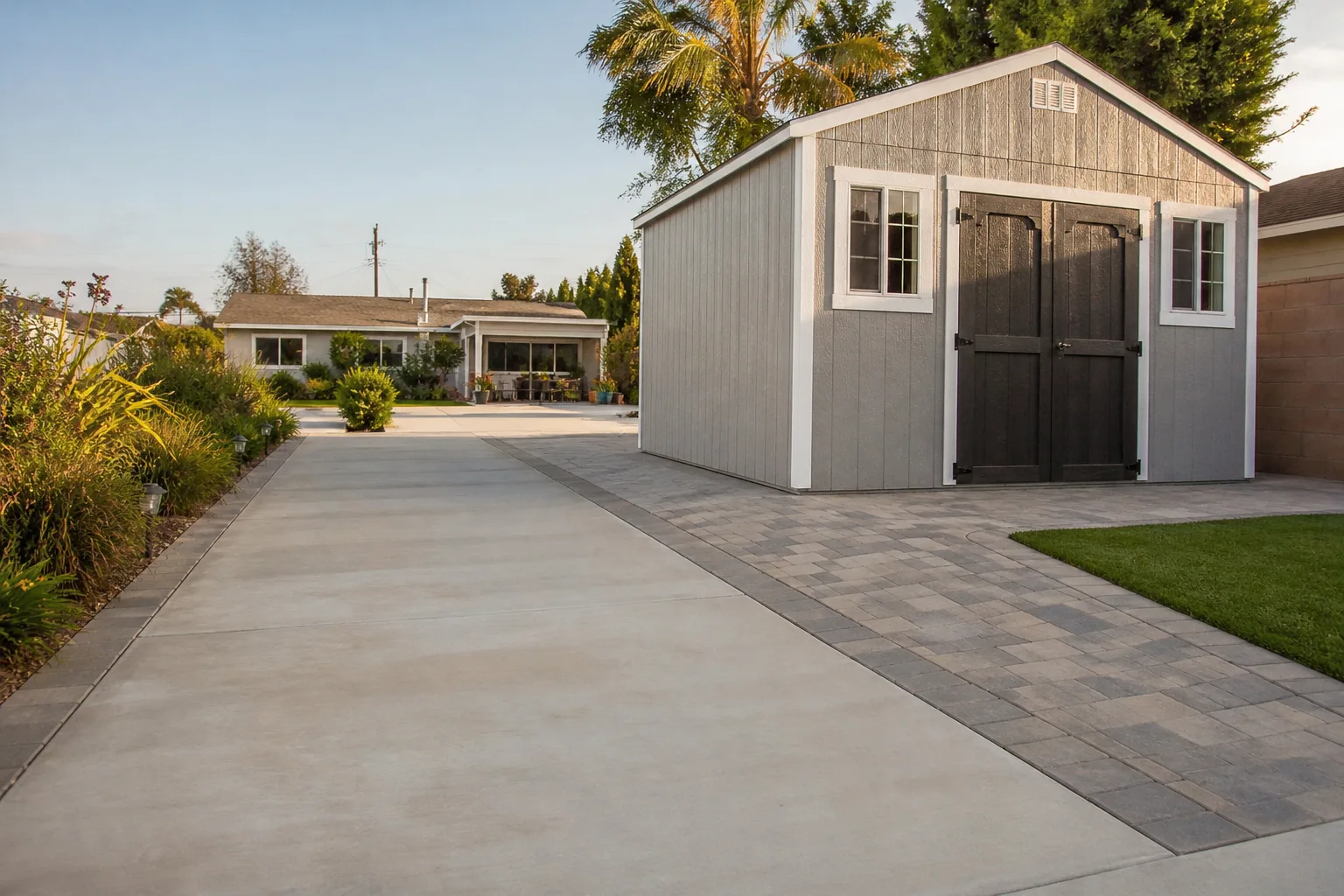
Tuff Shed Driveway & Pavers in Downey: A Homeowner’s Guide
Tuff Shed’s installation crew will tell you they need a “clear path to the site.” What they won’t tell you is exactly how wide that path needs to be, what surface it needs to be on, and what happens to your pavers if the base isn’t compacted to handle equipment weight. Most Downey homeowners find out the hard way, either with a cracked driveway apron or a rerouted delivery that adds days to the project. This guide covers the access planning your dealer won’t walk you through.
If you’d rather have someone handle the site assessment and paver work up front, call (888) 255-8179 for a free estimate.
Key Takeaways
- Tuff Shed delivery and assembly equipment typically needs a clear path of at least 8 to 10 feet wide with an overhead clearance of 12 feet or more.
- Downey’s expansive clay soil shifts seasonally, which makes paver base preparation under and around a shed footprint the most overlooked failure point.
- Accessory structures in Downey are subject to setback and permit rules that determine where your shed can legally sit, and therefore where your paver path must run.
- Combining shed placement with a driveway or side-yard paver project cuts mobilization cost significantly compared to staging them as separate jobs.
- Document your paver condition with photos before installation day, every time.
What Are the Minimum Access Requirements for Tuff Shed Installation in Downey?
For a standard Tuff Shed delivery and assembly in a Downey residential lot, plan for a clear path that’s at least 8 to 10 feet wide, with 12 feet of overhead clearance and a firm, level surface that can handle the weight of a delivery truck and assembly crew. Narrower paths can sometimes work for smaller sheds, but the crew will need to hand-carry panels, which adds labor and time.
Here’s what the crew actually needs to see when they pull up:
- A straight shot from the street to the pad. 90-degree turns around fences, AC units, or parked cars slow the job and sometimes stall it entirely.
- Firm ground the whole way. Loose gravel, decomposed granite, or bare soil will rut under a loaded truck. A properly compacted paver surface handles the weight without deformation.
- No overhead obstructions. Low tree limbs, power drops, and patio covers are common deals in older Downey neighborhoods near downtown and along the streets off Florence Avenue.
- Gate width that matches the path. A 6-foot gate on a 10-foot path is a problem. Measure the narrowest point, not the widest.
In our experience, the installers who show up to a Downey property with a wide, paved side yard finish in a single day. The ones who show up to a rutted dirt alley access often reschedule, and that reschedule costs you a second setup fee and a second day of disrupted parking.
How Do You Protect Existing Pavers From Installation Equipment Damage?
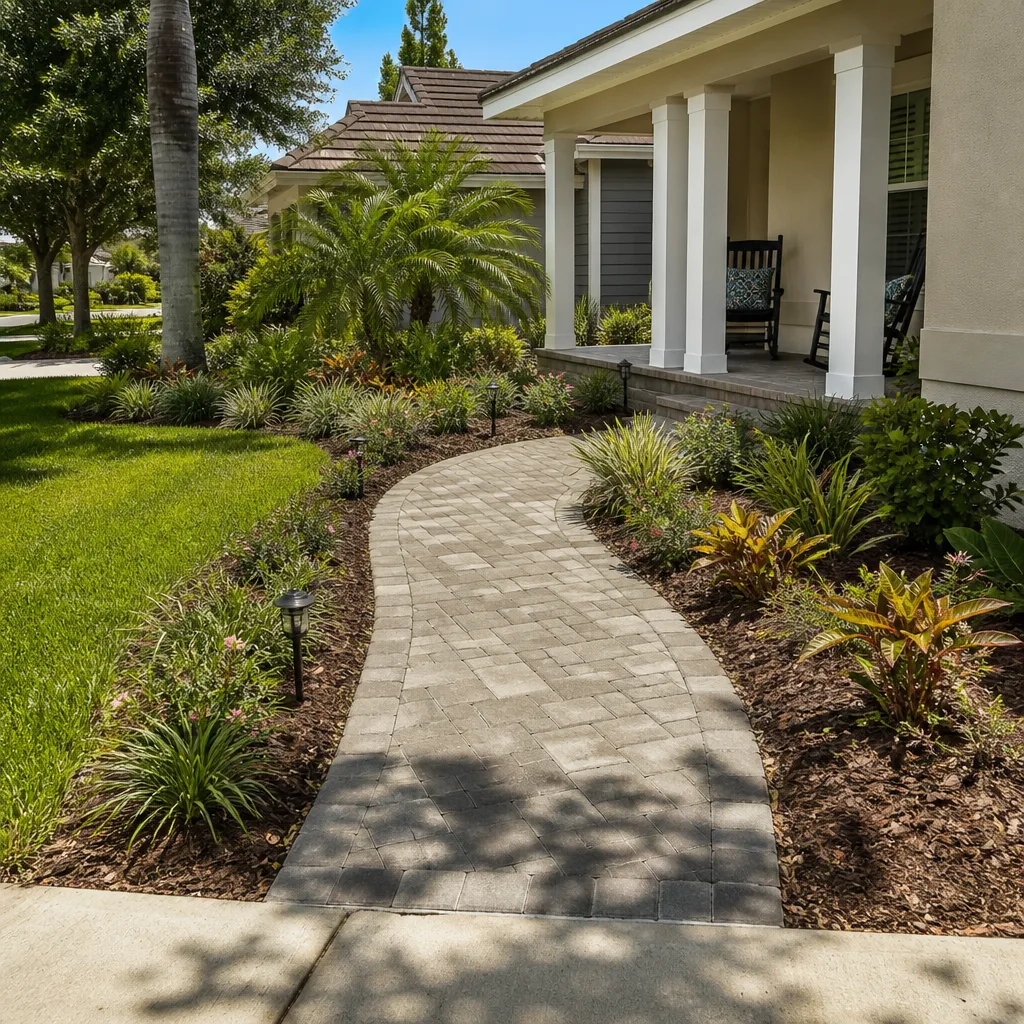
You protect existing pavers from Tuff Shed installation equipment by confirming the paver base is compacted to at least 95% density, laying down plywood or protective mats along the equipment path, and photographing the full paver surface before the crew arrives. If damage does occur, that photo record is the difference between a smooth claim and a dispute.
Here’s the sequence we recommend for any Downey homeowner planning shed installation over or near pavers:
- Walk the path the day before. Note any paver that’s already loose, chipped, or sitting low. Those aren’t the crew’s fault, but they’ll become the argument if you haven’t documented them first.
- Photograph the entire surface in good light. Wide shots and close-ups. Timestamp them. This is your record.
- Ask the dealer in writing how they protect paved surfaces. Some crews use plywood runners over a geotextile layer, some don’t. Get it in the contract or email before install day.
- Confirm who’s responsible for damage. The dealer’s contract should state clearly whether paver damage from equipment is covered and how a claim gets filed.
We pulled a job in Downey last spring where a homeowner’s brand-new Tremron driveway had three cracked units after a shed delivery. No photos, no written protection plan, and the dealer and the paver installer spent six weeks pointing at each other. The pavers were a month old. It was a $400 fix that turned into a $4,000 argument. Protecting the surface costs less than winning the dispute.
What Paver Foundation Works Under and Around a Tuff Shed in Downey?
The right paver foundation under a Tuff Shed in Downey starts with 4 to 6 inches of compacted Class II base over geotextile fabric, topped with a 1-inch bedding layer and interlocking pavers set with a polymeric joint sand. Downey’s expansive clay soil is the reason the base depth matters, not just the paver choice.
Here’s why. Expansive clay swells when it’s wet and shrinks when it dries, and Downey gets both cycles every year. A shallow base over that clay will heave in the wet season and settle in the dry season. Under a shed with a fixed footprint, that movement shows up as cracked slabs, doors that don’t close, and pavers that rock when you walk on them. We’ve seen this repeatedly in the older tracts south of Firestone Boulevard where the clay content runs high.
What actually works under and around a shed in Downey:
- Excavate to depth. 6 inches minimum of base, more if the soil test shows high clay content.
- Use geotextile separation fabric. It keeps the clay from migrating up into the base.
- Compact in lifts. 2-inch lifts, plate compacted, not one thick pour.
- Install edge restraint. A properly set edge keeps the field from spreading, especially at the shed door threshold where foot traffic concentrates.
For pavers themselves, we typically spec Unilock or Techo-Bloc for this application because their units hold dimensional tolerance well and their joint profiles accept polymeric sand cleanly. Cambridge Pavers also works well when the homeowner wants a specific color blend to match an existing walkway.
What Downey Zoning Rules Affect Where Your Shed and Paver Path Can Go?
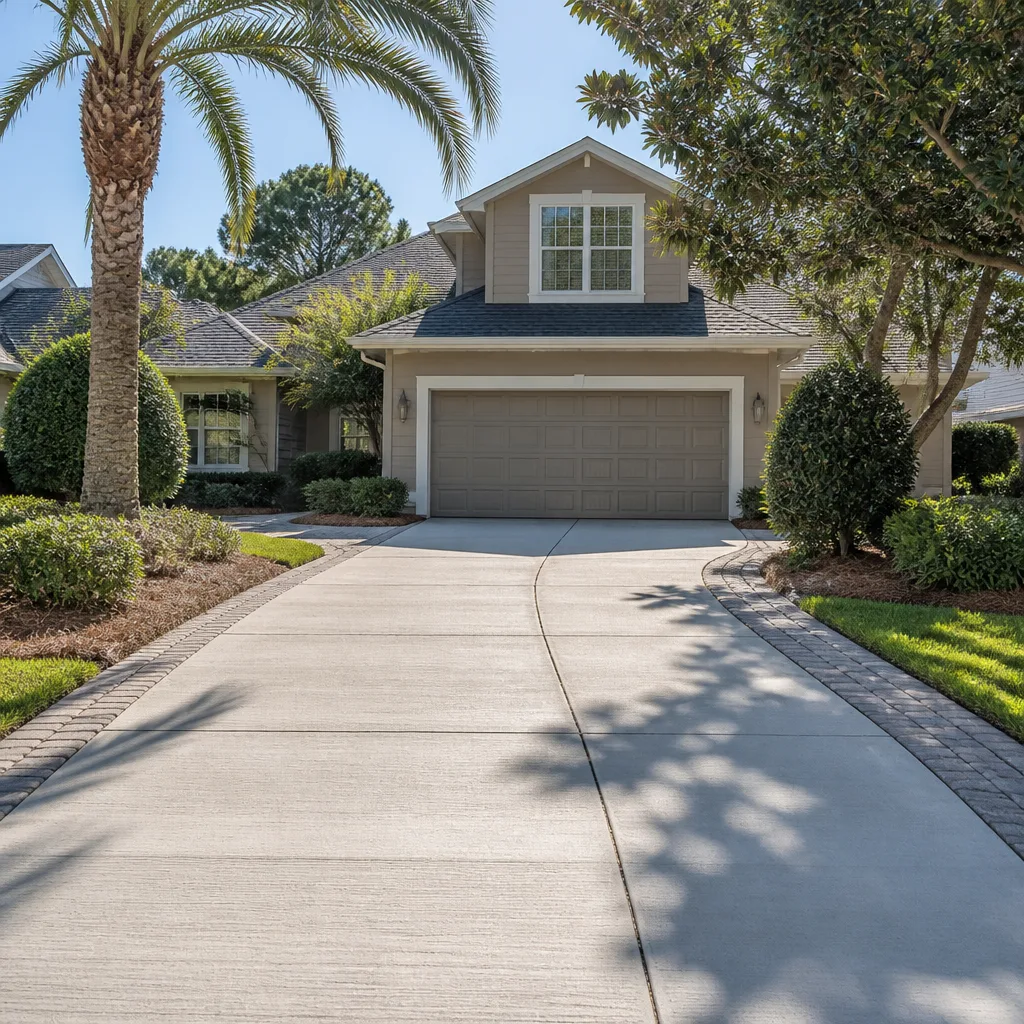
Downey regulates accessory structures through setback requirements and permit thresholds, and those rules determine where your shed can legally sit, which in turn determines where your paver access path has to run. Sheds under a certain square footage may be exempt from a building permit but still have to meet setback and height limits, and those limits vary by zone.
The practical implications for your paver path:
- Setbacks shrink the usable area. If the shed has to sit 3 to 5 feet off the rear and side property lines, your path has to fit in the remaining corridor. That’s often the tightest point on the property.
- Height limits can force a lower profile. A lower shed means different anchoring and different paver base detail at the threshold.
- Permit triggers vary. Call Downey’s Building & Safety Division before you design the layout. They’ll tell you the current thresholds for your zone, and getting that answer in writing saves a redesign later.
- HOA rules layer on top. Many Downey neighborhoods have CC&Rs that limit shed size, color, and placement beyond what the city requires. Read those too.
We’ve had clients plan a full side-yard paver run, then discover the shed had to shift 4 feet because of a setback, which meant re-excavating the whole base. One phone call to the city before design work costs nothing.
Why Combine Shed Installation With a Driveway or Side-Yard Paver Project?
Combining a Tuff Shed installation with a driveway or side-yard paver project saves significant mobilization cost compared to sequencing them separately. When the same crew is already on site with equipment, excavation, and base material staged, adding the shed pad and the access path runs a fraction of what a standalone paver job would cost.
Here’s the math homeowners don’t usually see:
- One mobilization charge instead of two. Equipment delivery and setup alone is often several hundred dollars per visit.
- One excavation pass. The base prep for the driveway and the shed pad happen together, so the digging, hauling, and grading is a single operation.
- One material order. Base rock, sand, and pavers come on one truck. Less waste, less delivery cost, fewer trips.
- One restoration. Grass, irrigation, and landscaping get repaired once instead of twice.
The other benefit is sequencing. When the paver work happens first, the shed crew arrives to a properly compacted, level, protected surface. No ruts, no cracked pavers, no reschedule. We’ve handled this combined approach in Downey a fair number of times, and the finished result is more consistent because there’s a single point of responsibility for the surface the shed sits on. If you’re considering the full scope, our Driveway & Pavers in Downey page walks through base prep and material options in more detail.
When to Call a Pro
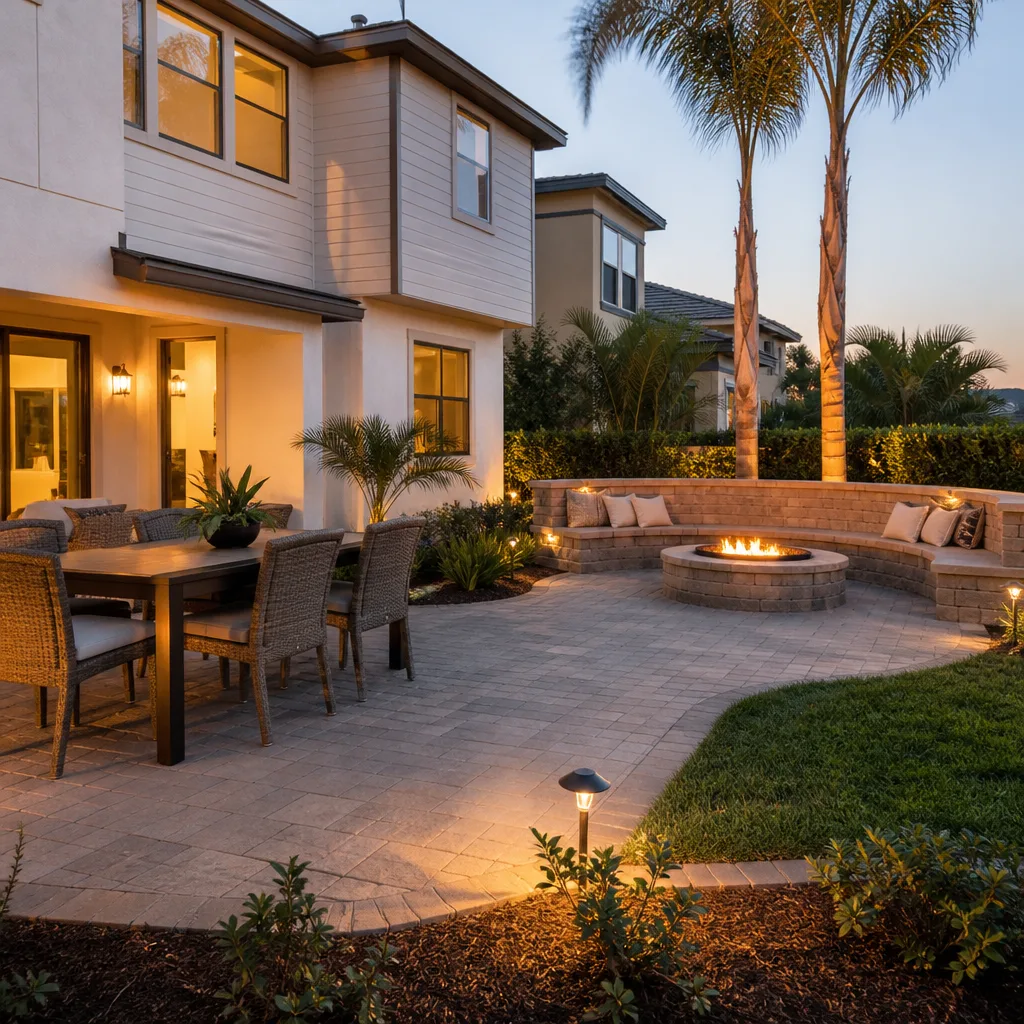
Call a professional when: the access path is tight enough that you’re guessing at dimensions, the base under your pavers is older than 10 years or visibly rutted, the shed will sit within a few feet of the property line, or you want the paver work and the shed placement under one written warranty. Getting the base wrong on Downey clay is the expensive mistake, and it’s not a mistake you fix by adding sand on top.
Related services in Downey: Fence Installation in Downey, and Home Additions & ADU in Downey if the shed is a first step toward a larger accessory structure.
The Bottom Line
The Tuff Shed crew needs a clear path, a firm surface, and enough overhead clearance, and they need it before install day. The three things you control: measuring the path correctly, hiring a paver installer who’ll compact the base to handle equipment weight under Downey’s expansive clay, and documenting the surface condition in photos before anyone shows up. Get those right and the install is a one-day event. Get them wrong and you’re arguing about cracked pavers six weeks later.
If you’re in Downey and need help, Groundwork Construction Co. of Downey offers free estimates – call (888) 255-8179. Our technicians have up to 12 years of experience, all work is covered by our 730-Day Done Right Promise, and calls are answered by a live person 24/7. We currently offer $1,000 off projects over $10,000 and 0% financing for 18 months. Start with the Groundwork Construction Co. of Downey home page for the full scope of what we handle.
Frequently Asked Questions
Plan for at least 8 to 10 feet of clear width and 12 feet of overhead clearance for standard delivery and assembly equipment. Smaller sheds can sometimes use a narrower path with hand-carrying, but that adds labor cost and time. Call (888) 255-8179 if you want us to measure it for you – estimates are free.
Yes. Downey’s expansive clay requires at least 4 to 6 inches of compacted Class II base over geotextile fabric, installed in 2-inch lifts. A shallow base will heave in the wet season and settle in the dry season, which leads to cracked pavers and shed doors that no longer close. Call (888) 255-8179 for a site assessment before you commit to a base depth.
It depends on the shed’s size and your zone. Smaller structures may be exempt from a building permit but still have to meet setback and height limits. Call Downey’s Building & Safety Division for the current thresholds for your address, and check your HOA rules. If you want us to review the layout against those rules before you order pavers, call (888) 255-8179.
They can, if the base isn’t compacted to full density or the crew doesn’t use protective runners over the pavers. Photograph the entire paver surface before install day and confirm in writing how the dealer protects paved surfaces. If damage happens, those photos decide who pays. Call (888) 255-8179 for a free estimate on paver repair or replacement.
Written by the team at Groundwork Construction Co. of Downey.
Need Construction Help?
Call Groundwork Construction Co. of Downey - licensed & insured, here with fast after-hours help in Downey.
(888) 255-8179