Last updated November 17, 2026



Free written scope consultation - allowances, timeline, and change-order rules on paper before a single trade is scheduled
How Long Does Driveway & Pavers Take? Timelines and What to Expect
The “3 – 5 day” timeline your contractor quoted covers about 60% of a real paver installation. The other 40% is the part nobody puts in writing: the permit counter, the material lead time, the subbase you can’t see until the old concrete is gone, and the curing hold after the last stone goes down. We’ve walked Downey homeowners through enough installs to know the honest number usually lands closer to two to three weeks of calendar time, not four working days. This guide breaks down every phase, gives you real day counts, and shows you how to plan your life around the driveway so you’re not parking on the street for a month wondering what went wrong.
Quick Answer
A driveway paver installation in Downey typically takes 3 – 6 working days of on-site labor, but the full project runs 2 – 4 weeks from contract signing to first car parked, once you account for permits, material delivery, and the curing and settling period. Complex jobs with extensive excavation, drainage corrections, or a large square footage can stretch past four weeks. The single biggest wildcard isn’t the crew’s speed, it’s how long the city takes to issue a flatwork permit and how long your chosen pavers take to arrive.
Styles & brands we work with
- Kitchen remodeling
- Bathroom remodeling
- Home additions & ADU
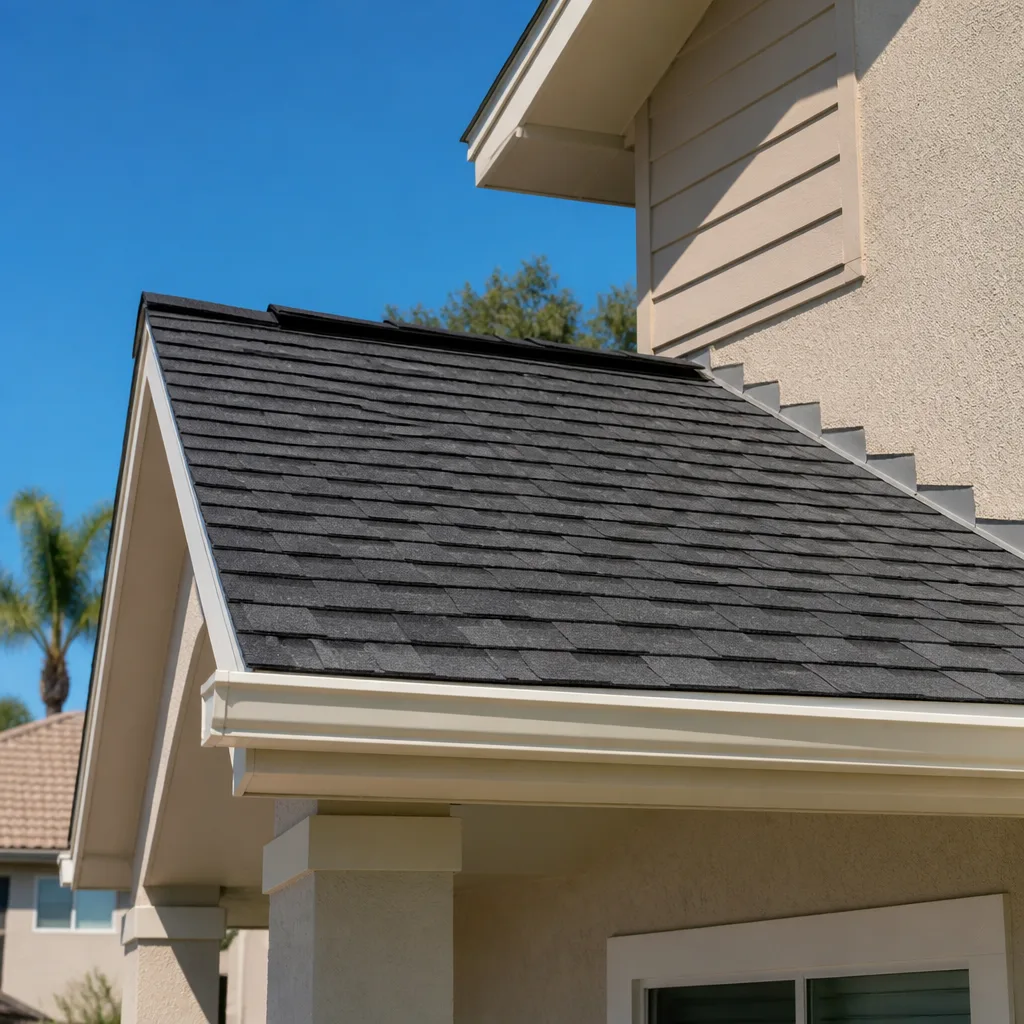
- Roofing
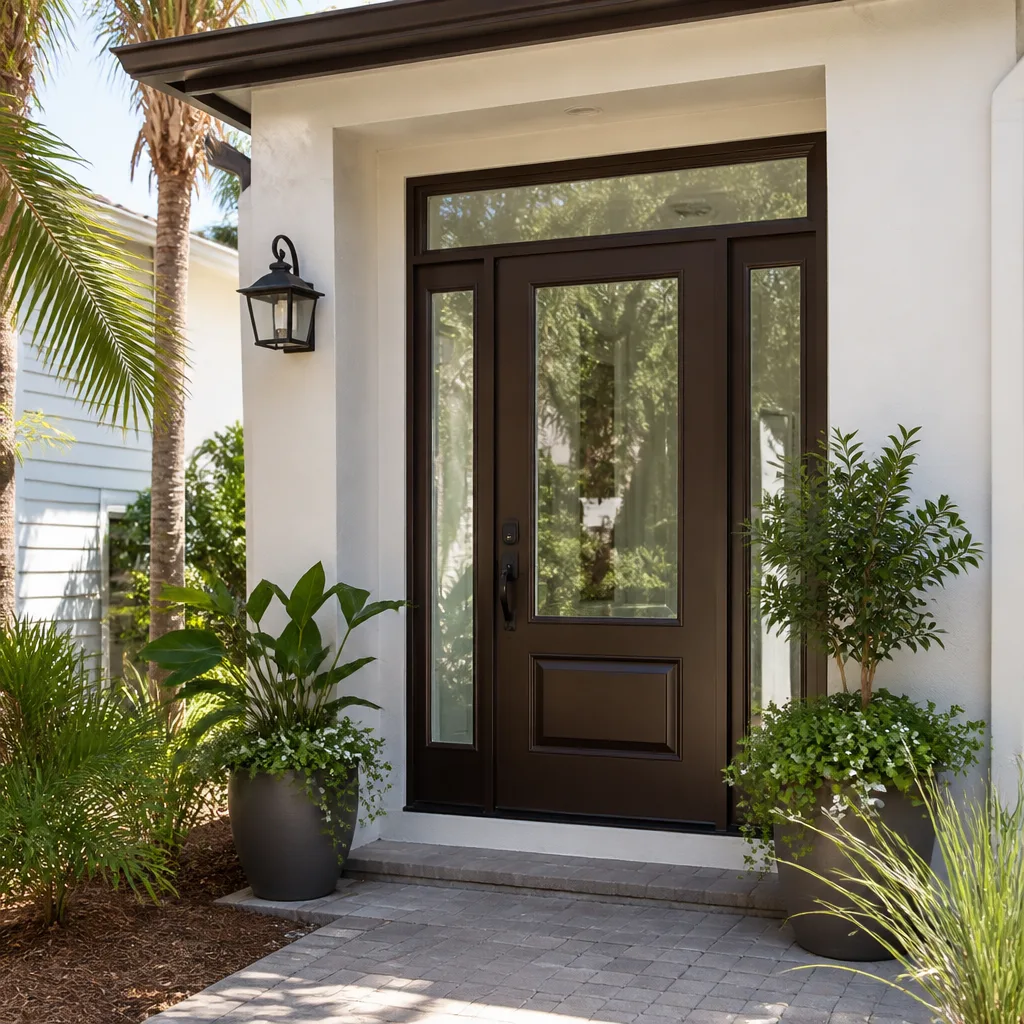
- Windows & doors
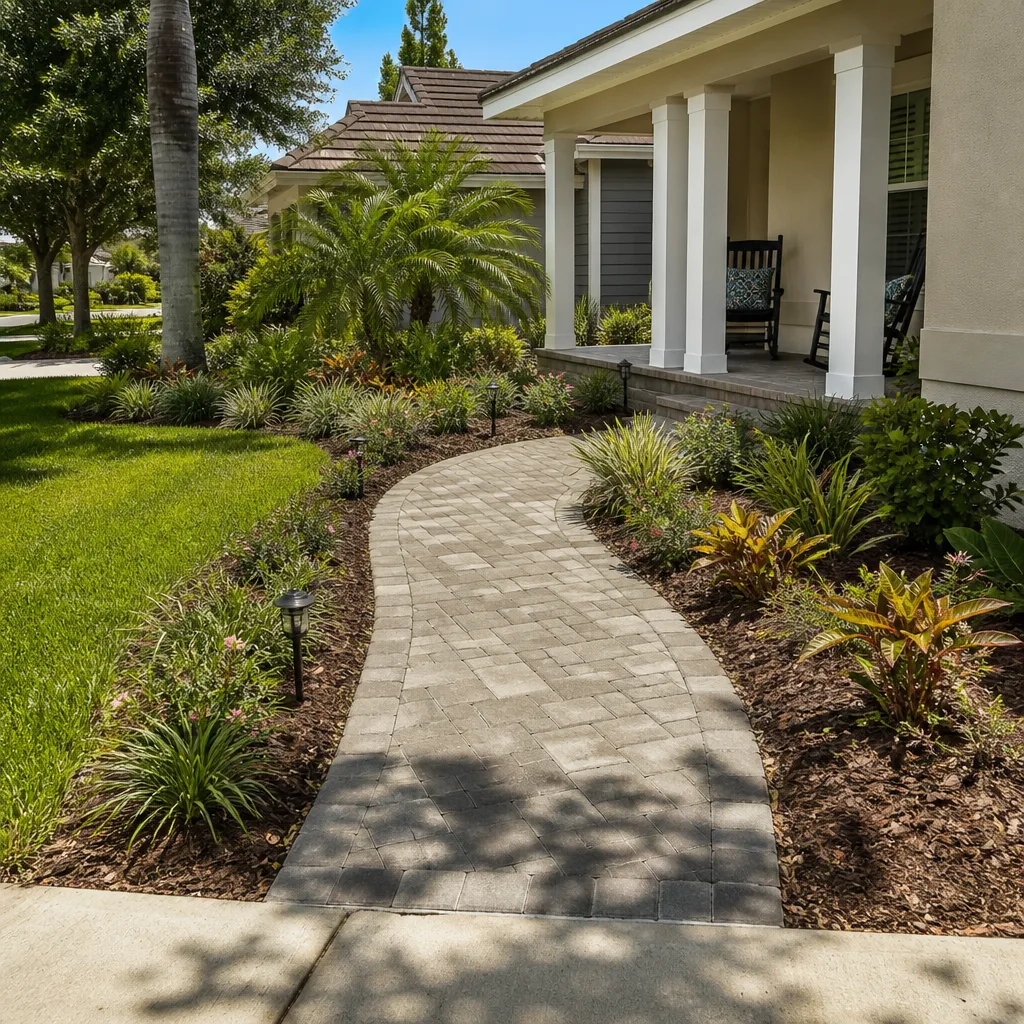
- Driveway & pavers
- Fence
Table of Contents
- The Eight Phases of a Paver Driveway, With Honest Day Counts
- Why Downey Permit Timelines Add 1 – 3 Weeks Before a Shovel Hits the Ground
- The Subbase: Where Timelines Quietly Break
- Weather Windows: Why Downey’s Dry Season Matters for Pavers
- Curing and Settling: When Can You Actually Park on It?
- Red Flags in Contractor Timelines
- How to Plan Around the Project
- When to Call a Professional
The Eight Phases of a Paver Driveway, With Honest Day Counts
Most contractors quote you the middle of this list and skip the rest. Here’s the whole thing, from the first phone call to the moment you pull your car back in. Day counts assume a standard two-car driveway of roughly 600 to 800 square feet, which is typical for a lot in Downey.
- Permit pull and site measure (3 days to 3 weeks). The city reviews your plan, confirms setbacks and drainage, and issues the flatwork permit. This is the phase that eats calendar time while nothing happens at your house.
- Material order and lead time (1 – 2 weeks). Once you pick a paver line and color, the order goes to the supplier. Stock colors move fast; special-order blends or out-of-stock profiles can take longer.
- Demolition and haul-away (1 day). Breaking out old concrete or asphalt and trucking it off. In Downey, old slabs often hide rebar and a thicker concrete base than expected, which adds a few hours.
- Excavation and grading (1 – 2 days). Digging down to the proper depth for base, gravel, and sand. The final elevation and slope away from the garage and street is set here.
- Subbase and compaction (1 – 2 days). Crushed aggregate goes down in lifts, each compacted with a plate or roller. This is where a driveway either lasts twenty years or fails in three, so it should not be rushed.
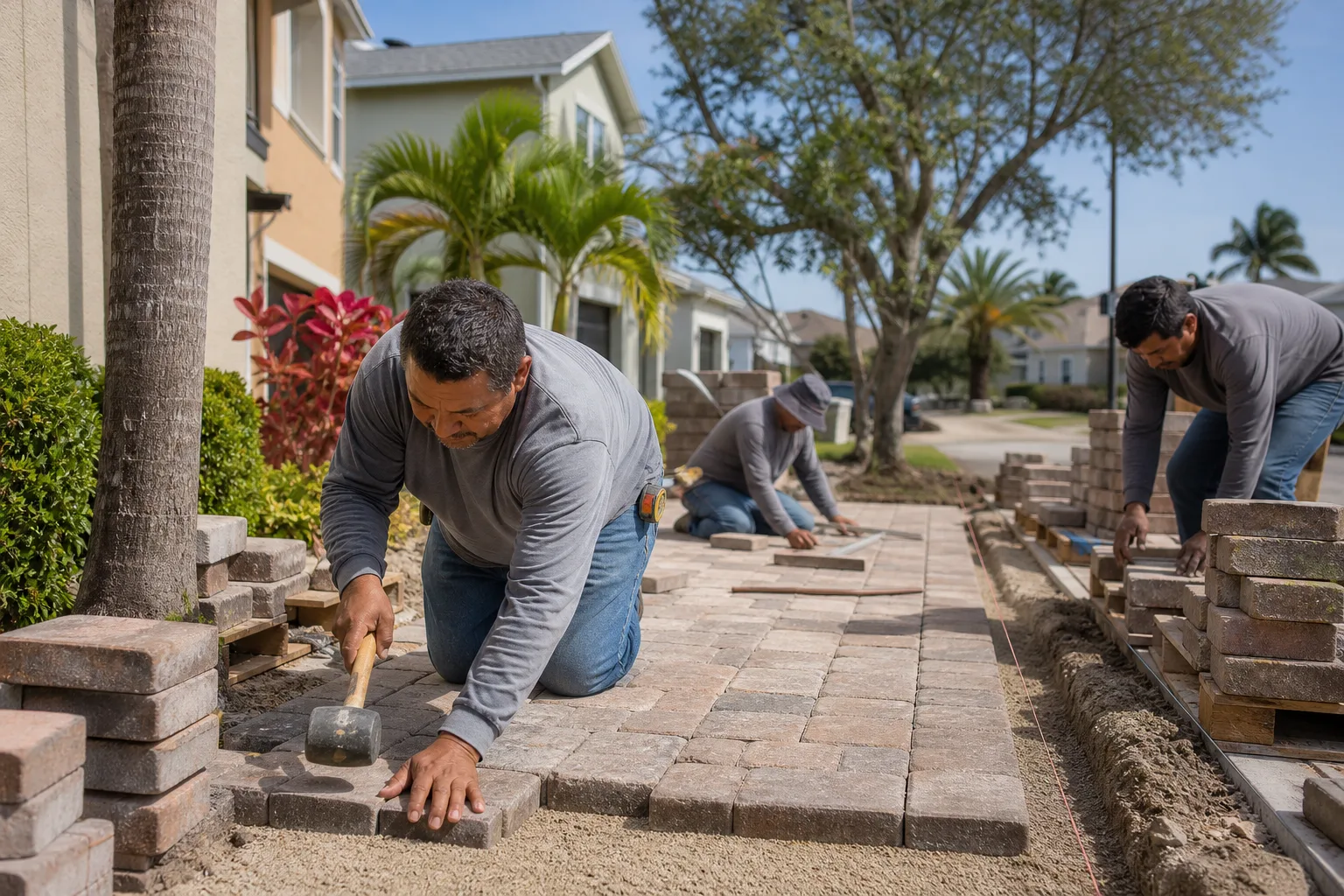
- Sand bed and paver laying (1 – 2 days). Setting the bedding sand, laying the field pattern, cutting edge pieces, and installing restraints along the borders.
- Joint sand and compaction (same day to 1 day). Sweeping polymeric joint sand into the gaps and vibrating the pavers to lock the surface.
- Sealing and cure (2 – 5 days before light traffic). Some pavers are sealed at install; others cure first. Either way, you’re waiting before parking a loaded car on the surface.
Add the working days up and you’re at 6 to 8 days on-site, some of it overlapping. But from contract signature to first parked car, most Downey jobs run somewhere between two and four weeks of calendar time. That gap between labor days and calendar days is the whole story, and it’s why a quote of “five days” can make you feel like your contractor vanished for a fortnight.
Why Downey Permit Timelines Add 1 – 3 Weeks Before a Shovel Hits the Ground
Before anyone breaks a slab, the work should be permitted. In Downey, flatwork that touches your driveway, an apron, or the public right-of-way usually needs a permit from the city’s building division, and sometimes a separate encroachment review if the work extends to the sidewalk or curb cut. Plan reviewers are handling a whole queue of projects, not just yours. In practice, we’ve seen a lot of straightforward residential permits clear in a week or so, and a lot of others get kicked back for something as small as a missing setback dimension, which resets the clock.
Here’s how to keep permit delay from blindsiding you:
- Ask your contractor to submit the permit application the same week you sign, not “sometime next week.”
- Confirm whether your work requires street encroachment review. Driveways near the curb often do.
- Make sure the plan shows drainage direction and elevations so it clears first review.
- Never let a crew start grading while the permit is pending – you can get a stop-work order and start over.
This is the phase most people don’t factor in, and it’s why a good contractor builds it into the schedule up front rather than pretending it doesn’t exist. On larger driveways or sites with grading challenges, the review can run longer. Planning around a two to three week permit window is more realistic than assuming Monday means demolition.
The Subbase: Where Timelines Quietly Break
Every timeline quoted before demolition is a guess. The real schedule gets set once the old surface is gone and everyone sees what’s underneath. In Downey, we regularly find one of a few things hiding below the driveway: old concrete poured directly on soil with no aggregate base, tree roots from a parkway ficus reaching under the slab, or soil that stays damp from poor drainage and needs to be removed and reworked before any base goes down. Any of those can add a day or two you didn’t budget for.
This isn’t the contractor padding the job. A paver driveway only works if the base beneath it is compacted and stable. Skip the fix and save two days now, and you’ll be lifting sunken pavers and re-leveling within a few years. When we quote timelines, we’re honest that base work is where the estimate flexes: a standard soil profile costs one set of days, a soft or root-filled subgrade costs more, and nobody can promise which one you’ve got until the slab is out. Still, a straight base is the reason a paver driveway outlasts poured concrete by a comfortable margin, and it’s the piece of the project that gets buried and forgotten the moment the pavers go down. That base is doing all the work for the next two decades.
Weather Windows: Why Downey’s Dry Season Matters for Pavers
Downey runs on a dry, warm climate most of the year, with the rainy season landing roughly between November and March. For paver installation, that’s actually good news, because pavers and base don’t like working in wet conditions. Dry aggregate won’t compact properly under a soaked subgrade, and joint sand washes out if a storm hits before the surface is locked. Laying pavers in a proper weather window protects the outcome, not just the schedule.
What this means for you:
- Spring and summer installations (roughly April through October) give you the most backup days. If a compaction step needs to wait, weather usually cooperates.
- In a wet winter, one rain event can push a job back a few days while the base dries out.
- Humidity and cool nights slow sealant cure, which stretches the “no parking” phase at the end.
- Booking a paver project in the dry stretch of the Downey calendar lets the sealant cure fully before the first rain.
This is one reason the “3 – 5 days” quote can quietly turn into three weeks in a winter install. It’s the same job, just fighting the sky. A contractor who talks about weather windows before you sign is telling you something useful about how they run jobs.
Curing and Settling: When Can You Actually Park on It?
Everyone asks when they can park on the new driveway, and the honest answer is: it depends on the sealant. Freshly laid pavers with polymeric joint sand are usually stable for foot traffic the same day. Vehicle traffic comes later, and the safe range for a fully loaded car is generally 24 to 72 hours after the jointing and compaction are complete. If a sealant coat goes on top, add another day or two depending on the product and the weather.
Here’s the typical sequence for parking after a Downey install:
- Foot traffic: the same evening, once the joint sand is set.
- Light vehicles and motorcycles: often within 24 hours.
- Full-size cars, SUVs, and trucks: usually 48 to 72 hours, longer if it was sealed in humid weather.
- Heavy loads (RV, trailer, dumpster): wait until the surface has fully settled, which can run a week or more.
There’s also a settling period over the first season. Even a well-built base will show tiny shifts as the pavers interlock under traffic. That’s normal, and it’s why a walkthrough a couple weeks after install matters. It’s the moment any small low spot gets corrected before you settle into the surface for the long haul.
Red Flags in Contractor Timelines
An unrealistically short quote tells you what’s being skipped before anyone picks up a shovel. If a contractor promises a full paver driveway in “two or three days, no permit needed,” you’ve learned more about their standards than any five-star review will tell you. Here’s what to watch for when you compare timelines:
- “No permit required.” For flatwork that meets Downey’s criteria, it usually is. A contractor who shrugs off permits is trading your liability for their convenience.
- “We’ll start tomorrow.” A real schedule has a permit and material lead time in it. Starting tomorrow usually means cutting corners or working without approval.
- A quote with no line items. Upfront pricing means you see each phase, its days, and its cost. A single all-in number with no breakdown is a red flag.
- No base depth specified. Ask how deep the subbase will be. If they can’t answer, you can’t trust the timeline either.
- “Sealing isn’t necessary.” Some pavers are self-sealing, but a contractor who waves off jointing and sealing altogether is skipping a step that protects the investment.
- A warranty measured in months. A driveway should be backed in writing for years, not weeks.
Timeline honesty is a preview of workmanship honesty. If the schedule is padded with wishful thinking, the driveway probably will be too. Ask tough questions before you sign, not after the crew is gone. And if a quote sounds too quick, it probably is.
How to Plan Around the Project
You can’t shorten the permit or cure windows, but you can make the whole experience bearable. Start by setting the schedule around the calendar, not around your wish list. Book the project for the dry season if you can. Factor in a realistic two to four week range, and let the contractor give you the firm dates once the permit clears and the pavers are on a delivery truck.
Practical moves that pay off:
- Clear the driveway and garage of anything that would block demolition the night before.
- Have an alternate parking plan. A permit from Downey lets you park on the street; know the rules on your block before you need them.
- Schedule around any family events or deliveries that need the driveway free.
- Ask for a written timeline with phases and dates so you’re not guessing by text message.
- Verify the base depth and materials before the crew arrives so there are no Monday-morning surprises.
Get those pieces lined up, and a paver driveway stops feeling like a month of disruption. It becomes a project with a plot: permit, demolition, base, pavers, seal, wait, park. If your plans touch other areas of the property, you can line up a fence installation in Downey in the same season, or talk through home additions & ADU in Downey so flatwork and foundations coordinate cleanly with the rest of the site.
Common Mistakes to Avoid
- Booking around a “3 – 5 day” number and nothing else. That number covers demolition through laying, not permits or cure. Plan your life around the calendar window, not the labor days.
- Starting work before the permit is in hand. In Downey, a flatwork permit that touches the public right-of-way isn’t optional. Skipping it exposes you to stop-work orders and fines.
- Skipping the subbase to save time. A paver surface is only as good as the compacted aggregate beneath it. Rushing the base saves a day today and costs a redo later.
- Laying pavers into a rain forecast. Wet aggregate won’t compact, and wet joint sand washes out. Wait for the dry stretch even if it slips the schedule.
- Parking a truck on day one. Full vehicle load belongs 48 to 72 hours after the jointing and compaction settle. Respect the cure window.
- Going with a quote that has no base depth, no line items, no warranty. Those three details tell you whether the timeline and the work are real.
- Ignoring settlement over the first season. Pavers settle slightly under traffic. A two-week walkthrough catches any low spots before they become a problem.
See the difference
 Before
 After
 Before
 After
 Before
 After
When to Call a Professional
Paver driveways are heavy work, and some of it is genuinely hazardous: breaking out concrete, running a plate compactor, cutting stone with a saw, and setting grades so water drains away from the house. If your driveway needs excavation, a new base, or drainage correction, that’s not a weekend job with a rented compactor. Call a professional when the slope runs toward your garage, when you’re replacing an old slab with unknown subgrade, or when the square footage is large enough that a mistake is expensive. Groundwork Construction Co. of Downey offers free estimates in Downey, and we’ll give you a written, line-item timeline and price so you know what each phase actually costs and how long it takes. Every job is backed by the 730-Day Done Right Promise, and your call is answered by a live person 24/7, no voicemail. Call (888) 255-8179 to schedule your free estimate. Visit our Groundwork Construction Co. of Downey home or the Driveway & Pavers in Downey page to see how the whole project fits together.
Frequently Asked Questions
Plan on 3 – 6 working days of on-site labor and 2 – 4 weeks of total calendar time when permits, material lead time, and curing are included. The on-site work itself moves quickly, but the permit pull and curing phase are the slow parts. Call (888) 255-8179 for an exact timeline for your driveway; estimates are free.
Usually yes, especially if the work touches the apron, sidewalk, or curb cut and the public right-of-way. The city building division reviews flatwork plans and may also require encroachment review near the street. A contractor who tells you permits aren’t needed is telling you they plan to skip steps. Call us to sort out the permit path before work begins.
No. Foot traffic is usually fine the evening the job finishes, but a loaded car should wait 24 to 72 hours after the final jointing and compaction, and longer for anything heavy like an RV. If a sealant was applied, add a day or two depending on the weather.
Two things: hidden subgrade problems and unexpected drainage work. Old concrete poured on bare soil, root intrusion, or damp soil under an old slab can add a day or two of excavation and rework. Drainage corrections near a garage or lot line can add more. Ask for a line-item quote that lists the base depth and drainage scope so there are no surprises once the old surface comes up.
Dry, warm weather from roughly April through October gives the most backup time, while rain between November and March can pause a job while the base dries. Laying pavers and joint sand in wet conditions leads to washout and compaction problems. Book the dry stretch when you can, and the cure window goes a lot smoother.
It usually skips the permit pull, material lead time, and the post-install cure window. Those are the phases that stretch a five-day job into a two-to-three-week project. A realistic quote separates labor days from calendar days and outlines each phase in writing. Call (888) 255-8179 for a timeline that includes all of it.
The Bottom Line
A paver driveway is a two-to-four-week project even though the crew is only on site for a handful of days. The permit, the material order, the base work, and the curing window are the parts that make the timeline honest. When you plan around the whole calendar instead of the on-site number, you stop feeling blindsided and start seeing the project move in the right order: permit, demolition, base, pavers, seal, wait, park. And when you choose a contractor who’s upfront about all of it, you get “built to last, backed in writing” without the guesswork. Call (888) 255-8179 for your free estimate.
Written by the team at Groundwork Construction Co. of Downey.