Last updated November 17, 2026
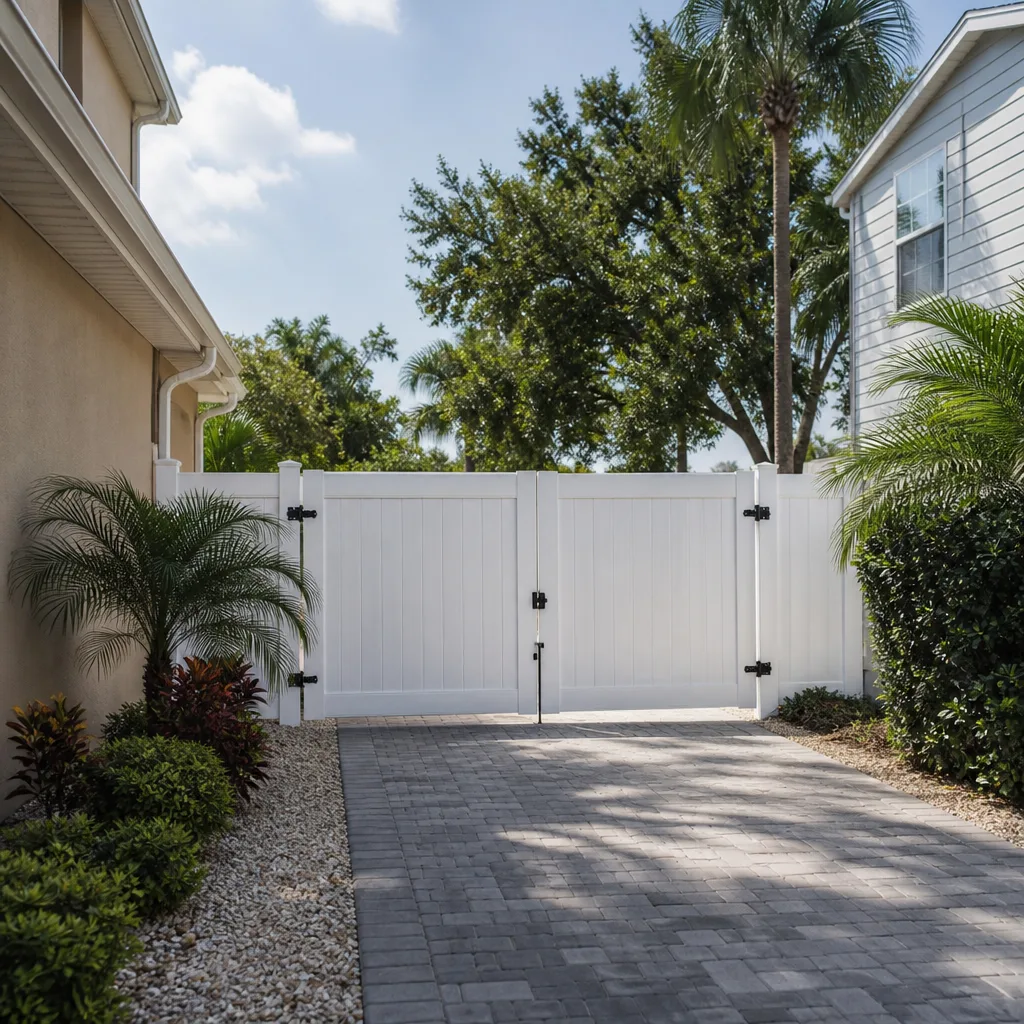
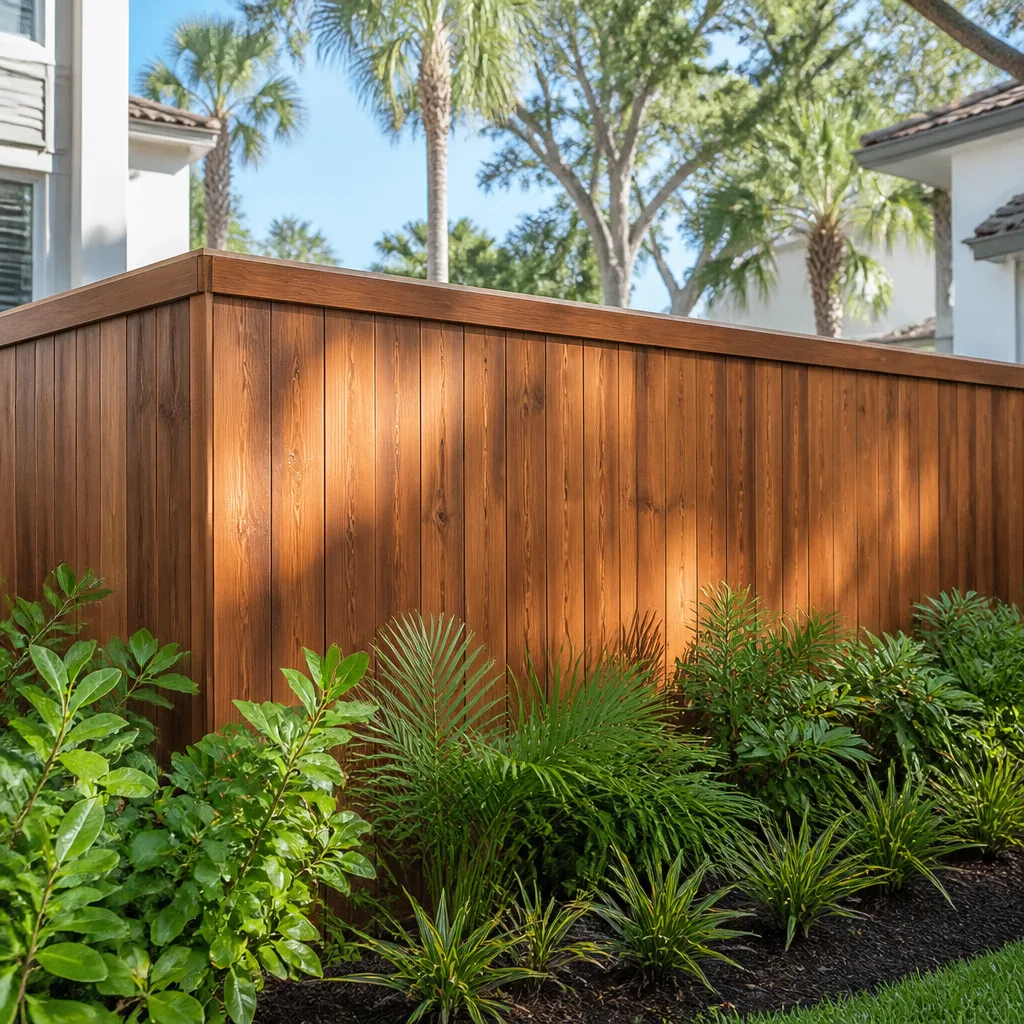
Free written scope consultation - allowances, timeline, and change-order rules on paper before a single trade is scheduled
How Long Does Fence Installation Take? Timelines and What to Expect
A 150-foot wood fence can go up in two days. The two weeks before that are where most projects fall apart. In Downey, we’ve watched homeowners wait on a permit they didn’t know they needed, then lose another ten days to a utility crew that had to be scheduled before anyone could dig. The fence was never the hard part. This guide maps the real timeline, phase by phase, including the prep work most contractors skip over in the estimate. You’ll learn what actually drives the calendar, how soil in Downey’s clay-heavy lots changes cure time, and how to hold any crew to a schedule you can check week by week.
Quick Answer
Most residential fence installation takes 1 to 3 days of actual building once materials are on site and the ground is ready. The full project, from signed contract to finished fence, usually runs 2 to 6 weeks in Downey, with utility marking and permit approval eating most of that time. Wood and chain link move fastest; vinyl and wrought iron add material lead time, sometimes another 2 to 4 weeks.
Styles & brands we work with
- Kitchen remodeling
- Bathroom remodeling
- Home additions & ADU
- Roofing
- Windows & doors
- Driveway & pavers
- Fence
Table of Contents
- The Real Timeline: What Happens Before the First Post
- Utility Marking (DigAlert) and Why It Sets the Clock
- Permits: Do You Need One, and How Long Do They Take?
- Material Lead Times by Fence Type
- Ground Prep and Downey’s Clay Soil Problem
- How Material Choice Changes the Installation Window
- Legitimate Delays vs. a Contractor Stalling
- Your Week-by-Week Project Tracker
The Real Timeline: What Happens Before the First Post
Homeowners think the clock starts when the crew shows up. It doesn’t. Here’s the sequence we work through on every fence job in Downey, and roughly how long each phase runs once the contract is signed.
- Utility marking (DigAlert): 2 to 3 business days after the request is filed. No digging until it’s done.
- Permit review (if required): 1 to 3 weeks at the city counter, depending on the scope and whether the fence touches a corner or a setback.
- Material order and delivery: same week for chain link, 1 to 2 weeks for standard wood, 2 to 4 weeks for vinyl and ornamental metal.
- Demolition and haul-off: 1 day for most residential runs.
- Post-setting: 1 day to dig and set, then 24 to 48 hours of cure before framing.
- Installation: 1 to 3 days for boards, panels, or steel panels.
Add it up and a simple wood privacy fence lands at roughly 2 to 4 weeks. A vinyl or wrought iron fence with a permit can push past 6 weeks. The building itself is almost never the bottleneck. The prep is. Any contractor who quotes you a finish date without walking you through these phases is guessing.
Utility Marking (DigAlert) and Why It Sets the Clock
Every post hole is a potential strike on a gas line, water lateral, or buried electrical conduit, and in Downey’s older residential blocks, those lines are often shallower and less documented than anyone would like. That’s why California requires you to notify the regional 811 service before you dig. In our area, that’s DigAlert. It’s free, and it’s mandatory.
Here’s how it works in practice:
- You or your contractor files a ticket at least 2 business days before digging. File too early and it expires; file too late and the job slides.
- Utility operators mark their lines with paint and flags within that window. Gas, water, electric, sewer, and telecom each mark separately.
- Every mark gets photographed and logged before a shovel touches the ground.
The kicker: if a marking crew is backed up, or if a mark lands in a spot that conflicts with your fence line, you wait. We’ve seen a single unmapped irrigation sleeve in a post hole outside a Downey backyard send a job back two days. Factor 2 to 5 business days into your calendar for marking and any re-marks. If a contractor says they’ll “just hand-dig and be careful,” that’s not caution, that’s a liability sitting in the soil.
Permits: Do You Need One, and How Long Do They Take?
This is the question that most surprises Downey homeowners. In most cases, a standard residential fence up to 6 feet tall along a side or rear property line does not require a building permit. But several conditions change that, and they come up constantly in this city.
You’ll likely need a permit or additional review when:
- The fence runs along a street-facing front yard (height and visibility rules apply).
- You’re on a corner lot, where sight-line rules at the intersection matter.
- You border a slope, retaining wall, or shared drainage easement.
- You want a fence taller than 6 feet (up to 7 feet is possible in some zones with approval).
- The property sits in or near a historic or specific plan area.
Approval timelines run 1 to 3 weeks for a straightforward review and up to 4 to 6 weeks if the plan gets bounced for a setback or height issue. A contractor who knows Downey will tell you upfront whether your lot triggers any of these, and will pull the permit themselves. If they ask you to handle it, that’s a warning sign about who’s carrying the risk.
Material Lead Times by Fence Type
The fence you want doesn’t always exist in a warehouse the week you order it. Lead time is real, and it varies wildly by material. Here’s what we see for residential orders in the Downey area.
- Chain link: Typically in stock. 2 to 5 business days from order to delivery, sometimes same-week. The fastest fence to build.
- Standard wood (dog-ear, cedar, treated pine): 1 to 2 weeks for common panels and rails, longer for custom heights or stained finishes. Most Downey yards carry common stock.
- Vinyl: 2 to 3 weeks for standard privacy styles, 3 to 4 weeks for custom colors and heights, since panels are often manufactured to order.
- Wrought iron and ornamental steel: 3 to 5 weeks if custom fabricated, 1 to 2 weeks for standard prefab sections.
- Composite and hybrid panels: 2 to 3 weeks, with occasional backorders on premium lines.
We mention brand partners where they matter because material consistency is part of why fences last. For gate hardware and finish components, a name like Therma-Tru or Mr-Glass signals the kind of supplier relationships that keep a delivery date honest. The lesson for planning: pick the material before you pick the install date, not after.
Ground Prep and Downey’s Clay Soil Problem
Here’s where Downey’s geography gets specific. Much of the city sits on heavy clay soils that hold water, expand when wet, and shift when they dry. That matters for exactly one thing in fence installation: how long posts need to cure before you can load them with a 6-foot panel and the wind that catches it.
Post-set in our climate runs like this:
- Dig the hole to a depth below the clay layer when possible, wider at the base than the top.
- Set the post with concrete (not just soil backfill) and check plumb while it cures.
- Cure for a minimum of 24 to 48 hours, longer if the ground was saturated from a rainy stretch or if the soil drains poorly.
- Backfill and compact around each post before framing the panels.
Rushing that cure is the single most common cause of a fence that leans two summers later. In clay-heavy lots, water pools around the post base after the first wet season, and a post that was framed the same day it was set never had a chance to lock in. We tell homeowners in Downey neighborhoods like those near Rancho Los Amigos to expect an extra day of cure time during a wet winter, and to ask any contractor how long they leave posts before framing. If the answer is “same day,” ask them to explain their method.
How Material Choice Changes the Installation Window
Two fences of the same length can differ by days on the calendar, and material is the reason. Here’s how the build time breaks down once ground is ready.
- Chain link: 1 day for most residential runs under 200 feet. Posts, rails, and mesh go up fast; the constraint is tension, not time.
- Wood: 2 to 3 days for 150 feet. Setting posts is one day, framing is one, boards and final trim are another. More cutting, more adjustment, more time for stain or paint to dry.
- Vinyl: 1 to 2 days for standard panel systems, since sections arrive pre-assembled. Custom panel spacing adds a day.
- Wrought iron: 2 to 3 days. Heavier sections need more hands and careful leveling, and any field-welded gates add a day.
The longer effort on wood and iron isn’t inefficiency. It’s finishing quality. A chain link job is mostly tension and hardware; a wood privacy fence is dozens of cuts and a gate that has to swing true. When you budget time, match the material to the calendar you actually have. And when material choice runs into things like gate hardware and matching entry pieces, professional-grade lines such as ViewLux or ECO Window Systems tend to hold up better than whatever the yard has on the shelf. We’d rather point you to a supplier who can deliver the right spec than swap in what’s available and hope.
Legitimate Delays vs. a Contractor Stalling
Not every slip is a problem. Some delays are real and outside anyone’s control. Others are scheduling failures dressed up as bad luck. Knowing the difference keeps you informed instead of anxious.
Legitimate delays:
- Utility marking reveals a line that conflicts with the fence line and needs a re-route.
- The city asks for a plan revision on a corner-lot sight-line issue.
- Material arrives damaged or short, and the yard needs to reship.
- A sustained rain stretch delays post-setting or cure time.
Warning signs:
- The start date keeps shifting without a reason you can verify.
- The crew disappears mid-build to start another job.
- You’re told “next week” for three weeks.
- Nobody filed a DigAlert ticket or ordered material before the supposed start date.
The fix is documentation. A reputable contractor gives you a written schedule with named phases and a person who owns each one. That’s how we run jobs, and it’s how you tell the difference between a project moving through real steps and a contractor who never planned them.
Your Week-by-Week Project Tracker
Use this as a checklist you can hold any contractor to. A credible crew should be able to name their position on it at any point.
| Week | What Should Be Happening | What You Verify |
|---|---|---|
| Week 1 | Contract signed, DigAlert ticket filed, permit submitted if needed | Copy of the 811 ticket, permit receipt |
| Week 1-2 | Utility markings complete, material ordered | Marking photos, order confirmation with delivery date |
| Week 2-3 | Permit approval (or confirmed exemption), delivery window | Approved plan or written exemption, delivery scheduled |
| Week 3 | Old fence removed, posts dug and set | Posts plumb, concrete used, cure clock started |
| Week 4 | Posts cured, framing and panels/boards installed | Cure time logged, panels level and even |
| Week 4-5 | Gate hung, hardware set, final cleanup, walkthrough | Gate swings true, site clear, 730-Day Done Right Promise documented |
For a fence with no permit and stock material, you can compress this to roughly 10 to 14 days total. With a permit and a custom material, plan on 4 to 6 weeks. Any responsible contractor will tell you which end of that range your job falls on and why.
Common Mistakes to Avoid
- Skipping DigAlert to save a few days. A strike on a gas or water line costs far more time and money than the two-day wait. It’s also the law in California.
- Ordering material before the permit clears. Many suppliers charge restocking fees if a city setback issue forces a redesign. Get approval first, then order.
- Framing panels the same day posts are set. In Downey’s clay soil, that shortcut is the leading cause of leaning fences two summers later. Ask for the cure time.
- Assuming a corner lot is the same as a standard lot. Sight-line rules at Downey intersections add review steps. Mention your lot type when you get an estimate.
- Choosing a material based on the showroom, not the calendar. Custom vinyl and wrought iron look great and add weeks. Match the material to the schedule you actually have.
- Accepting a verbal start date with no written schedule. If it isn’t on paper, it isn’t a commitment. Ask for named phases and a point of contact.
- Paying a large deposit before any prep is logged. A legitimate crew files the utility ticket and orders material early. A prepayment without visible prep is a red flag.
See the difference
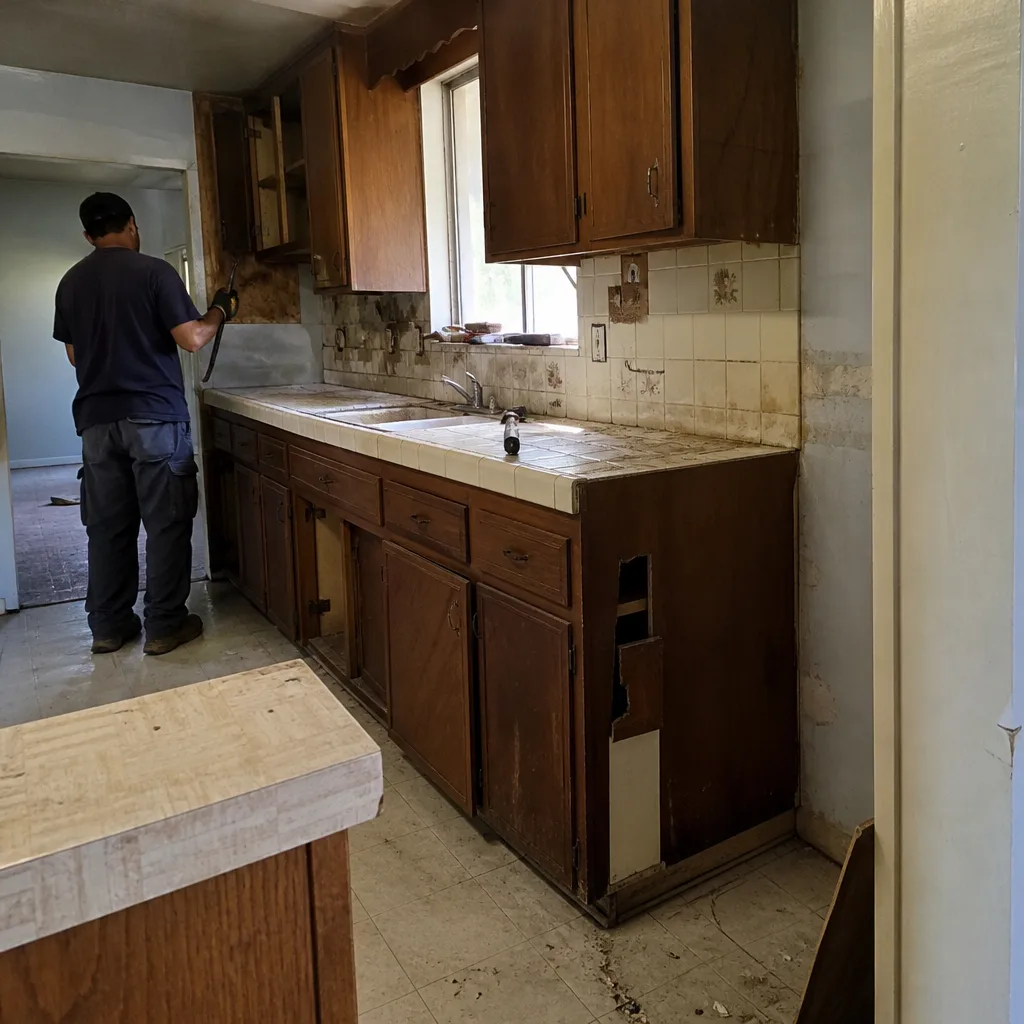 Before
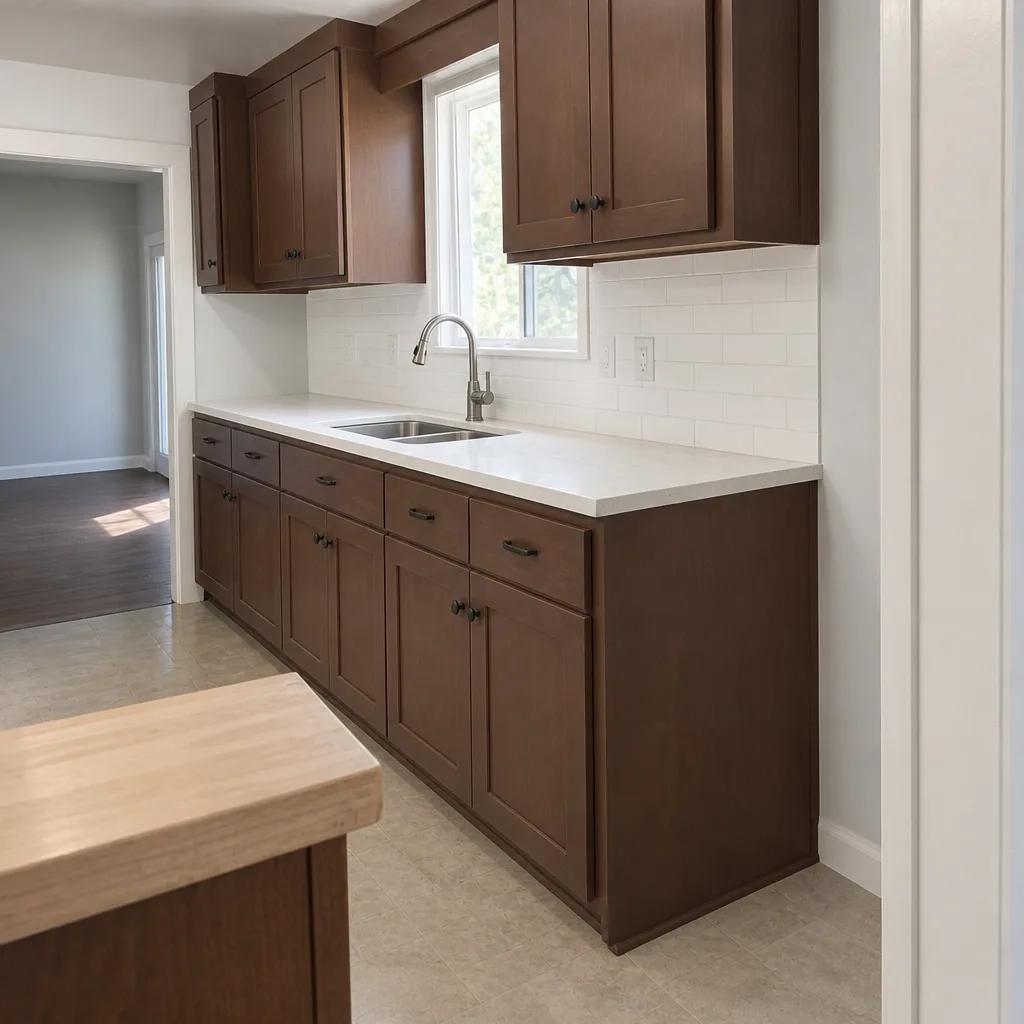 After
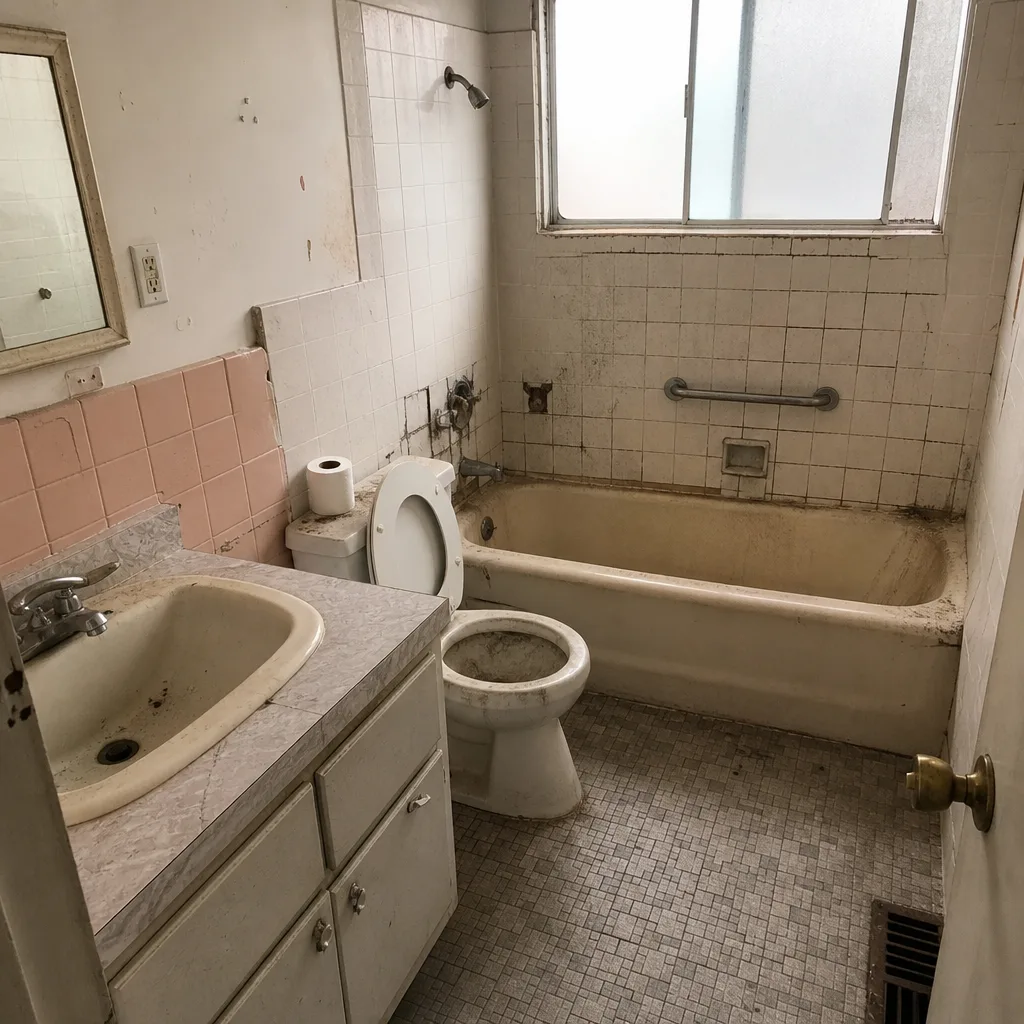 Before
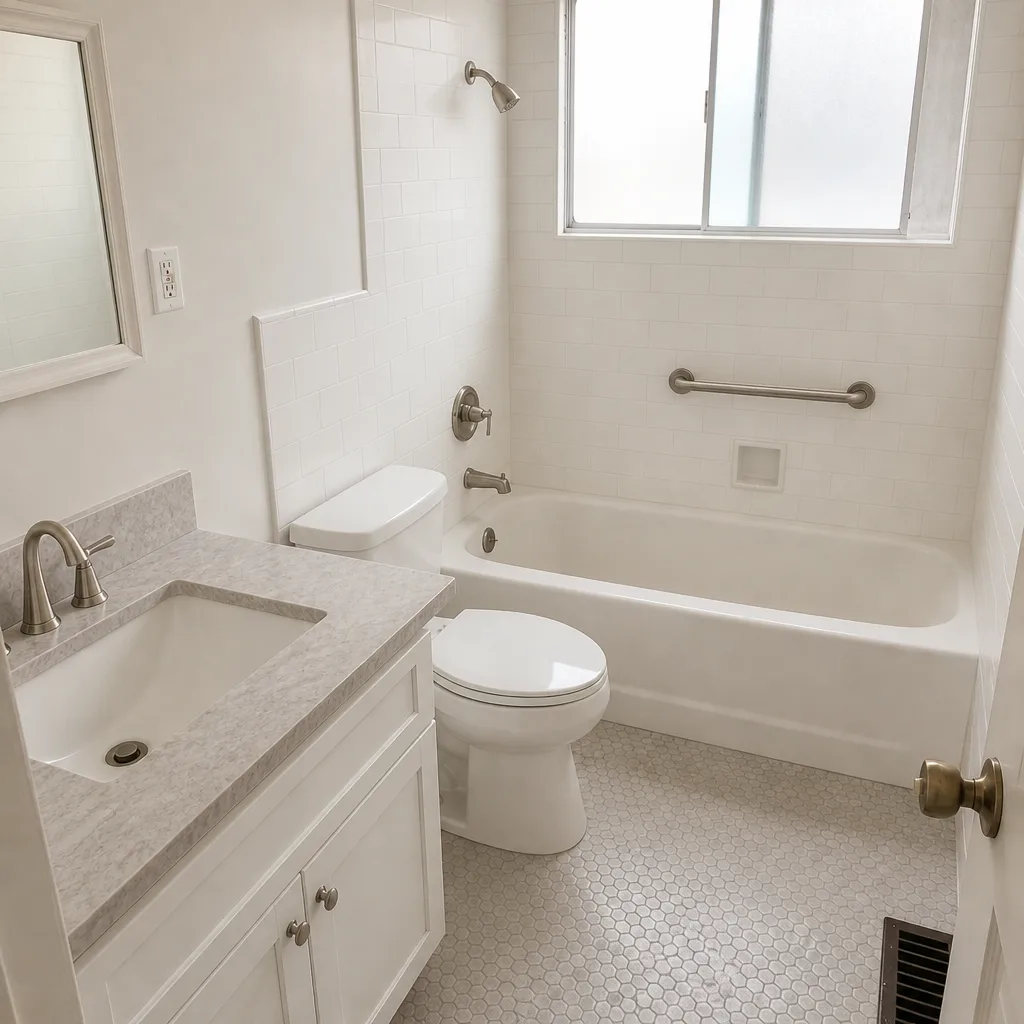 After
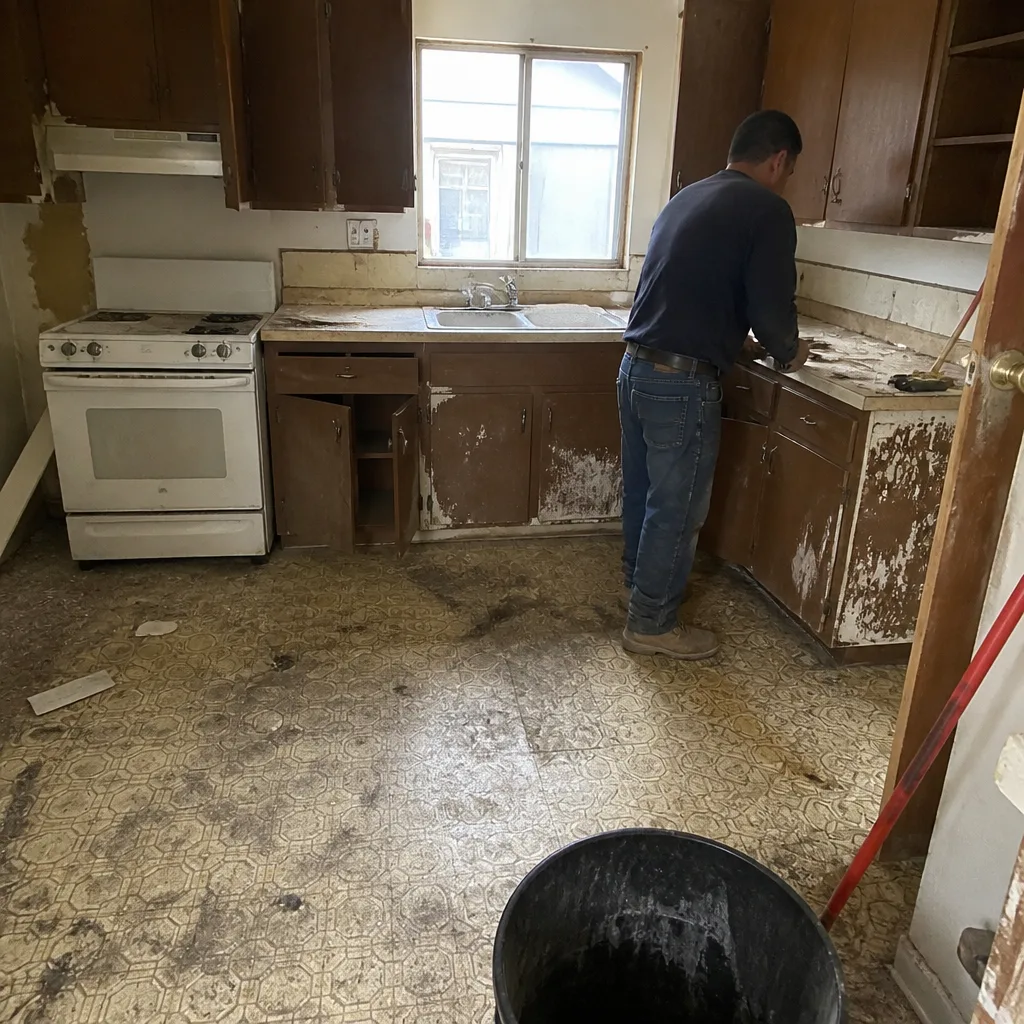 Before
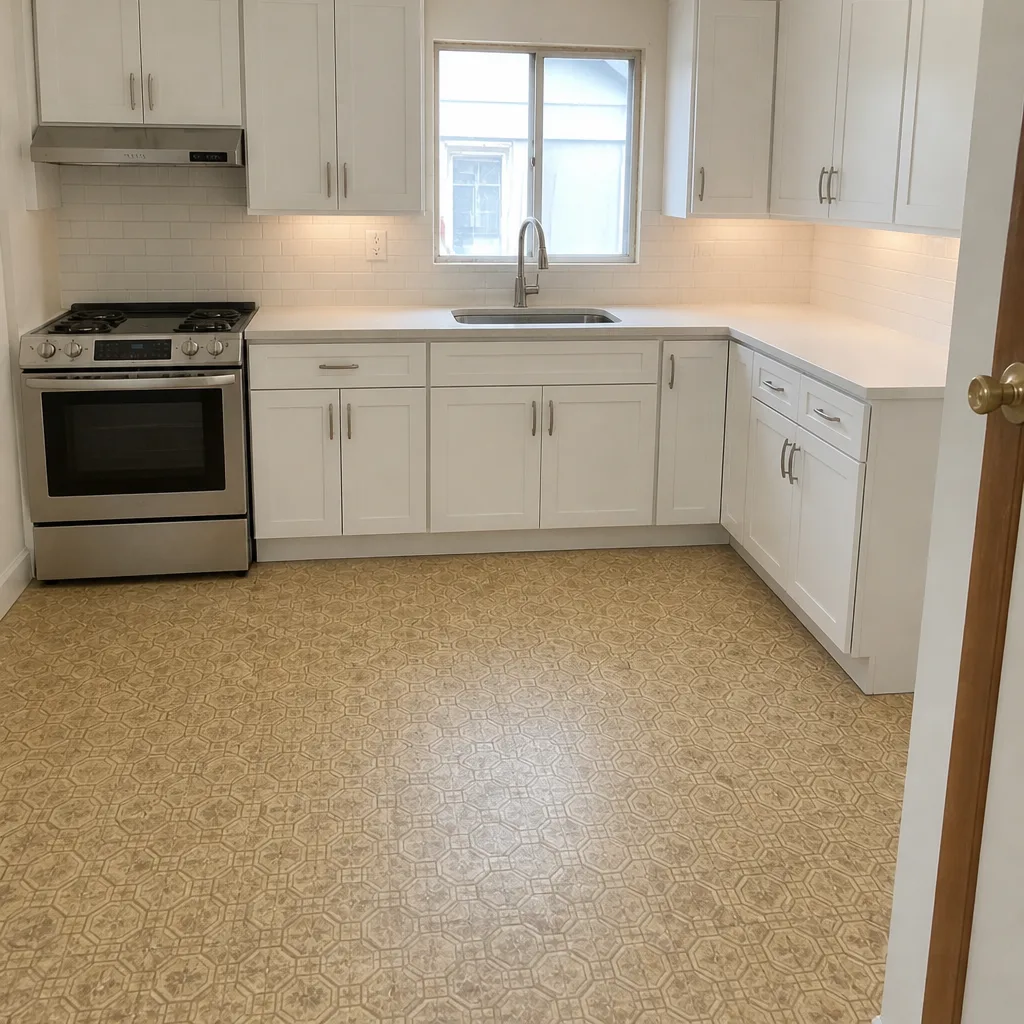 After
When to Call a Professional
Some projects are genuinely DIY territory: a short low fence, a repair, a garden border. But call a professional when any of the following applies. A fence on a shared or corner lot with sight-line rules. A property with known buried utilities or irrigation. A run longer than 100 feet, where plumb and cure time decide whether it lasts. A material like wrought iron or custom vinyl that needs fabrication. Any fence bordering a slope or retaining wall. And any job where you want a warranty you can enforce in writing. When fence installation is part of a bigger exterior plan, it also pays to think of it the way you’d think of driveway and paver work in Downey, where site prep drives the schedule just as much as the product. Groundwork Construction Co. of Downey offers free estimates in Downey and pulls permits as part of the job. Call (888) 255-8179.
Frequently Asked Questions
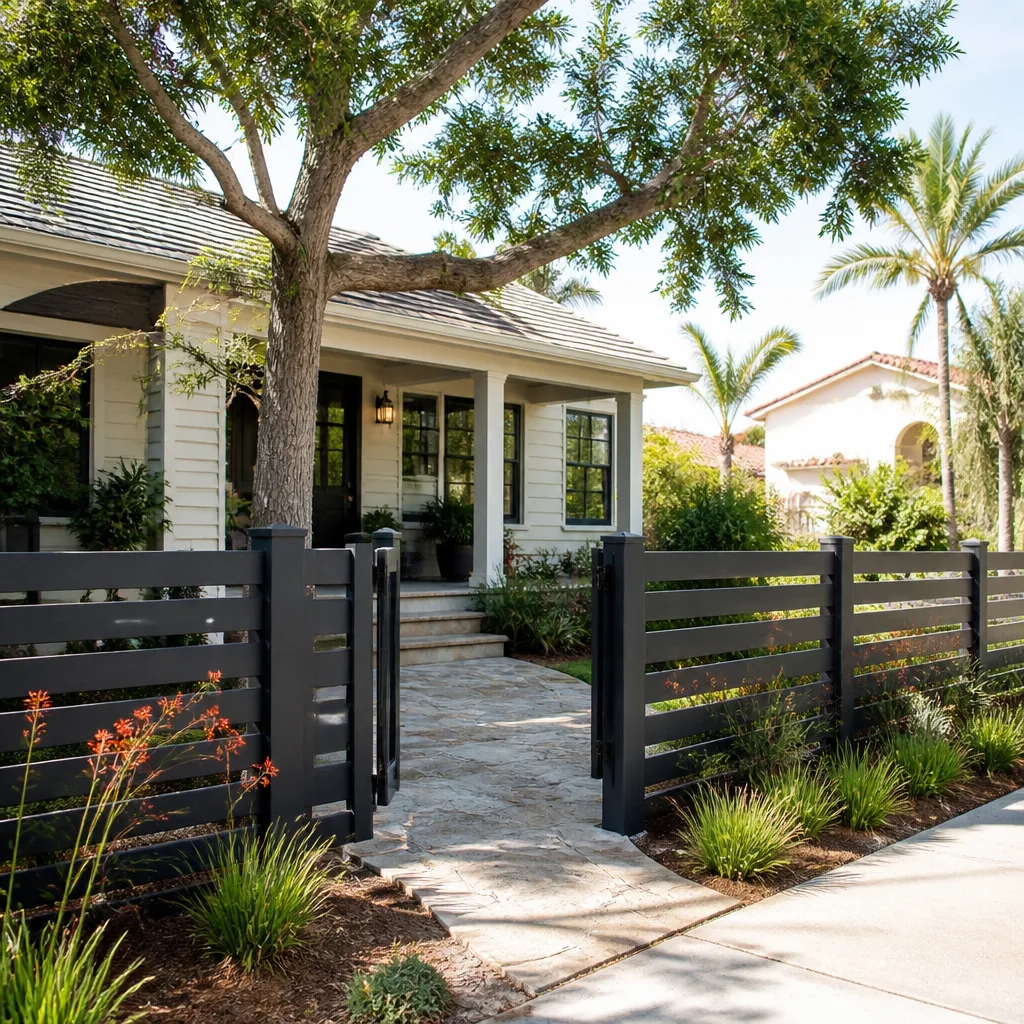
Plan on 1 to 3 days of building once ground and material are ready, and 2 to 6 weeks end to end. In Downey, most of that time goes to DigAlert marking, permit approval if your lot needs it, and material lead time. Call (888) 255-8179 for a real schedule based on your property.
Usually not for a standard side or rear fence up to 6 feet, but corner lots, front-yard fences, and taller fences do trigger review. Permits run 1 to 3 weeks for a straightforward case. A knowledgeable contractor will tell you upfront whether your lot needs one and will pull it for you. Call (888) 255-8179 for a free estimate that includes a permit check.
At least 2 business days after the ticket is filed. In practice, plan for 2 to 5 business days to account for marking crews and any re-marks. That wait protects you from hitting a gas or water line, and it’s mandatory in California. Our team files the ticket as part of the job setup.
Usually the posts were framed before the concrete cured, or the hole wasn’t set deeply enough for Downey’s clay soil. Posts need 24 to 48 hours of cure before panels go up, sometimes longer in wet weather. A contractor who promises to skip that step is promising a fence that leans. Call (888) 255-8179 to talk through how we set and cure posts.
Pricing depends on material, length, and site conditions, and we give a written line-item quote with upfront pricing so the number you see is the number you pay. No change orders mid-job for things that were visible during the estimate. Along with the free design consult, projects over $10,000 qualify for $1,000 off and 0% financing for 18 months. Call (888) 255-8179 for your exact quote.
Wet weather delays post-setting and extends cure time, which can add a day or two. It rarely cancels a whole project. We watch the forecast and schedule around it, and we won’t frame panels on posts that haven’t cured just to stay on the calendar. Call (888) 255-8179 for a schedule built with weather in mind.
The Bottom Line
The fence you install yourself in two days is the easy part. The two to six weeks around it (marking, permits, delivery, cure) are where projects succeed or slide. DigAlert buys you safety. Permission from the city buys you peace of law. Material lead time buys you the right fence instead of the available one. And cure time in Downey’s clay soil buys you a fence that stands straight beyond the first wet season. Hold any contractor to the week-by-week tracker, and demand proof of each phase. From foundation to finish line, that’s how a fence gets built to last and backed in writing. It also fits naturally into a broader exterior plan, so if you’re thinking about the whole yard, it’s worth pairing this with home additions and ADU work in Downey or reviewing fence installation in Downey as part of a larger project. Ready to see your exact timeline and price? Call (888) 255-8179 for a free estimate and design consult. A live person answers around the clock, and our technicians arrive background-checked and in uniform, with up to 12 years of experience on the job.
For more on how we approach exterior work and the rest of the home, start with the Groundwork Construction Co. of Downey home page.
Written by the team at Groundwork Construction Co. of Downey.