Last updated November 17, 2026


Free written scope consultation - allowances, timeline, and change-order rules on paper before a single trade is scheduled
Home Additions & ADU Maintenance Schedule: What to Do and When
An ADU or a home addition doesn’t come with an owner’s manual. That’s the gap nobody warns you about. A detached ADU has at least four maintenance systems most homeowners don’t realize they’re now responsible for, and the first time they find out is usually a repair bill: a roof flashing leak at the junction where the addition meets the house, a mini-split that stopped cooling because the filter clogged two summers ago, a tankless heater limping from hard-water scale. In Downey, where heat cycling and aging stucco make these failures arrive faster than in cooler parts of the county, this guide lays out a real month-by-month schedule so you catch each one before it costs you.
What you’ll get here: a calendar owners can actually follow, the systems unique to additions and ADUs, California’s landlord rules for rental units, and the inspections almost everyone skips.
Quick Answer
A home addition or ADU needs maintenance on a set calendar: filter and drainage checks monthly to quarterly, roof flashing at the junction and safety-device checks annually, a deeper systems inspection at years one, three, and five. Because Downey’s heat cycling, hard water, and concentrated winter rains stress new stucco, rooflines, and foundations harder than in milder climates, the key systems to watch are the roof flashing junctions, the connection between the addition and the original structure, and the tankless water heater’s scale.
Styles & brands we work with
- Kitchen remodeling
- Bathroom remodeling
- Home additions & ADU
- Roofing
- Windows & doors
- Driveway & pavers
- Fence
Table of Contents
- Why an ADU or Addition Needs Its Own Maintenance Schedule
- The Month-by-Month Maintenance Calendar
- The Expansion Joint: The One Inspection Most Owners Skip
- Downey Climate: Stucco, Trim, and Irrigation Next to New Foundations
- What a Landlord Renting an ADU Must Maintain Under California Law
- The 1-Year, 3-Year, and 5-Year Post-Construction Inspections
- Seasonal Cheat Sheet for Downey
- Common Mistakes to Avoid
Why an ADU or Addition Needs Its Own Maintenance Schedule
Here’s the counterintuitive part. An ADU and a home addition add several systems that don’t exist in your original house, and each one has a failure timeline of its own. A detached unit in Downey may carry its own electrical subpanel, its own utility meter, a mini-split heat pump instead of a ducted central system, a tankless water heater that a regular flush keeps alive, and a completely separate roof with its own flashing and gutters. None of these ride on the maintenance routine you’ve kept for the main home, because that routine was built for a house, not a unit.
The systems that are new to you:
- Junction roof flashing. Where an attached addition’s roof meets the existing roofline, flashings and counterflashings are the first place water gets in. That seam does not exist on the original structure.
- An independent electrical subpanel or service. A detached Downey ADU often runs its own panel, so breakers and GFCI receptacles here aren’t covered by the panel checks you do in the main house.
- A tankless water heater. In Downey’s moderately hard water, scale builds in the heat exchanger and cuts efficiency before the unit ever fails.
- Mini-split or ductless HVAC. Each head has a filter that needs cleaning, and the outdoor condenser coil collects dust and leaf litter from our trees.
- Foundation drainage at the new perimeter. A new footing sheds water differently than the original foundation.
The consequence is simple. Nobody tells the homeowner the monthly filter clean is now their job, so the mini-split clogs, the tankless scales, and the flashing seam leaks until it stains a ceiling. Build a schedule around those five systems and you’ll stay ahead of nearly every repair we’re called out for in Downey.
The Month-by-Month Maintenance Calendar
You don’t need to hire anyone to follow most of this. A 20-minute monthly walkthrough, plus a few times a year for the heavier items, keeps an ADU and an addition in good order. Print it, or keep it on your phone. The point is to do these checks on a rhythm rather than after a failure.
Monthly
- Clean the mini-split filters. Pull each indoor filter head and rinse off dust. In Downey’s dusty late summer, once a month beats the quarterly schedule you’ll find in most manuals.
- Check the tankless water heater for error codes and look under it for drips at the fittings.
- Walk the addition’s perimeter and confirm the foundation drain areas (graded slope, downspouts, drainage channels) are clear of debris. Standing water against the new footing is the enemy.
- Look at the junction roofline from the ground. A dark stain on the stucco under the flashing seam is early water intrusion.
- Test smoke and carbon monoxide detectors in the unit, if it has a cooking or heating source.
Quarterly
- Wash the outdoor condenser coil with a garden hose (power off first) to remove dust and leaf litter.
- Test every GFCI and AFCI breaker in the subpanel, and note any that won’t reset.
- Clear gutters, downspouts, and any yard drains on the new roofline.
- Inspect the caulk and sealant around windows and doors on the addition, and touch up gaps before rain season.
Annually
- Descale the tankless water heater. A vinegar flush annually keeps the heat exchanger efficient, and in Downey’s water it’s the single best thing you can do for that unit.
- Inspect the junction flashing and expansion joint (see the next section), and schedule a roofing check before winter.
- Look at stucco for hairline cracks and any spot where the paint has thinned.
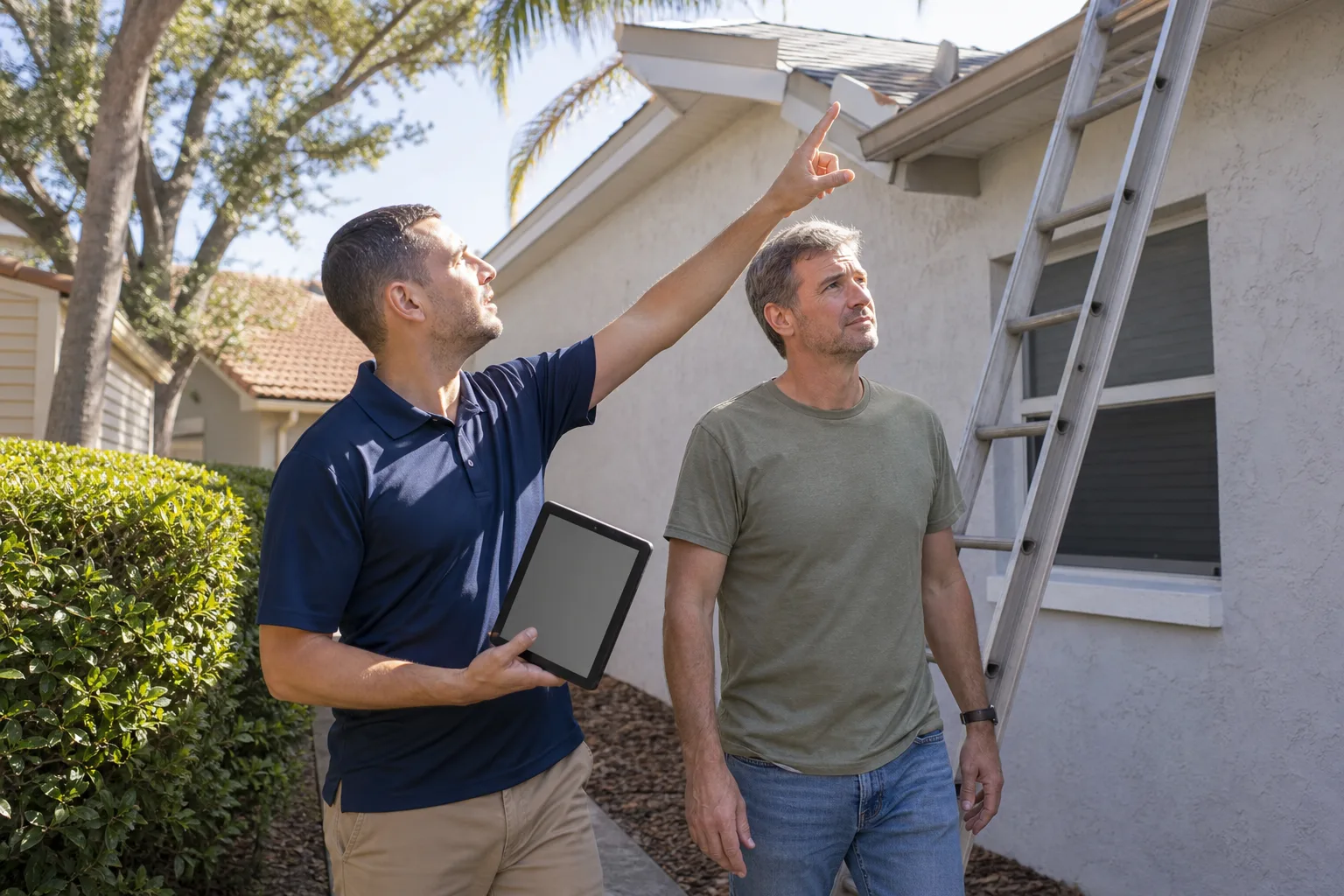
- Have a professional confirm the roof, flashing, and drainage at the junction. Roof and flashing work is a fall hazard; leave it to trained hands.
Our own teams on an addition in Downey set owners up with this rhythm at the final walkthrough, because maintaining what we built falls inside what the 730-Day Done Right Promise covers: if it’s not done right, we make it right. That doesn’t replace a maintenance calendar, but it means the handoff comes with a written guarantee underneath it.
The Expansion Joint: The One Inspection Most Owners Skip
Between an addition and your original structure, there’s an expansion joint, that narrow gap that lets the two structures move independently as they expand in heat and contract when it cools. It’s the most overlooked item on an ADU or addition in Downey, and it’s the one most likely to cause damage that’s expensive to repair. Every year, it deserves a close look.
Here’s why it matters. In Downey, the daily swing between warm afternoons and cool nights gives both structures a slight, constant push and pull. The joint exists precisely to absorb that movement. When it’s left alone, two things go wrong:
- The sealant dries and cracks. Water gets into the joint, soaks the framing, and shows up as a stain on an interior wall or a swollen corner months later.
- Someone caulks it shut. This is the dangerous mistake. A joint packed full of caulk or foam can no longer flex. Under a summer of heat cycling, the two structures fight each other, and the damage shows as cracked stucco, a cracked interior drywall corner, or a bent door frame where the addition meets the house.
What an annual check should confirm:
- The joint gap is even and free of packed-in debris.
- The joint sealant is flexible, not hardened or split. It should compress slightly when you press it, not feel like a rock.
- There’s no water staining on either side of the joint, inside or out.
- No new cracks have opened in the stucco or drywall at that intersection.
If the sealant is hard or split, it needs to be replaced with a flexible exterior-rated joint sealant, and that’s a job for someone who knows how deep the joint should be and how to install it without locking the two structures together. If you see cracking at the joint now, call a professional before it grows.
Downey Climate: Stucco, Trim, and Irrigation Next to New Foundations
Downey sits in the Los Angeles basin, warm and dry most of the year, with hot late-summer stretches and cool winter nights. That combination is hard on exterior surfaces, and the ones on an addition are the newest and the most exposed. Each needs its own attention.
Stucco cracking from heat cycling
Stucco expands through hot afternoons and contracts overnight, and over a few seasons that movement opens hairline cracks, usually around windows, door frames, and corners. Cracks slightly wider than a hairline (above about 1/16 inch) are a sign to look closer, because they let in water that can work behind the stucco. Re-caulk the joints and have anything wider inspected. This is normal for a Downey addition; what you don’t want is a crack left open through a winter rain.
Wood trim and UV degradation
Fascia, window trim, and door casings on an addition take full afternoon sun. UV dries and grays the wood, and untreated trim begins to check and split within a few years. Repaint or reseal exterior trim on a 3-to-5-year cycle, and touch up any spot where paint is cracking. A small paint repair now prevents rot that turns into a carpentry job.
Irrigation proximity to new foundations
This is the one that catches people. Sprinkler heads set too close to a new foundation soak the soil continuously, and the constant moisture can cause the soil under a new footing to shift, which shows up as cracks in the slab or stucco. Check that no sprinkler head sprays within a few feet of the addition’s foundation, that the grade slopes away from the new footing, and that downspouts carry water away rather than dropping it at the wall. If you’re redoing the yard around a new addition, we build landscaping, patio walls, and hardscape with Belgard and ActiveYards materials, and we always keep irrigation clear of the foundation line.
When you’re ready to plan the addition itself, the Home Additions & ADU in Downey service page lays out the build side; this guide handles what comes after the keys.
What a Landlord Renting an ADU Must Maintain Under California Law
If you rent out your ADU, California law splits the maintenance duties between you and the tenant, and the split is clear enough that every ADU landlord in Downey should know it before signing a lease. The key distinction: the landlord is responsible for keeping the unit habitable; the day-to-day upkeep sits with the tenant.
Landlord responsibilities
- Habitable conditions. Working plumbing, hot and cold water, a functioning water heater, heating, weatherproofing, and a safe electrical system.
- Structural and systems. The roof, foundation, exterior walls, and major systems. If the tankless heater fails, that’s on the landlord.
- Health and safety. Smoke and carbon monoxide detectors, and pest control in most cases.
- Repairs to keep the unit habitable within a reasonable time after written notice.
Tenant responsibilities
- Keeping the unit clean and sanitary, and not damaging it.
- Routine tasks like changing filters and light bulbs, and reporting problems promptly.
- Small day-to-day upkeep the lease can assign, as long as it doesn’t shift a structure or habitability duty onto the tenant.
Two points every Downey ADU landlord should get right. First, put the maintenance split in writing in the lease: who cleans the mini-split filters, who reports the first sign of a leak, who checks the water heater annually. Second, build a maintenance log and keep receipts for every repair. California law treats water intrusion and habitability as serious, and if a tenant complains of a leak and you can show prompt repair, you’re in a much stronger position than one who relied on a verbal understanding. A written schedule protects the investment and the tenant.
The 1-Year, 3-Year, and 5-Year Post-Construction Inspections
Most homeowners skip every one of these. The build is done, the punch list is closed, and the assumption is that a new addition takes care of itself. That assumption is the reason we see avoidable repairs years later, because the checks that matter most happen in the first five years, when the structure settles and exterior finishes wear.
Here’s what a proper post-construction inspection at each milestone covers, and why each is worth doing.
1-Year inspection
This is where you catch settlement and drying-related issues while they’re still small.
- Look for new cracks in stucco, drywall at the corners, and the interior joint between the addition and the original house.
- Check the roof flashing at the junction and every penetration for signs of water.
- Confirm doors and windows still latch cleanly and no frame has shifted.
- Check drainage and grade around the new foundation, and confirm the slope still carries water away.
- Test all GFCI/AFCI breakers and outdoor receptacles.
3-Year inspection
- Examine exterior caulk and sealant around windows and doors, and replace anything dried or split.
- Inspect roof flashing and gutters for wear, and clear them.
- Check the tankless heater’s scale and efficiency and confirm the mini-split still cools and heats properly.
- Look at the expansion joint again, and confirm no cracks have opened on either side.
5-Year inspection
- Plan to repaint or reseal exterior trim and stucco where the finish has worn.
- Review the roof for age-related wear, and recheck the flashing at the junction.
- Confirm the subpanel and all breakers are sound.
- Reassess landscaping and irrigation for any water being pushed against the foundation.
The reason most owners skip these is simple: nothing looks broken. But a 1-year check that finds a hairline crack before it lets in water is cheap; a 5-year fix for rotted framing behind stucco is expensive. A physical walkthrough, with photos, at each milestone is the cheapest insurance on a home improvement. Our technicians, who bring up to 12 years of experience to the walkthrough, can handle a post-construction inspection and point out what to watch during the coming year.
Seasonal Cheat Sheet for Downey
If the monthly calendar feels like a lot, the seasonal view is the short version. Downey’s dry summers and concentrated winter rains mean the work clusters into a few windows a year.
- Spring (March – May): Stucco and trim check after the rains, clear gutters and drains, descale the tankless heater once summer cooling season starts, and look at the expansion joint and roof flashing.
- Summer (June – August): Clean mini-split filters monthly, wash the outdoor condenser coil, and watch the stucco for heat cracking. The dry season is also the best time for exterior paint touchups.
- Fall (September – November): This is the critical window: inspect the roof, flashing, gutters, and downspouts before the first rain, confirm the grade drains away from the new foundation, and repair any caulk that’s dried.
- Winter (December – February): Watch for water stains at the joint and around windows, test smoke and CO detectors, and check the tankless heater for leaks.
A yard and drainage system around the addition benefits from the same rhythm. If you’re planning hardscape or a driveway around a new unit, the Driveway & Pavers in Downey service page covers how we build so water sheds away from the building, and Fence Installation in Downey handles the perimeter. For the main house’s broader maintenance, our Groundwork Construction Co. of Downey home page is the place to start.
Common Mistakes to Avoid
- Caulking the expansion joint shut. It stops the joint from flexing, so the two structures push against each other and crack the stucco or drywall. Leave the gap free and keep the sealant flexible.
- Skipping the tankless descale. In Downey’s water, scale builds inside the heat exchanger and quietly drains efficiency and hot water output. A yearly flush is far cheaper than a replacement.
- Letting a sprinkler head soak the new foundation. Continual moisture near a new footing can shift the soil and crack the slab. Check that heads throw water away from the wall and that the grade slopes off.
- Treating the mini-split filter like a once-a-year task. One clogged filter in a Downey summer makes the unit work harder, ices up the coil, and can cut its life short. Clean it monthly in hot weather.
- Ignoring a stucco crack that’s wider than a hairline. A hairline crack is one thing; an open crack lets water behind the stucco and starts rot. Watch for anything wider than about 1/16 inch.
- Skipping the 1-year and 3-year inspections because nothing looks broken. The point of an early inspection is to find the small thing before it’s expensive. Most owners don’t, and that’s exactly why we see avoidable repairs.
- Landlording an ADU with a verbal maintenance deal. A lease that doesn’t spell out who does what, and a file without receipts, leaves you exposed if a tenant reports an uninhabitable condition.
See the difference
 Before
 After
 Before
 After
 Before
 After
When to Call a Professional
Some maintenance tasks are yours to do: changing filters, testing breakers, clearing gutters, and watching for stains. Others need a trained eye and the right tools. Call us when you see water staining under the junction flashing, cracking that’s wider than hairline at the expansion joint, a tankless heater showing error codes after a proper flush, a mini-split that stops cooling after a clean filter, or any crack in the slab or stucco near a new foundation. Any roof or flashing inspection calls for a trained professional, because climbing up there is a genuine fall hazard, and the people who do it are the ones who know how the flashing should be built. When you need a deeper look, the team at Groundwork Construction Co. of Downey handles post-construction inspections for additions and ADUs across Downey. Groundwork Construction Co. of Downey offers free estimates in Downey, and if you’d rather talk it through first, call (888) 255-8179.
Frequently Asked Questions
Clean mini-split filters every month during cooling season, and every 2 to 3 months the rest of the year in Downey. The monthly rhythm matters more than a quarterly one here because of the dust and pollen in the basin’s late summer. Call (888) 255-8179 if you want a technician to check a unit whose cooling has dropped.
You lock the two structures together, so they can no longer move independently under heat cycling. The result is cracked stucco, cracked drywall, and sometimes a bent door frame at the junction. Keep the joint free and the sealant flexible, and call (888) 255-8179 if you’re seeing cracks there.
Yes, once a year. Downey’s water leaves mineral scale inside the heat exchanger, and scale cuts efficiency and hot water output before the unit ever fails. A yearly vinegar flush is the cheapest maintenance on the whole unit. Call (888) 255-8179 to schedule a check before scale builds up.
The landlord is responsible for habitability and the major systems, and the tenant handles daily upkeep and routine tasks like filters. Put that split in writing in the lease and keep a repair log with receipts. Call (888) 255-8179 for a maintenance inspection on a rental unit.
It covers settlement and drying issues: new cracks in stucco and drywall, the joint between the addition and the original house, roof flashing at the junction, door and window function, drainage and grade, and the electrical subpanel. Nearly every owner skips it, and it’s the cheapest check on the list. Call (888) 255-8179 to book one.
At least once a year, ideally in the fall before the rain season. The junction flashing is the first place water gets in, and a stain on the stucco under the seam is early water intrusion. Leave the roof work to a trained professional and call (888) 255-8179 for a flashing inspection.
The Bottom Line

An ADU or a home addition is a set of new systems that no one handed you a manual for. The ones to run on a calendar are the mini-split filters, the tankless descale, the foundation drainage, the junction roof flashing, and the expansion joint. Watch Downey’s heat cycling and hard water, keep irrigation away from the new foundation, and don’t caulk the joint shut. Landlords should put the maintenance split in writing and keep a repair log. Do the 1-year, 3-year, and 5-year inspections even when nothing looks broken. That’s the schedule that keeps an addition in good order and out of the repair-shop. Built to last, backed in writing, and easy to maintain when you know what to look for.
Ready to plan an addition or a post-construction inspection? Call Groundwork Construction Co. of Downey at (888) 255-8179 for a free estimate. Calls are answered by a live person, 24/7, upfront pricing means the number you see is the number you pay, and every project is covered by the 730-Day Done Right Promise: if it’s not done right, we make it right.
Written by the team at Groundwork Construction Co. of Downey.