
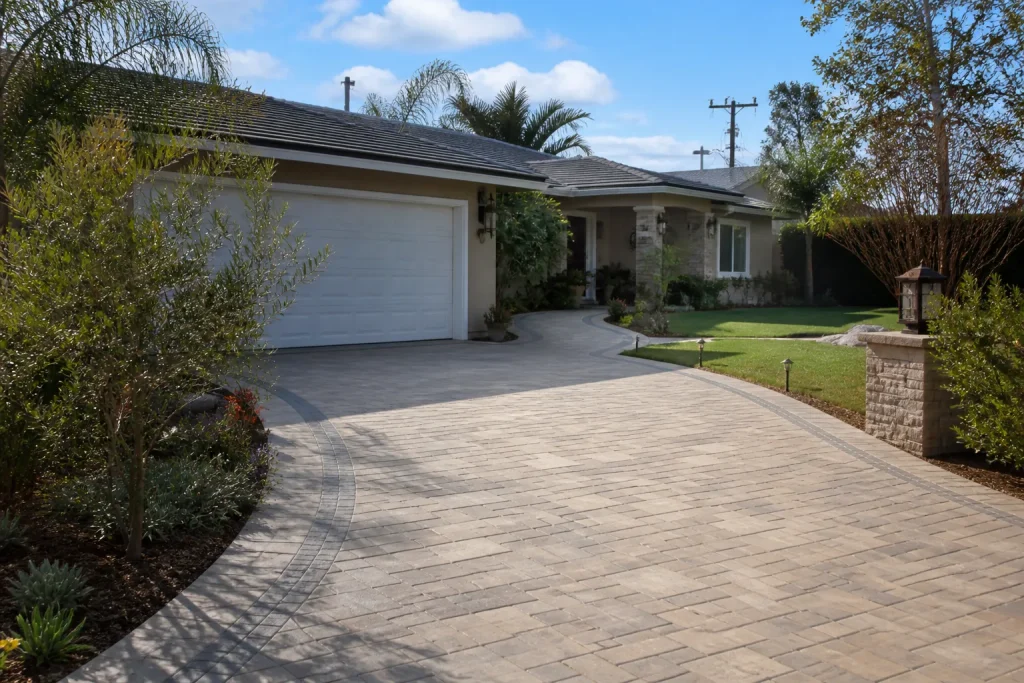
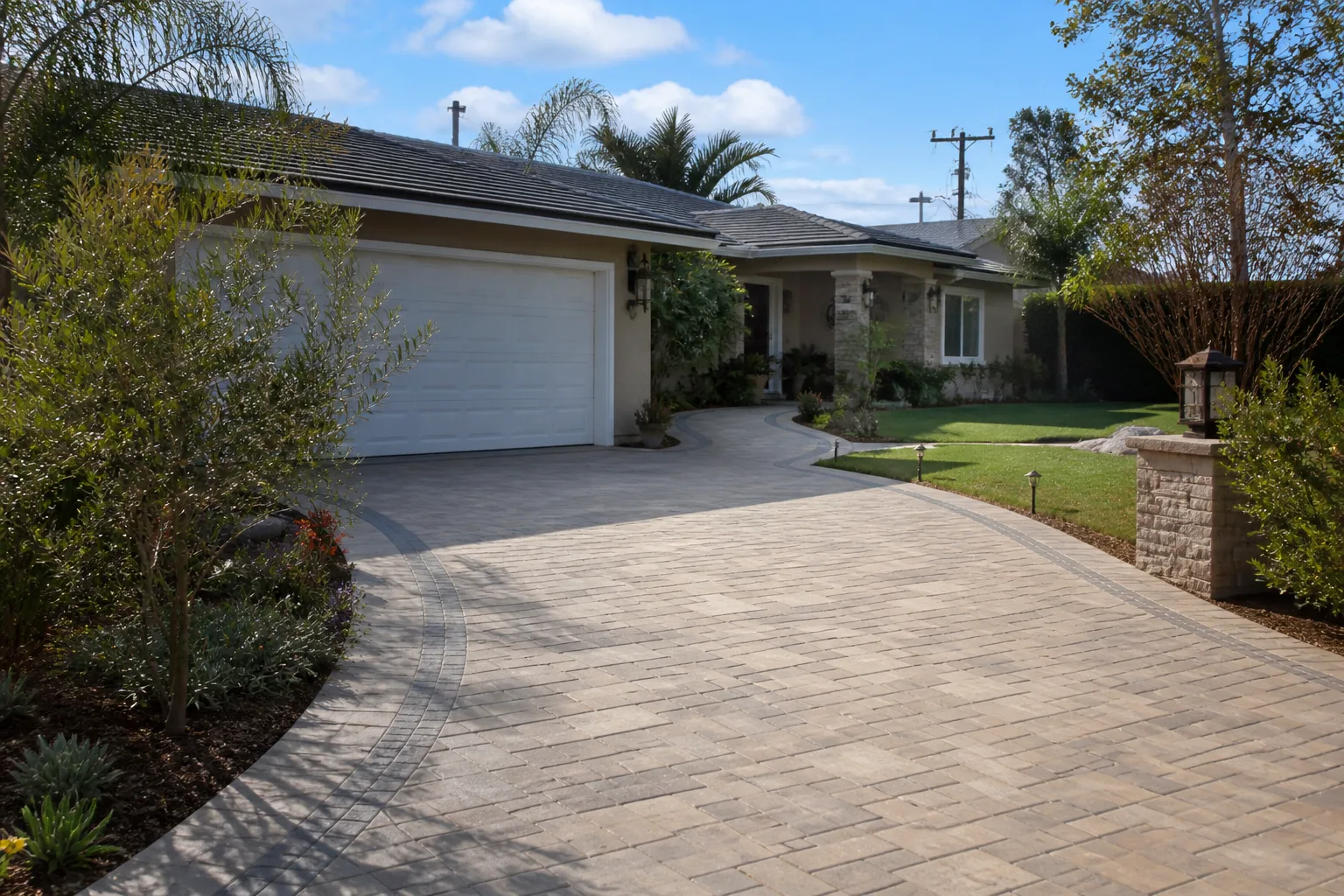
Abodu Driveway & Pavers in Downey: A Homeowner’s Guide
Abodu can set a finished ADU on your Downey lot in a single morning. What that morning actually requires, though, is a driveway engineered for a flatbed crane truck before the unit ever leaves the factory. Most homeowners plan the ADU first and the pavement last. That order is backwards, and it’s the most expensive afterthought we see on Downey properties.
If you’d rather not sort through load ratings and setback math on your own, call (888) 255-8179 and we’ll walk your lot with you.
Why does an Abodu delivery change how you build the driveway?
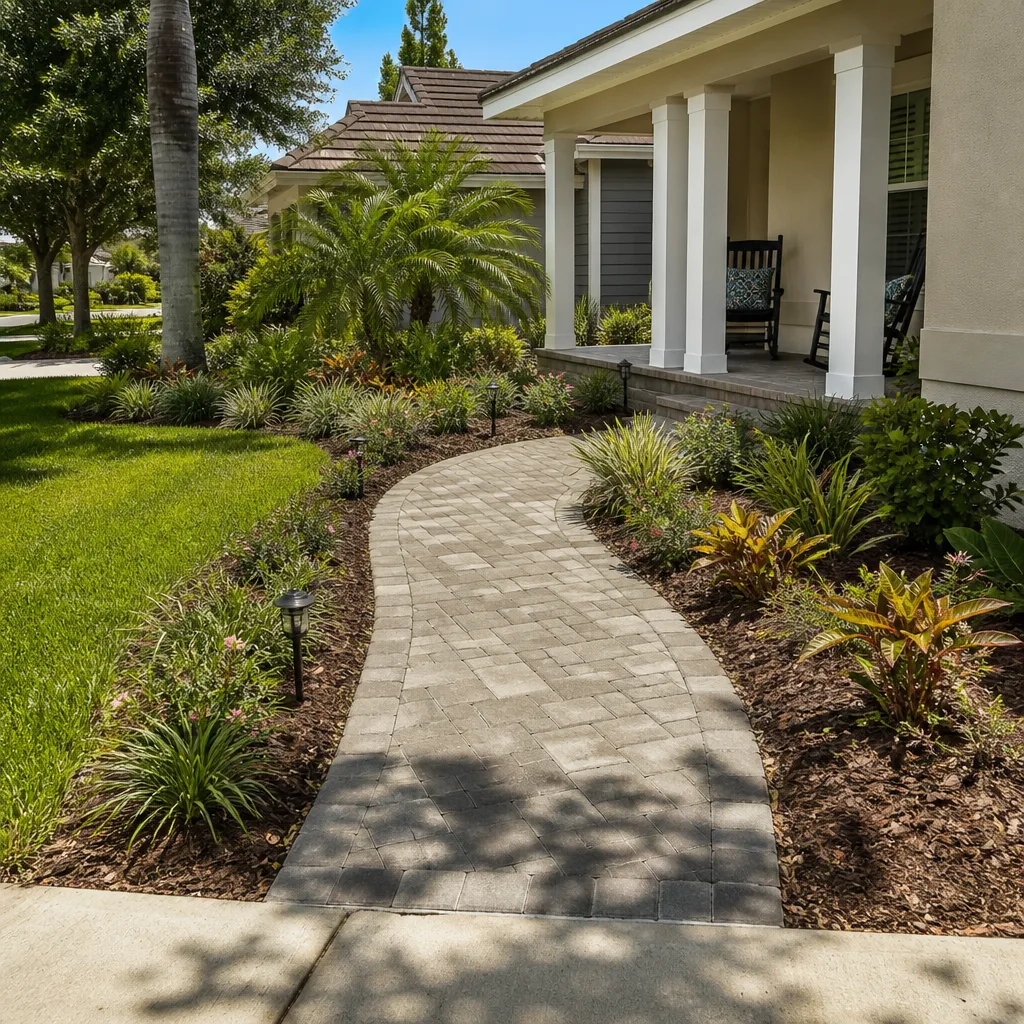
An Abodu unit arrives on a flatbed and gets lifted and set by crane. That means your driveway and the path to the placement pad carry two very different kinds of weight: a slow-moving, multi-ton truck and a stationary crane with outriggers. Standard residential driveway specs aren’t built for either.
Here’s what has to be verified before you schedule delivery:
- Loaded weight capacity. The pavement base has to hold the loaded delivery vehicle without rutting or punching through. That usually means a thicker compacted aggregate base than a car driveway gets.
- Turning radius and approach. The truck needs room to swing in from the street and line up straight. Tight Downey lots with a narrow apron or a parked car across the street can stall a delivery.
- Outrigger footprint. Crane outriggers concentrate load into small pads. The ground under them has to be stable, or the crane can’t safely lift.
- Clear overhead path. Low branches, power drops, and carport structures all get checked before the truck rolls.
This is the part most people miss: the driveway isn’t just a surface for your cars after the fact. It’s the delivery infrastructure. Get it wrong and the install gets delayed, rescheduled, or done with the crane in a spot that leaves you with a cracked apron six months later.
How do Downey’s lot and driveway rules interact with Abodu placement?
Downey is a city of mostly older single-family lots, and those lots come with real constraints. Front setbacks, driveway width at the property line, and the way garages sit close to the alley all shape where a unit can actually land and how a truck can get to it.
A few Downey-specific realities to plan around:
- Setbacks move the pad. Where the unit can sit on the lot is governed by local setback rules, and that placement decides how long the driveway or access path needs to be. Longer access means more pavement, more base, and more cost.
- Driveway width at the curb. Old Downey driveways were often poured narrow for a single car. A delivery truck needs more than that, so widening the apron is frequently part of the scope, not an upgrade.
- Alley access. Some Downey blocks back onto alleys, which can offer a cleaner approach than a tight front driveway. Worth checking before you assume the front is your only route.
- Permits. Pavement and access changes may need permits depending on scope. Confirm what’s required for your specific lot before work starts, not after.
We’ve walked plenty of Downey lots where the front driveway looked fine until we measured the turning swing. That measurement happens first, before anyone orders pavers.
Which paver materials hold up under heavy vehicle traffic?
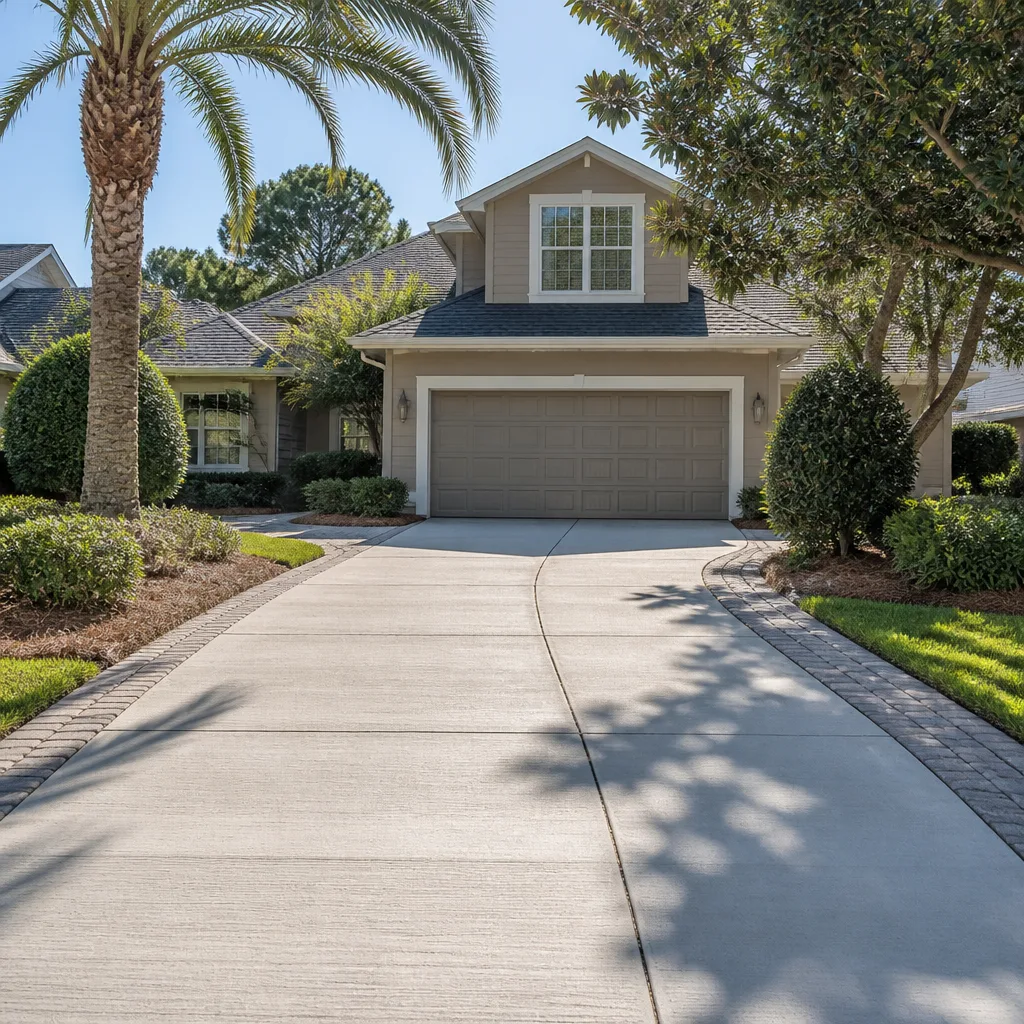
Pavers are the right call for a Downey driveway, but not every paver and not every installation method. The failure mode isn’t the paver itself. It’s the base and the joint sand underneath it.
What holds up:
- Interlocking concrete pavers on a properly compacted aggregate base. This is the workhorse choice for driveways with real vehicle load. The interlock spreads weight across the field instead of concentrating it.
- Thicker profile pavers. Heavier vehicle traffic calls for a thicker paver than a walkway would use.
- Polymeric joint sand. It locks the pavers together, resists washout, and keeps the surface stable under repeated loading.
- Proper edge restraint. The edge is what keeps the whole field from spreading. Skip it and the driveway sags at the borders within a few seasons.
Where people go wrong: laying pavers over a thin base because it looks fine on delivery day. It will. Then the loaded truck arrives, or a few years of daily parking happens, and the field starts to shift. For the material itself, we lean on proven brands like Belgard for residential driveways, and we match the paver profile to the actual load the surface will carry, not a generic spec.
The sequencing mistake: why the driveway should often come first
Here’s the pattern. Homeowner orders the ADU. ADU gets scheduled. Then someone remembers the driveway and rushes a pour or paver install in the last two weeks. That’s the mistake.
The better order for most Downey Abodu projects:
- Site and access review. Measure the approach, turning radius, and outrigger footprint.
- Driveway and pad design. Size the pavement and base for the delivery truck and the long-term vehicle load.
- Permits and site prep. Handle what the city requires for your lot.
- Pavement and access construction. Build it and let it cure or settle properly.
- Delivery and placement. The truck and crane arrive to a surface that’s ready for them.
- Finish work. Aprons, edging, landscaping, and any connecting paths.
Building the driveway first removes the single biggest cause of Abodu install delays we see: a surface that isn’t ready when the delivery window opens. It also means the pavement gets designed for the load it will carry, instead of squeezed in around a finished unit.
One contractor or two: what a coordinated Abodu plus driveway scope looks like
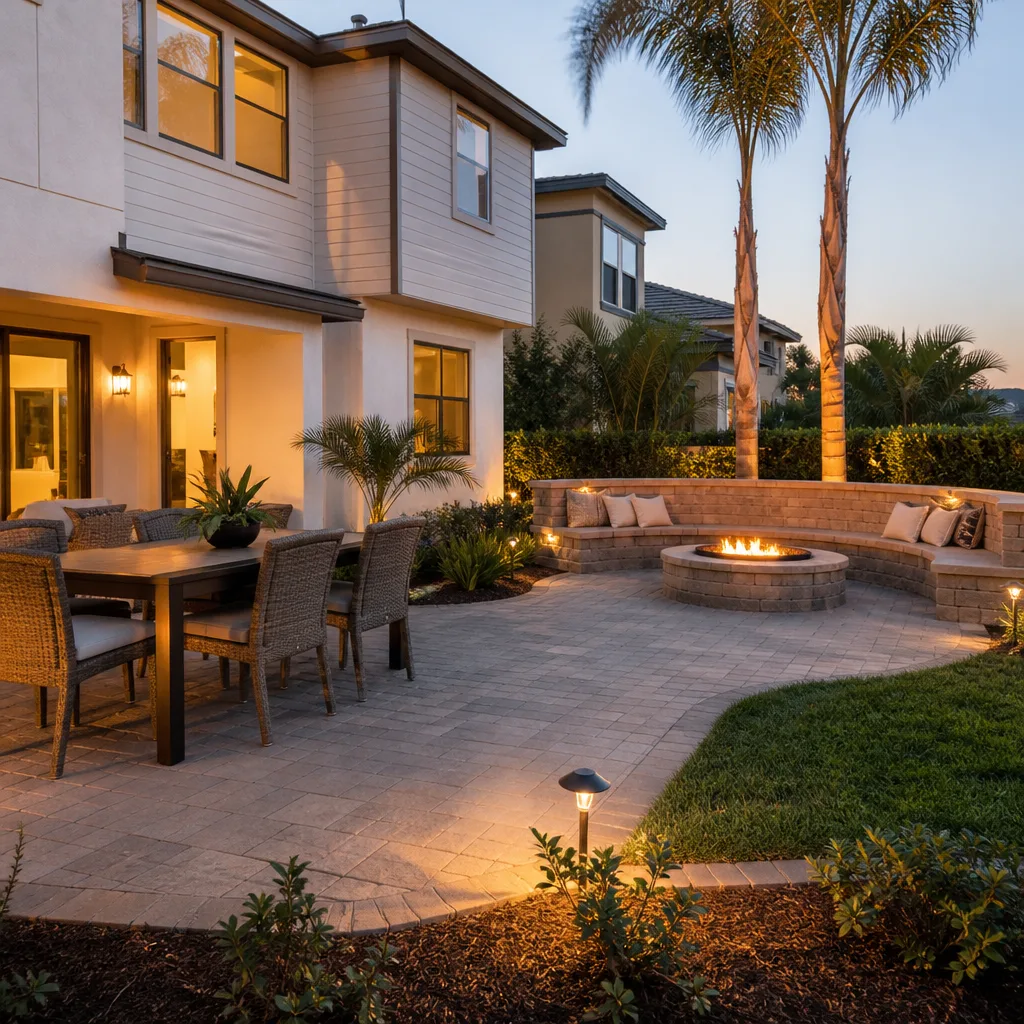
Two vendors, two schedules, one property. The ADU company handles the unit. A separate paving company handles the driveway. When something goes wrong on delivery day, nobody owns it, because each side points at the other.
A single coordinated scope changes that. One team maps the delivery access, sizes the pavement, handles the site work, and stays accountable through the final walkthrough. That’s the difference between a project that finishes clean and one that leaves you chasing two contractors for a fix.
We bring the full picture together from foundation to finish line: the pavement engineered for the delivery, the long-term vehicle load, and the finish work that ties it into the yard. Our technicians have up to 12 years of experience on residential projects like this, and every job is backed by our 730-Day Done Right Promise, which means if it’s not done right, we make it right. The driveway and the unit are one project, and we treat them that way.
When to call a pro: if your lot has a tight approach, an older narrow driveway, or overhead obstructions near the delivery path, get eyes on it before you order the ADU. A half-hour site review saves a rescheduled delivery.
Related services in Downey: if you’re planning the full project, see our Driveway & Pavers in Downey service, our Home Additions & ADU in Downey work, and our Fence Installation in Downey if the new unit changes your lot lines. You can also start at the Groundwork Construction Co. of Downey home page.
The Bottom Line
An Abodu install in Downey goes smoothly when the driveway is engineered before the unit is scheduled, not after. That means checking load capacity, turning radius, and the outrigger footprint, then building the pavement and base to hold both the delivery truck and the daily vehicle load for years. Pavers on a properly compacted base with solid edge restraint and polymeric joint sand will outperform a rushed surface every time. And keeping the driveway and the unit under one contractor removes the finger-pointing that comes with two separate vendors.
If you’re in Downey and need help, Groundwork Construction Co. of Downey offers free estimates and no-hassle upfront pricing, so the number you see is the number you pay. Call (888) 255-8179 to schedule yours.
Frequently Asked Questions
In most cases, yes. The delivery requires a surface that can hold a loaded flatbed and support crane outriggers, and building it first prevents the rescheduling that happens when the ground isn’t ready. It also means the pavement is designed for the delivery and the long-term load together rather than patched in afterward. Call (888) 255-8179 for an exact quote on your Downey lot, and estimates are free.
They can, if the base is thick enough, properly compacted, and the field is locked together with polymeric joint sand and edge restraint. The paver itself is rarely the weak point; the base and installation are. We spec the base to the actual load, not a generic driveway standard. Call (888) 255-8179 to talk through your specific approach and load.
Cost depends on the approach length, base depth, and whether the apron needs widening for the truck’s turning radius. A site review gives you a real number instead of a guess, and we provide a written line-item estimate up front with no surprises. Call (888) 255-8179 to schedule your free estimate.
Yes, and it’s usually the better route. A single coordinated scope maps the delivery access, sizes the pavement, builds it, and stays accountable through the final walkthrough, so there’s no gap between the unit and the pavement. That’s how we run these projects in Downey. Call (888) 255-8179 to set up a free design consult.
Written by the team at Groundwork Construction Co. of Downey.
Need Construction Help?
Call Groundwork Construction Co. of Downey - licensed & insured, here with fast after-hours help in Downey.
(888) 255-8179