Last updated November 17, 2026




Free written scope consultation - allowances, timeline, and change-order rules on paper before a single trade is scheduled
Fence Installation Warning Signs Every Homeowner Should Know
A fence that looks perfect on day one can be leaning by year three, and the red flags that predicted that lean were visible at the estimate stage, long before anyone dug a hole. We’ve walked plenty of Downey properties where the finished product looked sharp in photographs but the posts were set too shallow, the concrete was mixed too lean, and the homeowner paid in full before the gate ever hung straight. Here’s the uncomfortable truth: the warning signs of a failing fence job rarely live in the finished product. They live in how a contractor behaves before the first shovel hits the ground. This guide teaches you to read contractor behavior, not just workmanship, so you can spot trouble while you still have leverage.
Quick Answer
The biggest fence installation warning signs are behavioral, not cosmetic: a contractor who skips DigAlert utility marking, refuses to name post depth and concrete specs in writing, demands full payment upfront, and won’t mention permits. A fence that fails early almost always traces back to a bid that was too vague or too cheap to build correctly. Read the estimate, the contract, and the crew’s habits before the job starts, and you’ll catch most failures before they’re buried in concrete.
Styles & brands we work with
- Kitchen remodeling
- Bathroom remodeling
- Home additions & ADU
- Roofing
- Windows & doors
- Driveway & pavers
- Fence
Table of Contents
- Why Skipping DigAlert Is Your Legal Problem, Not Just Their Shortcut
- Post Depth and Concrete Mix: What Downey Soil Actually Requires
- Contract Red Flags: Vague Specs, No Permits, Upfront Demands
- Panel Spacing and Gate Hardware: Catching Problems Mid-Job
- Why the Cheapest Bid Almost Always Means Shorter Posts
- How the Crew Behaves on Day One Tells You Everything
- Material Substitution and the “Equivalent” Trap
Why Skipping DigAlert Is Your Legal Problem, Not Just Their Shortcut
DigAlert is California’s free utility notification service, and any contractor digging fence post holes is legally required to call 811 before breaking ground. When a crew skips it, they’re not just taking a shortcut on your schedule. They’re burying a liability that lands on the property owner. If a shovel strikes a gas line, an electrical conduit, or a water main, the damage claim often follows the homeowner because the excavation happened on your property. Unmarked utilities are the single most expensive “savings” in fence work.
We’ve seen the aftermath in Downey more than once, and it’s never a small bill. A severed irrigation line is annoying. A nicked gas service line is a fire department response, an evacuation, and a repair invoice that can run into the thousands. The DigAlert ticket is free and the marking usually happens within a couple of days. There is no legitimate reason to skip it.
Here’s how to verify the contractor actually did it, because plenty will claim they did:
- Ask for the DigAlert ticket number before work starts. Every call generates one. If they can’t produce it, they didn’t call.
- Look for painted markings on your lawn and sidewalk. Utilities flag their lines with color-coded paint. No paint means no locating happened.
- Confirm the ticket is current. Markings expire after a short window. A stale ticket on a job that got delayed is the same as no ticket.
- Put it in the contract. A line reading “Contractor will obtain DigAlert/811 clearance prior to excavation” costs nothing and protects you.
A contractor who treats utility marking as a box to check is telling you how they handle everything else. Speed over safety at the utility stage is the same philosophy that under-digs posts and skips permits. When you’re comparing bids, whether they mention digging safely before installing a line of fence says more about the finished job than any photograph in their portfolio.
Post Depth and Concrete Mix: What Downey Soil Actually Requires
Downey soil is a mix that includes clay-heavy pockets and sandy stretches closer to the Rio Hondo and San Gabriel River corridors, and that variability matters for fence posts. Clay holds moisture and swells, then shrinks and pulls away from concrete during dry stretches. That cycle is what racks a fence over time. In our experience, the posts that survive here are set at least a third of their above-ground height into the ground, and in exposed or gate-bearing runs, deeper still. A 6-foot fence should have posts buried a minimum of 24 inches, and we prefer 30 to 36 inches in Downey’s clay. Gate posts take more.
Concrete mix is the other half of the equation. A proper post mix for structural fence work is a stiff, correctly proportioned blend, and the key is that the hole is crowned so water runs off rather than pooling at the base of the post. A crew dumping dry mix into a hole and spraying it with a hose is guessing. A crew that measures water is building something that will hold.
Watch for these under-digging signs while the holes are still open:
- Holes that look shallow relative to the post length. If a 6-foot post goes into a knee-high hole, the fence is going to lean. Period.
- Holes that are too narrow. A post set in a hole barely wider than itself has almost no concrete around it. The hole should be roughly three times the post’s width across.
- Concrete sitting below grade. The mix should come to the top of the hole and be crowned. Sunken concrete is a water trap.
- No measuring, ever. If nobody on the crew has a tape measure or a depth stick out, they’re eyeballing, and eyeballing is how fences fail in year three.
Our technicians have up to 12 years of experience setting posts in Southern California soil, and the difference between a well-set and a poorly-set fence is mostly invisible at install and completely obvious after a few wet winters and dry summers. If you want to understand what proper excavation looks like, it helps to know the same standards apply whether you’re building a boundary line or pouring for Driveway & Pavers in Downey, where base prep decides everything.
Contract Red Flags: Vague Specs, No Permits, Upfront Demands
The contract is where the honest jobs show themselves and the bad ones expose their seams. A fence estimate that says “6-foot wood fence, materials and labor” is not a bid, it’s a guess. You cannot compare it to anything, you cannot hold anyone to it, and the materials can change to whatever’s cheapest the week the crew buys them. A real bid reads like a specification sheet.
Here’s what belongs in writing before you sign anything:
- Material specifications, named. Species, grade, and treatment for wood, or the actual manufacturer and style for vinyl or composite. Not “cedar fence” but “Western red cedar, dog-eared pickets” or a named composite line. Reputable suppliers like Boral, PGT, CGI, and CWS run the quality range; your bid should name what you’re paying for.
- Post depth and concrete spec. Written, not implied. This is the single line most bids omit, because it’s the line that reveals whether the contractor is cutting the one cost you won’t see.
- Permit responsibility. For a like-for-like residential fence replacement in Downey, a permit often isn’t required, but any fence that’s new construction, over a certain height, or near a corner sight line may need one. A contractor who says “you don’t need a permit” for every job without checking your specific lot is guessing about code.
- Payment schedule tied to milestones. A reasonable schedule ties payments to stages of completion, with final payment after a walkthrough. “50% down, 50% on delivery of materials” is aggressive. “Paid in full upfront” is a hard no.
- Cleanup and haul-away. Who removes the old fence, the old concrete footings, and the debris? If it’s not in the contract, it’s not included.
Lien language matters too. A contractor has the legal right to file a mechanic’s lien against your property if they aren’t paid, and a property owner can get caught in the middle of a subcontractor dispute. Ask for lien waivers with each payment and a statement that subcontractors have been paid. Any contractor who bristles at that request is telling you something. This is also the stage to nail down scope with a written estimate; an upfront pricing job means the number you see is the number you pay, with no change orders slipping in later. When the project expands beyond a fence into a bigger build, the same discipline should carry into Home Additions & ADU in Downey planning.
Panel Spacing and Gate Hardware: Catching Problems Mid-Job
Most of the failures you can catch happen while the fence is still going up, and panel spacing and gate hardware are the easiest to read in real time. Panel spacing refers to the gap between the fence and any structure, plus the spacing between pickets or panels. A fence should sit with a small, consistent gap from a house or garage wall so moisture can drain and air can move. Pushed flush against a stucco wall, the back of the fence traps water, rots first, and you’ll never see it because it’s hidden behind the pickets. Consistent picket spacing across the whole run tells you the crew cares about layout. Uneven pickets that tighten and spread along a line tell you the posts are drifting out of plumb.
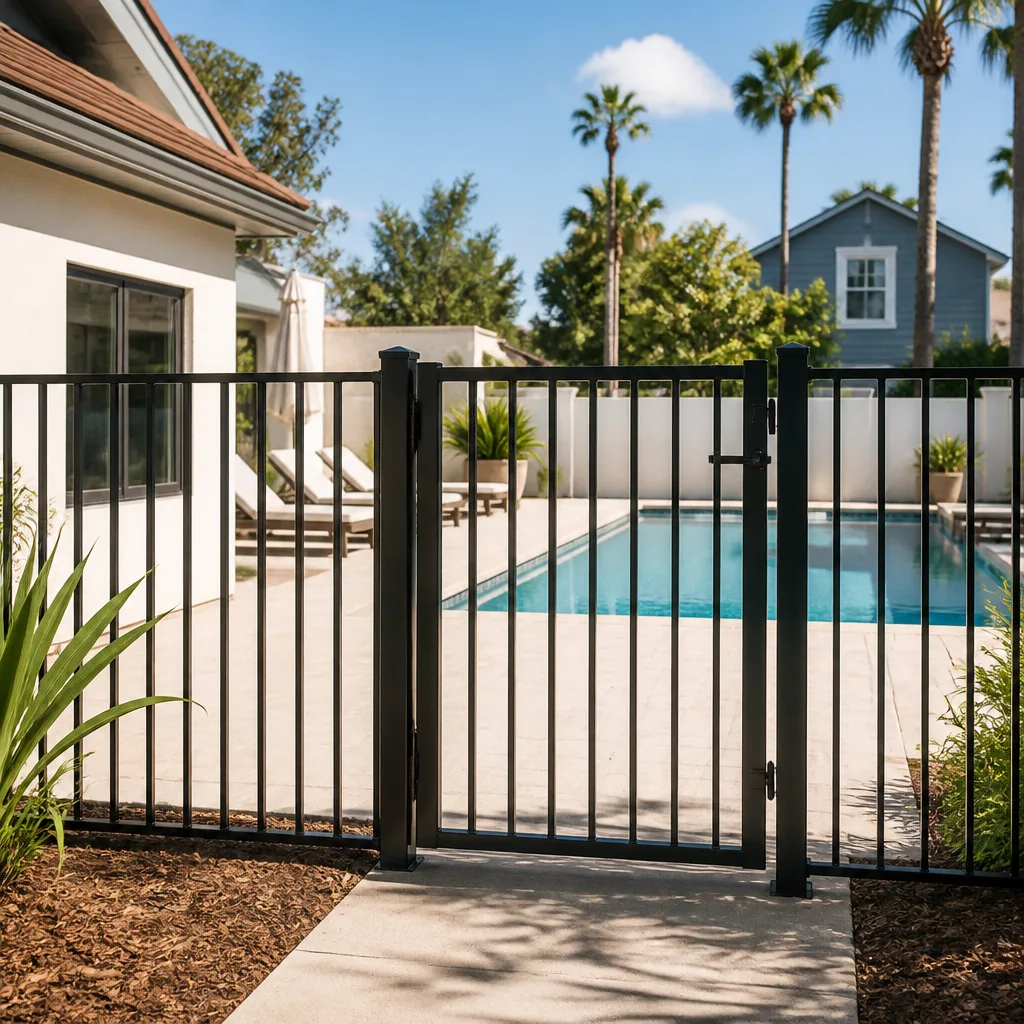
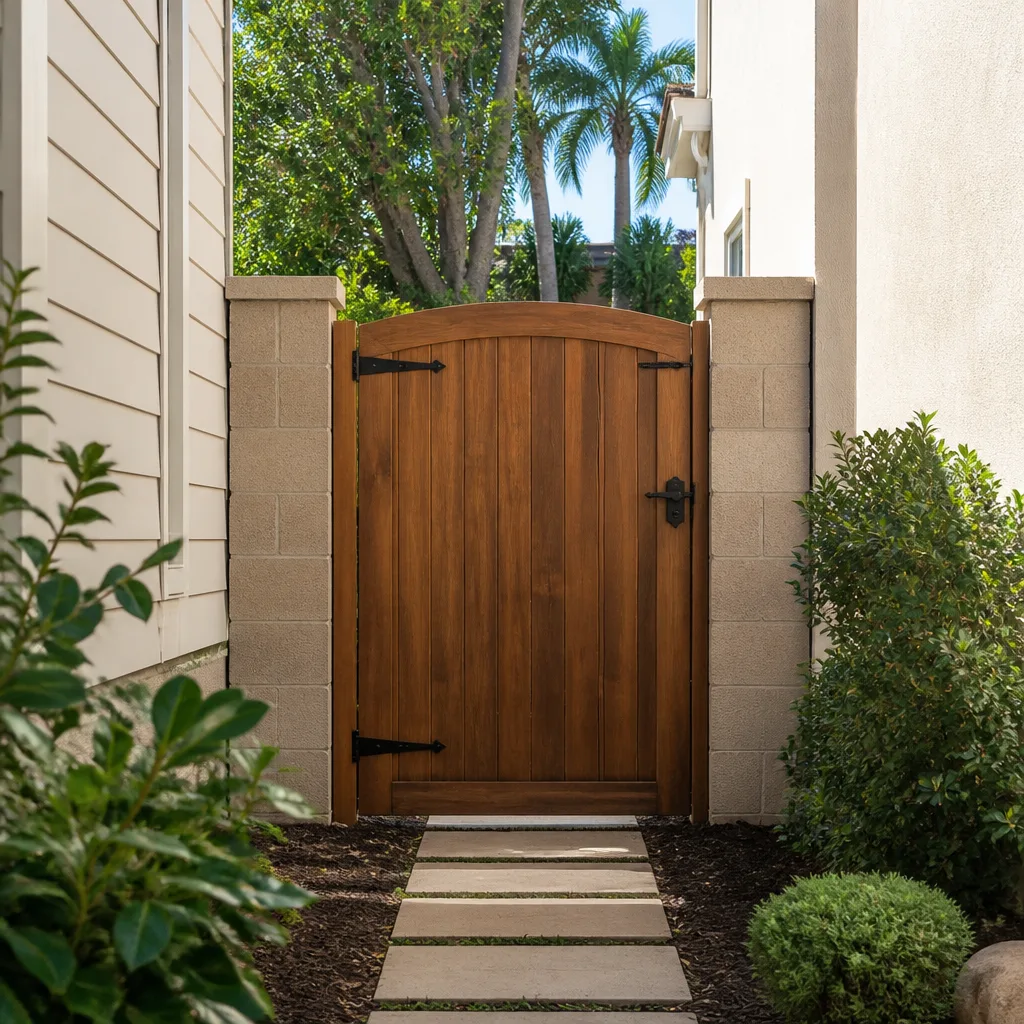
The gate is where cheap work gets loud. A gate that drags, sags, or doesn’t latch cleanly on day one is a gate that will be worse in six months. Good gate construction uses a diagonal brace to prevent sag, a solid latch, and hinges set into the frame, not just screwed on. Hardware should be exterior-rated. The whole thing shouldn’t twist when you swing it open.
Numbered steps to check a gate while the crew is still on site:
- Open and close it ten times. It should swing smoothly the same way every time, with a consistent latch catch.
- Look for the diagonal brace. No brace means the gate will sag sooner than later. Ask for one.
- Check hinge mounting. Hinges should be into solid frame material, not screwed into the end grain of a thin picket.
- Swing it fully wide. It should open freely without scraping the ground or rubbing the post.
- Test the latch with one hand. If you have to lift the gate to get it to close, the frame is twisted and the fix is structural.
A crew that gets defensive when you point out a dragging gate at the walkthrough is a crew that won’t pick up the phone at month three. Our approach to Fence Installation in Downey is to check the gate swing before we call the job done, because a gate that fails is the first thing you’ll notice and the last thing you’ll forgive.
Why the Cheapest Bid Almost Always Means Shorter Posts
When you line up three fence bids and one is 30 percent lower than the others, the difference is almost never skill or speed. It’s material and depth. The cheapest bid has to cut something to hit that number, and the things it cuts are the things you can’t see. Shorter posts. Leaner concrete. Thinner pickets. Fewer nails. Skip the DigAlert call. Skip the permit. Nobody saves 30 percent on a fence by being efficient. They save it by building less of a fence than they quoted.
The post length cut is the one that costs you the most, and it’s the one that takes years to expose. A post cut four or five inches short still holds up for a few dry seasons. Then a wet winter comes, the soil shifts, the shallow concrete footings tilt, and the whole run starts leaning like it was tired. By the time you can see it, the contractor is long gone, the warranty is a folded piece of paper in a drawer, and the repair is a full replacement, not a fix.
In our experience, the bids that look expensive on paper are the ones priced to survive a decade of Downey weather. Here’s how to compare bids fairly if you want to avoid the cheap-bid trap:
- Ask every bidder for post depth in writing. Compare the numbers, not just the totals.
- Ask for material spec names. Boral, PGT, CGI, and CWS are the kind of suppliers whose names you should see on a bid, not the generic “quality material” line.
- Ask about concrete. Bag or ready-mix, how much per hole, crown or no crown.
- Ask about payment schedule and lien waivers. A bid that skips these is hiding financial risk in your name.
- Use the low bid as a conversation starter, not a decision. “This bid is lower than the other two; walk me through what’s different” gets you more information than any five-star review.
The 730-Day Done Right Promise is a useful benchmark here, because it turns the whole “who’s cheapest” question on its head. A contractor confident enough to back a fence in writing for two years is not cutting post length to win on price. Our technicians have up to 12 years of experience, and the good ones refuse to drop a post shallow, because they know they’ll be the ones coming back. A written guarantee says the company expects the fence to outlast the invoice.
How the Crew Behaves on Day One Tells You Everything
The crew shows up, and within ten minutes you know most of what you need to know about how the job will go. Not because of how they look, but because of what they do. A crew that walks the property before unloading, checks the DigAlert markings, and asks where the gate hinge is supposed to swing is a crew that plans. A crew that backs in, starts yanking old fence off the trailer bed, and has to ask you which way the gate faces is a crew that’s going to figure it out as they go, and “figure it out as they go” is how posts end up wrong and gates drag.
Watch for these behaviors on day one:
- They walk the line before digging. They should lay out the fence line with string or stakes before holes are dug, and confirm the property line with you or a survey.
- They have a plan for the utilities. DigAlert marks are present, and they point them out. No marks, no digging.
- They measure. Post spacing, gate width, and line height should be set out with a tape and level, not eyeballed.
- They ask about the property line. A fence is on the line, and boundaries matter, especially in older Downey neighborhoods where lots were laid out close together. A contractor who doesn’t raise the property line question is asking for a neighbor dispute.
- They protect the yard. Plywood down over concrete, drop cloths near landscaping, machines kept off tender grass. Small care on day one scales into small care on the finished job.
Background-checked, uniformed crews on every job are not a marketing nicety. When the people in your yard are vetted and clearly identified, you know the company has standards for who represents it, and that confidence starts at the curb. It also means you know who to call when something needs adjusting, because you can name the crew and the project instead of describing a mystery truck. The Groundwork Construction Co. of Downey home page spells out how we handle each job from the first walk-through.
Material Substitution and the “Equivalent” Trap
This one sneaks in politely and costs you quietly. You signed a bid for a named composite or a specific cedar grade. Then the material arrives, and it’s not the same thing. The invoice says “or equivalent,” or the crew lead shrugs and says “this is what the supplier had.” Maybe it’s true and the named material was out of stock. But when it happens twice, or the substitute is visibly thinner, lighter, or a different grade, you’re paying for a fence you didn’t order.
The fix is simple and belongs in the contract: no substitutions without written approval. Compare the delivered material to the spec sheet before a single post goes in. If the wood species, thickness, or coating doesn’t match what you signed for, you have leverage to refuse delivery before it’s installed, and zero leverage after. The same applies to gate hardware, hinges, and fasteners, where “exterior-rated” is a real spec and household screws are not.
For composite and vinyl, ask for the manufacturer line, not just the color. PGT, CGI, and CWS make solid products at different price points, and knowing which one you’re paying for protects you. For wood, ask for the actual species and grade. “Cedar” covers a range from tight-knot clear heart grades down to what’s effectively kindling. If the yard sends the cheap grade, the fence looks fine on install and starts checking and splintering within two years in the Downey sun. Our own procurement leans on a curated set of top-tier brand partners precisely so the material you spec is the material that arrives. If a product is unavailable, we’d rather delay the job or offer an upgrade than swap in a downgrade quietly.
Common Mistakes to Avoid
- Choosing on price alone. The lowest bid usually hides a shorter post or a leaner concrete mix, and you won’t see it until year three. Compare specs, not totals.
- Skipping the property line check in older Downey neighborhoods. Lots here were platted close together. A fence built on the wrong side of a boundary is a neighbor dispute you pay for twice, once to build and once to move.
- Not getting payment terms in writing. Full payment upfront is not a discount, it’s leverage handed over before the work exists. Milestone payments and lien waivers protect you.
- Ignoring the DigAlert question. You’re not being difficult by asking for the ticket. You’re protecting your property and your wallet from a utility strike that becomes your problem.
- Accepting vague materials language. “Or equivalent” gives the contractor permission to downgrade. Name the brand, the grade, and the spec, and refuse substitutions without written approval.
- Skipping the day-one walkthrough with the crew lead. Take ten minutes to confirm the fence line, gate swings, and post spacing before digging starts. Changes are cheap before excavation, expensive after.
- Not inspecting the gate before final payment. Open and close it ten times, look for the diagonal brace, and check that the latch catches. A dragging gate is structural, and fixing it after the crew leaves costs more.
See the difference
 Before
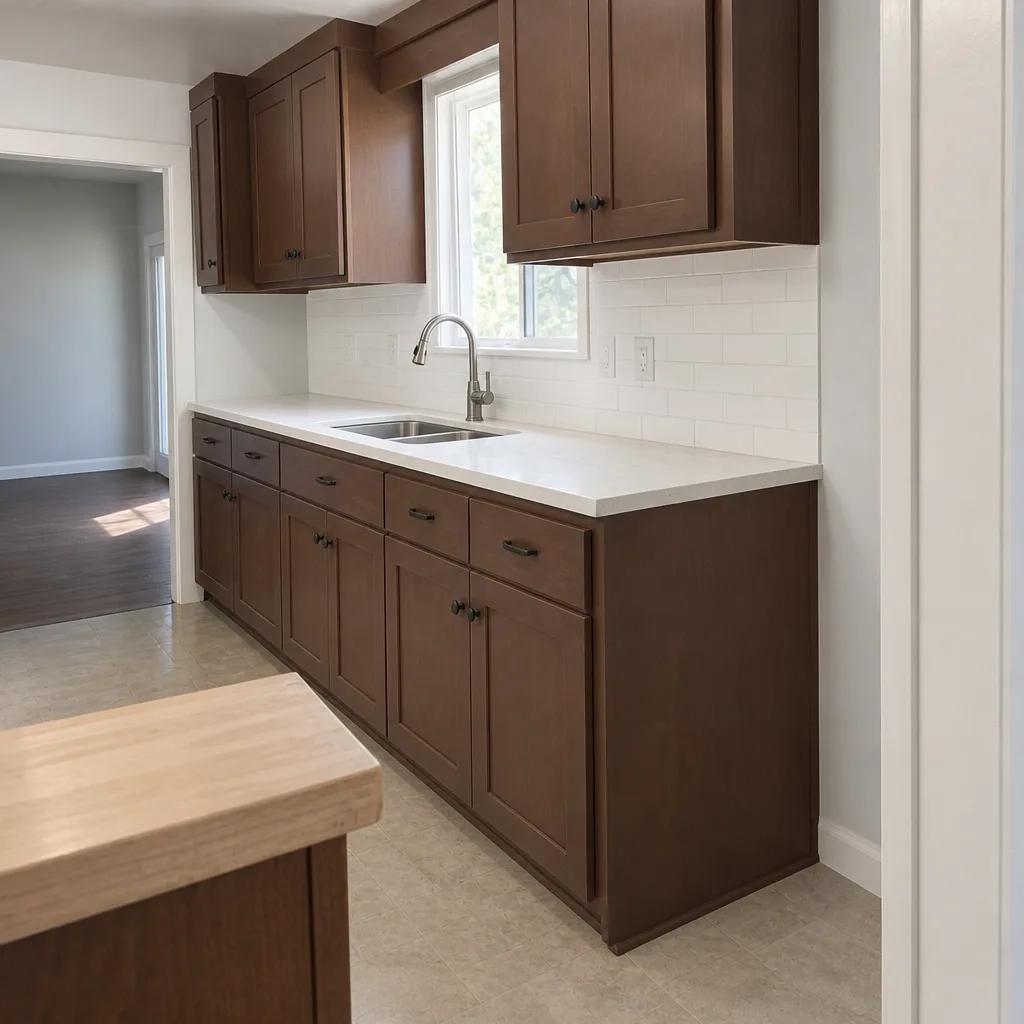 After
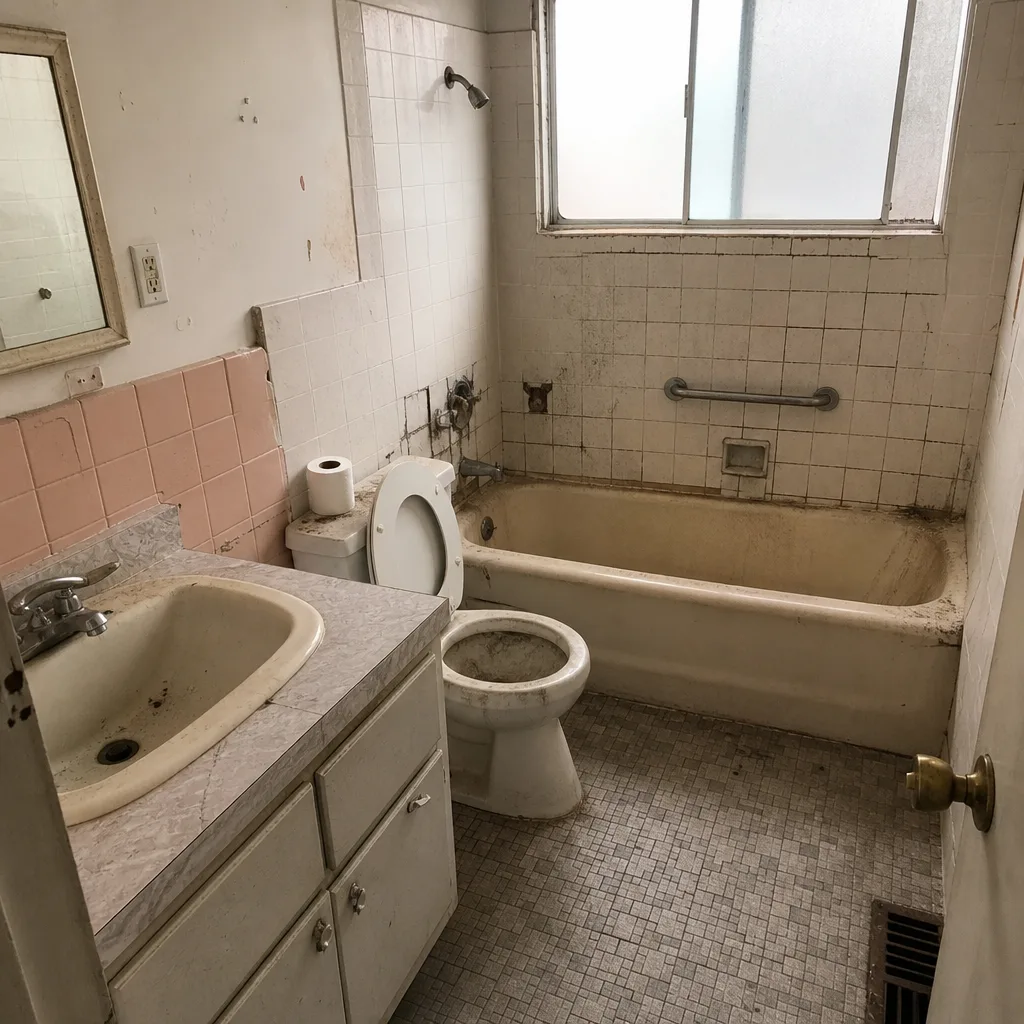 Before
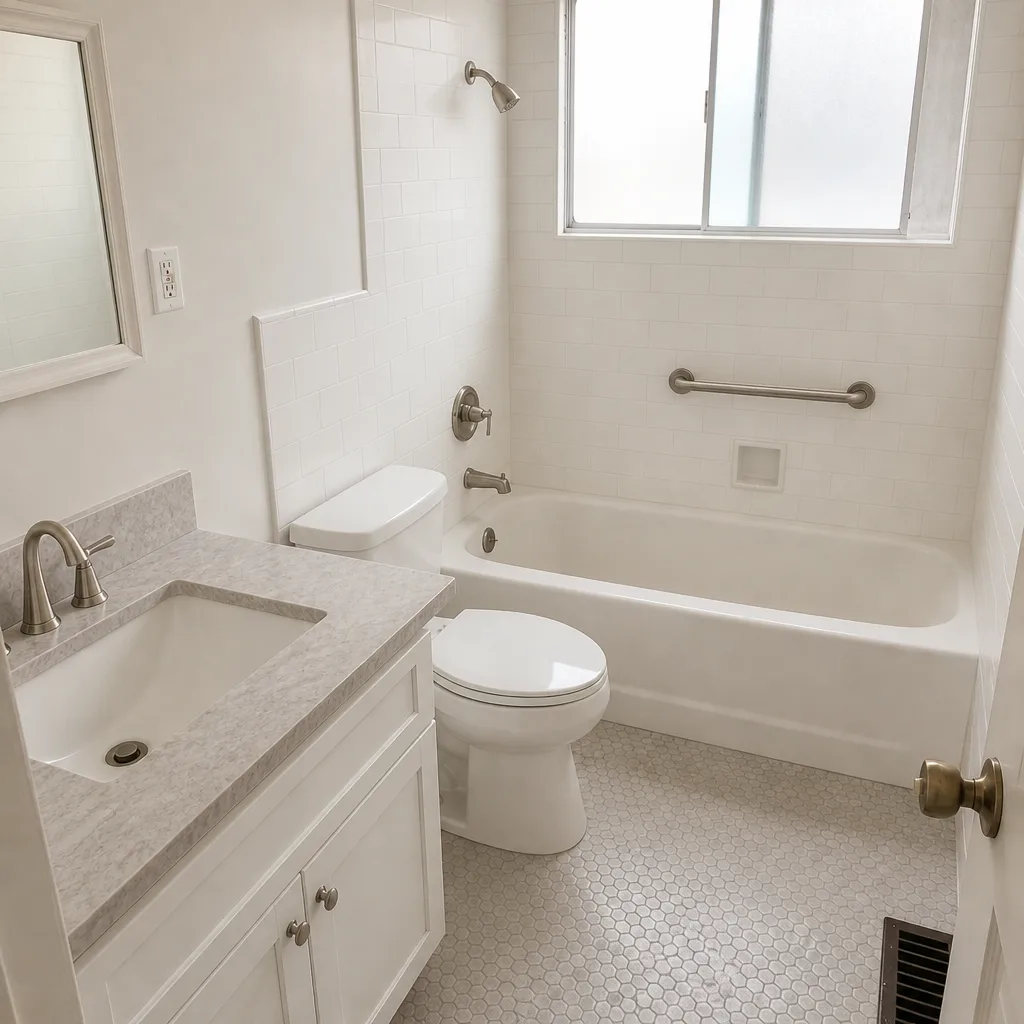 After
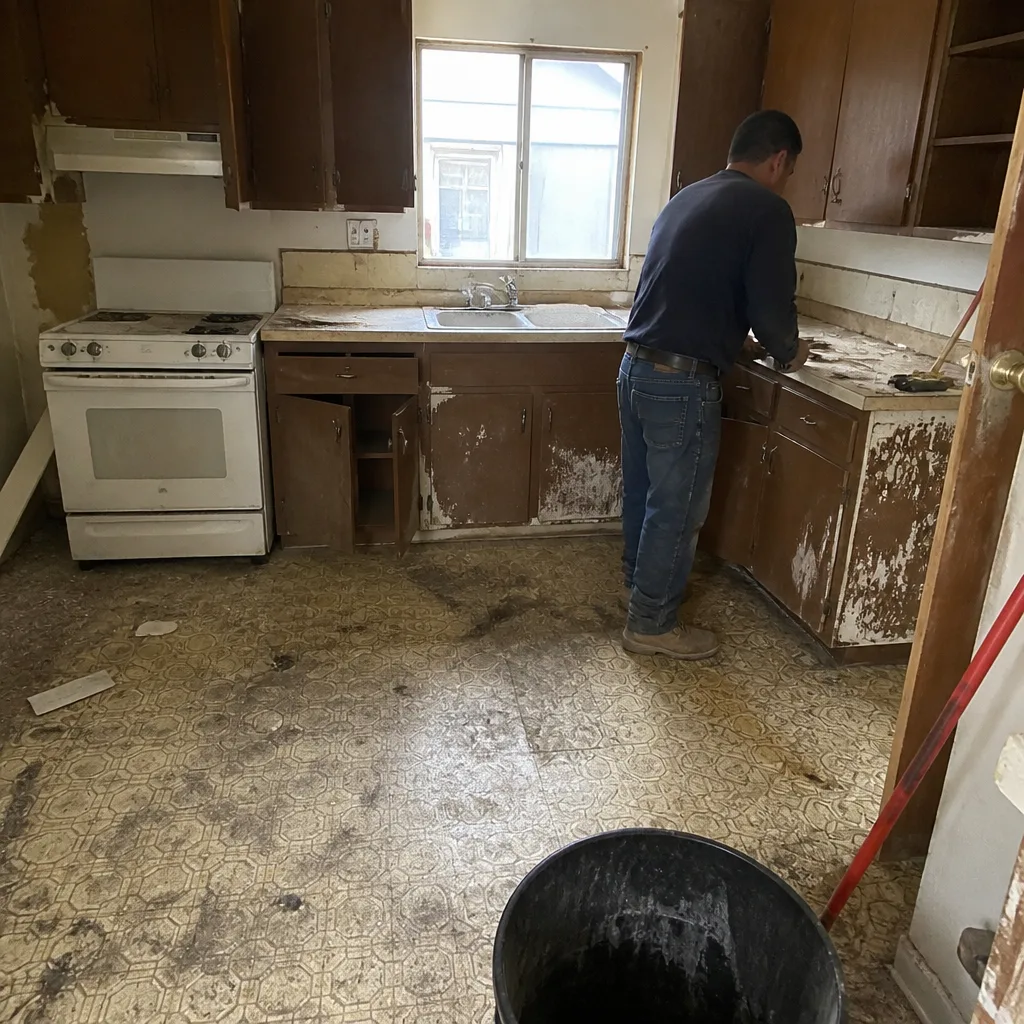 Before
 After
When to Call a Professional
Some fence jobs want a pro from the start. If your property line runs through clay-heavy soil, if the run is long or the site has a slope, if you need a gate that gets daily use, or if any part of the build touches a shared boundary with a neighbor, the failure cost of doing it wrong is high enough to justify a professional estimate. The same goes for any job where the contractor expects to skip DigAlert, won’t put specs in writing, or wants full payment upfront; those are signals to stop and get a second opinion. Groundwork Construction Co. of Downey offers free estimates in Downey; call (888) 255-8179 to schedule one. A written bid with named materials, post depth, and a 730-Day Done Right Promise gives you something to compare, even if you don’t hire us.
Frequently Asked Questions
Yes. California requires any excavator, including a homeowner, to contact 811/DigAlert before digging, and it’s free. The call generates a ticket and the utilities mark their lines. If a contractor skips it, the liability for striking a line on your property usually comes back to you, so ask for the ticket number before work starts. Call (888) 255-8179 if you’d like an estimate from a crew that treats the ticket as mandatory.
A 6-foot fence should have posts buried at least 24 inches, and we prefer 30 to 36 inches in this area’s clay-heavy pockets. Gate posts need more depth because they carry the weight of the swing. Ask any contractor to put post depth in writing; if the bid doesn’t specify it, the crew will decide on site, and the cheapest bid always decides short. Get an exact quote from us by calling (888) 255-8179.
Vague material specifications, no post depth or concrete spec, no mention of permits or DigAlert, no cleanup clause, and payment-in-full upfront are the biggest fence contract red flags. A bid that reads like a spec sheet is a bid you can hold someone to. A one-line bid for “6-foot wood fence” is a guess. If a bid is missing those details, call (888) 255-8179 for a free written estimate you can compare against.
The cheapest bid almost always means shorter posts, leaner concrete, and thinner pickets, because those are the costs you can’t see once the fence is built. The failure doesn’t show up until year three, after the warranty has lapsed. A written 730-Day Done Right Promise is a good filter, because a contractor who expects the fence to last will not cut the depth. Call (888) 255-8179 to see what an upfront price looks like on your property.
It can, but it needs a small drainage gap, usually just an inch or so, so moisture can escape. Fences pushed tight against stucco trap water behind the pickets, and that’s where rot starts and where you’ll never see it until the panel fails. Ask the crew to set the fence back from the wall. Our crew confirms the setback with you before digging; call (888) 255-8179 to schedule your estimate.
A properly set, properly specified fence in this climate should hold up for years without leaning or racking, and the post depth and concrete mix are the deciding factors. Downey’s wet-dry cycle is hard on shallow footings, so the crew that digs deep builds a fence that outlasts the one that doesn’t. Material grade matters too; cheap cedar or thin composite fails faster than a named, verified product. Call (888) 255-8179 for an estimate that puts those specs in writing.
The Bottom Line
The warning signs of a bad fence job are mostly behavioral: skipping DigAlert, refusing to name post depth and concrete, quoting one line with no specs, demanding full payment upfront, and shrugging when you point out a dragging gate. Read those signals at the estimate stage and you’ll avoid most of the pain. Understand what Downey’s clay soil asks of a post, watch the crew on day one, and compare specs instead of totals. A written bid with named materials and a written workmanship guarantee is the difference between a fence that holds and one that leans.
Ready to skip the guesswork? Call Groundwork Construction Co. of Downey at (888) 255-8179 for a free estimate. We’ll walk the line with you, put the post depth, materials, and payment terms in writing, and back the job with our 730-Day Done Right Promise. Upfront pricing, no surprises, from the first call to the final walkthrough.
Written by the team at Groundwork Construction Co. of Downey.