Last updated November 17, 2026





Free written scope consultation - allowances, timeline, and change-order rules on paper before a single trade is scheduled
Windows & Doors Warning Signs Every Homeowner Should Know
A window that suddenly becomes hard to lock in a house that’s 30 years old isn’t a hardware problem. In Downey’s expansive clay soil, it’s frequently the first visible sign of differential foundation movement – the ground beneath one corner of the house swelling in the wet season and shrinking in the dry one, slowly racking the frame out of square. The window is the messenger, not the culprit. We’ve walked into hundreds of Downey homes where a homeowner was ready to replace a perfectly good window that was actually reporting on a foundation issue two feet below the sill. This guide teaches you to read those messages – fogged glass versus racked frames, energy bill clues, water stain mapping, security failures, and contractor warning signs – so you respond to the real problem, not the symptom.
Quick Answer
The warning signs that matter most fall into four groups: fogged or failed glass seals (cosmetic), frames that rack, stick, or won’t lock (often structural), water staining in specific patterns around the unit (leak diagnostics), and locks that engage but don’t hold (security degradation). Fogged dual-pane glass is a glass-replacement issue; everything else should be investigated as a possible envelope or foundation problem before you spend money on new windows. In Downey, clay soil movement, dry summers, and coastal marine layer moisture make racking and concealed water intrusion the two most common real failures we see.
Styles & brands we work with
- Kitchen remodeling
- Bathroom remodeling
- Home additions & ADU
- Roofing
- Windows & doors
- Driveway & pavers
- Fence
Table of Contents
- Cosmetic Seal Failure vs. Structural Failure: Why the Difference Matters
- Your Energy Bill as a Window and Door Diagnostic Tool
- Reading Water Stains Around Windows and Doors
- Security Degradation: When Locks Lie
- Downey Soil, Foundation Movement, and the Windows That Report It
- Contractor Red Flags During a Window or Door Project
- A Step-by-Step Homeowner Inspection You Can Do This Weekend
- How to Know Whether to Repair, Reseal, or Replace
Cosmetic Seal Failure vs. Structural Failure: Why the Difference Matters
Most window problems fall into exactly two buckets, and mixing them up costs homeowners real money. Cosmetic seal failure is the fogged, milky, or condensation-trapped glass you see between the panes of a dual-pane unit. The seal that holds the argon or krypton gas in place has failed, moisture has entered the spacer cavity, and the glass looks permanently cloudy. The frame itself is fine. The fix is a new insulated glass unit (IGU) – the glass sandwich only, not the whole window – and the frame, trim, and wall opening stay exactly where they are. In Downey, we routinely see this on west- and south-facing windows after 12 to 18 years, because the inland sun load combined with the daily marine-layer temperature swing works the seal harder than in a milder climate.
Structural failure is different. The frame is no longer square, the sash binds in the jamb, the lock no longer aligns with the keeper, or the glass itself has cracked from a corner across the pane. Those are not glass problems – they’re movement problems. Either the wall opening has shifted, the header has sagged, the foundation has moved, or the frame was never installed level and plumb to begin with and the fasteners are losing their grip. Replacing the glass in that window is throwing money at the wrong layer of the house.
- Fogged glass, frame operates smoothly: cosmetic seal failure. Replace the IGU.
- Frame racks, binds, or won’t lock: structural. Diagnose the opening and the structure first.
- Cracked glass starting at a corner: almost always a movement or impact issue, not a seal issue.
- Condensation on the room-side of the glass: an interior humidity problem, not a window failure. Interior glass fogging means the unit is doing its job – the moisture is inside your home.
- Condensation between the panes: a failed seal. That’s the IGU.
The response for each is completely different. A failed seal on one window is a one-day service call. Racking across four windows on the same wall is a structural conversation, and it should happen before anyone signs a window-replacement contract.
Your Energy Bill as a Window and Door Diagnostic Tool
A sudden rise in your electric bill is one of the most underused diagnostic tools you have. The trick is attribution – separating a window or door thermal failure from an HVAC problem, a rates increase, or a change in household habits. Here’s how we walk a Downey homeowner through it.
First, pull the last 18 months of bills from your utility’s online portal. Compare the same month year over year, not one month to the next, because Downey’s summer cooling load and winter heating load swing hard. A window problem shows up as a bill that’s up 15 to 30 percent in the same month year over year with no other changes – same number of people in the house, same thermostat settings, no new appliance.
Second, run the hand test. On a hot afternoon, stand 12 inches from each window’s interior glass with the back of your hand. If one window feels noticeably warmer than its neighbors, that unit’s low-E coating or gas fill has degraded. Run the same test on doors near the bottom edge and the top edge – a leaking door gasket or worn sweep will feel warm at the bottom threshold.
Third, look for air movement on a still day. Light a thin strip of tissue and hold it near the perimeter of each window frame and each door’s weatherstripping line. Movement means air infiltration. A window with a bad perimeter seal can leak conditioned air continuously for 24 hours a day, and the bill impact is larger than most people assume.
- Bill up 15 – 30%, all same-month-year comparisons: likely envelope or window thermal loss.
- Bill up during the same months regardless of AC age, with hot interior glass: failed low-E or gas fill.
- Bill spiked after your HVAC system was serviced or replaced: investigate HVAC first, not windows.
- Bill climbed gradually over 3+ years: usually utility rate increases, not windows.
Attribution is everything. Calling a window company because your bill went up – when the real issue is a struggling compressor – is a common way to spend $9,000 and still get the same bill next August.
Reading Water Stains Around Windows and Doors
Water stains are the single most misread warning sign in a home, because the location of the stain tells you almost nothing about the location of the leak. The stain is where the water exits. The leak is where the water enters, and it’s often 3 to 8 feet away and up. Here’s how we read a stain pattern before we ever start tearing into a wall.
Stain directly above the window, spreading down onto the header trim: the leak source is above the window – failed flashing at the roof-to-wall transition, a blocked gutter backing water into the wall, a balcony above, or an exterior siding joint. The window itself may be perfectly sealed. The stain is only the exit point.
Stain on the interior sill or drywall just below the window, with bubbling paint: the source is at the window’s perimeter or sill. Failed caulk at the exterior, an improperly installed sill pan, or water infiltrating the corner joints of the frame. This is the pattern we most often find on Downey homes built between 1970 and 1995 where original perimeter caulk has cracked out.
Stain beside the window, running vertically down the wall: the source is beside the frame – a piece of trim with a hidden gap, siding that terminates too close to the frame, or (in stucco homes) a crack in the stucco that funnels water behind the frame. Common on Downey’s older stucco elevations after the dry summer expands and cold-weather contraction opens micro-cracks.
Stain inside the window’s lower channel, with visible water in the track: the weep holes are blocked. Water in the channel means the sill is holding water instead of draining. Caulking over weep holes – a real contractor error we’ll cover later – does exactly this.
Stain dripping below an exterior door threshold, with swelling in the flooring or trim: the door pan was installed incorrectly or the threshold seal has failed. This one always gets worse fast because it puts water into your subfloor, not just into a wall cavity.
Before you call anyone, photograph the stain with a tape measure held in frame. Trace the path. Look above and beside. In our experience on Downey homes, more than half of “window leaks” turn out to be originating elsewhere on the elevation.
Security Degradation: When Locks Lie
A window lock or door lock that engages but doesn’t hold is more dangerous than a lock that’s visibly broken, because you think you’re protected when you’re not. We see this on Downey entry doors more often than homeowners realize, and the tell is subtle.
On doors, the sign is a gap that wasn’t there before. Run your hand along the perimeter of a closed and locked door. Any light visible between the door and the jamb in a house where that gap didn’t exist two years ago is a movement warning – either the hinge has pulled slightly, the frame has shifted, or the door slab has swollen or warped from moisture. A gap wider than about 1/8 inch at the deadbolt side means the lock can be defeated by deflection – the door frame flexes and the bolt walks out of the strike plate.
On windows, the sign is frame flex. With the window closed and locked, press steadily on the frame near a corner. A frame that flexes noticeably – more than a hair – has lost the structural rigidity it was installed with. Combine that with a lock where the cam or keeper doesn’t fully engage, and the lock is decorative.
Then there’s the “hard to lock” problem. A window or door that used to lock easily and now requires slamming, pushing, or lifting is telling you the opening is out of square. In Downey, that’s the message we get called about most often.
- Locks engage but don’t fully seat: the frame has moved and the lock hardware is holding by friction only.
- Frame flexes under moderate pressure: the window was undersized for the opening, or the opening has shifted.
- New daylight gap at a door’s edge when locked: the strike side has moved, or the door slab has warped.
- Door slab or window sash has swollen and no longer closes: moisture intrusion into the material. Investigate the source, don’t sand the door.
- Lock cylinder difficult to turn on an older door: could be hardware age, could be frame misalignment. Test the door’s edges before replacing hardware.
The security conversation is downstream of the structural conversation. If a door frame has moved, no lock upgrade fixes the underlying problem.
Downey Soil, Foundation Movement, and the Windows That Report It
Downey sits on expansive clay soil. That dirt behaves like a sponge – it swells when it’s wet and shrinks when it’s dry, and the movement isn’t uniform across the lot. A corner with more sun exposure dries faster. A corner near a shade tree stays wet longer. A corner where the home’s original gutter has been failing for years has been absorbing water for a decade without your knowledge. Over 15 to 30 years, that differential movement puts slight torque on the home’s frame, and windows and doors are the least forgiving elements in the structure because they were cut to fit a specific opening on the day they were installed.
When we get a call from a homeowner in the Rancho Estates area about a window on the south side of the house that suddenly won’t lock after years of working fine, we start with the window, but we walk the perimeter. Here’s what we’re checking before we ever quote a window replacement:
- Door-to-frame gaps that changed: new daylight at the top or bottom corner of any entry door is a foundation-movement marker, because interior doors are tuned tighter than windows.
- Diagonal drywall cracks in the wall opposite the problem window: a hairline crack radiating from a corner of a door frame or window frame is the signature of movement.
- Doors that stick in one season and free up in another: seasonal sticking means the opening is flexing with the soil.
- Sloping floors near the exterior walls: a marble or a level ballpoint pen rolled across the floor will show you the pitch without any tools. A floor that slopes 1/4 to 1/2 inch over 10 feet near an exterior wall is worth flagging.
- Stucco cracks that follow a pattern: stair-stepping or diagonal stucco cracks in Downey typically track the same movement.
None of those signs by itself proves a foundation problem. Together, they tell you to have the foundation evaluated before you invest in new windows for a house that will crack the new ones the same way it cracked the old ones. Which brings us to a Downey-specific piece of math we want every homeowner to hear: a window replacement project in Downey for a mid-sized home typically runs $8,000 to $16,000 for quality units installed correctly. If the movement cause is a foundation issue, that money gets eaten inside of four years. Get the structural question answered first. A foundation evaluation runs a few hundred dollars and could save you five figures. Windows & Doors in Downey is a category we work in constantly, and the projects that last are the ones where the underlying structure was addressed first.
Contractor Red Flags During a Window or Door Project
Most of the window and door failures we’re called to fix in Downey weren’t caused by a bad product. They were caused by a bad installation at the time of the original installation – sometimes 10 years earlier – that only became visible once the movement had done its work. If you’re having windows or doors installed right now, watch for these specific misses. Every one of them is a symptom of a crew that hasn’t been trained on waterproofing and building science.
- Skipping flashing tape or using it inside-out: the flashing at the sill is the single most important waterproofing step on any window. Correct flashing runs up the jambs, laps over the sill, and is installed shingle-style – each piece overlapping the one below it. If a crew skips the sill flashing entirely or lays the tape in the wrong direction, water entering above the window will get trapped inside the wall cavity and the damage shows up years later.
- Caulking over weep holes: every window and sliding door has small drainage slots at the bottom of the exterior frame called weep holes. They exist to let water that gets into the frame escape. A crew that caulks over them – sometimes by accident, sometimes on purpose because they look like gaps – has just created a bathtub inside your window frame. Water pools, damages the sill, and eventually rots the wall sheathing below.
- Not checking level and plumb before fastening: a window installed 1/4 inch out of square will operate stiff from day one and progressively worse as the frame settles. The tell is a sash that binds in the jamb or a lock that requires force. If a crew is fastening without a level on the sill and a plumb line on the jambs, they’re guessing.
- Sealing the window directly to stucco without a reveal: in Downey’s stucco homes, the window needs a reveal (a small recess) and a backer rod with proper sealant joint, not a smear of caulk bridging window frame to stucco. Smear caulk cracks within two summers.
- No pan flashing on exterior doors: an exterior door needs a pan-flashed sill just like a shower. A crew that sets the threshold onto bare framing has created a permanent water channel into your subfloor.
- Mismeasuring the rough opening: if the new window had to be forced into the opening with a sledgehammer or shimmed 1/2 inch out of level on one side, stop the install. Improper sizing creates immediate racking.
The crews we send out are background-checked, arrive in uniform, and are trained on these exact waterproofing steps because we’ve seen what happens when they’re skipped. Our work is covered by the Downey home construction team at Groundwork Construction Co. under the 730-Day Done Right Promise, which means if a window we installed leaks inside of two years, we come back and make it right – not with a phone call, with a crew.
A Step-by-Step Homeowner Inspection You Can Do This Weekend
You don’t need any tools to run this inspection. Give yourself 45 to 90 minutes on a Saturday morning, walk each window and door in the home, and follow the same sequence on every unit. What you’re building is a baseline – a record of what’s normal on your Downey home – so the next time something changes, you’ll actually notice.
- Open, close, and lock every window. Note any window that requires force, doesn’t seat smoothly, or has a lock that doesn’t fully engage. Listen for grinding sounds – they usually mean hardware wear or frame binding.
- Look at the glass up close. Foggy, milky, or streaky interior between the panes means a failed seal. Note which windows, and photograph the glass at an angle with a light behind it.
- Trace every frame perimeter on the interior. Look for stained paint, bubbling drywall, or discolored caulk. Photograph and mark the location of any stain – above, beside, or below the window.
- Inspect exterior perimeters and weep holes. On each window, look at the bottom of the exterior frame – you should see small drain slots. Any that are caulked, painted closed, or buried in stucco need attention. Look at the caulk joint between frame and wall – if the caulk is cracked, pulling away, or missing, note it.
- Open and close every exterior door. Run your hand around the perimeter. Look for new daylight at the top corner, the strike side, or the hinge side. Note any door that has started rubbing at the top or bottom.
- Perform the hand test on the glass. On a hot afternoon, compare interior glass temperature across your windows. Any that’s noticeably warmer than its neighbors is a candidate for low-E or gas-fill failure.
- Do the tissue test on one windy day. A thin tissue held at each perimeter will move if air is infiltrating. Note the locations.
- Walk the interior walls of each room. Note any hairline crack that runs diagonally from a window or door frame corner, and any floor that feels uneven along an exterior wall. This is a foundation-movement screen.
Keep your notes and photos. If you end up calling us or any contractor, that record helps enormously – it tells us what’s changing and when, and it lets us solve the actual problem instead of a guess.
How to Know Whether to Repair, Reseal, or Replace
The decision between repair, reseal, and replace is not a judgment call on vibes – it has a consistent framework based on what’s actually failing and how many units on the same elevation show the same failure.
Repair is right when a single window has a mechanical issue the frame can still support – a broken lock, a worn hinge, a bad operator on a casement, a torn weatherstrip on one door. Those are $40 to $250 hardware fixes, and if the frame is square and sealed, they solve the problem. Reseal is right when the perimeter caulk has failed but the frame and glass are intact. Re-caulking the exterior joint properly (with backer rod and the correct sealant – not just a smear of silicone) runs $60 to $180 per window, and prevents the water intrusion that becomes a five-figure repair later.
Replace is the right answer when three or more windows on the same elevation show the same failure, when a dual-pane unit has lost its seal and the frame is more than 20 years old, or when the frame has racked and the opening can’t be squared. If one window on a wall has failed, it’s a window issue. If four have failed on the same wall, it’s a wall issue – replacement won’t fix it, and the structural cause needs attention first. That’s why we look at the whole elevation before we quote a single window.
If you’re evaluating a larger project – a window package alongside a fence, driveway, or addition – the sequencing matters for pricing and for how much of the work overlaps. Our teams handle fence installation in Downey and driveway and paver work in Downey alongside window and door packages most weeks, and we can sequence them so the same site prep and access work serves both projects. If the eventual math points toward a bigger structural shift like an addition or ADU in Downey, that’s a conversation worth having before you spend on window replacement a year ahead of building.
Common Mistakes to Avoid
- Replacing windows to fix a leak that’s coming from above. We routinely see homeowners spend $10,000 on new windows to solve a stain that turns out to be a failed roof transition or a clogged gutter. Trace the water path first.
- Confusing interior condensation with a window failure. Fog on the room-side of your glass means interior humidity is too high, not that the window is broken. Adding a bath fan and a dehumidifier sometimes solves what a $12,000 replacement could not.
- Assuming one stuck window is only a window problem. In Downey’s clay soil, one stuck window after 20 years of operating smoothly is the message. The foundation should be ruled out before the window is replaced.
- Caulking over weep holes on the exterior. Water needs to escape. Blocking the drain path turns every rain event into slow water damage in the wall.
- Choosing the cheapest window package without checking the installer’s flashing method. The cheapest installation is often the one that causes the most expensive long-term repair. Ask how the sill is flashed on any quote.
- Skipping the permit because the window “looks the same.” Downey requires permits for most window and door replacement work on the building envelope, and unpermitted work can complicate a sale. A contractor suggesting you skip the permit is telling you exactly what kind of contractor they are.
- Signing a window contract before the structural integrity of the openings has been inspected. New windows installed into a racked opening fail faster than the old ones. Get the openings checked first.
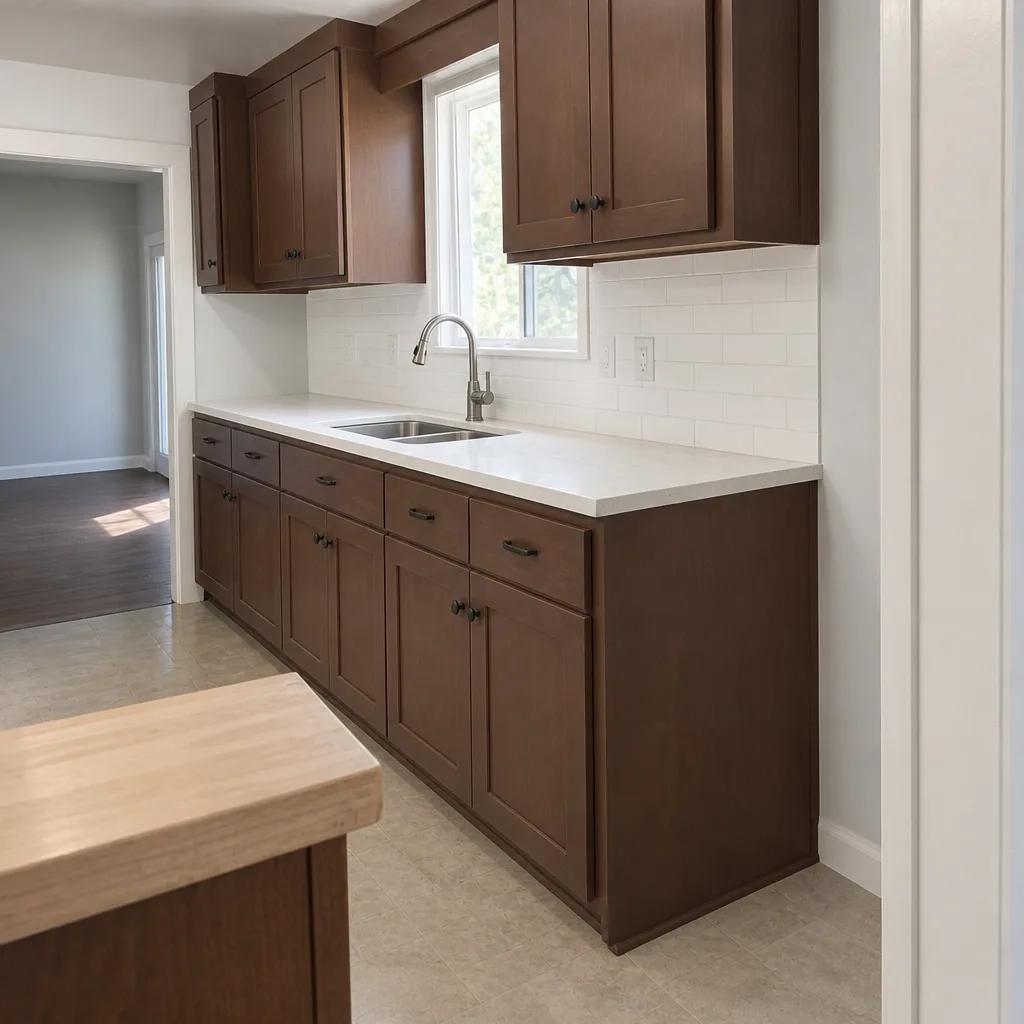
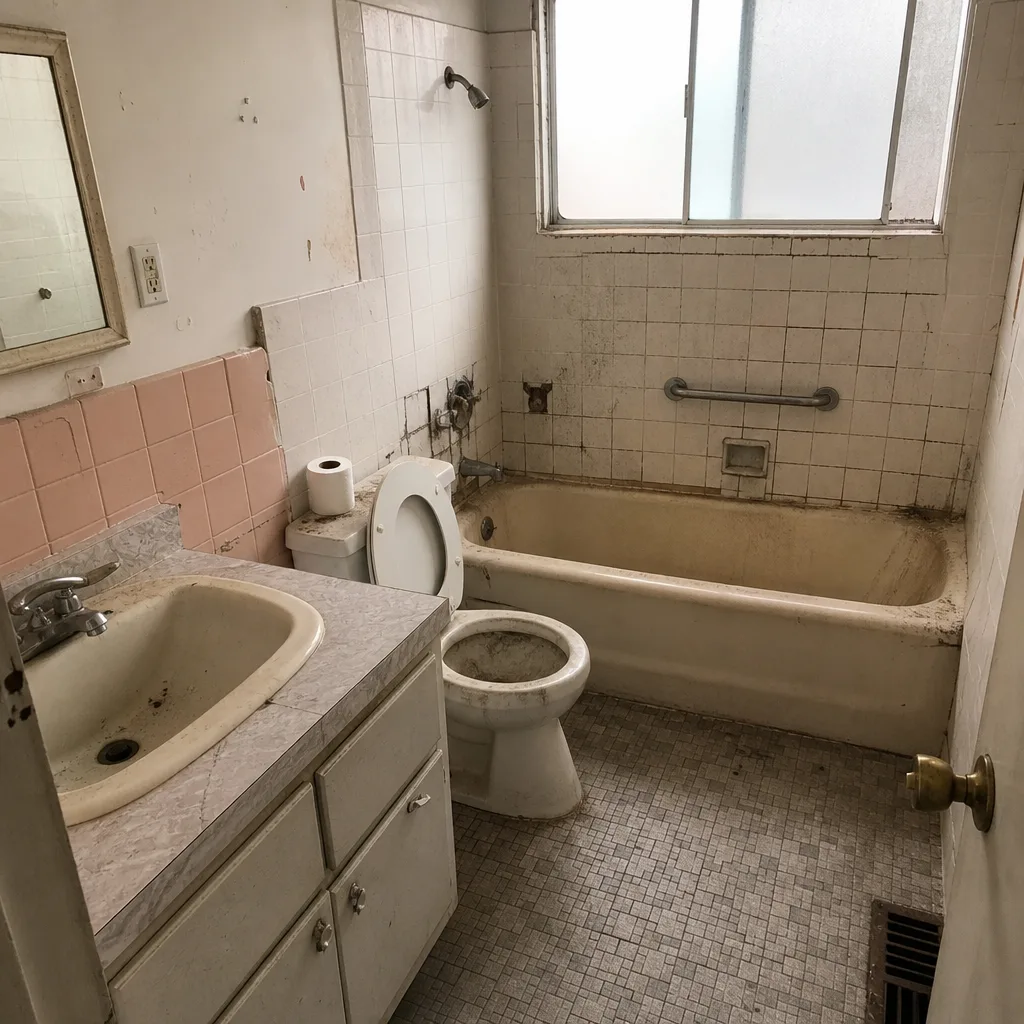
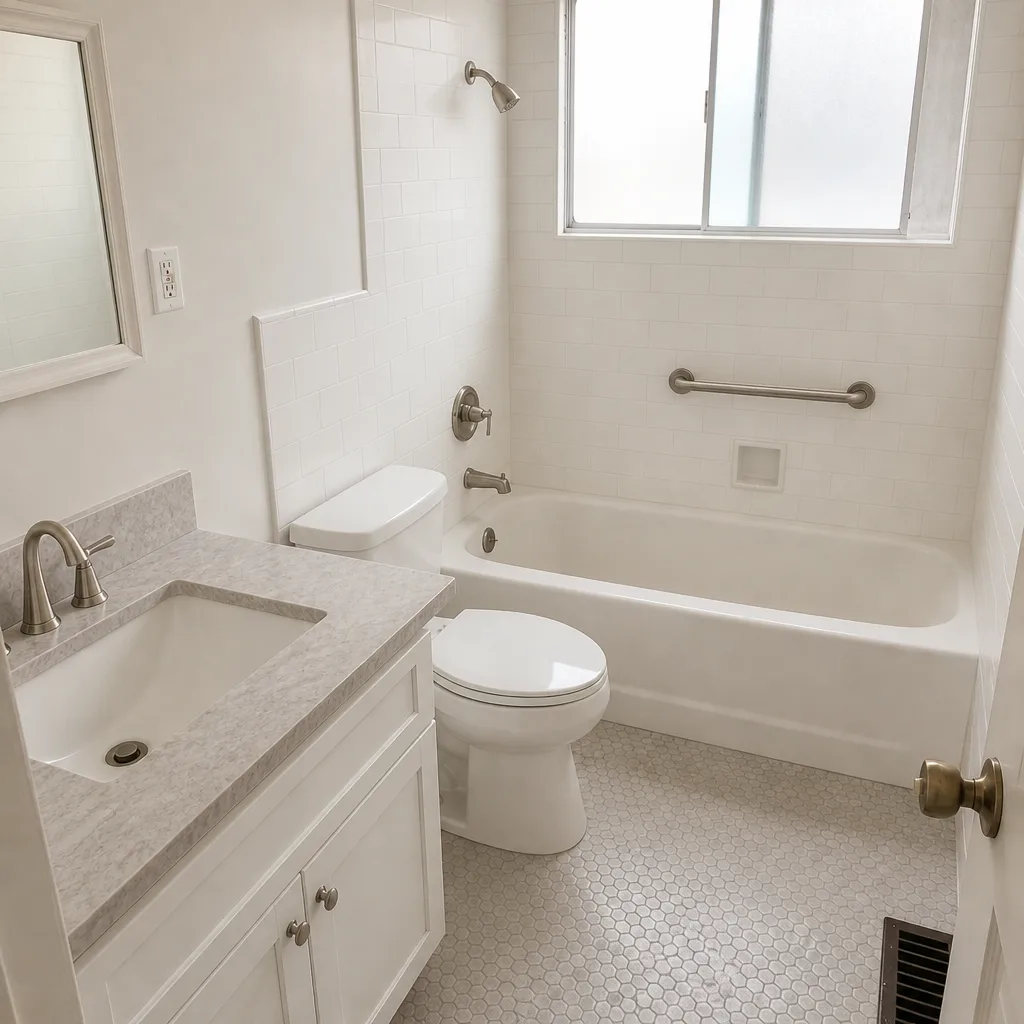
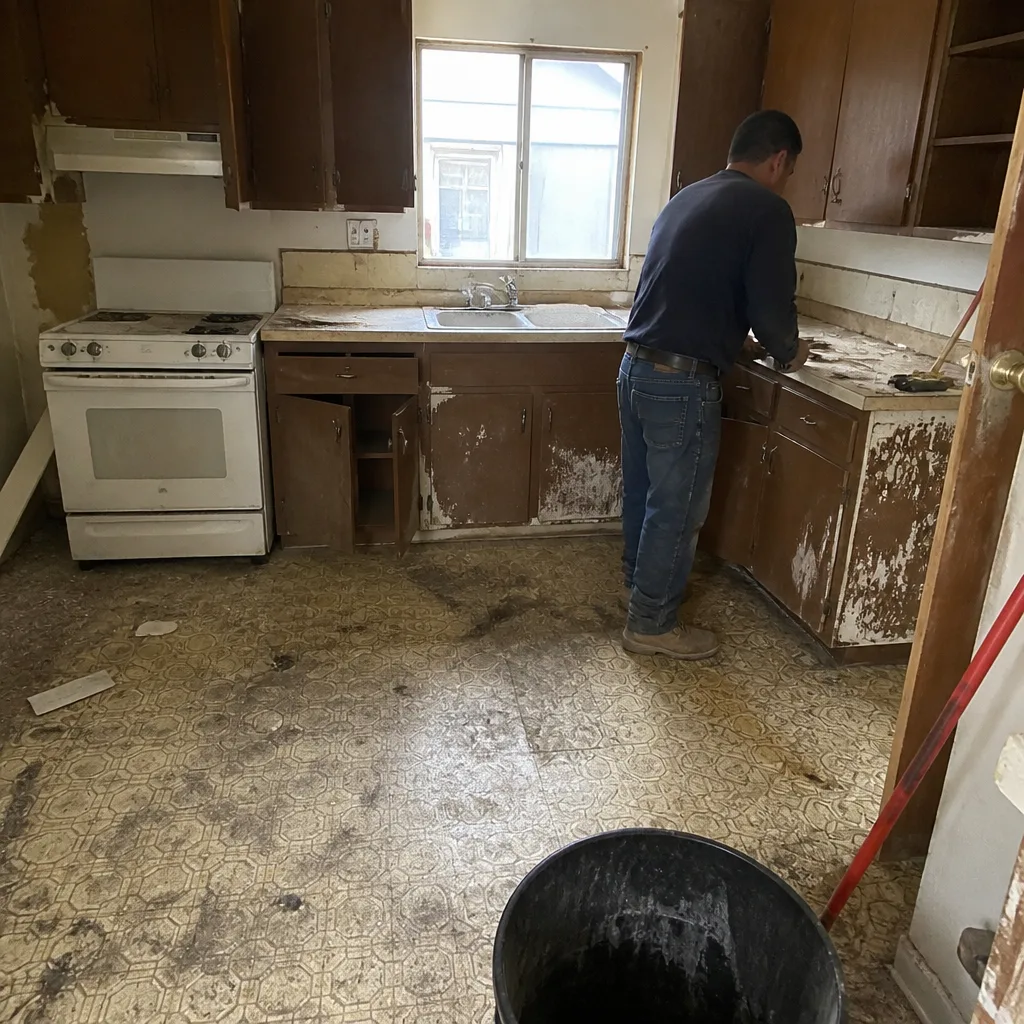
See the difference
 Before
 After
 Before
 After
 Before
 After
When to Call a Professional
Call a professional when a warning sign crosses from cosmetic to structural – a window that used to operate smoothly and no longer does, a door that’s developed a daylight gap, water staining inside a wall cavity, or three or more units showing the same failure on the same elevation. Call when you see fresh diagonal cracks radiating from the corner of a window or door frame. Call when a lock engages but doesn’t hold, because that’s a security issue you don’t want to sleep on. And call when the energy bill math says thermal loss, but you can’t attribute it confidently – a proper inspection takes 45 minutes and saves plenty of wrong turns. Chimney exterior siding and window-trim intersection issues, exterior door pans, and any waterproofing question on a Downey home are all worth a professional look before water gets deeper into the assembly. Groundwork Construction Co. of Downey offers free estimates in Downey – call (888) 255-8179. Our technicians have up to 12 years of experience, and calls are answered by a live person, 24 hours a day, 7 days a week.
Frequently Asked Questions

No, as long as the frame is intact. Fog between the panes means the seal has failed and the insulated glass unit needs replacement – typically a one-day service call, and usually just the glass, not the whole window. If the frame is also racked or the sash binds, then it’s a different conversation. Call (888) 255-8179 and we’ll walk through both scenarios with you.
Seasonal sticking means the opening is flexing with soil moisture and temperature swings – the frame is moving, not the glass. In Downey, this is most common on homes in clay-soil areas and on south- and west-facing elevations. It’s a foundation-movement screen and worth checking before you consider window replacement. Call (888) 255-8179 for a free structural assessment.
Trace the water from where the stain appears upward and outward. If the stain is above the window, the source is above – roof transition, gutter, or wall flashing. If it’s on the interior sill, it’s usually window perimeter or sill pan. Photograph the stain location and call us at (888) 255-8179 before you authorize any replacement.
Not automatically. If they were installed at the same time and are visibly the same age, replacing them together often makes financial sense – one crew, one permit, one warranty. But if a single elevation has failed while others are holding, the failing elevation deserves investigation into the underlying cause first. Free estimate and design consult at (888) 255-8179.
In most cases yes, especially for any work that touches the building envelope, changes the opening size, or replaces an exterior door. We pull permits on all window and door work we perform in Downey, and inspections are part of the job. Ask any contractor to state in writing on the quote whether permits are included. Call (888) 255-8179 for a clear, permitted process.
It means the frame has moved out of square and the lock hardware is meeting its keeper at the wrong angle. That’s a structural warning, not a hardware issue – replacing the lock alone fixes nothing. Have the opening checked. Call (888) 255-8179 and we’ll be at your home for a free estimate.
The Bottom Line
Windows and doors are the most reliable indicators of what’s happening inside your home’s structure and envelope – and the reason they’re diagnostic is that they’re unforgiving. They were cut to fit an opening on the day they were installed, and any shift in the frame reopens the conversation. Fogged glass is cosmetic and treatable. A window that stops locking is not. Water stains tell you where water exits, not where it enters. Your energy bill is a diagnostic tool only if you attribute it correctly. And during any window or door project, the flashing method is worth more attention than the brand name printed on the glass. If any sign in this guide says “investigate,” that’s your next move – not a signature on a window contract.
We handle window and door replacements, structural evaluation, and envelope repairs across Downey – with brand partners including Andersen, Pella, Marvin, and James Hardie, backed by the 730-Day Done Right Promise: if it’s not done right, we make it right. Upfront pricing, no surprises. If you’re evaluating windows and doors in Downey, call (888) 255-8179 for a free estimate. We’re available 24/7 because a real person answers the phone – every time. And if the inspection reveals the real problem is somewhere else in the home, we’ll tell you that first, before you spend a dollar on the wrong fix.
Written by the team at Groundwork Construction Co. of Downey.