Free written scope consultation - allowances, timeline, and change-order rules on paper before a single trade is scheduled
Styles & brands we work with
- Kitchen remodeling
- Bathroom remodeling
- Home additions & ADU
- Roofing
- Windows & doors
- Driveway & pavers
- Fence
See the difference
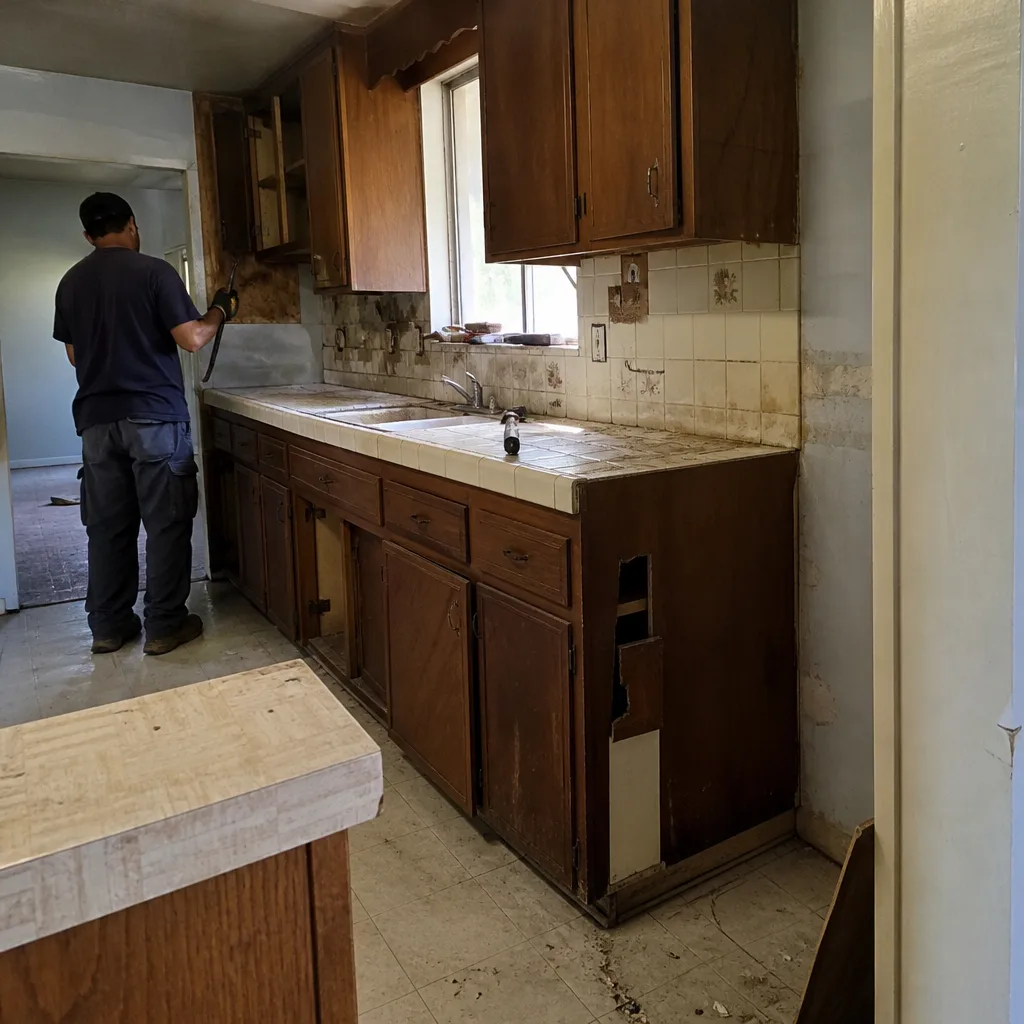 Before
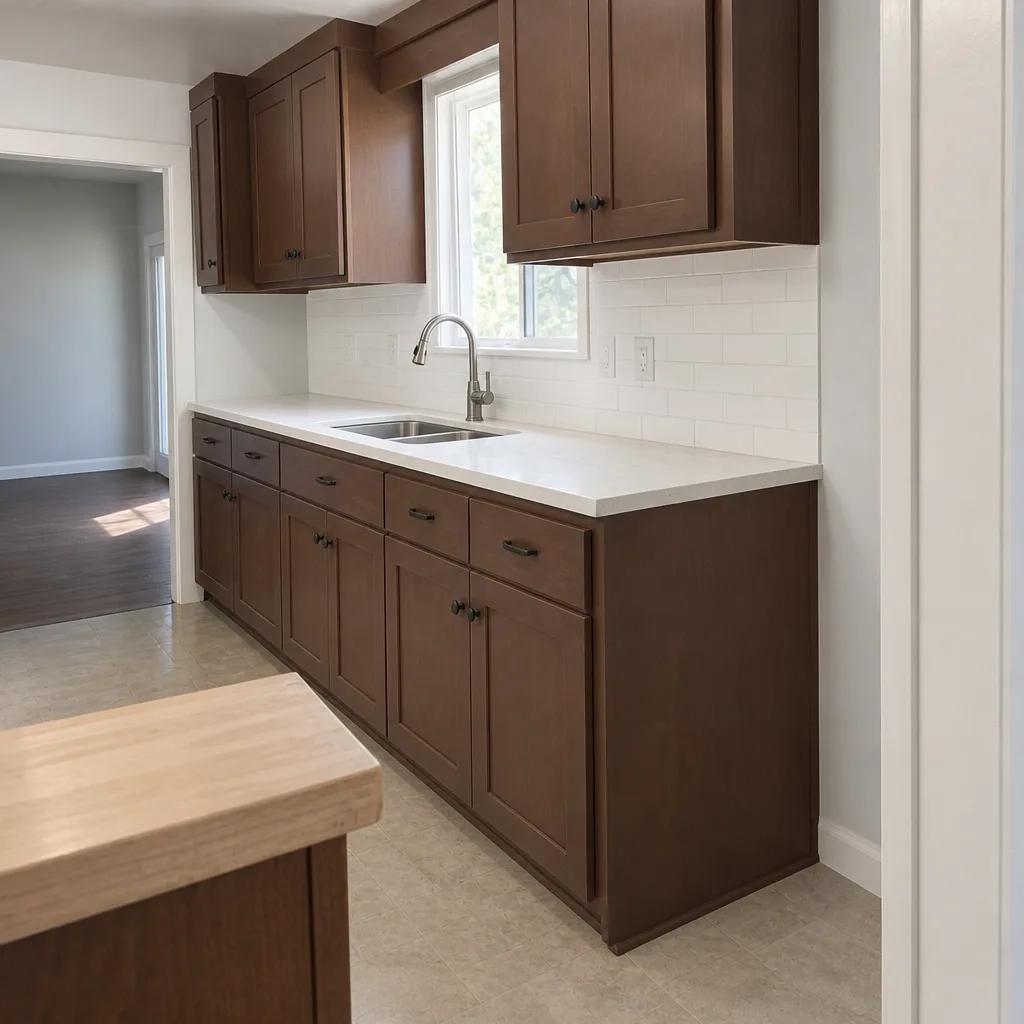 After
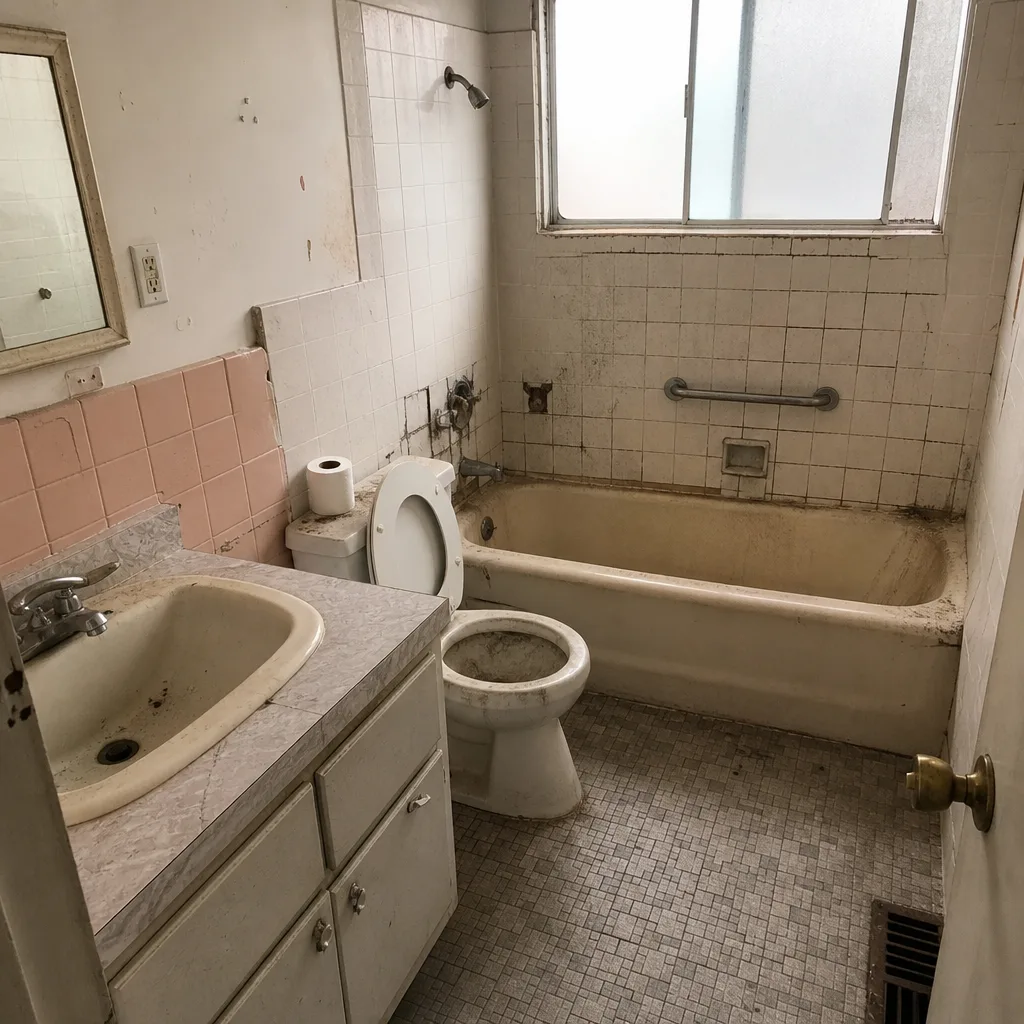 Before
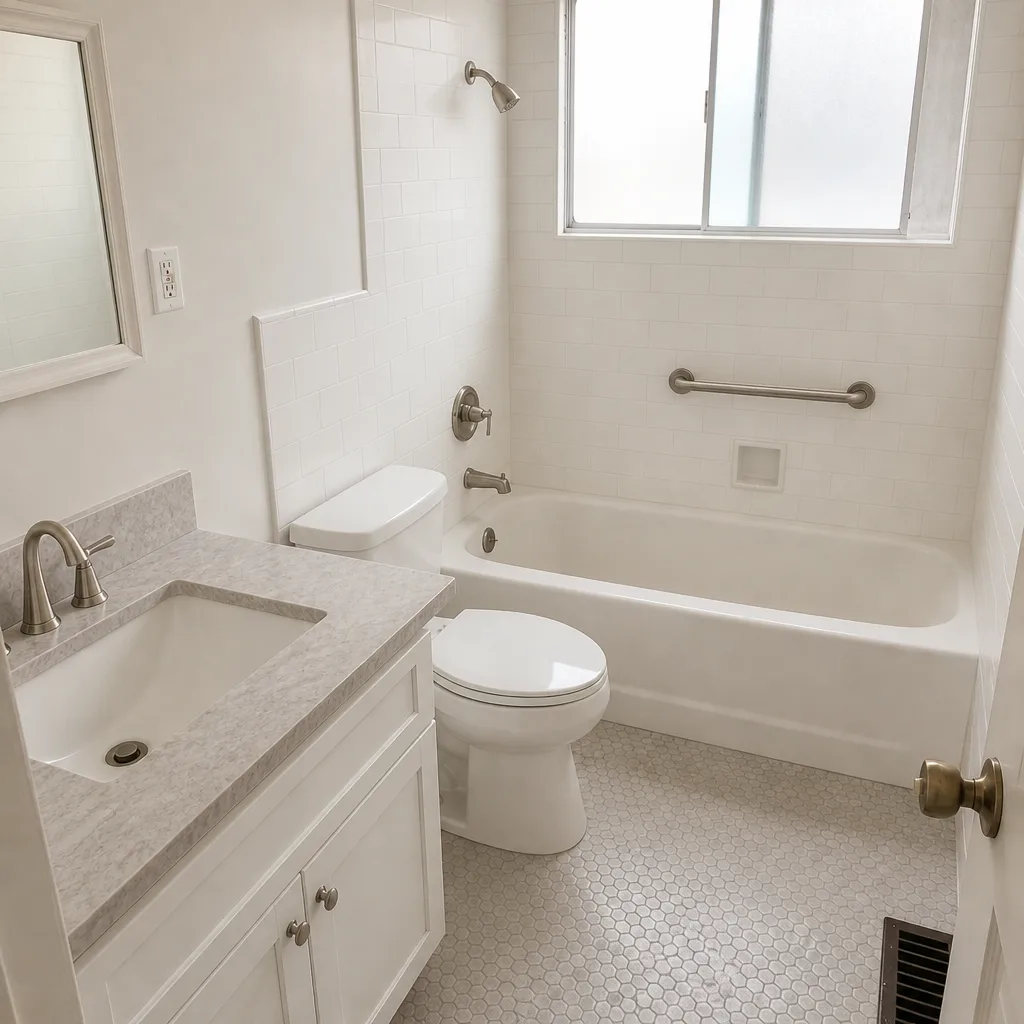 After
 Before
 After
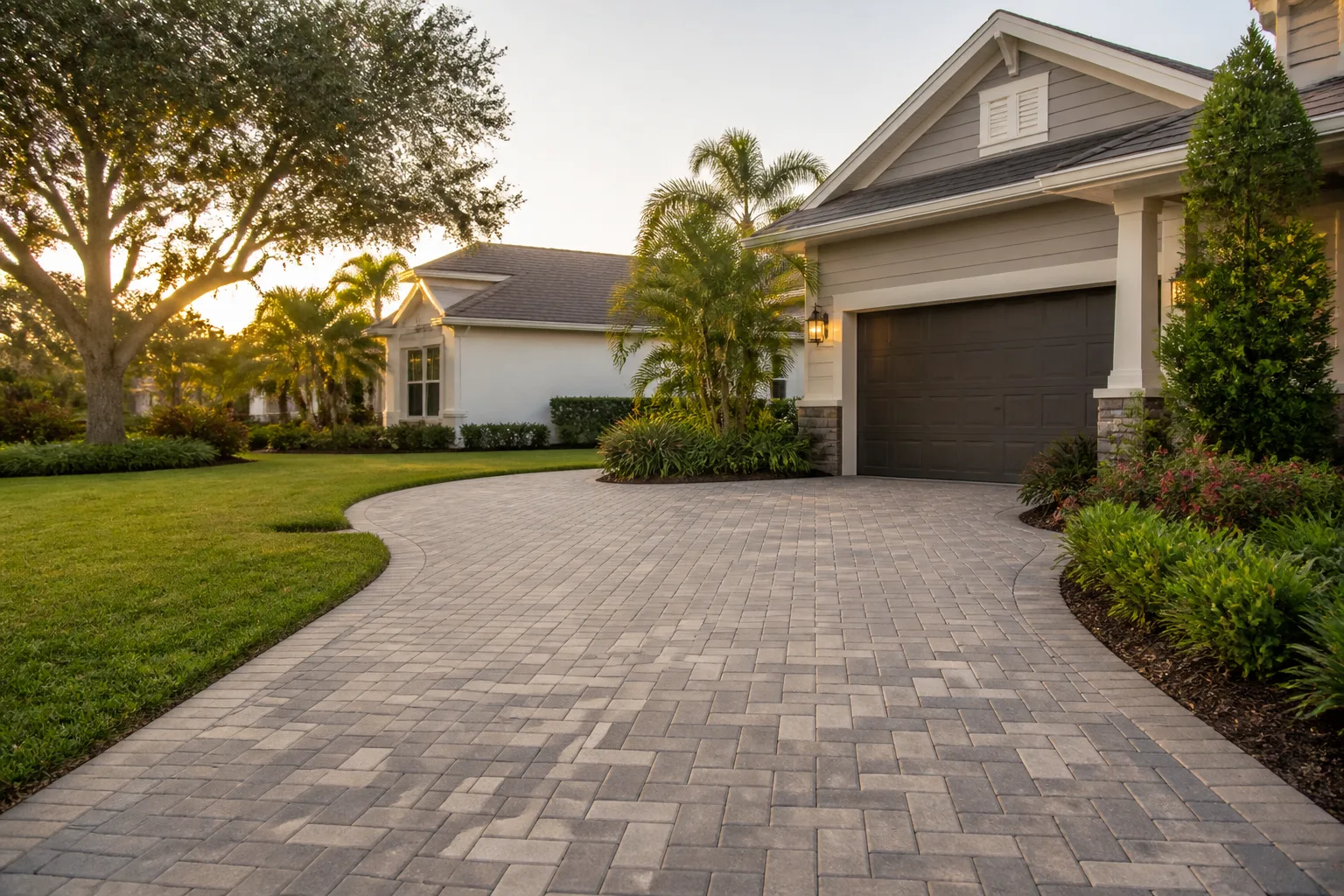
How Long Does a Paver Driveway Last in Downey, CA?
The pavers themselves will last 25 to 50 years or more, but the honest answer in Downey is that the base and edge restraint decide how long your driveway actually stays flat. Here, expansive clay soils and hot, dry inland summers push base movement harder than the coastal cities do. We’ve seen a driveway installed on the wrong aggregate spec need releveling inside five years, while one built to local conditions holds true for a generation. If you want a straight read on your own driveway, call Groundwork Construction Co. of Downey at (888) 255-8179.
Key takeaways
- The surface pavers can outlive the house; the 6-inch-plus aggregate base under them is what fails first in Downey’s clay.
- Missing or rotting edge restraint lets pavers creep sideways under tire loads, and that shows up within a few summers.
- Polymeric sand is not optional in our dry climate. Plain mason’s sand blows out in a single season.
- If the base is rebuilt right, original pavers can often be salvaged and relayed rather than replaced.
Why Downey’s ground shortens paver driveway life – and what local crews do differently
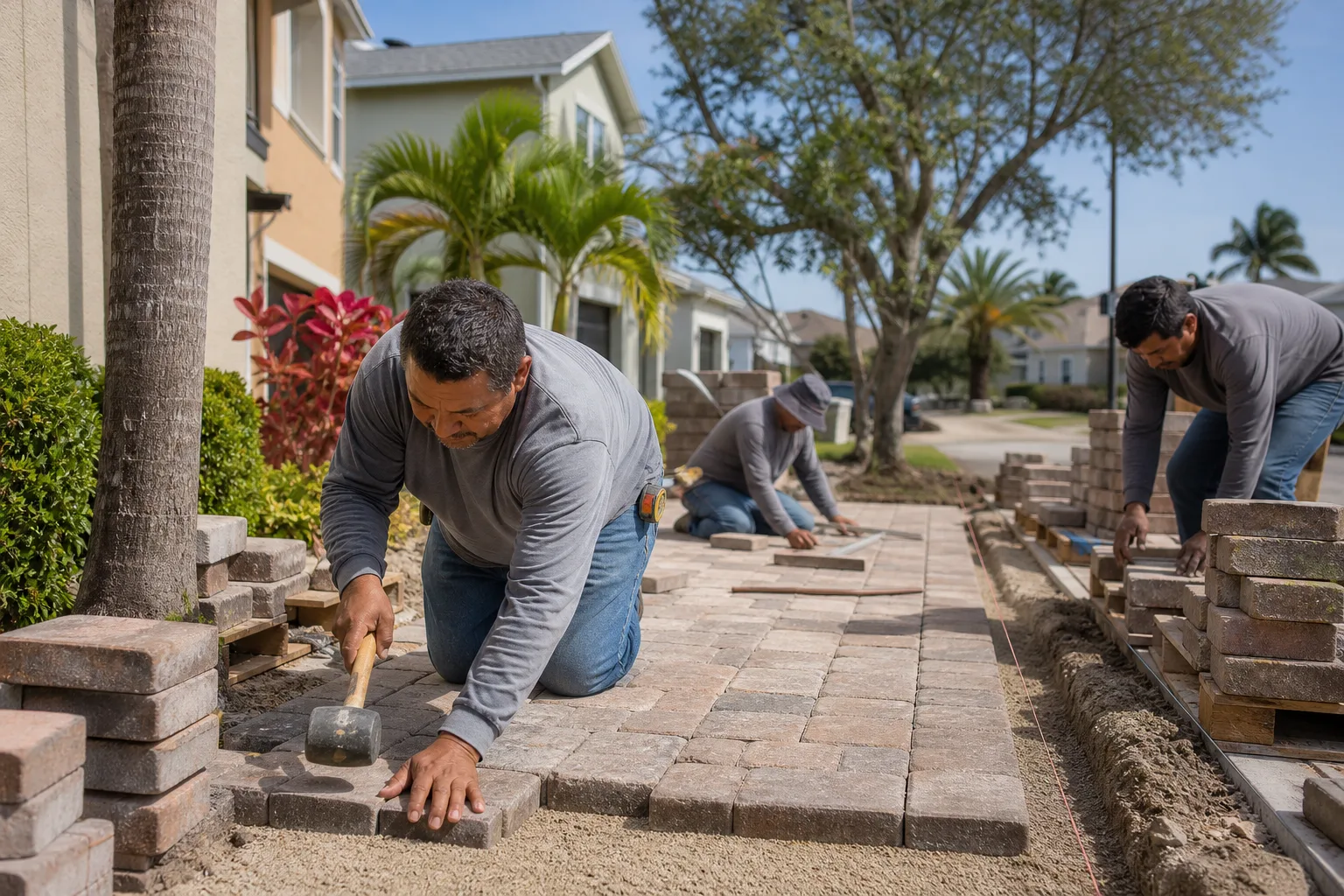
Downey sits on expansive and older clay soils that swell in the wet months and shrink hard in the dry ones. On the post-WWII tracts around Furman Park and the original 1950s ranch blocks, we routinely work on shallow stem-wall and slab foundations and tight lots where water has nowhere obvious to run. That soil movement is what a paver driveway has to absorb day after day.
A base built for coastal sand will not cut it here. The aggregate has to go deep enough to bridge the seasonal movement, be compacted in lifts, and be graded so the rare but intense winter rain sheets off instead of pooling at the edge. This is the first-hand detail that separates a driveway that lasts from one that ripples: the base is a local decision, not a generic one.
The three things that actually cut a Downey paver driveway short
When a paver driveway in Downey fails early, it’s almost never the pavers. It’s one of three predictable problems:
- Undersized aggregate base. Anything under about 6 inches in our clay zones leaves the pavers riding on soil that moves. That’s the number-one cause of sinking and rutting we get called out to assess.
- Missing or degraded edge restraints. The border holds the field together. Without a solid, pinned restraint, vehicle loads push the pavers laterally and the whole surface creeps apart at the joints.
- Joint sand washout. A driveway left with plain mason’s sand loses it fast in our dry heat, and one hard winter rain event can carry the rest out through gaps in the restraint. Once the joints are empty, the interlock that lets pavers carry weight is gone.
Polymeric sand closes that gap. It sets up and stays in the joint, which keeps the interlock working through both dry spells and winter rain. It’s part of how we build a Driveway & Pavers installation at Groundwork, and it’s the difference between a surface that stays locked and one that starts losing sand the first summer.
What to look for in a paver driveway quote (the parts that predict lifespan)
Not every bid tells you the same thing. When you compare estimates, ask about the components below by name. A contractor who can answer them with specifics is building for the long haul; one who waves at “proper base prep” is not.
- How deep the base is, and whether they adjust it for clay soil on your lot.
- Which edge restraint they use and how it’s pinned into the existing surface.
- Whether polymeric sand is included in the number, or quoted as an add-on later.
- How they handle drainage off the driveway, especially where it meets an older slab.
One useful fact for Downey homeowners: pavers are essentially inert. If a driveway has to be redone, the original pavers can usually be lifted, cleaned, and relayed onto a rebuilt base. That makes pavers the only driveway type where the surface is a depreciating asset you can recover. Concrete and asphalt can’t do that.
What a paver driveway costs in Downey
A full paver driveway installation in Downey typically runs $7,000 to $18,000, while concrete lands around $4,500 to $12,000 and asphalt around $3,500 to $9,000. Paver driveway replacement, when the base is rebuilt and good pavers are relayed, generally falls between $5,000 and $14,000. For reference, here’s how the options compare:
| Driveway type | Typical Downey cost |
|---|---|
| Paver driveway installation | $7,000 – $18,000 |
| Concrete driveway | $4,500 – $12,000 |
| Asphalt driveway | $3,500 – $9,000 |
| Driveway replacement | $5,000 – $14,000 |
| Driveway sealing | $250 – $700 |
Those numbers are upfront, and the number you see is the number you pay. Because Groundwork is a full-scope contractor rather than a paving-only sub, a crew that opens up your driveway and finds a drainage problem from an adjacent 1950s slab or a shallow utility line can address it in the same scope. It isn’t flagged later as an out-of-contract surprise. We back the work with our 730-Day Done Right Promise, which covers joint stability and base settlement for two full years (the written accountability window that answers “how long will this stay right” with a real number). If it’s not done right, we make it right. See how that shows up in our Driveway & Pavers in Downey work, and learn more about who we are on the home page.
How does the installation process protect longevity?
Longevity comes down to the sequence: excavate to depth, compact the aggregate base in graded lifts, set a solid pinned edge restraint, lay the pavers, then lock the joints with polymeric sand. Skipping or rushing any step is what lands a driveway on a shorter clock, especially in our soils and heat.
FAQs
A well-built paver driveway in Downey lasts 25 to 50 years or more, with the pavers themselves often outliving that range. The base and edge restraint are what age, so a local soil-appropriate spec is what gets you to the top of that range. Call (888) 255-8179 for a free assessment of your driveway.
Repair is usually cheaper when the base is sound and only the joints or a small section have failed. If the base is undersized or the restraint is gone, replacing the base while salvaging the pavers is the smarter spend. Either way, upfront pricing means you’ll know the number before work starts. Call (888) 255-8179 for an exact quote, estimates are free.
Small settlement repairs can often be handled in a single visit, though base rebuilds that need re-excavation take longer to plan. We’ll tell you honestly which one you’re looking at. Calls are answered by a live person 24/7, so call (888) 255-8179 to get it on the schedule.
Because our dry heat and occasional heavy winter rain strip plain mason’s sand out of the joints within a season, which lets the pavers shift. Polymeric sand sets up and holds the interlock. That’s part of the spec, not an upsell. Call (888) 255-8179 to have your joints checked.
Ready to know how long your driveway will last?
If you’d rather have it looked at, Groundwork Construction Co. of Downey offers a no-pressure assessment in Downey. We answer calls with a live person around the clock, give you upfront pricing, and back paver work with our 730-Day Done Right Promise. Call (888) 255-8179 to start.
Written by the team at Groundwork Construction Co. of Downey, serving Downey, CA.