Last updated November 17, 2026


Free written scope consultation - allowances, timeline, and change-order rules on paper before a single trade is scheduled
Seasonal Construction Care for Downey: Year-Round Homeowner’s Guide
June Gloom is Downey’s most underestimated construction threat. Weeks of marine-layer humidity at ground level push moisture into slabs, stucco, and wood framing far more quietly than any rainstorm – and most homeowners never check for it until they see a stain. That’s the strange part about living here: no snow load, no freeze-thaw cycle, no foundation heaving from permafrost. What Downey has instead is a set of seasonal stress windows that hit specific parts of your home in predictable ways. This guide maps the right maintenance action to the right month, from stucco inspections before the marine layer settles in to pour timing around Santa Ana wind events, so you stop reacting to damage and start staying ahead of it.
Quick Answer
Home construction care in Downey follows three seasonal stress cycles rather than four classic seasons: the June Gloom moisture window (late May through July), the Santa Ana wind and heat spikes (September through October), and California’s compressed rain season (roughly November through March). Each cycle targets different building assemblies – stucco and rooflines during Gloom, concrete pours and fresh paint during Santa Anas, drainage and foundation perimeters before the rains. Time your inspections and projects to those windows and you’ll prevent most of the repair work Downey homeowners pay for.
Styles & brands we work with
- Kitchen remodeling
- Bathroom remodeling
- Home additions & ADU
- Roofing
- Windows & doors
- Driveway & pavers
- Fence
Table of Contents
- Why Downey’s Climate Demands a Different Maintenance Calendar
- June Gloom: The Moisture Threat Most Homeowners Miss
- Santa Ana Winds and Heat: Protecting Fresh Work
- The Fall Checklist: Drainage, Hardscape, and Foundation
- Why Downey Winters Crack Caulk Joints (and What Product Fixes It)
- How to Time Construction Around Downey Weather Windows
- Month-by-Month Maintenance Calendar
- What We See in Specific Downey Neighborhoods
Why Downey’s Climate Demands a Different Maintenance Calendar
Downey sits in the Los Angeles Basin’s coastal-influenced interior, roughly 12 miles from the Pacific and just east of the Long Beach marine layer’s reach. That geography produces a climate that most national home-care guides simply get wrong. You’re not managing freeze-thaw cycles or snowmelt. You’re managing humidity swings, relentless UV exposure, and a dry-wet rhythm compressed into roughly four months.
The practical consequences matter for construction. Downey’s average annual rainfall runs in the 14-inch range, but the vast majority arrives in a handful of storms between November and March. That means foundations and drainage systems sit bone-dry for eight months, then face concentrated water loads in short bursts. Stucco gets months of dry thermal cycling, then weeks of ambient humidity during Gloom. Concrete cures in heat that reaches triple digits on a September afternoon and cools to the 60s that same night.
Add the urban heat island effect – Downey’s dense residential blocks hold heat into the evening – and you get material fatigue that follows a calendar. We’ve seen roofing sealant fail in predictable August patterns and we’ve seen slab cracks that trace back to a single poorly timed October pour.
The good news: Downey’s mild climate is forgiving if you work with it. The failure modes are predictable, which means they’re preventable. Here’s what to watch for in each window.
June Gloom: The Moisture Threat Most Homeowners Miss
June Gloom is a marine-layer phenomenon that blankets Downey in low cloud cover and pushes ground-level relative humidity past 90% for weeks at a time. Rain totals stay near zero, so nothing triggers a homeowner’s mental “check for water” alarm. That’s exactly why it causes more hidden moisture intrusion into slabs, stucco, and wood framing than a rain event does.
The mechanism is simple. During Gloom, the ambient air is saturated and the building envelope can’t dry through evaporation the way it does in dry heat. Any moisture that gets behind cladding – from a hairline stucco crack, a failed window seal, a roof flashing gap – has nowhere to go. It sits. Over weeks, wood framing softens, stucco sheathing loses bond, and you get the early conditions for dry rot.
Here’s what to inspect before Gloom settles in, ideally during May:
- Walk the full stucco perimeter at eye level and above. Look for hairline cracks, bubbling, or discoloration below window sills and at inside corners where two wall planes meet.
- Check every roof penetration – vent stacks, chimney flashing, skylight frames. In our experience, the majority of Gloom-related water intrusion Downey homeowners report traces back to failed flashing sealant, not shingles.
- Test window and door seals by running a hand along the interior frame on a cool morning. Condensation or a draft means the weatherstripping or caulk has opened up.
- Inspect the roofline from the ground with binoculars. Missing or lifted shingles, especially on south and west-facing slopes, create wind-driven water entry points.
If you find failing flashing or stucco cracks, that work should be completed before late May. Once Gloom is fully established, patch materials cure slowly and sealants may not bond cleanly to damp substrate. A job done in April is a job done right. The same logic applies to any roof replacement you’ve been putting off – our Groundwork Construction Co. of Downey home page covers the full range of what we handle.
Santa Ana Winds and Heat: Protecting Fresh Work
September and October bring the Santa Ana wind events – dry, hot, offshore winds that can push Downey temperatures into triple digits and gusts well above 40 mph. For homeowners with recent construction work, this is the window that creates cure failures and finish damage, and it’s the window most people don’t plan around.
Here’s what Santa Ana conditions do to fresh construction:
- Fresh concrete: Hot, dry, windy air pulls moisture out of a slab or driveway pour faster than it can hydrate. The result is surface cracking, dusting, and a weakened top layer. Concrete placed during a Santa Ana needs a curing compound or continuous moisture management – not just a quick spray-down.
- Fresh exterior paint: High heat causes the paint film to skin over while trapped solvent or moisture underneath causes blistering within days. Exterior painting during a Santa Ana window is a gamble.
- Roofing adhesive and sealant: Many roofing sealants specify a maximum application temperature. Applied above that spec, they can fail to adhere properly or cure too quickly. On a 100°F Downey afternoon, roof surface temps can hit 140°F or higher.
- Wood and composite materials: Sustained dry wind can cause newly installed wood to shrink and open joints before it acclimates to its final moisture content.
The window to pause: any day when the National Weather Service has issued a heat advisory or wind advisory for the Downey area is not the day to pour concrete, paint an exterior, or install adhesive-dependent roofing materials. This is the single biggest timing rule in Downey construction. Reputable crews know it. If yours doesn’t, ask questions.
If you’re planning a big exterior project – a new driveway, a paver patio, a fence – the smarter calendar slot is late spring or early summer before the heat builds. Our Driveway & Pavers in Downey page covers how concrete and paver installs should be scheduled around that season.
The Fall Checklist: Drainage, Hardscape, and Foundation
California’s rain season arrives compressed. Downey typically sees its first soaking storms in November, and the system that delivers them can drop an inch or more in 24 hours. Everything you didn’t fix in October gets tested in that first storm. This is the highest-value inspection window of the year.
Run this checklist by the end of October:
- Clear and test every roof gutter and downspout. Downey’s dry summer leaves a load of dust, leaf litter, and wind-blown debris. Clogged gutters during the first rain are one of the most common causes of fascia rot and foundation-edge erosion we see.
- Look for soil settlement and drainage slopes. Walk the foundation perimeter and confirm the ground slopes away from the house at roughly a half-inch per foot for at least 6 feet. If the soil has settled back toward the foundation – common after a dry summer – regrade it now.
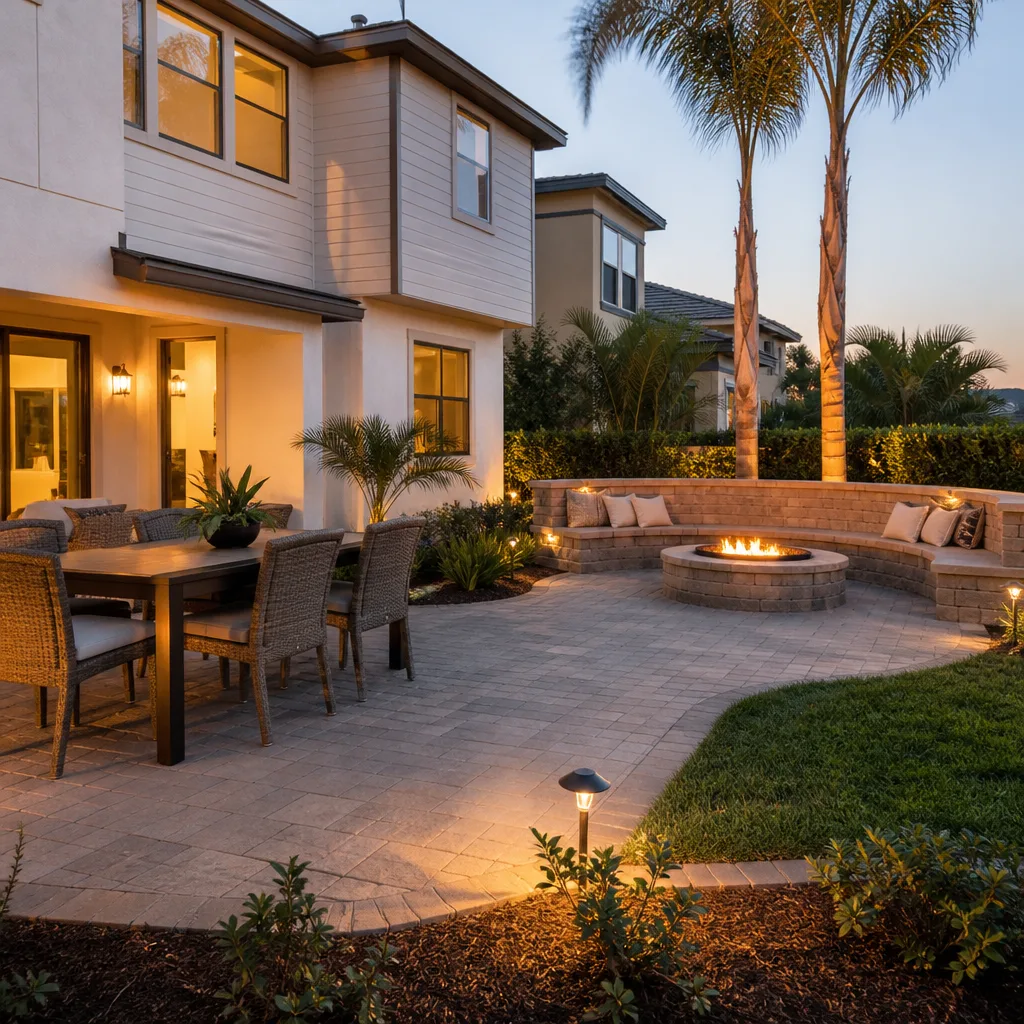
- Inspect hardscape joints and pavers. Concrete driveways and paver patios expand-and-contract. Any open joints or lifted pavers become water entry points at the first storm. Joint sand and crack sealant applied in October survive the rain season; the same work done in December fixes the wrong problem.
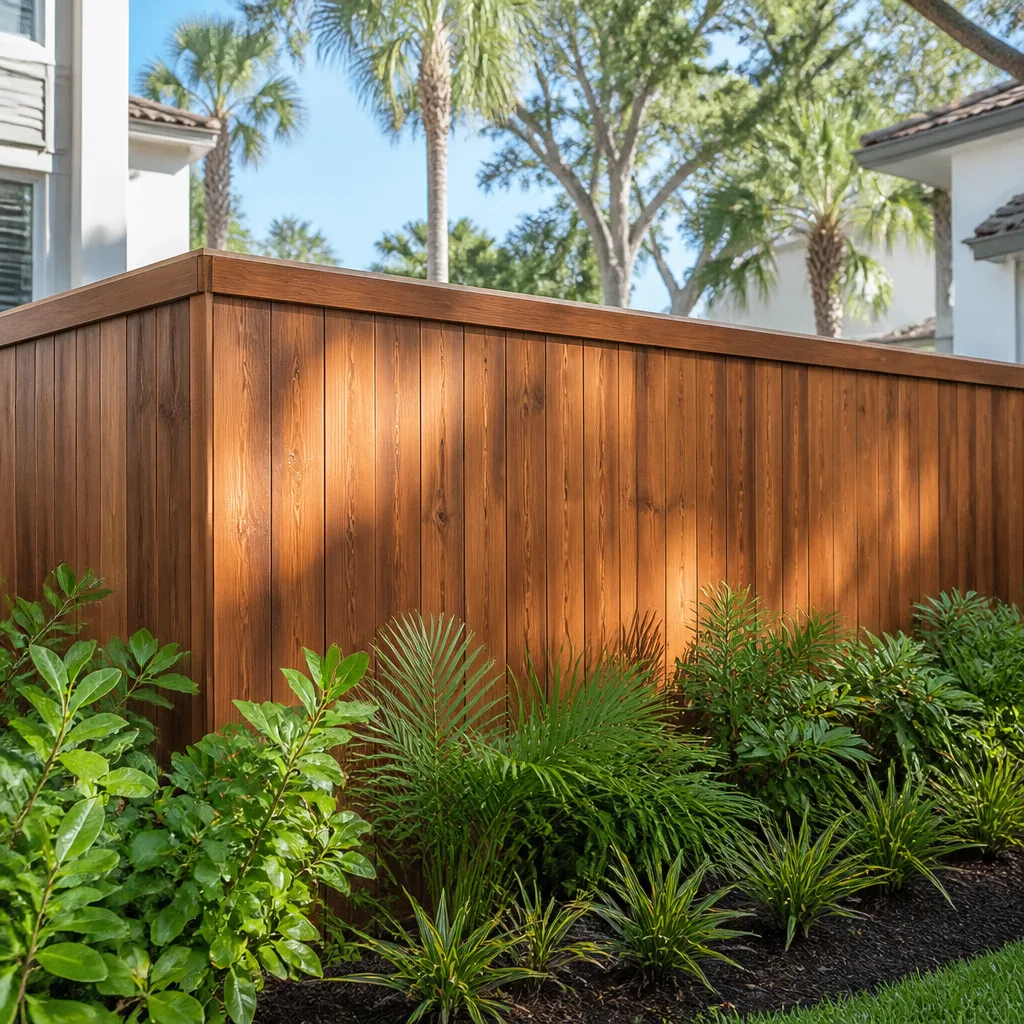
- Check the fence line. Wood fencing absorbs moisture and post-holes collect water. Any post showing movement or soil erosion around the base should be assessed before winter storms. Our Fence Installation in Downey team can inspect existing installations as part of a broader site review.
- Walk the foundation perimeter looking for cracks and efflorescence. The white, chalky mineral bloom called efflorescence is a sign moisture is moving through concrete. A crack wider than a business card needs assessment before rain season.
- Clear the winter debris traps. Area drains at the base of driveways, drainage channels at property lines, and low spots in the yard all need to be open before November.
The math is simple: everything you fix in October costs less than the moisture damage it was going to cause by January.
Why Downey Winters Crack Caulk Joints (and What Product Fixes It)
Downey winters don’t freeze, but they do swing. A typical January day can top out at 68°F and drop to 45°F overnight. That daily thermal cycle is repeated hundreds of times between December and March, and it’s enough to open up failing caulk joints at every window and door in your home.
Why does mild winter cracking matter? Because a joint that’s already cracked from thermal cycling is the point of entry for the next rain event, and the slow moisture source that feeds Gloom intrusion in spring. Caulk isn’t cosmetic – it’s the weather barrier.
The problem most homeowners hit: they replace summer-cracked caulk with the wrong product and it fails again within a season. Here’s what genuinely works in Downey’s climate:
- For exterior window and door perimeters: a high-quality elastomeric or siliconized acrylic latex sealant rated for exterior use and with good flexibility. Look for a product that specifies movement capability and a paint-friendly surface bond.
- For vertical joints and materials that expand and contract significantly (metal frames, trim over stucco): a pure polyurethane sealant has better flexibility but needs to be ordered in a paintable formulation if you plan to topcoat.
- Avoid the cheap “DAP-style” indoor acrylic on any exterior joint in Downey. It dries hard, cracks at the first thermal cycle, and is one of the most common failures we see when called out to fix a window leak.
The right time to re-caulk all exterior windows and doors is late fall, before the rain season, after any needed repair. Do it wrong and you’ll be doing it again in six months.
How to Time Construction Around Downey Weather Windows
The right project, on the wrong calendar, fails. Here’s how we think about timing for the most time-sensitive construction work in Downey:
Concrete pours (driveways, patios, sidewalks)
Best window: late spring (April-May) or early fall (October), when temperatures stay in the 60s to low-80s and ambient humidity is moderate. Avoid: Santa Ana weeks (crack-and-dusting risk) and Gloom weeks (slow cure, delayed finishing). A well-timed pour cures uniformly and holds its surface for years longer than a heat-stressed one.
Exterior painting
Best window: March-April or October, when humidity is low and temps are moderate. Avoid: Santa Ana days (blistering) and Gloom weeks (skin-over before cure). Painting is the single most weather-sensitive trade in Downey, and most painting “failures” are actually application-timing failures.
Roof replacement and repairs
Best window: April-May or September, when extended dry forecasts are reliable. Avoid: any time a storm system is within 5 days, and Santa Ana heat spikes when shingles and sealants are temperature-limited. A roof half-installed when a storm blows in is one of the most expensive kinds of preventable damage.
Fencing and hardscape installation
Best window: Year-round with adjustment. Fence and paver installs are more forgiving than concrete but still benefit from avoiding Santa Ana days and the middle of Gloom. Post-hole digging is easiest when soil moisture is moderate – not bone dry (August) and not saturated (February).
Addition and ADU work
Best window: Start in early spring. Home additions are the longest-duration projects and benefit from having the whole dry season for framing and rough trades. Once you’re adding a full new structure, planning matters as much as weather. Our Home Additions & ADU in Downey page explains how we phase those projects around weather.
Month-by-Month Maintenance Calendar
Here’s the calendar we recommend to Downey homeowners we work with. Print it.
- January: Inspect window and door caulk after first cold snaps. Check gutters after storms. Note any interior condensation on frames.
- February: Check foundation perimeter for erosion and settlement after rain season. Look for efflorescence on stucco below-ground level.
- March: Repair any water damage from rain season. Schedule exterior painting while humidity is still low and temps comfortable.
- April: Full stucco and roofline inspection before Gloom. Repair flashing and stucco cracks now. Best window for roof replacement.
- May: Test window and door seals before marine layer arrives. Clean roof gutters. Schedule concrete pours.
- June: Monitor interior for moisture signs during Gloom weeks. Run bathroom and kitchen exhaust fans more aggressively. Don’t ignore any new odor – it may mean hidden moisture.
- July: Check exterior wood for early rot signs (soft spots, paint lifting, discoloration). Touch up any failing caulk joints.
- August: Pre-Santa Ana inspection. Verify cure-quality of any recent concrete. Check roof sealants for heat stress.
- September: Pause exterior pours and paints during Santa Ana windows. Prioritize interior work during heat spikes.
- October: Full fall checklist – gutters, drainage, hardscape joints, fence posts, foundation perimeter. This is the most important maintenance month of the year.
- November: Re-caulk exterior windows and doors before rain. Confirm roof is storm-ready.
- December: Post-storm check. Look for new water stains on ceilings and around window frames.
What We See in Specific Downey Neighborhoods
Downey’s housing stock varies neighborhood to neighborhood, and the maintenance profile shifts accordingly.
Downtown Downey and the historic core: Many homes here date to the 1920s-1950s with original stucco systems over wood-frame construction. That older stucco is more susceptible to hairline cracking in moisture swings, and there’s often no modern drainage plane behind it. Pre-Gloom stucco inspection matters more in this core than in newer neighborhoods.
Northeast Downey and the area near Furman Park: A mix of mid-century single-family homes and newer construction. Gloom intrusion here often traces to original window flashing that’s outlasted its life. Repairs are straightforward but should happen before the marine layer cycle each year.
Downey’s south side near Lakewood Boulevard: More recent tract construction and renovation activity. The most common issues we see here involve newer homes where the thermal cycling effect on caulk joints (discussed above) happens on a faster timeline because of tighter construction tolerances. Fall re-caulking is the highest-value item on the list.
Neighborhoods with larger lots and mature trees: Roof debris loads are higher. Gutter clearing becomes a twice-a-year (spring and fall) job, not once. Falling limbs during Santa Ana wind events also threaten roof edges and fence lines – a good reason to have trees assessed by an arborist before September.
Common Mistakes to Avoid
- Treating Gloom as harmless because it isn’t raining. Weeks of high humidity do more cumulative moisture damage to stucco and wood framing than a single rainstorm. If you only check for water when it’s raining, you’ll be fixing rot the next spring.
- Pouring concrete during Santa Ana weeks. The surface dries faster than the slab cures and you get cracking that shows up within a month. This is the single most preventable construction failure we see in Downey.
- Replacing failed caulk with the wrong product. Interior acrylic on an exterior joint cracks at the first thermal cycle. All exterior caulk in Downey should be elastomeric or polyurethane-based.
- Clearing gutters in December instead of October. By the time you clear them, the first storm has already sent water where it shouldn’t go. Clear gutters in October, before the rain season arrives.
- Ignoring hairline foundation cracks because “they’re small.” A crack smaller than a hairline is cosmetic. A crack wider than a business card is a moisture entry point. Know the difference and act on the right one.
- Assuming stucco cracks are just visual. Cracks in the stucco are cracks in the weather barrier. Every crack lets moisture in during Gloom.
- Scheduling exterior painting in September. It looks like perfect weather until the first Santa Ana week hits and the paint blisters. Interior work in September; exterior painting in March or April.
See the difference
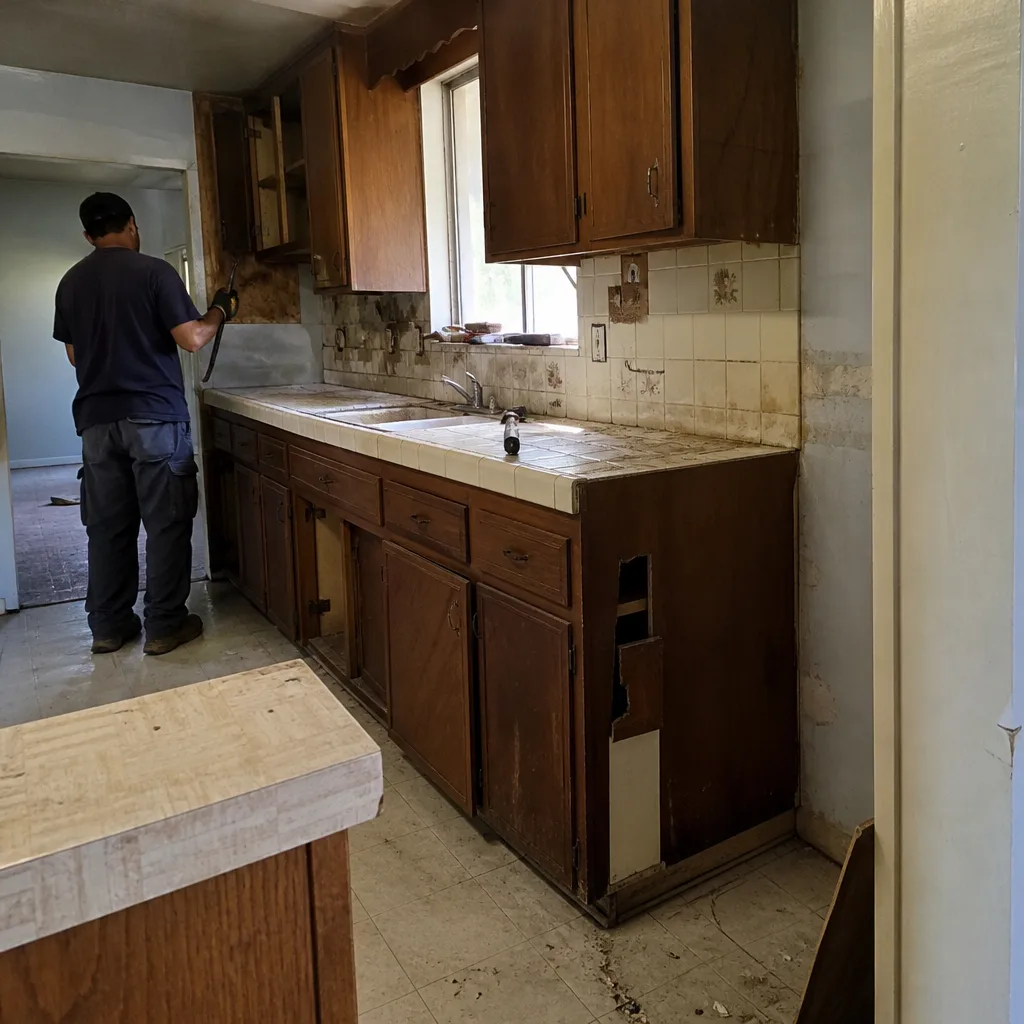 Before
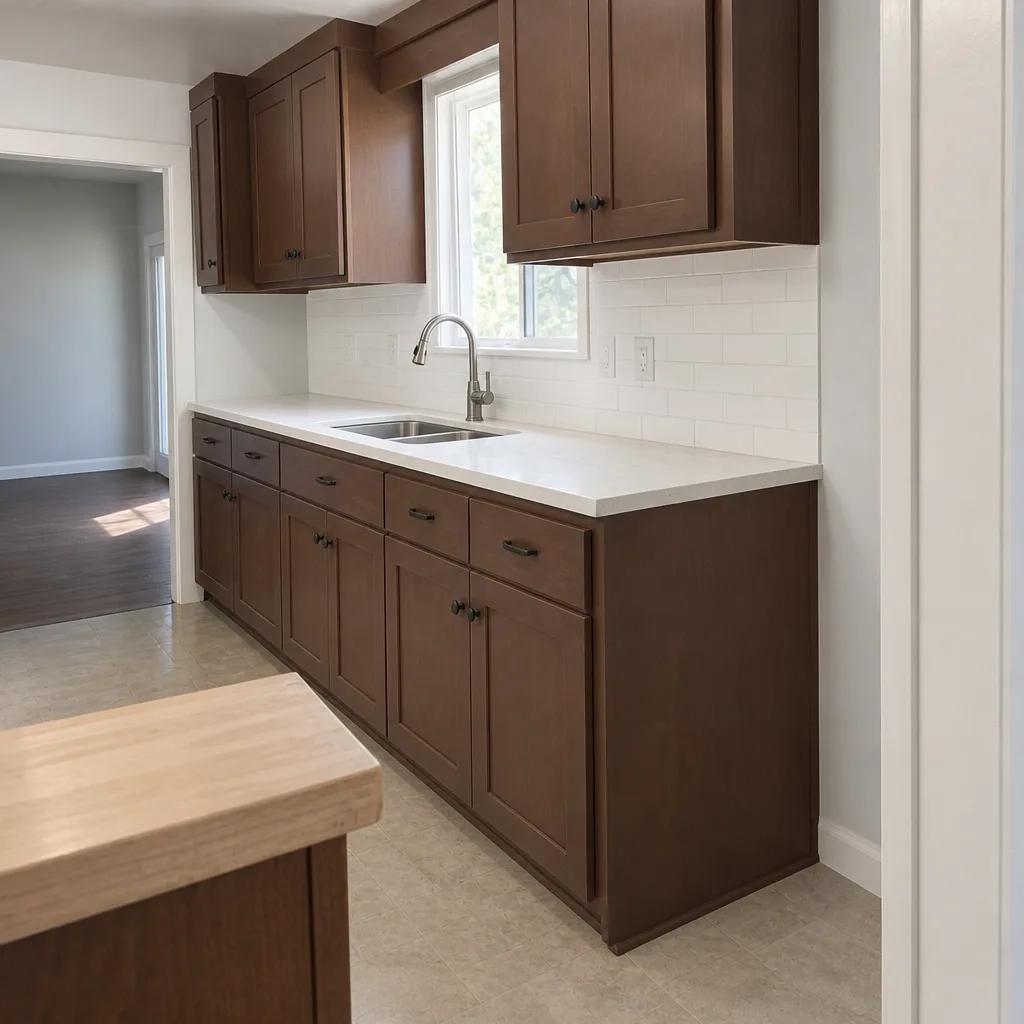 After
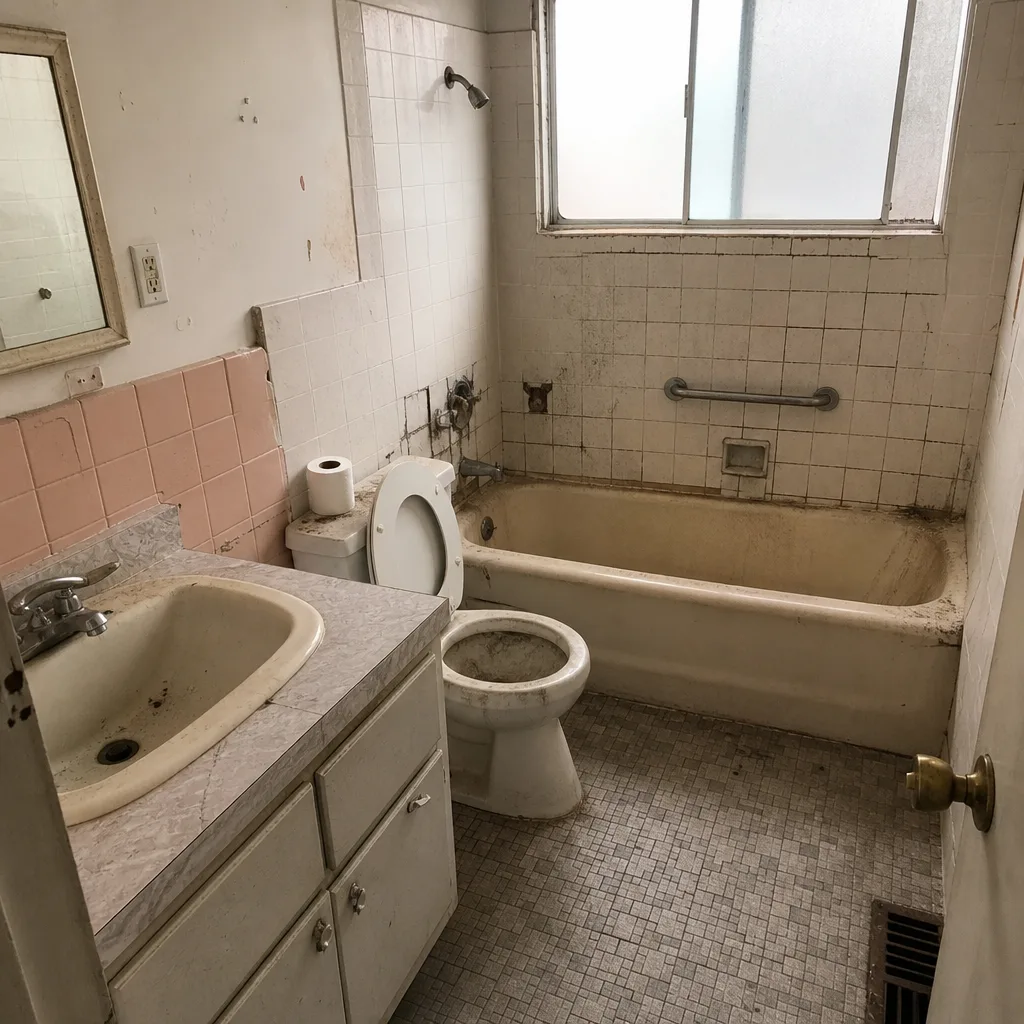 Before
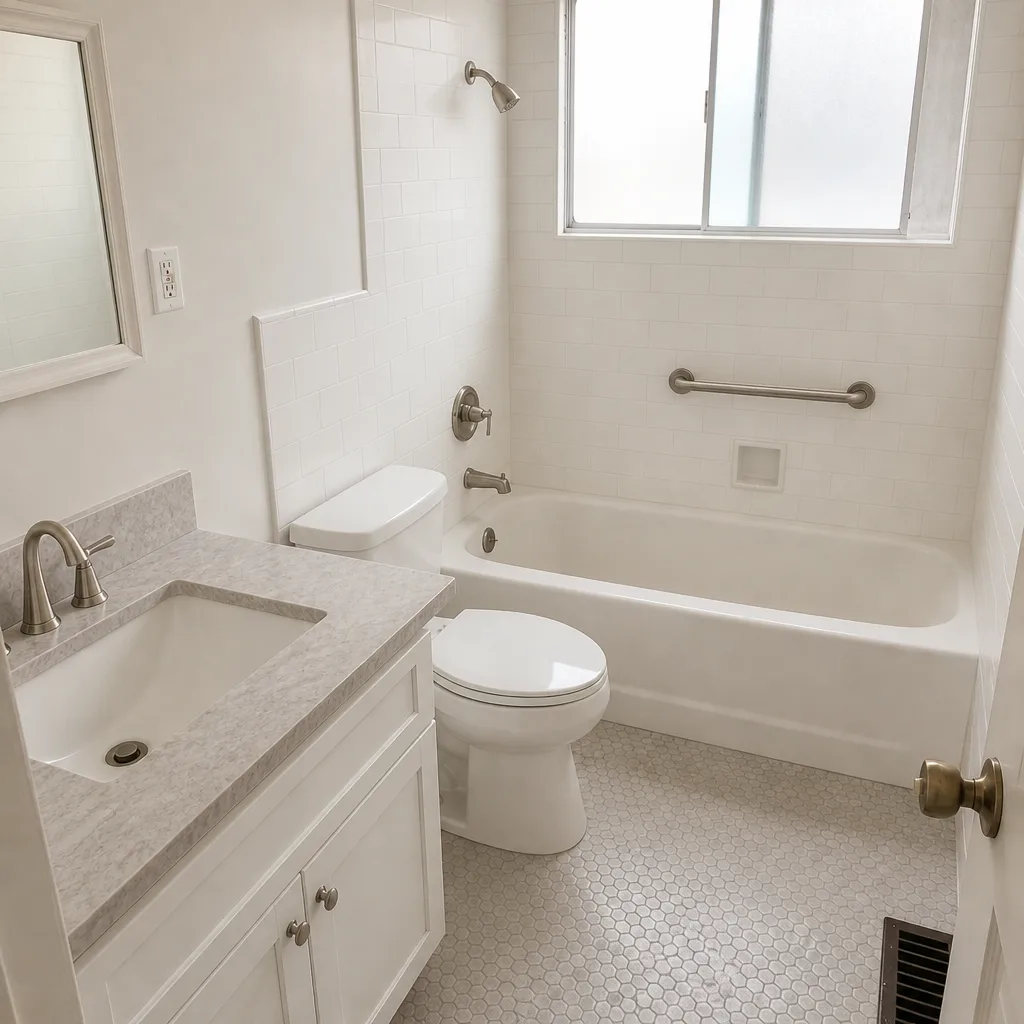 After
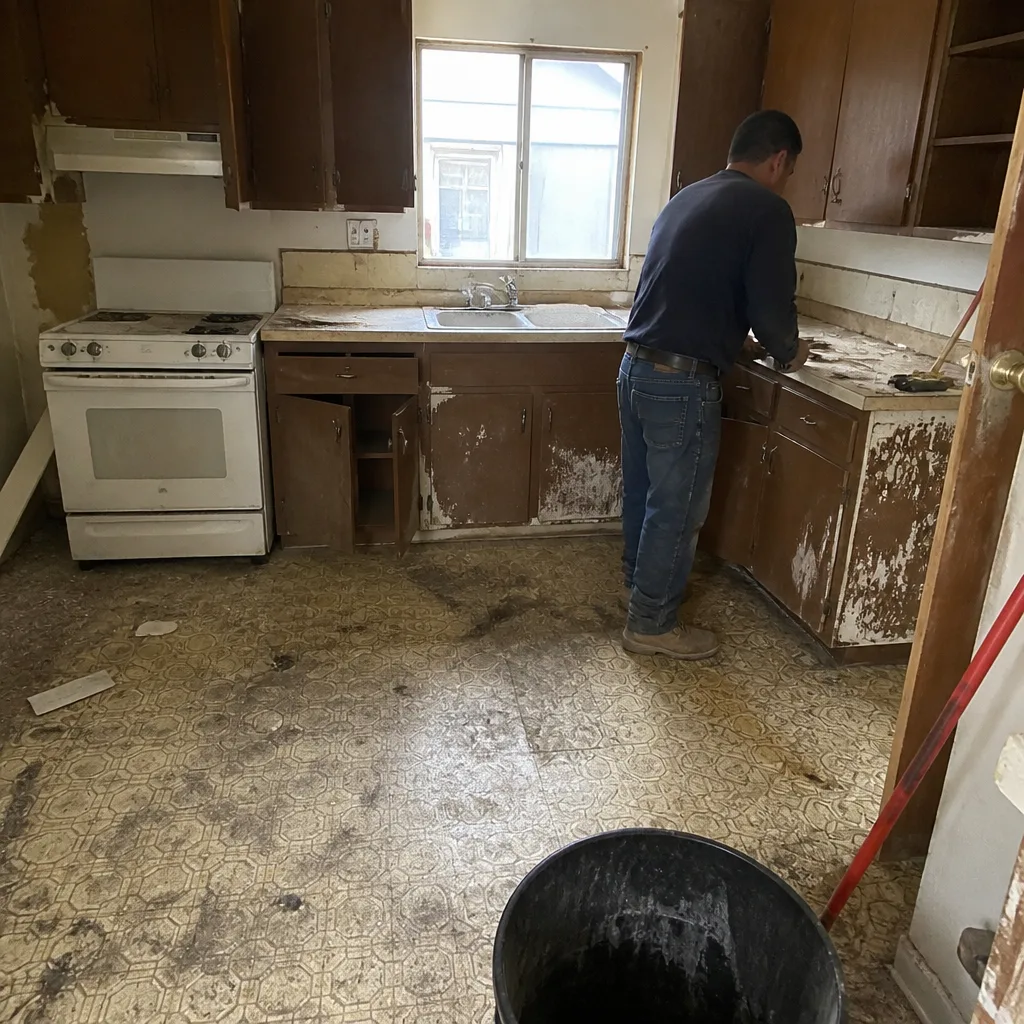 Before
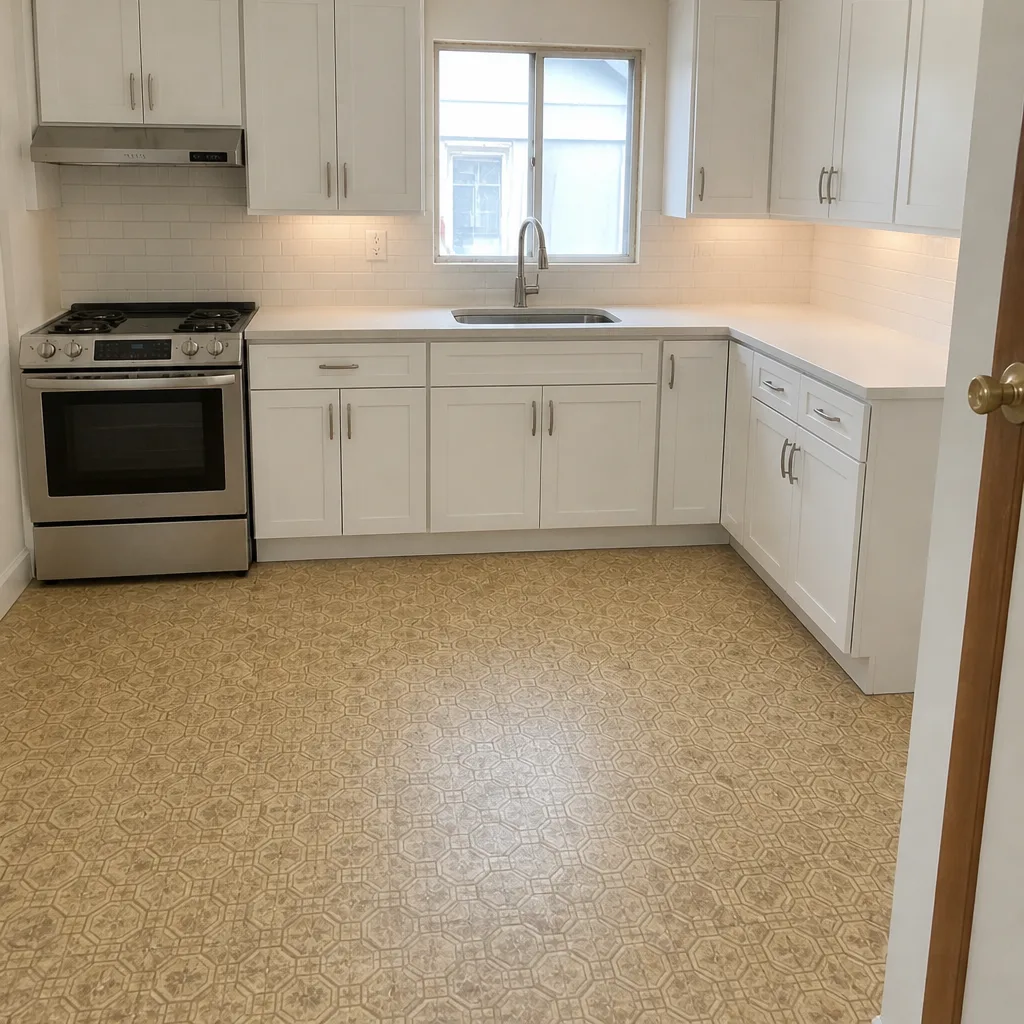 After
When to Call a Professional
Downey homeowners should call a licensed contractor for any of these situations:
- Any water intrusion you can’t trace to a specific, verifiable source. Ceiling stains, soft spots in stucco, musty odors after Gloom – these often involve hidden water paths that need proper diagnosis before repair.
- Foundation cracks wider than a business card or any visible displacement. These need structural assessment, not patch.
- Roof leaks, missing shingles, or roof age over 20 years. Roof diagnosis and repair require fall-protection equipment and licensing.
- Any repair work that involves cutting into the building envelope, including stucco replacement, window replacement, and door rough opening work.
- Concrete pours and driveway replacements. Timing, mix design, and curing requirements are not DIY-friendly in Downey’s climate.
- Additions, ADUs, and any project requiring permits.
Groundwork Construction Co. of Downey offers free estimates in Downey – call (888) 255-8179. We offer upfront pricing with no surprises, a written line-item quote, and our 730-Day Done Right Promise on every project. If it’s not done right, we make it right.
Frequently Asked Questions

Typical Downey homeowner seasonal maintenance runs roughly $400-$900 per year when you stay proactive: gutter clearing, exterior caulk refresh, roof inspection, and minor stucco repair. Reactive repairs to the same items cost 3-5x more. Call (888) 255-8179 for a free estimate on any of these services – our quotes are upfront and written line-item.
Yes, and it’s the most underestimated maintenance threat in Downey. The marine layer pushes ground-level relative humidity past 90% for weeks each late-spring and early-summer, and that ambient moisture penetrates stucco hairline cracks, window seals, and roof flashing far more quietly than a rainstorm. An April inspection is what prevents a June moisture problem.
The best window in Downey is April through early May or mid-September, when extended dry forecasts are reliable and temperatures are moderate. Avoid Santa Ana weeks (September-October) because sealant application is temperature-limited, and avoid scheduling within 5 days of forecast storms. Call (888) 255-8179 to schedule a free assessment – we’ll give you a written quote and a realistic timeline.
Yes, very likely. Concrete poured during a Santa Ana heat event in Downey dries at the surface faster than it cures internally, causing surface cracking, dusting, and weakened top layers. A properly timed pour (spring or October) avoids this. Reputable crews won’t pour on heat-advisory days. Ours don’t.
Most exterior caulk joints in Downey fail within 3-6 years because of the thermal cycling between cool nights and warm days. If your caulk is older than three years, it’s likely time for a refresh – and the right product matters. Call us at (888) 255-8179 for a free inspection if you’re unsure.
Most routine maintenance – caulking, gutter clearing, minor stucco patching, painting – does not require a permit. Repairs that involve cutting into the building envelope, replacing structural components, re-roofing, or any addition do. The City of Downey Building & Safety Division is the authority; any licensed contractor for that work should pull the permit. We pull permits and pass inspections on every project that requires them.
The Bottom Line
Downey’s climate looks forgiving on paper, but it has three specific stress windows – Gloom, Santa Anas, and the compressed rain season – that each target different parts of your home. Protect your stucco and roof before Gloom, time concrete and paint work between Santa Ana windows, get your drainage and foundation checked before the rains, and re-caulk exterior joints every few years with the right product. Do those four things and you’re ahead of 90% of Downey homeowners. The rest is knowing when to call a pro – and calling the right one. Groundwork Construction Co. of Downey backs every project with a 730-Day Done Right Promise, the number you see is the number you pay, and calls are answered by a live person 24/7. Call (888) 255-8179 for a free estimate and design consult today.
Written by the team at Groundwork Construction Co. of Downey.