Last updated November 17, 2026






Free written scope consultation - allowances, timeline, and change-order rules on paper before a single trade is scheduled
Windows & Doors Maintenance Schedule: What to Do and When
Most homeowners in Downey spend twenty minutes a year cleaning window glass and zero minutes on the weep holes that quietly flood their frames every rainy season. That backwards habit is one of the biggest reasons windows and doors fail years before they should. In our experience, the glass is almost never the problem. The parts that fail are the mechanical and weatherproofing systems around it, and each one wears out on its own clock. This guide breaks down the five systems inside every window and door, tells you exactly when to service each, and shows you how to time it all to Downey’s climate so your units last decades instead of a decade.
Quick Answer
A practical window and door maintenance schedule runs on four rhythms: monthly hardware checks and lubrication, quarterly weep hole and track clearing, an annual sealant and weatherstripping inspection each fall before the rainy season, and a pre-season hardware and frame check every fall before the Santa Ana winds arrive in Downey. Glass cleaning is cosmetic and doesn’t count toward maintenance. The systems that actually protect your home are the frame, hardware, weatherstripping, sealant, and drainage, and each needs attention on its own interval.
Styles & brands we work with
- Kitchen remodeling
- Bathroom remodeling
- Home additions & ADU
- Roofing
- Windows & doors
- Driveway & pavers
- Fence
Table of Contents
- The Five Systems in Every Window and Door
- The Annual Windows & Doors Maintenance Calendar
- Weep Holes: The Small Holes That Save Your Frames
- Lubrication by Hardware Type: What Goes Where (and What Ruins It)
- Annual Sealant Inspection: Dirty Caulk vs. Failed Caulk
- Downey Seasonal Adjustments: Before and After Santa Ana Winds
- Weatherstripping: The Cheapest Fix You’re Probably Ignoring
- Repair or Replace? A Downey Decision Guide
The Five Systems in Every Window and Door
Every window and door on your Downey home is really five pieces of equipment bolted together. Treating them as one unit is where the maintenance habit goes wrong. The frame holds everything square. The hardware makes it operate. The weatherstripping seals the gap. The sealant keeps water out of the wall cavity. The glass unit handles insulation. Each has its own failure mode and its own service interval.
Here’s how we think about the split, and what a realistic maintenance interval looks like for each:
- Glass unit (sealed IGU): Inspect annually for fogging or condensation between panes. No routine service needed on a healthy unit; a failed seal means the insulated glass unit needs replacement, not repair.
- Frame (wood, vinyl, fiberglass, aluminum): Inspect every six months. Check for swelling on wood, cracking on vinyl, and paint failure on aluminum. Refinish wood frames every 3 to 5 years in our Southern California sun.
- Hardware (hinges, rollers, locks, handles, multi-point mechanisms): Lubricate sliding tracks and rollers every 3 to 6 months. Inspect hinges and locks every 6 months.
- Weatherstripping (foam, felt, vinyl bulb, magnetic): Inspect every 6 months, replace when it flattens or tears. Expect 3 to 5 years of life on high-traffic doors in Downey.
- Sealant and drainage (caulk joints, weep holes, flashing): Inspect sealant annually, clear weep holes every 3 months, and clear debris from window and door tracks every 3 months.
When homeowners call us about a window that “just stopped working,” the cause is almost always one of these five systems staying unserviced for years. A sliding door that drags needs rollers, not new glass. A window that fogs is a glass unit failure, not a frame problem. Divide the schedule by system and the whole job takes about two hours a year. Treat it as one big “clean the windows” task and it takes twenty minutes and protects nothing.
The Annual Windows & Doors Maintenance Calendar
If you want a single schedule you can print and stick on the fridge, this is it. These intervals are set for Downey’s climate specifically: mild winters, hot dry summers, an annual Santa Ana wind season in fall, and a handful of heavy rain events between November and March. If you live in one of the canyons or on a hill where wind load is higher, shorten the hardware interval to monthly.
- Every month (5 minutes): Wipe down sliding tracks, check that every door and window opens and closes smoothly, listen for new dragging or grinding sounds on rollers and hinges.
- Every 3 months (20 minutes): Clear weep holes on every window and sliding door, vacuum track channels, remove debris from exterior weep paths, apply a light silicone spray to sliding tracks if you notice resistance.
- Every 6 months (45 minutes): Inspect weatherstripping on all exterior doors for flattening, tearing, or gaps. Test locks and latches for play or resistance. Check hinge screws for stripping. Test the seal of each window by holding a tissue near the perimeter on a breezy day.
- Annually – late October (2 hours): Full sealant inspection around every window and door on the exterior. Replace any caulk joint that has lost adhesion. Check flashing above windows for separation. Adjust weatherstripping. Lubricate every hinge, lock, and multi-point mechanism.
- Annually – late spring (1 hour): Post-Santa Ana inspection. Look for cracks in caulk that pulled open during wind flexing, check for popped screens, verify that no window corner has lost its seal, and check frame joints for movement.
- Every 3-5 years: Refinish exterior wood frames and doors. Replace weatherstripping. Have a professional inspect sealant depth on any exterior wall that gets full afternoon sun.
The order matters. Clear the drainage first, seal second, lubricate third. If you seal a window with blocked weep holes, water has nowhere to go but into the frame cavity and then into the wall. Get the sequence right and the rest of the schedule takes care of itself.
Weep Holes: The Small Holes That Save Your Frames
Weep holes are the small openings at the bottom of window frames and door thresholds that let water drain out of the frame cavity. They’re typically 3/8-inch wide slots, sometimes covered by a small flap or baffle, and they clog with dust, pollen, insect nesting, and paint overspray. In Downey, where we get infrequent but genuinely heavy rain events between November and March, a clogged weep hole means every window frame fills with water instead of draining it. That’s how you get rot, mold, and finish failure inside a wall cavity you never see.
Clearing them takes five minutes per window and doesn’t require a professional:
- Locate the weep holes on the exterior face of each window and on the threshold of every exterior sliding door. There are usually two per window, sometimes four.
- Clear anything visible with a stiff nylon brush or a piece of 16-gauge wire. Don’t use a drill bit or anything sharp; you’ll scratch the frame and open a corrosion point.
- Flush the hole with a low-pressure stream from a hose on a gentle setting. If water backs out of the hole rather than draining, the interior channel is blocked and needs more than a quick poke.
- Check the little baffles or flaps that cover the hole. If they’re stuck open or missing, replace them; they keep insects out between rain events.
- Test on a dry day, then again after the first big rain of the season. If water is pooling at the threshold after a storm, the whole frame drainage system needs a professional look.
Two Downey-specific notes from our experience. Homes with mature ficus or olive trees nearby get their weep holes clogged twice as fast – the leaf litter and pollen load is heavy in late summer. And if you’ve had exterior stucco work done, the stucco crew sometimes bridges over the weep holes without noticing. That’s worth a five-minute check right after any stucco or paint job. If your Downey home’s windows are already showing water damage around the frames, our Groundwork Construction Co. of Downey home page has the full list of what we handle.
Lubrication by Hardware Type: What Goes Where (and What Ruins It)
Most hardware failures we see on Downey homes come from the wrong lubricant, not from missing lubricant. WD-40 sprayed on a sliding door track will quiet it for a week and then attract dust that grinds the rollers down faster. The right product depends entirely on what you’re lubricating. Here’s the breakdown by hardware type:
- Sliding tracks and rollers (sliding doors, sliding windows): Silicone spray or dry PTFE (Teflon) lubricant. Apply a light coat, let it dry, and wipe off any excess. Never use grease or oil on tracks. They trap dust.
- Hinges (casement, awning, and door hinges): A light machine oil or a spray lithium grease. One drop per hinge knuckle is enough. Wipe off what drips or it becomes a dust magnet.
- Locks, cylinders, and latches: Graphite powder or a lock-specific dry lubricant. Never use oil in a cylinder; it gums up the pins and eventually seizes the cylinder.
- Multi-point door mechanisms (tilt-and-turn, tilt-slide, and European-style doors): A dry PTFE grease on the internal mechanism, applied once a year. These systems have more moving parts than any other door hardware and deserve the annual service.
- Threshold tracks and door bottoms: Dry silicone spray. Grease attracts grit that destroys the sweep seal.
- What degrades hardware: Sand, grit, and dust (Downey’s dry-season air carries plenty), salt air if you live near the coast and use a pressure washer, solvent-based cleaners, and repeated spraying of oil-based products that build up and harden.
If a roller is grinding or a hinge is squeaking after lubrication, the part is worn and needs replacement. Lubrication prevents failure; it doesn’t fix one. We’ve seen sliding doors in Downey where the homeowner had lubricated the same failing roller for three years and then had to replace the entire door because the grinding wore a groove in the track. A six-dollar roller would have prevented a two-thousand-dollar door. Watch for the warning signs and replace hardware when it needs it, not after the track is compromised.
Annual Sealant Inspection: Dirty Caulk vs. Failed Caulk
Caulk that has failed looks almost identical to caulk that has just gotten dirty. If you replace every ugly bead of caulk, you waste a weekend every spring. If you replace none of it, water gets behind your exterior trim and into the wall cavity. The distinction is physical, not visual, and any homeowner can run the test.
Here’s the five-minute test per joint:
- Press on the bead with your thumbnail. A healthy bead is springy and bonded to both surfaces. A failed bead feels hard, crumbly, or peels away from one side.
- Look for a gap at either edge. A hairline crack along the caulk-to-frame seam is a failure, even if the caulk looks intact.
- Look for water staining or dark streaks on the surface below the joint. That’s evidence of water getting behind and running out, which usually means the upper sealant failed.
- Check the depth. A bead that has shrunk enough to show the gap beneath it has lost its waterproof seal even if it’s still attached.
- Test with a light pull using a plastic scraper. If a piece of caulk comes away cleanly in one strip, the adhesion has failed and the joint needs to be repacked.
The climate in Downey gives sealant a longer life than in colder markets, but the summer UV load is hard on exterior caulk on south-facing and west-facing walls. Expect five to seven years from a quality exterior caulk on a shaded joint, three to four years on a full-sun south-facing joint. Use paintable exterior silicone or polyurethane for the majority of window and door joints, not interior caulk. And if you see a joint that repeatedly fails after a proper repair, the water is coming from above the joint, not through it – check the flashing and roofline above the window before you re-caulk it a third time. When window and door sealant issues are part of a larger exterior project, our Fence Installation in Downey page covers how we treat exterior moisture paths next to the house, and our Driveway & Pavers in Downey page covers hardscape drainage (both pages show how we think about water management beyond the wall).
Downey Seasonal Adjustments: Before and After Santa Ana Winds
Santa Ana winds are the single biggest stress event for windows and doors in Downey. Sustained gusts between 40 and 70 mph are common in October through January, and they hit the eastern and northern faces of a house hardest. Wind flexes the frame, pulls at hinges, works crevices open, and dumps sand into tracks and rollers. The right schedule handles that in two passes: a pre-season inspection in late September or early October, and a post-season check in February or March.
Before the Santa Ana season (late September to early October):
- Tighten every hinge screw on exterior doors. Replace any screw that won’t hold torque with a slightly longer one.
- Test all window locks. Wind-driven pressure will find every loose lock and rattle the sash open.
- Add a bead of sealant to any joint that has pulled open over the summer – the flexing from wind will widen any existing gap.
- Check window screens and storm windows for popped splines or loose corners. Wind is the number one cause of screens blowing off in Downey.
- Clear weep holes and tracks one final time before the season, since wind-driven sand and ash will fill them within a week.
After the Santa Ana season (February to March):
- Clear sand, ash, and grit from every sliding track and threshold.
- Re-inspect every exterior caulk joint for hairline separations. Wind flex opens up joints that were fine six months earlier.
- Test all windows and doors for smooth operation. Any binding or dragging after the season means the frame has shifted or a hardware component has worn – either needs a look.
- Check exterior door weatherstripping for compression set. Doors on the windward side flatten faster than the others.
- Inspect window screens and screen doors for holes from wind-blown debris.
We’ve had homeowners in Downey lose an exterior sliding door glass panel to a Santa Ana gust because the roller was worn and the door slammed into the jamb. The replacement was several hundred dollars. The roller was under ten dollars. Post-season inspection catches that kind of failure before winter rain sends water behind the failed seal.
Weatherstripping: The Cheapest Fix You’re Probably Ignoring
Weatherstripping is the strip of foam, felt, vinyl, or magnetic seal that runs around the perimeter of every operable window and door. It keeps air, water, and insects out and conditioned air in. It’s also one of the shortest-lived components in the whole assembly, and the most frequently ignored. In Downey, high-traffic exterior doors lose weatherstripping in two to five years, not the ten years the label suggests.
How to spot failed weatherstripping:
- The dollar-bill test: Close the door on a dollar bill with the bill pinched between the door and the jamb. If it slides out freely, the seal has failed. Test at the top, bottom, and both sides.
- Daylight test: From inside with the door closed, look for visible daylight around the perimeter. Any daylight is a seal failure.
- Visual check: Foam weatherstripping shows failure by flattening or crumbling. Vinyl bulb weatherstripping shows failure by cracking or taking a permanent compression set. Felt weatherstripping doesn’t really show failure – it just stops being effective after a few years.
- Draft check: On a windy day, stand inside near a closed exterior door and feel for air movement at the bottom and sides. If you feel it, the seal has failed.
Replacing weatherstripping on a single door is a 20-minute job with a putty knife and a fresh strip in the same profile. Match the profile – most modern exterior doors in Downey use a standard kerf-mount foam or bulb seal, easy to find at any hardware store. Do it before winter rain lands. A weatherstripped door and window with failing seals is also a moisture entry point, and that moisture is what eventually drives wood frame rot.
Repair or Replace? A Downey Decision Guide
The maintenance schedule keeps windows and doors alive for decades, but every system eventually needs a decision: service it, repair it, or replace it. Our rule of thumb for Downey homes: if the glass unit is still sealed (no fogging between panes), repair and maintain. If the glass has failed but the frame and hardware are healthy, replace the glass unit only. If the frame is soft, the hardware is out of production, or water has gotten behind the wall, replace the full unit.
We’ve replaced windows on homes in Downey where the original units were still on their first glass but the frames had been swelling for a decade. We’ve also seen frames from the 1980s still in perfect condition after fifteen years of a good maintenance schedule. The schedule is the difference. Newer window and door systems – including factory-built ADU door packages from brands like Plant Prefab and Mighty Buildings that we see on custom accessory dwelling units – often ship with tighter tolerances and need less maintenance, but they still need the same five-system schedule. When window and door replacement is part of a bigger project – a home addition, a converted garage, a full exterior refresh – see our Home Additions & ADU in Downey page for how the window and door package fits into a larger build schedule.
The brands matter in the replace decision. Premium window systems from Andersen and Marvin hold their hardware tolerances longer than builder-grade units, and the weatherstripping on a Marvin door typically lasts two to three years longer than a low-end import. When you’re replacing anyway, spending the money on a system that lasts is the whole point.
Common Mistakes to Avoid
- Cleaning the glass but never clearing the weep holes. The glass is what you see; the weep holes are what keeps the frame from rotting. Every window in Downey needs its weep holes cleared every three months, not once a season.
- Spraying WD-40 on sliding door tracks. It feels like a fix for a week, then attracts dust that grinds the rollers. Use dry PTFE or silicone spray instead.
- Caulking over caulk. If the existing bead has lost adhesion, adding a new bead on top doesn’t fix the seal – it creates a pocket that traps water. Remove and repack.
- Skipping the pre-Santa Ana hinge and lock check. High-wind events in Downey pop loose screws and push unfastened windows open. Ten minutes of tightening in October prevents a lot of expensive glass.
- Waiting for a window to fog before replacing the IGU. A failed insulated glass unit is a glass problem, not a frame problem. If the frame is healthy, replace just the glass and save the rest.
- Ignoring exterior door weatherstripping until winter. Failed weatherstripping lets in water that rots the door bottom and the threshold. Replace it in the fall, not in February when the rain is already in.
- Using interior-grade caulk on exterior joints. It looks fine for a season, then fails. Use exterior silicone or polyurethane on every exterior window and door joint.
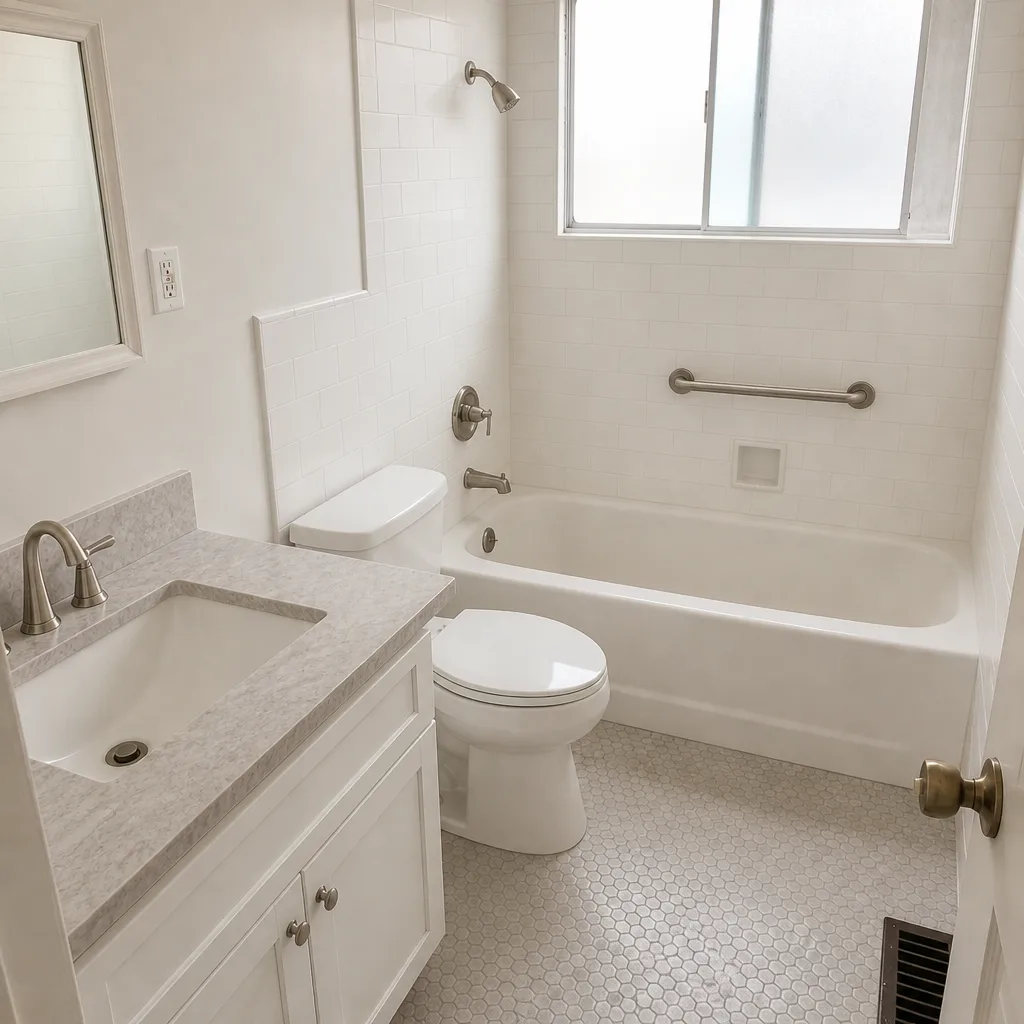
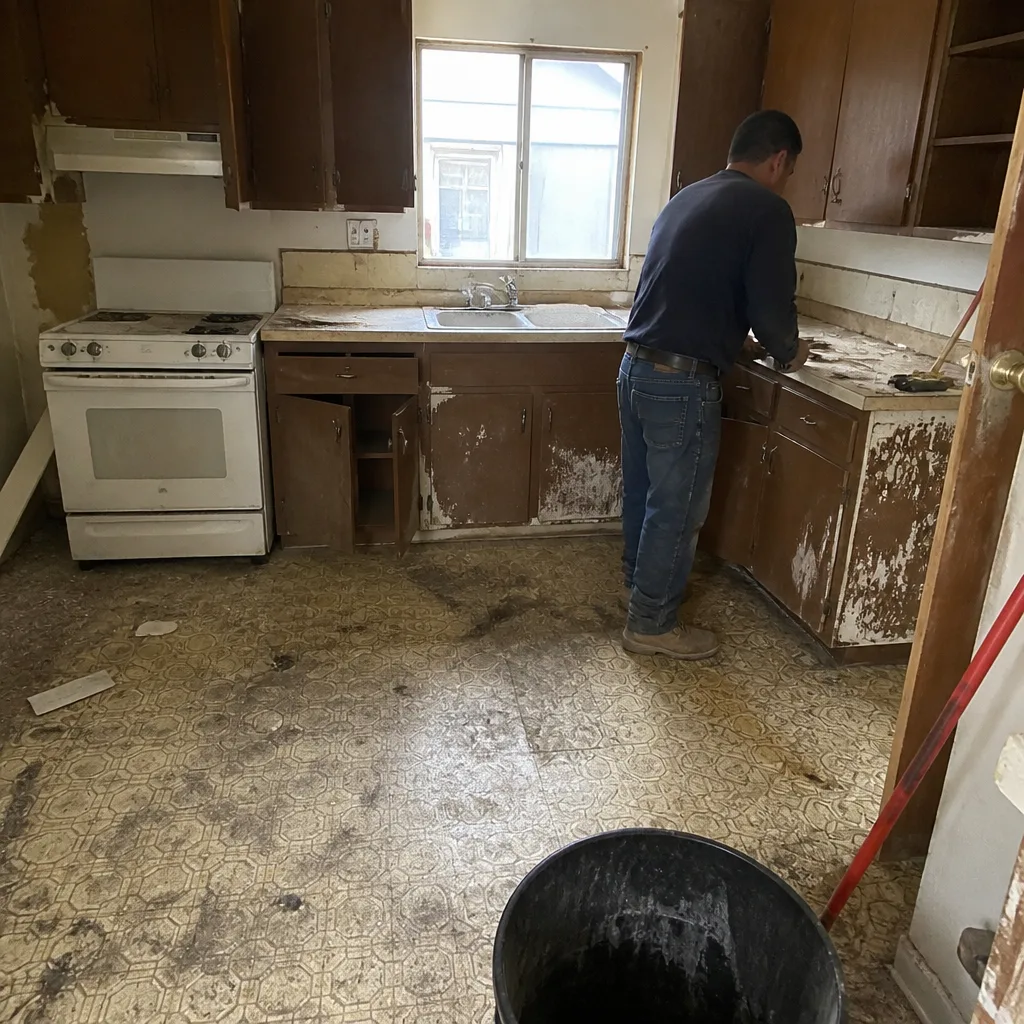
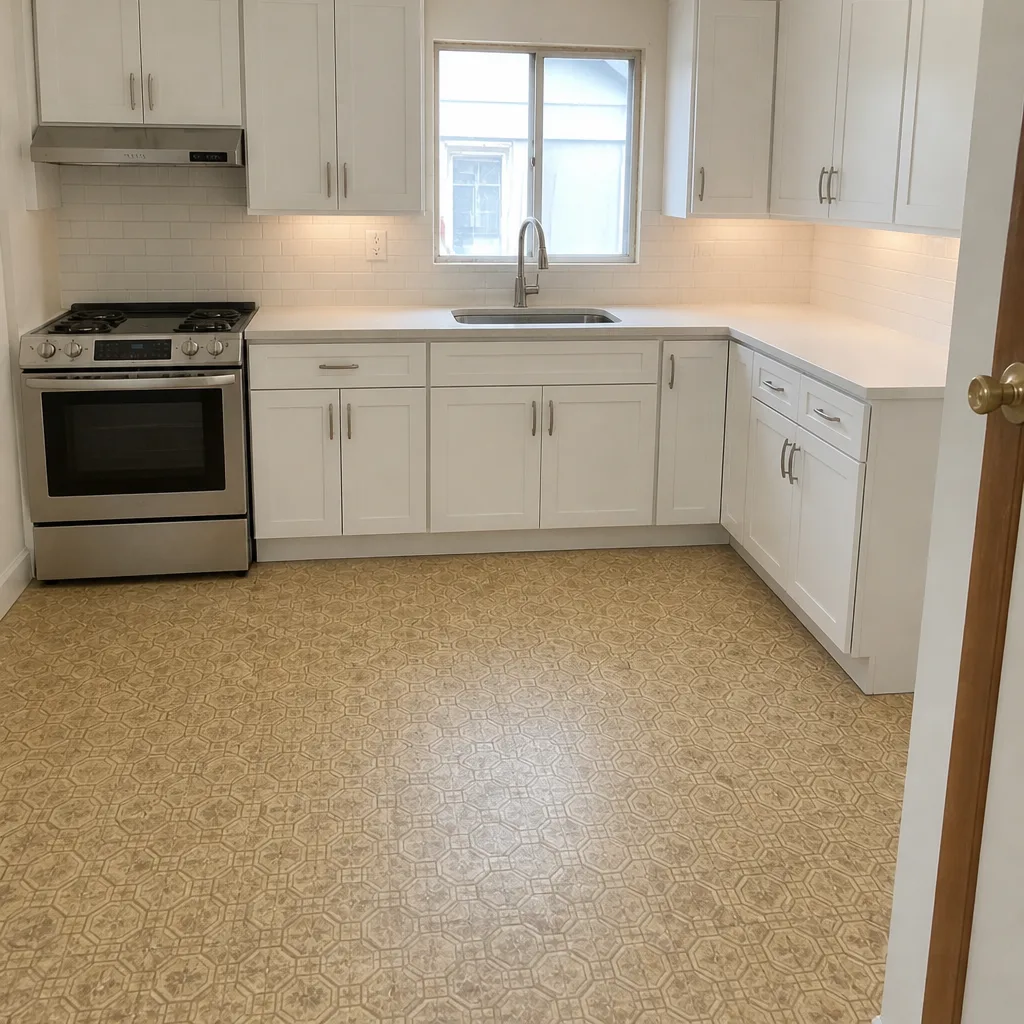
See the difference
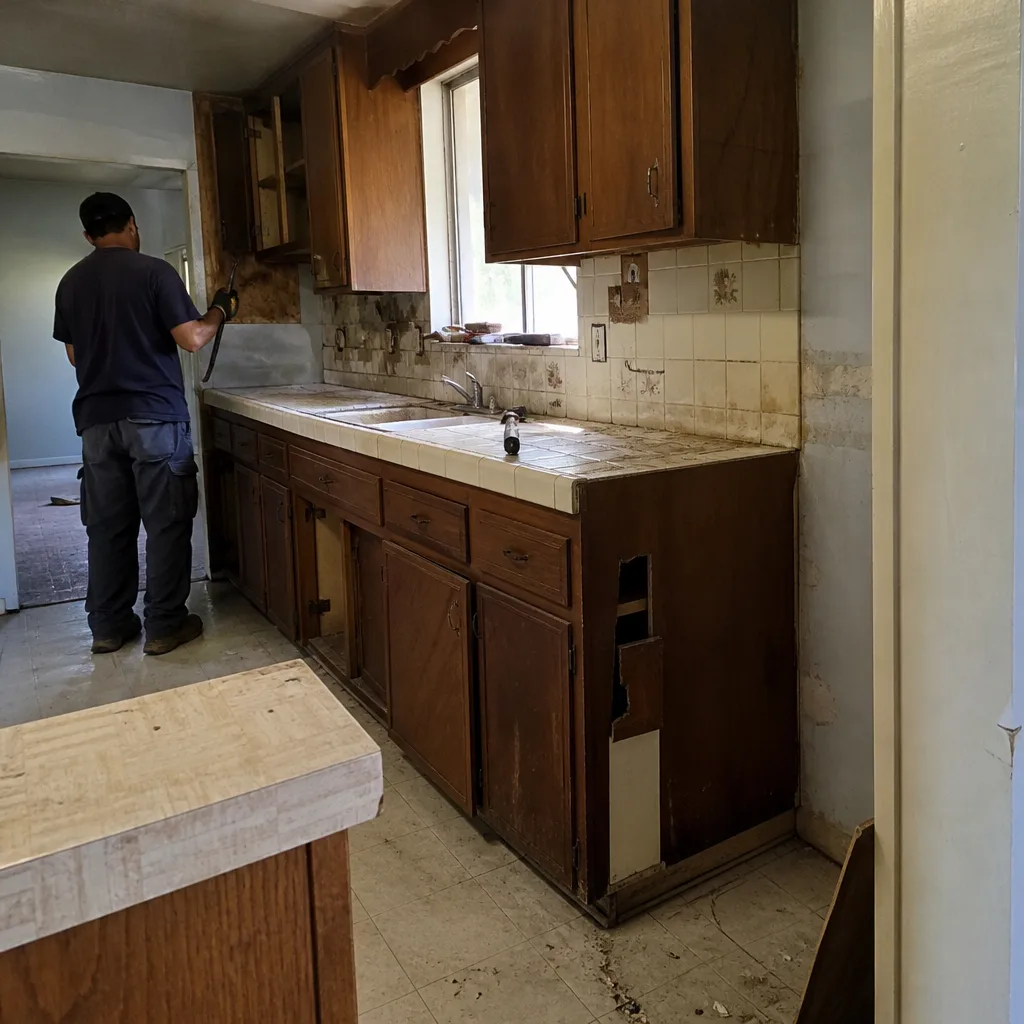 Before
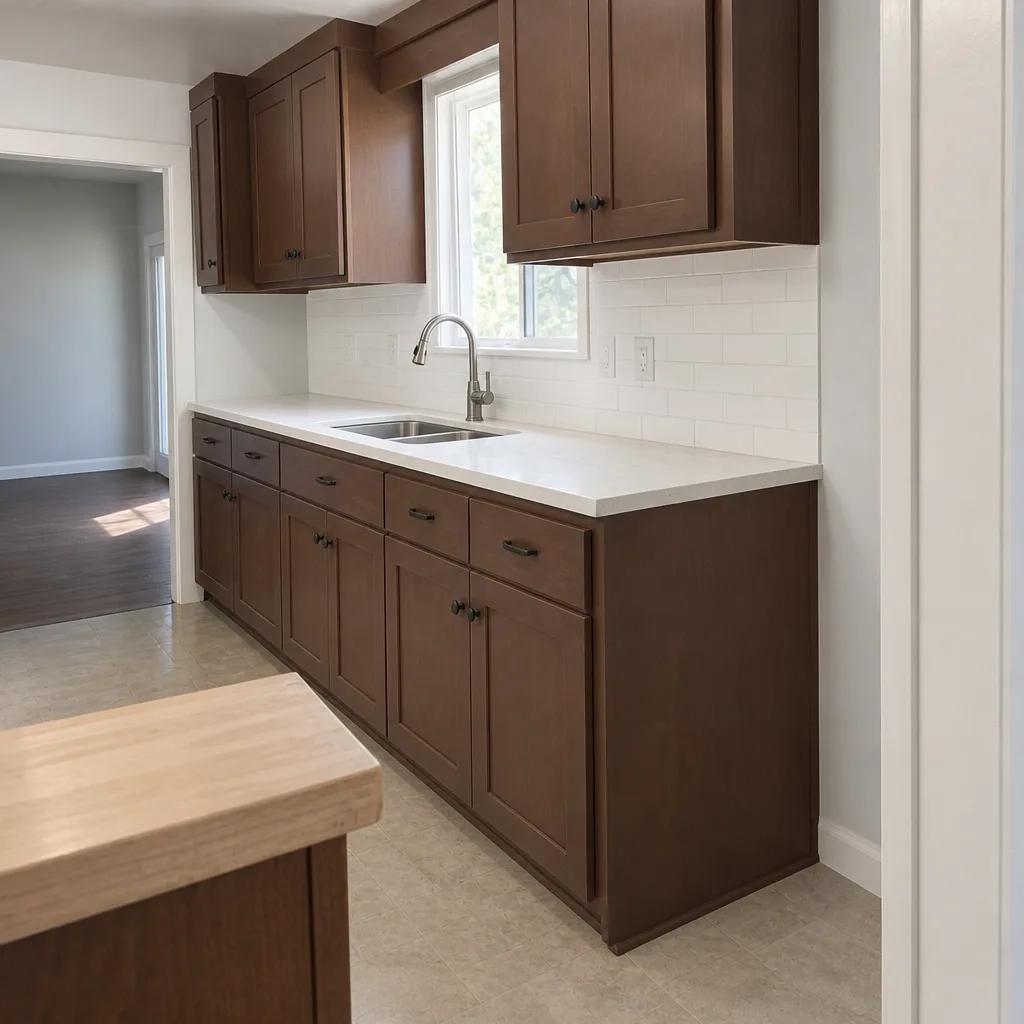 After
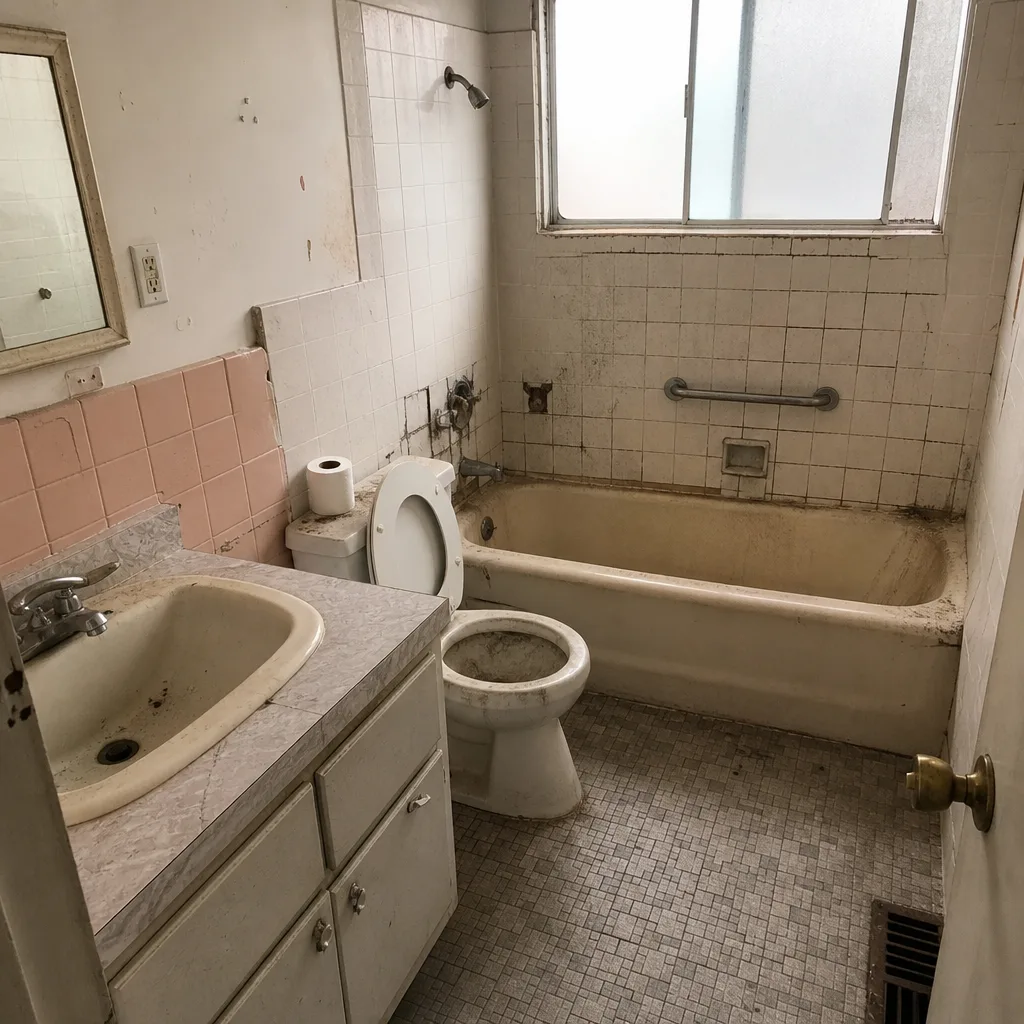 Before
 After
 Before
 After
When to Call a Professional
Most of the schedule in this guide is genuine homeowner territory. Weep hole clearing, track cleaning, hinge tightening, weatherstripping replacement – none of it needs a pro. A few situations do. Call us when the frame itself has moved, when a window has fogged between the panes, when water is pooling at a threshold after a heavy rain, when a multi-point door mechanism has stopped engaging all its points, or when a Santa Ana event has left a window or door with a visible gap that won’t close. Any of those means the maintenance schedule caught the problem too late and a repair or replacement is the answer.
Groundwork Construction Co. of Downey offers free estimates in Downey – call (888) 255-8179 to schedule a walk-through. We look at the frames, hardware, weatherstripping, sealant, and drainage on every window and door in the house, tell you what needs service now, what can wait, and what’s beyond repair. You get a written line-item quote before anyone touches anything. Our technicians have up to 12 years of experience on window and door systems across Downey homes, all projects are covered by the 730-Day Done Right Promise, and pricing is genuinely upfront – the number on the quote is the number on the invoice.
Frequently Asked Questions

Every three months, and once more right after the first heavy rain of the season. In Downey’s dry months weep holes fill with dust and pollen fast, and a single storm with a clogged weep hole can push water into the frame cavity. Set a reminder for the first of each quarter.
Dry PTFE (Teflon) or silicone spray, never grease or oil. Apply a light coat, let it dry, and wipe off the excess. Oil and grease attract the dust in Downey’s air and grind the rollers down faster than if you’d left them alone. Call (888) 255-8179 if a roller is already grinding – that’s a replacement, not a lubrication fix.
Almost always a clogged weep hole or a failed threshold seal. Clear the weep holes first and test again after rain. If water still pools, the threshold flush or the door sweep has failed and needs professional repair. That’s a job for a technician, not a homeowner, because the threshold needs to come up carefully to inspect for rot underneath.
Every three to seven years, depending on sun exposure. South- and west-facing joints on full sun fail on the shorter end of that range; shaded joints last longer. Inspect annually in late October and replace any joint that fails the thumbnail test. Call (888) 255-8179 for an exact quote on a full exterior sealant refresh – estimates are free.
Yes – one pre-season pass in late September or early October, and one post-season check in February or March. Tighten hinges and locks, inspect screens, and check sealant before the wind arrives. After the season, clear sand from tracks and re-inspect every caulk joint for wind-opened gaps. The pre-season check is 30 minutes; the post-season check is an hour.
Replace the insulated glass unit, not the whole window. Fogging between panes is a failed glass seal, not a frame problem. If the frame and hardware pass inspection, a glass unit replacement costs a fraction of a full window replacement. If the frame is soft, swollen, or out of tolerance, that’s when a full replacement makes sense. Get an inspection before deciding.
The Bottom Line
Window and door maintenance isn’t a glass-cleaning chore. It’s a schedule for five separate systems, each running on its own clock: glass, frame, hardware, weatherstripping, and sealant plus drainage. Get the schedule right in Downey and you clear weep holes quarterly, lubricate hardware by type every few months, inspect sealant every October, and run a full pre- and post-Santa Ana hardware pass. The result is fewer window and door replacements, no hidden water damage behind the frames, and a house that seals properly through every storm season. The maintenance does the work; when a repair is beyond a homeowner’s scope, we’re one call away.
Groundwork Construction Co. of Downey handles window and door replacement, sealant refreshes, and full exterior packages as part of our core service lines – from foundation to finish line. Every project comes with upfront pricing, no surprises, and the 730-Day Done Right Promise in writing. Financing at 0% for 18 months and $1,000 off projects over $10,000 are available on qualifying work. Call (888) 255-8179 for a free project estimate and design consult – a live person answers around the clock.
Written by the team at Groundwork Construction Co. of Downey.