Last updated November 17, 2026
Free written scope consultation - allowances, timeline, and change-order rules on paper before a single trade is scheduled
The Complete Driveway & Pavers Guide for Downey Homeowners
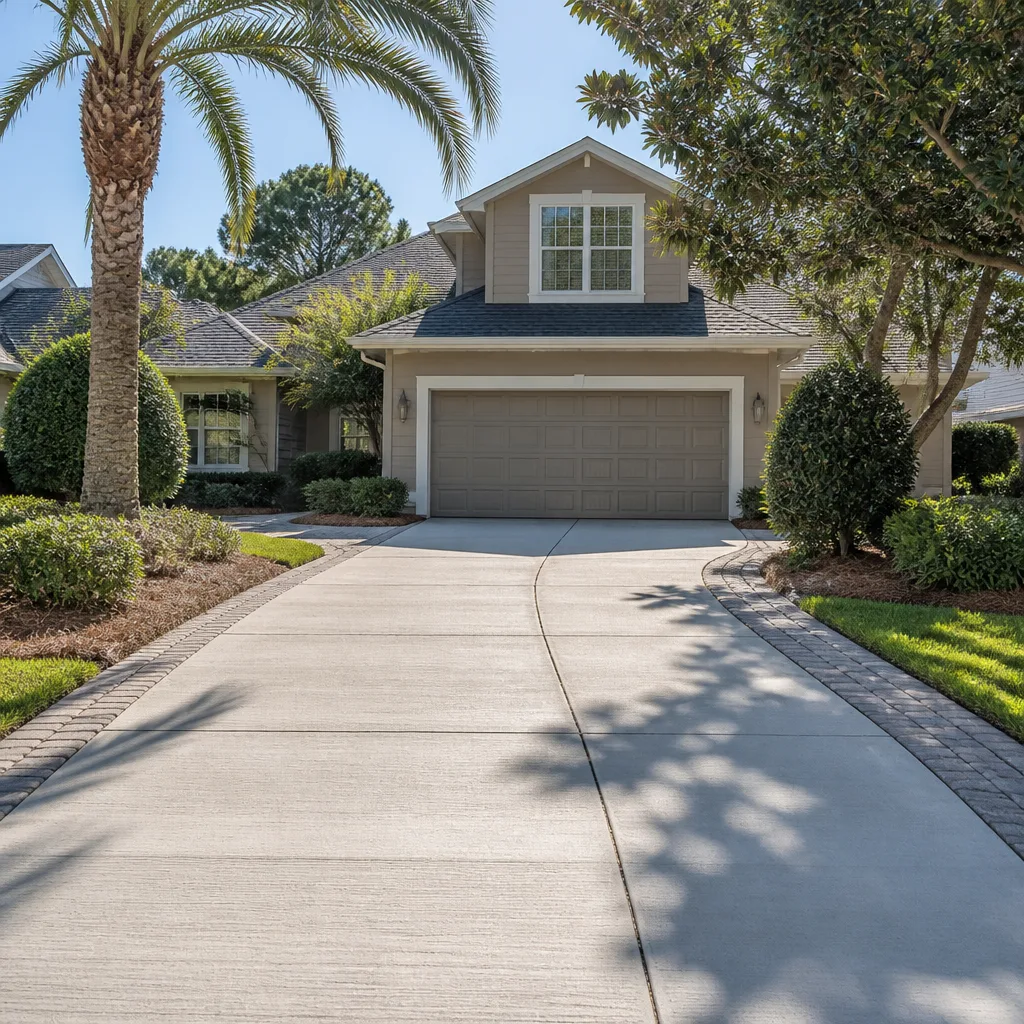
Most Downey homeowners don’t realize their driveway failed before the first paver was ever laid – it failed the day the base was skimped on under expansive clay soil. We’ve pulled up three-year-old driveways in this city where the pavers themselves were perfectly good and the eight-inch base underneath had turned to mush. Downey sits on some of the most active clay in Los Angeles County, and that clay moves with every wet season and dry spell. This guide covers what actually matters here: base depth, sealer schedules for our UV load, Downey permit thresholds, HOA color rules, and honest 2024 pricing. By the end you’ll know how to spec a driveway that survives a decade of Santa Ana winds and February rain.
Quick Answer
A driveway paver project in Downey typically runs $14 to $26 per square foot installed, depending on material and base depth, with most residential driveways landing between $9,000 and $22,000. The single biggest factor in whether that investment lasts is a compacted base of 8 to 10 inches of Class II aggregate – deeper than the 4 to 6 inches common in less clay-heavy parts of Southern California. Skip that, and no paver pattern or brand will save the surface.
Styles & brands we work with
- Kitchen remodeling
- Bathroom remodeling
- Home additions & ADU
- Roofing
- Windows & doors
- Driveway & pavers
- Fence
Table of Contents
- Why Downey’s Clay Soil Changes Everything
- Base Depth and Compaction: The Numbers That Matter
- What Driveway Pavers Cost in Downey in 2024
- Downey Permit Requirements for Paver Driveways
- HOA Rules That Affect Your Paver Choice
- Sun, Wind, and Sealer: The 90241 – 90242 Reality
- Choosing Materials That Fit Downey
- The Installation Sequence, Step by Step
- Common Mistakes to Avoid
Why Downey’s Clay Soil Changes Everything
Downey sits on expansive clay soils that swell when wet and shrink when dry. The technical term is vertisol, and the practical translation is movement – sometimes a half inch or more between a wet January and a bone-dry September. That movement transfers straight up into whatever sits on top of it. A concrete slab will crack. A thin paver base will heave, cup, and separate at the joints. This isn’t a Downey-only problem, but the clay here is notably heavier than what you’ll find in, say, Long Beach or Torrance, where sandy loam drains faster and moves less.
What does that mean for a driveway? Three things. First, your base has to be thick enough to spread the load and rigid enough to resist the clay’s push-pull. Second, drainage has to be designed into the project, not added as an afterthought – water pooling under a driveway is what triggers the worst swelling. Third, the edges need proper restraint, because clay movement loves to push pavers outward at the borders. We’ve seen driveways in the Rancho Estates area where the pavers themselves looked new but the whole field had crept two inches toward the street because the edge restraint was a single row of plastic spikes.
If your existing driveway has hairline cracks running parallel to the street, or pavers that rock when you walk on them, that’s clay movement talking. Getting the base right the first time costs more upfront and saves you a full tear-out later.
Base Depth and Compaction: The Numbers That Matter
The base is the compacted aggregate layer between the native soil and the bedding sand. It’s the structural heart of the whole driveway, and in Downey it needs to be deeper than the Southern California standard. Here’s the working spec we use:
- Standard SoCal base: 4 to 6 inches of Class II aggregate, adequate for sandy or loam soils
- Downey clay base: 8 to 10 inches of Class II aggregate, compacted in 2-inch lifts
- Heavy-traffic or sloped driveways: 10 to 12 inches, with geotextile fabric between the native soil and the base
- Compaction: 95% relative density, verified with a plate compactor at each lift – not one pass at the end
- Bedding sand: 1 inch of coarse concrete sand, screeded level, never substituted with masonry sand
Compaction in lifts is the part that gets skipped. A crew that dumps 10 inches of base and runs a plate compactor over the top once has only compacted the top 2 inches. The bottom 8 inches are still loose, and the first wet season rearranges them. Real compaction means two inches, compact, two more, compact, and so on, with the fabric and the edge restraint installed before the pavers go down.
On sloped driveways – common in the hillside pockets off Florence Avenue and around Wilderness Park – the base also needs to shed water away from the house. A 2% slope minimum toward the street is standard, and a French drain or channel drain at the apron helps in low spots. Water that can’t escape is the enemy of a clay-soil driveway.
What Driveway Pavers Cost in Downey in 2024
Pricing varies by material, square footage, and how much site prep your yard needs, but here’s a realistic line-item breakdown for a Downey project in 2024. These are installed costs, including base, materials, labor, and cleanup.
| Line Item | Cost Range (Installed) |
|---|---|
| Concrete paver (standard, 60mm) | $14 – $19 per sq ft |
| Concrete paver (premium, 80mm, textured) | $18 – $24 per sq ft |
| Clay brick paver | $22 – $30 per sq ft |
| Natural stone (travertine, flagstone) | $28 – $45 per sq ft |
| Base prep and excavation (clay-specific) | $4 – $7 per sq ft |
| Edge restraint and drainage | $2 – $4 per sq ft |
| Sealer (initial application) | $2 – $3 per sq ft |
| Old driveway demolition and haul-away | $1,500 – $3,500 flat |
A typical 500-square-foot two-car driveway in Downey with a proper clay base and mid-range concrete pavers lands around $9,000 to $12,000. Bump to a larger 800-square-foot driveway with a premium paver and a channel drain and you’re looking at $18,000 to $24,000. Labor in this part of LA County runs $65 to $95 per hour per crew member, which is roughly 15% higher than Inland Empire rates but 10 to 15% lower than Westside pricing.
Material costs have jumped about 12 to 18% since 2021 across the concrete paver category, mostly in freight and cement. If a bid comes in dramatically below these ranges, the base is almost certainly where the number was trimmed. Ask for a line-item quote that separates base prep from paver installation. Upfront pricing with no change orders is the standard we hold ourselves to, and it’s the right standard to ask of any contractor bidding on your Downey driveway.
Downey Permit Requirements for Paver Driveways
Many paver driveway projects in Downey don’t need a permit. Some do, and the difference matters. The city’s building department draws the line based on three factors: how much of your lot the driveway covers (impervious surface area), whether the project touches the public right-of-way or approach apron, and whether it changes the grading or drainage pattern of the lot.
- Under 400 square feet, no grading change, no sidewalk or apron work: typically no permit required, but confirm with the Downey Building & Safety Division before demolition starts.
- Over 400 square feet, or any change to impervious coverage ratios: a zoning review is often triggered, especially in older neighborhoods where lot coverage is already near the limit.
- Any work in the public right-of-way (curb, gutter, sidewalk, approach apron): requires an encroachment permit from the city, and often a separate inspection by the Public Works department.
- Grading changes of 50 cubic yards or more: a grading permit and a drainage plan are required.
- Driveways within the property line but less than 3 feet from the side lot line: may need a variance or a boundary review before approval.
Permit fees for a standard residential paver driveway run roughly $200 to $600 depending on scope. In our experience, the projects that run into trouble are the ones that start with a “we don’t need no stinkin’ permit” attitude and end with a stop-work order. Pulling the permit first is cheaper. Written, line-item proposals that spell out who pulls the permit – and who pays for the inspection – are how a clean project starts.
If your driveway project is part of a larger exterior plan, see our guide to Fence Installation in Downey, since fence permits and property line surveys often run in parallel with driveway work.
HOA Rules That Affect Your Paver Choice
Downey has a meaningful number of HOA-governed neighborhoods, particularly in the newer planned communities and townhome developments built from the 1990s onward. Before you spend a dollar on material, pull the CC&Rs. Paver color and material restrictions are common, and demolition is expensive.
- Approved color palettes: many Downey HOAs restrict pavers to earth tones – tan, gray, sand, and muted charcoal – and reject bright reds, distinct blacks, or high-contrast patterned runs.
- Pattern restrictions: herringbone and running bond are usually fine; some associations restrict circular or fan patterns as too decorative for the streetscape.
- Materials: clay brick is sometimes approved while concrete pavers of the same color are not, or vice versa. Confirm before ordering.
- Scale and layout: an HOA may dictate driveway width and apron configuration if the driveway is visible from the street.
- Submission timeline: architectural committee reviews can take 2 to 6 weeks in Downey associations. Start early.
The practical move is to request the architectural submission packet before you sign a contractor agreement. Some Downey HOAs require a color sample board and a site plan, and a contractor who has bid this work before can usually supply both. The 730-Day Done Right Promise applies to material and workmanship – it doesn’t cover an HOA demanding a re-install because the pavers were the wrong shade of tan.
Sun, Wind, and Sealer: The 90241 – 90242 Reality
Downey gets intense sun. The 90241 and 90242 zip codes see roughly 200 clear days per year and summer high temperatures that regularly touch the upper 90s, with UV levels in the 9 to 11 range on the index for a good chunk of June through September. Combine that with the Santa Ana wind season – dry, abrasive, particulate-heavy gusts that scour surfaces – and sealer life here shortens notably compared to coastal cities.
What that means in practice:
- Sealer reapplication: every 2 to 3 years in Downey versus the 4 to 5 years marketed on sealer cans. Coastal cities get closer to the label claim; inland LA County doesn’t.
- Product type: a penetrating, solvent-acrylic or polyurethane-enhanced sealer outperforms film-forming sealers in UV-heavy climates, since film-forming products chalk and peel under sustained sun.
- Timing: seal once after installation cures (typically 30 to 60 days after install, when the sand has settled and rain has washed the surface), then every 2 to 3 years on a schedule.
- Wind season: Santa Ana winds carry grit that acts like sandpaper on a sealer coat. An extra light clean-and-topcoat after the fall wind season extends the life of both the sealer and the pavers underneath.
We’ve seen downey driveways where the sealer failed in 18 months because a film-former was specified on a south-facing surface in direct sun. The pavers underneath were fine, but the surface had gone cloudy and chalky, and the homeowner had to pay for a strip-and-reseal. Getting the product category right the first time is money saved in year two.
Choosing Materials That Fit Downey
The right paver for Downey is one that handles freeze-thaw cycling (mild here, but real overnight), resists UV fade, and doesn’t absorb clay-stain. Here’s how the main categories shake out:
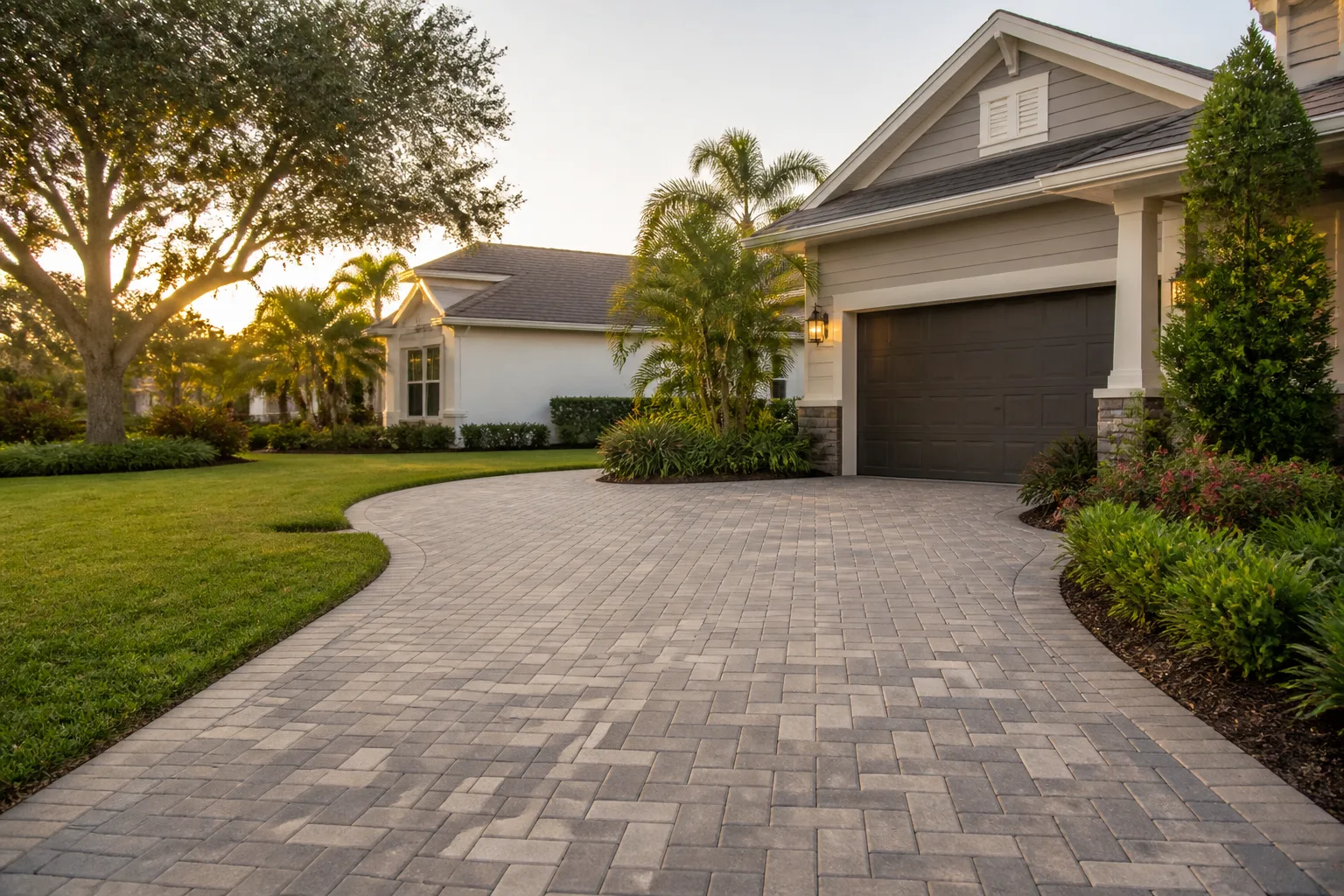
- Concrete pavers: the best all-around value in Downey. Interlock well, replaceable one-by-one, wide range of colors and textures, and manufactured with UV-stable pigments that hold color 15 to 20 years.
- Clay brick pavers: genuinely beautiful, holds color indefinitely, but pricier and heavier – better for accent bands and walkways than full driveways unless the budget allows. Vulnerable to staining if not sealed.
- Natural stone: travertine and flagstone are the premium option. Work well on covered or shaded areas; on full-sun Downey driveways, travertine can get hot underfoot and needs periodic sealing to resist our clay-heavy runoff staining.
- Permeable pavers: increasingly requested in Downey as stormwater rules tighten. Open-graded base allows water to infiltrate, which is a real advantage in clay soil – but the base system has to be engineered specifically, not just swapped in.
Color matters too. Light grays and tans reflect heat and stay walkable in July; dark charcoal or near-black pavers can hit 140°F surface temperatures under midday Downey sun. If you want a dark driveway, look for pavers with a light-reflective finish or plan the layout to shade the hottest run.
We partner with Belgard on paver systems and use barrette-grade steel edging on the restraint because it holds the field in clay-heavy soil better than plastic alternatives. The material spec should always be written into the bid: brand, series, color, thickness, and the base depth. Vague “paver” line items are where bids go sideways.
The Installation Sequence, Step by Step
A properly built Downey paver driveway follows this sequence. Knowing what should happen – and when – is how you sanity-check a crew during the build.
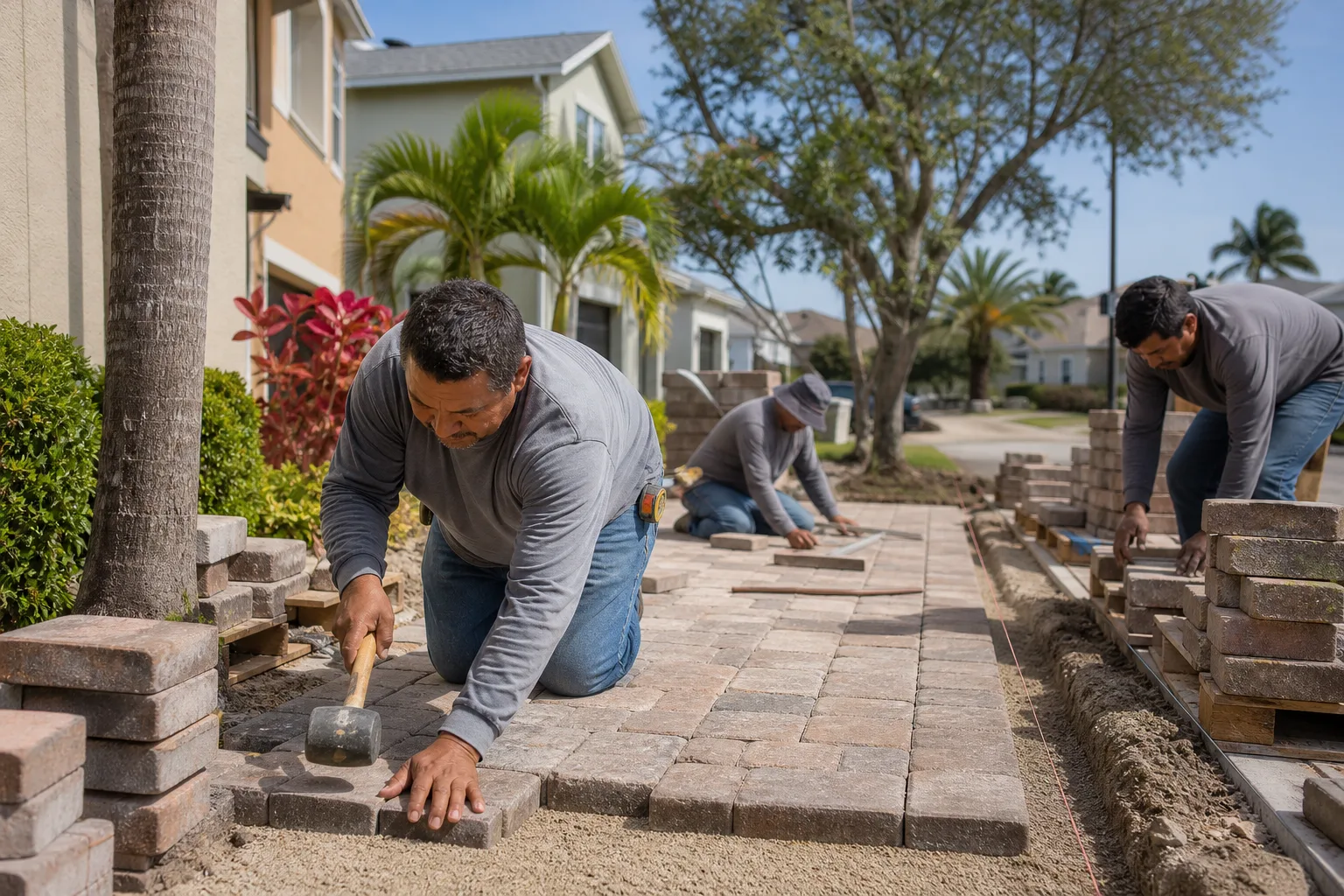
- Site measurement and layout. Mark the driveway footprint with string lines and stakes. Confirm slope (2% minimum away from the house) and confirm the location of any utility lines via Dig Alert.
- Demolition and excavation. Remove old concrete or asphalt, and excavate to a total depth of base + sand + paver thickness. For an 80mm paver with a 10-inch base, that’s roughly 14 inches total.
- Subgrade prep. Grade, moisten, and compact the native clay subgrade. Lay a geotextile separation fabric if the clay is highly active. Verify the fabric overlaps at least 6 inches at seams.
- Base installation in lifts. Place Class II aggregate 2 inches at a time. Compact each lift with a plate compactor to 95% relative density. Check grade with a laser or transit at every lift, not just at the end.
- Edge restraint. Install steel or rigid plastic edge restraint on the perimeter, spiked into the base, before any pavers go down. This is what stops the field from spreading in clay.
- Bedding sand and screed. Spread 1 inch of coarse concrete sand over the compacted base and screed to grade using rails. Do not walk on the screed once it’s flat.
- Paver laying. Lay pavers from a corner, maintaining the pattern. Cut edge pavers with a wet saw for clean joints. Keep a consistent 1/8-inch joint.
- Compaction and joint sand. Run the plate compactor over the finished field with a protective pad. Sweep polymeric joint sand into the joints, then mist and compact again.
- Sealing and final inspection. After 30 to 60 days of cure time and at least one rain cycle, apply the penetrating sealer. Walk the project with the contractor for a written punch list.
Most residential driveway projects in Downey run 3 to 6 working days, depending on square footage and site access. Larger projects or those with drainage additions stretch to 8 to 10 days.
Common Mistakes to Avoid
- Skipping the 8 to 10 inch base because the bid “fit the budget.” A thin base in Downey clay is a two-year driveway. The saved $2,000 shows up as an $8,000 tear-out when the field starts heaving.
- Using masonry sand in place of coarse concrete sand. Masonry sand is too fine and holds water. It migrates into the base and rots the structure from the bottom up.
- Ordering pavers before checking the HOA palette. We’ve seen Downey homeowners eat a 30% restocking fee because the architectural committee rejected the color after delivery.
- Skipping the permit on a project that needs one. Downey is not a “nobody will notice” city. Stop-work orders add weeks and cost more than the permit ever would have.
- Sealing immediately after installation. New pavers need 30 to 60 days to cure and settle. Sealing too early traps moisture and produces that cloudy, chalking look.
- Ignoring drainage on a flat-looking lot. Downey lots sometimes look level but grade slightly toward the house. Water that pools at the garage threshold is the #1 source of callbacks we see on older driveways.
- Hiring on price alone. The lowest bid here is generally the one where the base lift got skipped. Ask for line-item pricing and a written base spec – every time.
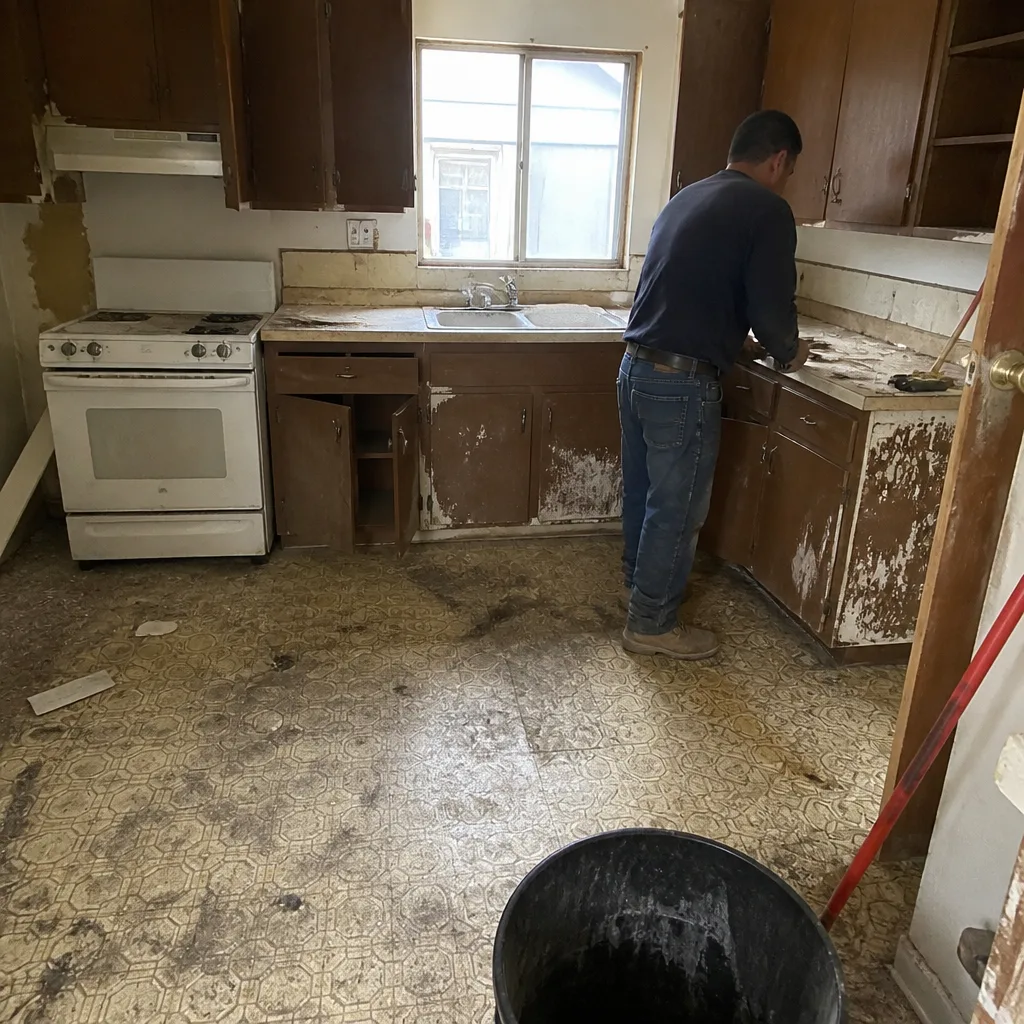
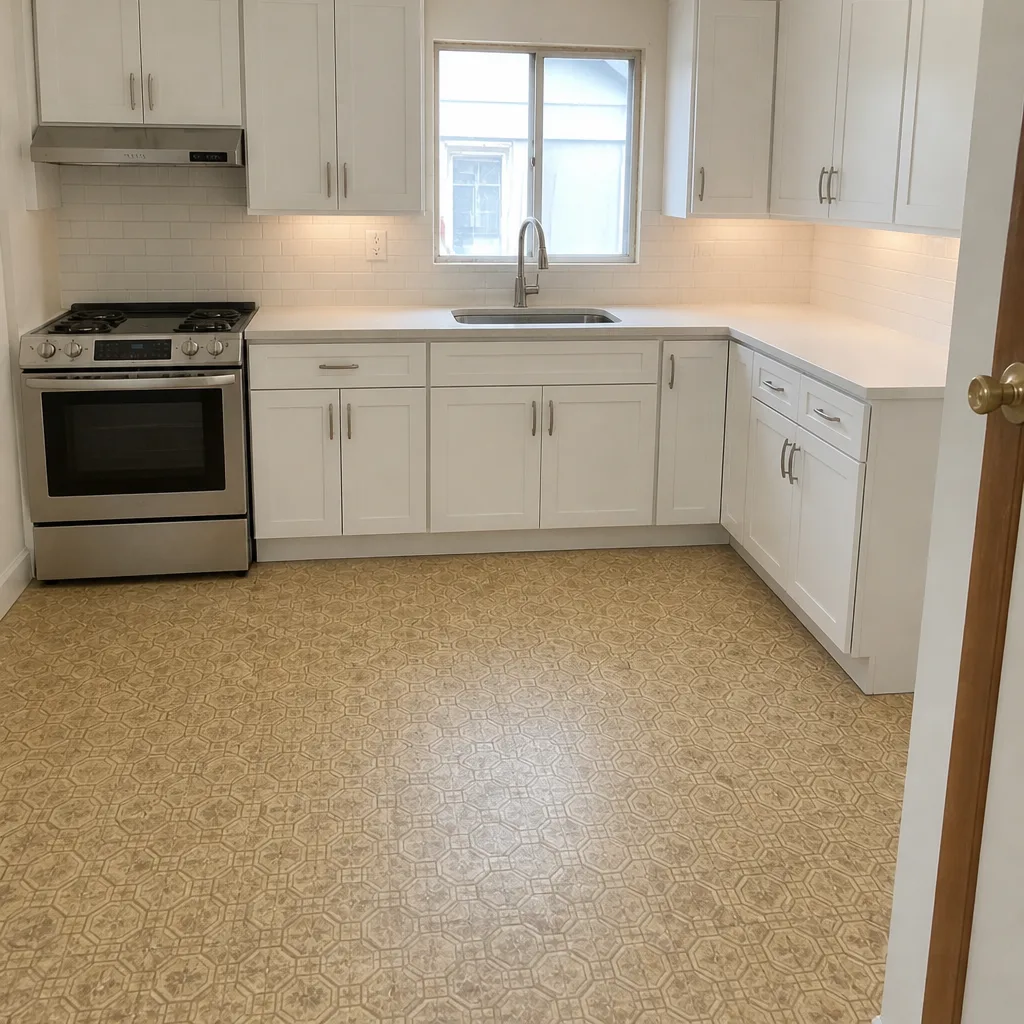
See the difference
 Before
 After
 Before
 After
 Before
 After
When to Call a Professional
Some driveway issues can wait. Others can’t, and knowing which is which saves you money. Call a professional when pavers rock or wobble underfoot (a sign the base has failed, not the surface), when the driveway is holding standing water after rain, when the edge has crept outward more than half an inch, or when a crack has opened in the apron or garage threshold. Structural damage to a base layer can’t be fixed from above – you can’t re-level pavers without rebuilding what’s under them. Also call before demolition if the project touches the public sidewalk, curb, or approach apron, since that requires a city permit.
Groundwork Construction Co. of Downey offers free estimates in Downey – call (888) 255-8179. We’ll walk the driveway, check the base and drainage, and put a written line-item proposal in your hands, no change orders, no vague ranges.
Frequently Asked Questions
Driveway pavers in Downey run $14 to $26 per square foot installed for most residential projects, with a 500-square-foot two-car driveway landing around $9,000 to $12,000 total. Premium materials and larger footprints push toward $20,000 to $24,000. The base depth is the biggest cost variable here, since Downey clay requires 8 to 10 inches versus the 4 to 6 inches common elsewhere. Call (888) 255-8179 for an exact quote – estimates are free.
Many Downey paver driveways under 400 square feet with no grading changes don’t need a permit, but any project touching the public right-of-way, changing lot impervious coverage, or grading 50 cubic yards or more does. Confirm with the Downey Building & Safety Division before demolition starts. Permits typically run $200 to $600 and are far cheaper than a stop-work order.
Downey’s expansive clay soil calls for 8 to 10 inches of compacted Class II aggregate, laid in 2-inch lifts and compacted to 95% relative density. Sloped driveways or driveways with heavy vehicle loads should go 10 to 12 inches with a geotextile fabric at the subgrade. The 4 to 6 inch base common in other parts of Southern California is not adequate here.
Every 2 to 3 years in Downey, compared to the 4 to 5 years you’ll see on sealer cans. The combination of high UV index, sustained summer heat in the 90241 – 90242 corridor, and particulate-heavy Santa Ana winds degrades sealer faster than in coastal cities. Use a penetrating sealer rather than a film-former and reapply on schedule.
Yes, typically by 1% to 3% of the home’s value if the driveway is well-built and the material matches the neighborhood. A failed paver driveway with heaving or spreading edges actually detracts, since buyers see a five-figure repair in their future. The return comes from the base, not the surface – a proper clay-soil installation is what buyers are really paying for.
Most residential driveway projects run 3 to 6 working days, depending on square footage and site access. Larger driveways, those requiring drainage additions, or projects with significant demolition of old concrete stretch to 8 to 10 days. Add 30 to 60 days of cure time before the final sealer application.
The Bottom Line
The driveway paver decision in Downey comes down to the layer you’ll never see. Pay for the 8 to 10 inch compacted base, a geotextile at the subgrade, a real edge restraint, and a penetrating sealer scheduled every 2 to 3 years, and the pavers themselves will hold for 20-plus years. Skimp on any of those, and even the best paver on the market becomes a tear-out. Check your HOA palette first, pull the permit if the project calls for it, and demand a line-item bid that separates base prep from finish work. Written pricing, permits pulled and inspections passed, and a 730-Day Done Right Promise behind the workmanship are the standards we hold ourselves to on every Downey driveway. If a paver or fence or addition is on your mind, start at our Groundwork Construction Co. of Downey home, and browse the full guide to Driveway & Pavers in Downey when you’re ready to price the project.
Contact
Ready to price your driveway? Call (888) 255-8179 to schedule your free estimate in Downey. We’ll walk the site, confirm base depth and drainage, and hand you a written, upfront proposal with no change orders. Our technicians have up to 12 years of experience on paver installations in clay-heavy Southern California soil. Get $1,000 off projects over $10,000, take advantage of 0% financing for 18 months, and know that from foundation to finish line, we’re the single contractor responsible for the whole job. Whether you’re planning the driveway first or thinking bigger, our Home Additions & ADU in Downey team can help with the larger exterior plan.
Written by the team at Groundwork Construction Co. of Downey.