Last updated November 17, 2026
Free written scope consultation - allowances, timeline, and change-order rules on paper before a single trade is scheduled
The Complete Fence Installation Guide for Downey Homeowners
More fence projects in Downey get stopped mid-installation by code violations than by bad weather, and nearly every one of those violations was visible during the planning stage if you knew where to look. A fence feels simple: dig holes, set posts, hang boards. But in Downey the paperwork comes first, the neighbors come second, and the materials come last. Get that order wrong and you’ll be tearing out a perfectly good fence. This guide walks through Downey fence code, California’s shared-fence law, local soil conditions, a climate-matched material comparison, and the actual permit and inspection process through the City of Downey’s Building & Safety division – in that order.
Quick Answer
Fence installation in Downey requires a building permit for most new fences and walls, and the City of Downey enforces front-yard height limits, rear-yard limits, and a “good neighbor” rule governing which finished side faces outward. Before you buy a single post, confirm your zoning district’s height limits, talk to the affected neighbors about the property line, and pull the permit – the average residential fence permit and inspection timeline in Downey runs several weeks, so plan your install around that, not the other way around.
Styles & brands we work with
- Kitchen remodeling
- Bathroom remodeling
- Home additions & ADU
- Roofing
- Windows & doors
- Driveway & pavers
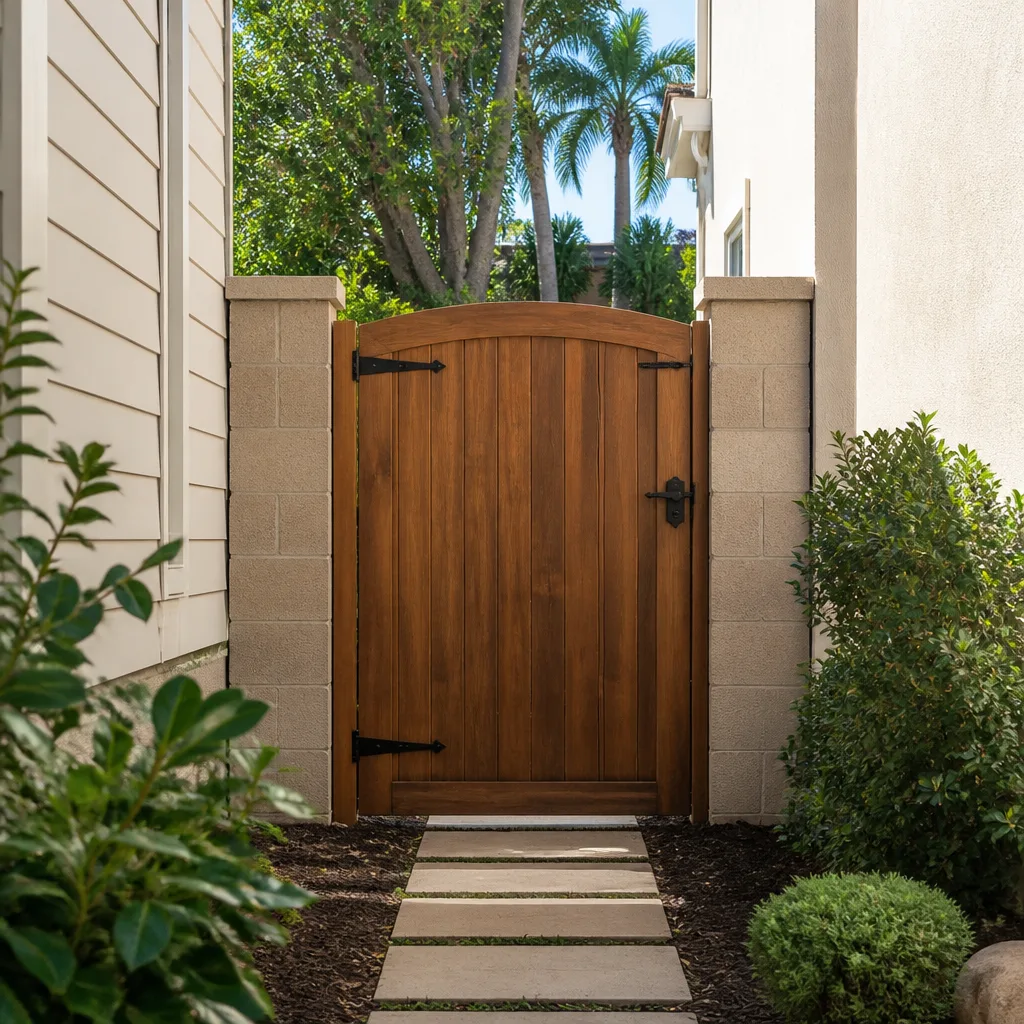
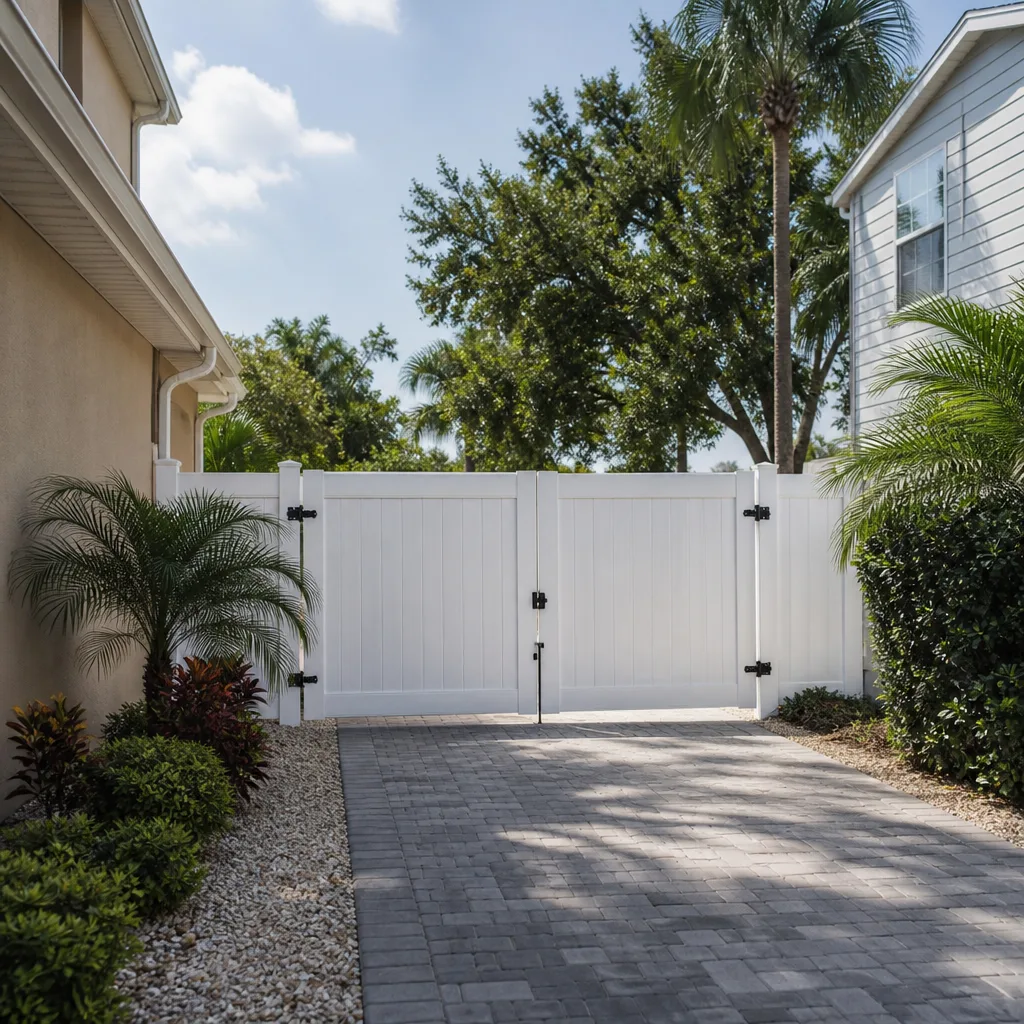
- Fence
Table of Contents
- What Does Downey’s Fence Code Actually Require?
- What Is Downey’s “Good Neighbor” Fence Rule?
- California’s Shared-Fence Law and Cost-Sharing
- How Downey’s Soil Affects Post Depth and Footings
- Material Comparison Built for Downey’s Climate
- The Downey Permit, Fee, and Inspection Timeline
- How a Proper Downey Fence Gets Installed
- Common Mistakes to Avoid
What Does Downey’s Fence Code Actually Require?
Downey regulates fence height by zone type and by yard location, and treating those two variables as one is the single most common planning error we see. In general residential zones across Downey, front-yard fences – meaning a fence between the house’s front setback and the property line along the street – are limited to roughly three feet of solid height, while rear and side-yard fences in the back are commonly allowed up to six feet. Corner lots face extra scrutiny because the front-yard restriction applies to both street-facing sides, and a fence that’s fine on one street is a violation on the other.
Height limits are measured from the finished grade, not from the top of a retaining wall or a slope. If you’re fencing a lot with elevation change – common on the older lots near Downey Avenue and around the neighborhoods south of Florence Avenue – the measurement resets with the grade, and a fence that reads three feet at the sidewalk might read five at the property line.
Here’s what to verify before you build:
- The exact zoning district for your parcel, which sets your base height limits.
- Whether your lot is a corner, interior, or flag lot, since corner lots carry front-yard restrictions on two sides.
- Front setback lines, because a fence further from the street is often treated differently than one at the property line.
- Any overlay, specific plan, or historic designation that changes the rules on top of the base zone.
- Whether the fence is a wall (masonry, block) versus a fence (wood, vinyl, metal), which can trigger structural review.
None of this is negotiable at the counter. Downey’s Building & Safety division checks height and setback before it issues a permit, and an inspector will re-measure on site. Confirm your limits in writing during planning and you’ll sail through; guess and you’ll be rebuilding. Our team at Groundwork Construction Co. of Downey pulls the permit and handles this review as part of every fence project, so the limits come from the city, not from a contractor’s memory.
What Is Downey’s “Good Neighbor” Fence Rule?
Downey, like most Southern California cities, expects fences to be “good neighbor” style – meaning the finished, smooth side faces the neighbor and the structural side (posts, rails, framework) faces the property owner. The rule exists to keep fences looking tidy from the neighbor’s yard and to prevent disputes over whose side is which. For a wood fence, that means fastening the boards to one face and leaving the rails on the other. For vinyl, it means installing a panel style designed to look finished on both sides, which is why products like Bufftech’s two-sided profiles see steady demand in Downey’s residential neighborhoods.
This is where a lot of DIY fence projects get the physics backwards. If you build a fence with the rails facing your neighbor, the neighbor can ask the city to make you flip it – and flipping a fence means uninstalling and reinstalling it. At that point the labor runs twice.
Here’s what a “good neighbor” build actually involves:
- Determine your property line first. Use your recorded survey, not a guess. The finished side faces away from the property line, toward the neighbor.
- Choose a panel system that looks finished on both faces if you expect to be on good terms with that neighbor for a long time. It costs a bit more than standard dog-ear wood.
- Set the fence slightly inside your property line by a few inches, so maintenance and repainting stay on your own ground.
- Document the install with photos of the posts and the line, which protects you if the neighbor later claims the fence encroaches.
- Notify the neighbor in writing before you start. A short note with the start date, fence style, and the contact number is enough; it prevents most disputes before they exist.
Downey’s older neighborhoods – the tracts built in the 1950s and 1960s around Brookshire and the streets off Paramount Boulevard – have a good number of fences where this convention wasn’t followed. If you’re replacing one of those, our crew at Groundwork Construction Co. of Downey resets the fence line correctly as part of the install, so it matches the neighborhood norm.
California’s Shared-Fence Law and Cost-Sharing
California Civil Code Section 841 gives you more leverage than most Downey homeowners realize: if a fence sits exactly on a shared property line and both sides benefit from it, either neighbor can ask the other to share the reasonable construction and maintenance costs. The neighbor isn’t automatically obligated – they can refuse – but the law creates a route for cost-sharing that most people never invoke. If you’ve ever wondered why the fence rebuild is sitting on your side of the ledger alone, this is why.
In practice, cost-sharing works like this:
- Confirm the fence is a true boundary fence. A fence entirely on your side of the line is yours alone.
- Get a written estimate and share it with the neighbor before work starts. A written, itemized quote is the single strongest tool for a cost-sharing conversation.
- Propose a split – often 50/50 for a shared line, or a split tied to which side of the fence each of you faces. Downey fences along older lots sometimes have unequal value to each side, and the law allows reasonable adjusted splits.
- Put the agreement in writing, signed by both parties, including the total, the split, and the install date.
- If the neighbor refuses, you can proceed on your own dime (the fence is legitimate if you own the materials and side), but the shared-cost claim needs a court to enforce. For fences in the $4,000-$9,000 range, the cost-sharing letter is almost always enough.
Common real-world outcome: about six in ten Downey boundary fences we quote get some neighbor contribution once a written estimate exists. The estimate does the work; a phone call alone rarely does. Our team at Groundwork Construction Co. of Downey provides itemized written estimates – the same number you see is the number you pay – so the neighbor conversation starts with facts instead of a ballpark.
How Downey’s Soil Affects Post Depth and Footings
Downey sits on a mix of recent alluvial soils and older clay-heavy deposits, and that variation dictates how deep a post actually has to go. Two blocks can behave differently. In the areas with heavier clay content – common on the older lots between Lakewood Boulevard and Downey Avenue – a shallow excavation hole will hold water after rain and swell it, so posts need footings that account for soil movement. In sandier, better-drained pockets, footings can be a bit shallower but need to guard against settlement.
Older Downey lots add a second variable: buried utilities. Properties built before the 1970s frequently have irrigation lines, old gas lines to yard appliances, or unbonded electrical conduit through the yard. Digging before calling 811 to mark those lines is how you find them the hard way. That’s a same-day call, it’s free, and it prevents the repair bill that makes a fence project suddenly cost twice the estimate.
Post depth on a Downey fence generally follows these rules of thumb:
- Standard depth: about a third of the post’s above-ground length below grade – a six-foot fence sits on a two-foot bury. In heavier clay, that’s the minimum, not the target.
- Clay-heavy soil: add depth and increase the concrete collar – eight to ten inches of concrete around the post foot is common here where the soil holds water.
- Posts on a slope or elevation change: depth follows the low side of the grade, not the high side.
- Gates and heavy panels: need a deeper footing and often a metal post anchor to resist sag; the gate corner is where most fence failure starts.
- Trees, roots, and old stumps: exploratory digging before the layout is settled, because moving the post four inches now is cheaper than cutting a root or hitting a buried line later.
We’ve seen a fair number of Downey fences fail at the gate post in under three years because the footing was sized for flat inland soil, not local clay. Getting the footings right at the start is the entire ballgame.
Material Comparison Built for Downey’s Climate
Downey’s climate puts a fence through a specific test: strong UV from roughly nine months of clear sun, a coastal marine layer that pushes humidity up overnight and pulls it back by mid-morning, and periodic heavy rain during the winter months. Each material handles that differently, and the right choice depends on how much maintenance you want to sign up for.
| Material | How It Handles Downey’s Climate | Typical Lifespan |
|---|---|---|
| Wood (cedar or redwood) | Warms up color-wise but takes UV damage without stain; marine-layer humidity promotes rot at the base; needs re-staining roughly every 2-3 years. | 12-20 years with maintenance |
| Vinyl (Bufftech, ActiveYards) | Handles UV well, resists rot in humid conditions, needs a rinse once a season; older vinyl yellows under strong sun, so specify UV-stabilized panels. | 20-30 years |
| Masonry Block | Heavy and permanent, excellent against UV and rain, but requires proper footings in Downey’s clay; a cracked block wall stays cracked. | 40+ years with good footings |
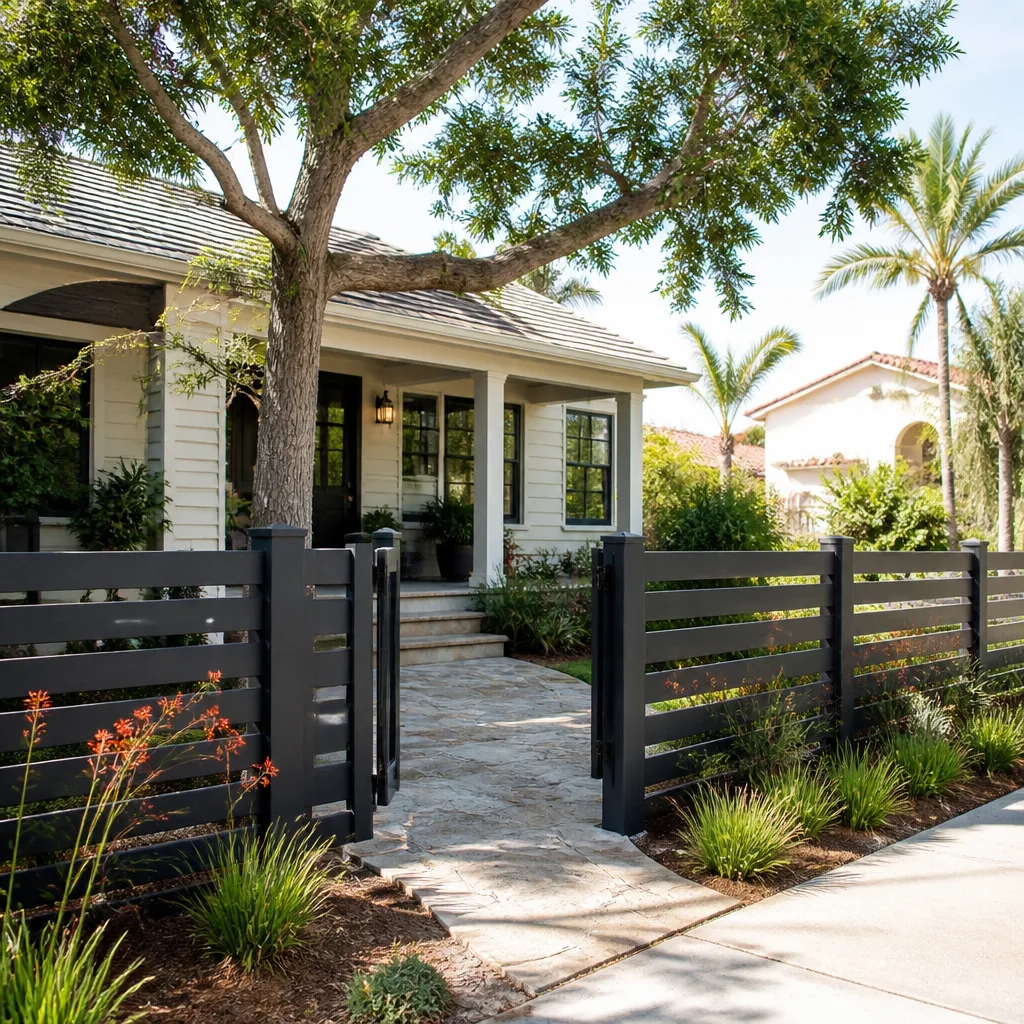
| Aluminum / ornamental (Jerith) | Rackable, powder-coated, holds color under UV; the go-to for front-yard restrictions where a solid privacy fence isn’t allowed. | 25-35 years |
For privacy in a back yard, wood and vinyl are the volume sellers in Downey. For front yards where height is limited, aluminum (Jerith is a strong performer) and short picket fences do the job. For the hardscape behind the fence, Belgard pavers are the standard match for Downey patios and driveways, which is why we quote the fence and the driveway and paver work as one project when a homeowner is redoing both at the same time.
A quick word on the “correct” choice: there isn’t one. Cedar looks better; vinyl needs less work; block lasts longest; aluminum solves the front-yard height problem. Match the material to the yard, not to a generic recommendation.
The Downey Permit, Fee, and Inspection Timeline
The City of Downey’s Building & Safety division issues the fence permit, and the timeline is the piece homeowners consistently underestimate. Here’s the process that holds up in 2024:
- Confirm zoning and height limits. Call or check the city’s online zoning viewer for your parcel before you design anything. This takes an afternoon but saves the whole project.
- Prepare a site plan. A scaled drawing showing the property lines, the fence line, the fence height, the material, and the setback from the front property line. Most cities reject applications with a hand sketch.
- Submit for the permit. Downey accepts fence and wall permit applications at the counter and, for straightforward residential fences, online. A residential fence permit typically runs a few hundred dollars, with the fee scaling by linear feet and the city’s current fee schedule – budget the line item, not a number from last year’s post.
- Plan review and corrections. Small residential permits often clear review in a two-to-four-week window. Standard plans are faster; custom or height-variant fences take longer.
- Inspection. The inspector checks footings and post depth before the concrete goes in, and a second inspection confirms final height and setback. Schedule the first inspection the day you dig – same-day or next-day scheduling in Downey is generally available for footing inspections when you call early in the morning.
- Final sign-off. After the final inspection passes, the permit closes and the fence is documented. Keep the paperwork; it matters at resale and if a neighbor ever disputes the line.
The one thing our team at Groundwork Construction Co. of Downey does for every fence project is pull the permit before digging. Clients frequently tell us they’d rather skip the permit to save a few hundred dollars and a few weeks. In our experience that decision costs more than it saves, because the inspector can stop an unpermitted fence at any point, and the corrections are more expensive than the permit.
If your project grows past a simple fence – a new detached unit, an enclosed yard, a reconstructed garage – the permit scope widens, and the home additions and ADU work follows the same review chain. This is the year to plan that as one permitting conversation, not two.
How a Proper Downey Fence Gets Installed
Installation order matters in Downey, and the second-guessing comes when a crew shortcuts it. Here’s the sequence that holds up on local soil:
- Call 811 and confirm utility markings – free, and required before any digging.
- Set the fence line from a survey or a recorded property description, not from the neighbor’s existing fence. Existing fences can be wrong; surveys usually aren’t.
- Lay out posts at the spacing the panel system requires (typically eight feet on center for wood, wider for vinyl profiles). Mark every post hole with a stake and string line.
- Dig the post holes to the depth the soil requires, adding to that depth in heavy clay areas.
- Set the posts in concrete, plumb and braced, and let them cure fully before hanging anything on them. Two bags of concrete per post in Downey’s clay-heavy zones is the norm; the gate post gets more.
- Schedule and pass the footing inspection if the permit calls for it. Do this before covering the footings.
- Hang the panels, facing the finished side toward the neighbor per the good neighbor convention. Install the gate with a metal frame or a reinforced wood assembly so it doesn’t sag.
- Final inspection and cleanup. Keep a copy of the signed permit and inspection card. Add a coat of exterior sealer on wood about a month after install (wood needs to dry first).
Time-wise, a straightforward 100-linear-foot Downey rear-yard wood fence lands in two to three working days once permits are in hand, plus the concrete cure window. Vinyl installs often go slightly faster. Block walls take longer and need a masons’ schedule that accounts for the cure.
If you’ve been burned before by vague bids – or by a crew that promised a start date and never showed – the fence installation in Downey page walks through how our crew works, and the Groundwork Construction Co. of Downey home page covers the full scope of what we handle across trades.
Common Mistakes to Avoid
- Building without pulling the permit. Fence permits in Downey aren’t optional for new fences and walls, and unpermitted work can be flagged at resale. The permit is cheaper than remediation by a wide margin.
- Measuring height from the wrong grade. Front-yard limits on Downey side-to-side lots count from finished grade, and short retaining walls reset the measurement. Measure from the low side, not the patio level.
- Building on a lot line without a survey. The neighbor’s existing fence is the single least reliable source of a property line. A recorded survey is the only number that holds in a dispute.
- Ignoring the good neighbor rule. A fence with the rails facing the neighbor will get flagged, and the fix means taking it apart and re-hanging every panel on the correct side.
- Undersizing the footings for Downey’s clay. A footing that works in sandy soil and a footing that works in Downey’s heavier clay are not the same. Shallow footings and gate posts sized for flat inland conditions fail inside three years.
- Skipping the 811 call. Buried irrigation, old gas lines, and unbonded conduit in pre-1970s Downey lots are common. Digging without marking those lines is the fastest path to a two-week repair delay.
- Choosing vinyl for the front yard without checking UV grade. Lower-grade vinyl panels yellow under Downey’s strong sun. Specify UV-stabilized panels or use aluminum for the front.
When to Call a Professional
Some fence work is genuinely a weekend project: replacing a few pickets, restaining a sound existing fence, or adjusting a sagging gate. But most Downey fence builds reach the point where the permit review, the survey question, the footing depth in clay-heavy soil, and the neighbor conversation stack up fast – and a mid-project correction costs more than the original hire. Call a professional when the fence needs a new permit, when the property line is uncertain, when the fence will be over six feet or contain a gate, when the neighbor is already in a disagreement, or when a prior fence has failed at the posts inside a few years.
Groundwork Construction Co. of Downey offers free estimates in Downey. Call (888) 255-8179 to schedule yours. Our team has been in business since 2014, our technicians have up to 12 years of experience, and every fence project is covered by the 730-Day Done Right Promise – a two-year written guarantee that’s one of the longest workmanship guarantees in the residential construction space. Live person, 24/7, on every call.
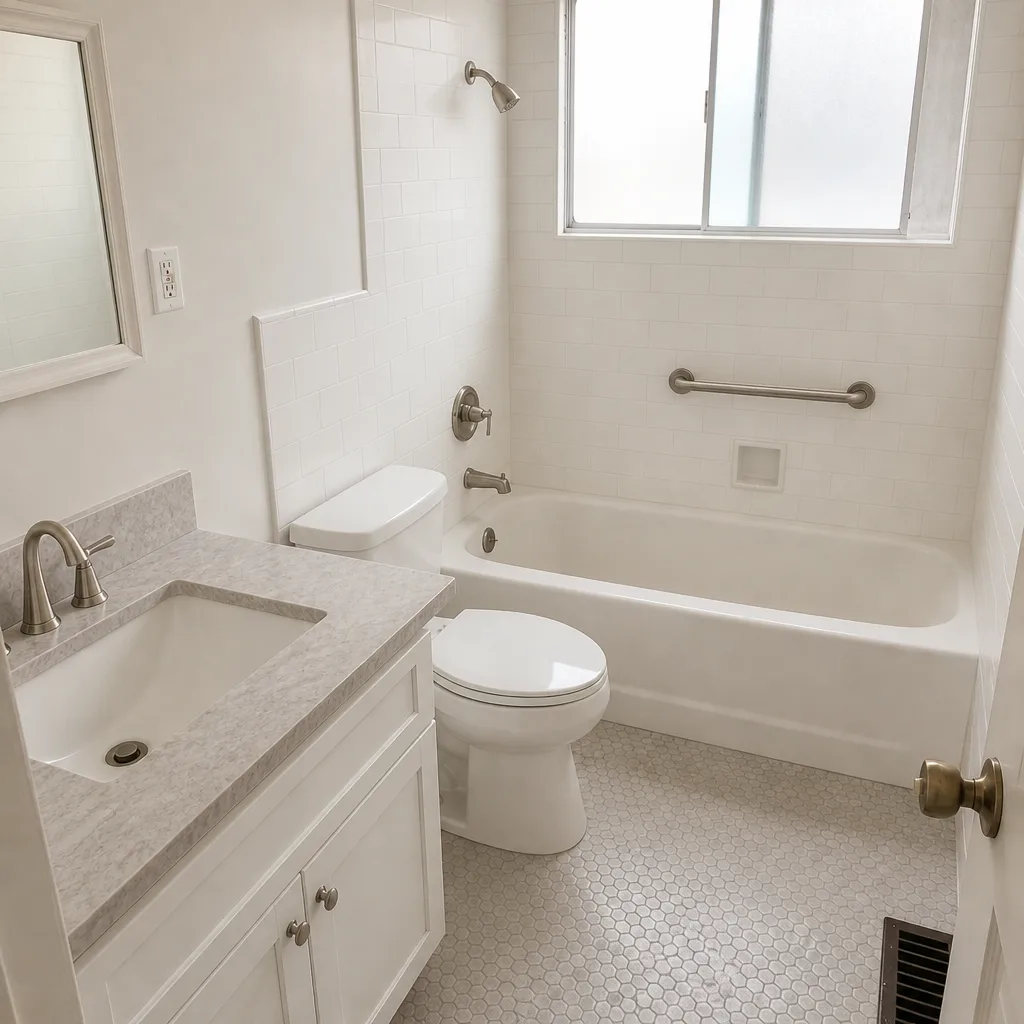
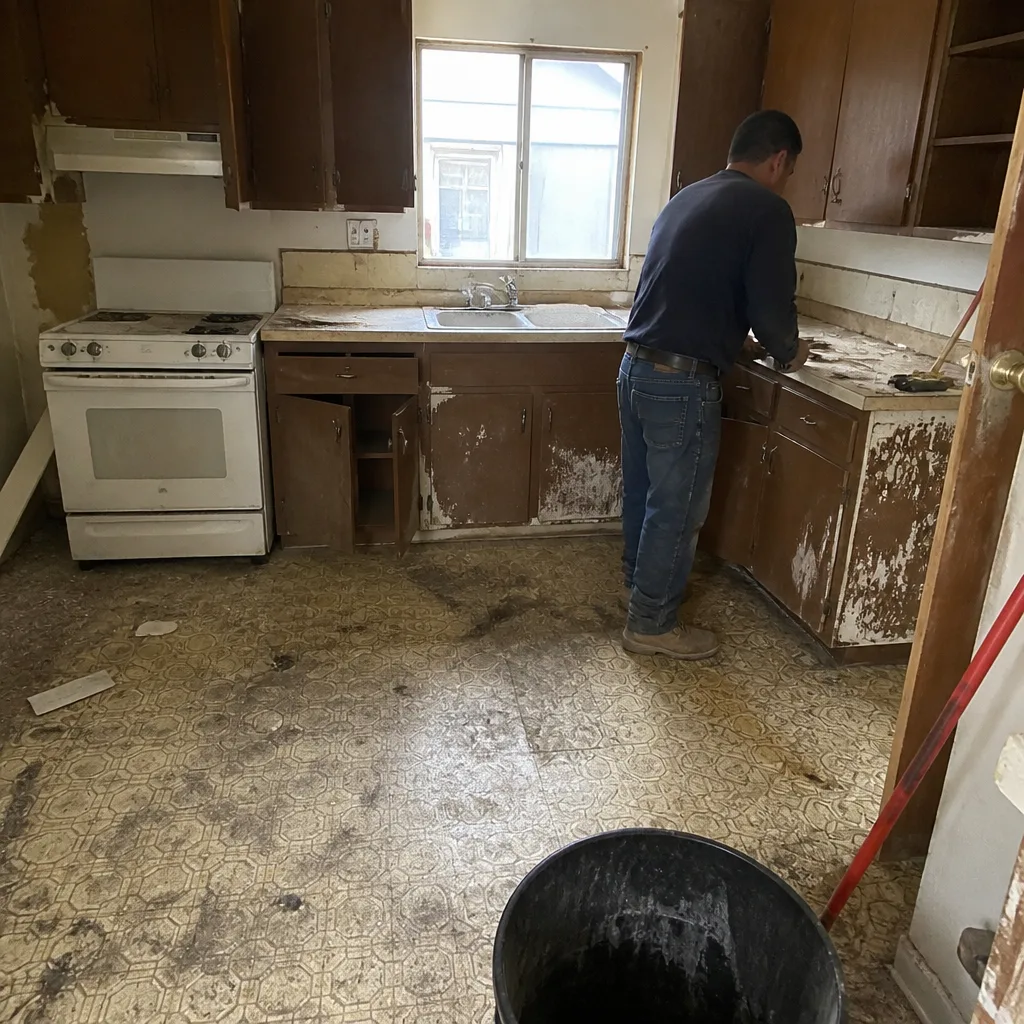
See the difference
 Before
 After
 Before
 After
 Before
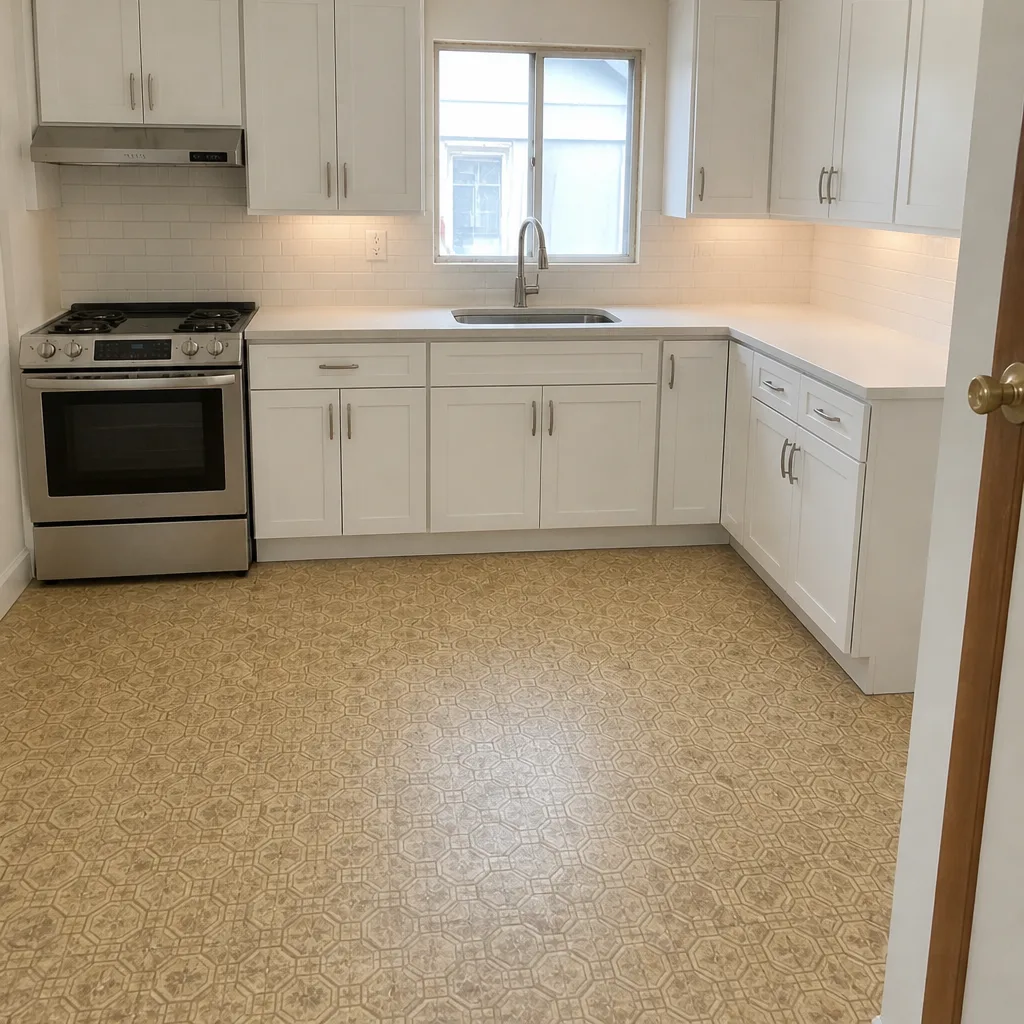 After
Frequently Asked Questions
Yes, most new fences and walls in Downey require a building permit from the City of Downey’s Building & Safety division, and the permit process includes at least one inspection before the final sign-off. The permit is generally required for new construction and for increasing fence height; repairs and like-for-like replacement of existing pickets usually don’t need one. Call (888) 255-8179 if you’re not sure which category your project falls into – we walk Downey homeowners through the permit question weekly.
In Downey’s general residential zones, rear and side-yard fences commonly run up to six feet, while front-yard fences in the setback area are typically limited to about three feet of solid height. Corner lots are commonly treated as front-yard on both street-facing sides, which surprises most homeowners. Confirm your parcel’s zoning district before you build – estimates are free, and the answer depends on the district, not on the general rule.
California Civil Code Section 841 allows either neighbor to request cost-sharing on a boundary fence that benefits both sides, but it doesn’t force the neighbor to pay. The practical recipe: get a written itemized estimate, propose a split (often 50/50), and put the agreement in writing before work starts. Call (888) 255-8179 for a written estimate you can share with your neighbor; the estimate does most of the work.
Fence posts in Downey typically need about a third of their above-ground length below grade, and clay-heavy lots need to go deeper with a larger concrete collar. A six-foot fence usually sits on a two-foot bury as a minimum; heavier clay or a gate post wants more. The soil varies block to block, so call 811 first and get the footings sized for your lot.
Vinyl and aluminum hold up best against Downey’s UV exposure and marine-layer humidity with the least maintenance, while wood looks best but needs re-staining every two to three years, and block lasts longest but demands proper footings in local clay. For back-yard privacy, UV-stabilized vinyl (Bufftech, ActiveYards) is the most common choice; for front yards, aluminum (Jerith) handles height restrictions well. Call (888) 255-8179 for a walk-through of the material options for your specific yard.
Plan for several weeks from application to final inspection on a standard residential fence permit, with the footing inspection schedulable on short notice once work starts. The exact timeline depends on plan review volume at the city and whether the application comes back with corrections. Downey fence permits and inspections are part of every project we handle – call (888) 255-8179 to start the estimate.
The Bottom Line
A fence in Downey is a permit-required, neighbor-adjacent, HOA-scrutinized project, and the paperwork comes before the posts. Confirm your zoning district and height limits, follow the good neighbor convention, have the cost-sharing conversation in writing before work starts, call 811 before digging, and size the footings for Downey’s clay-heavy soil. Choose the material for the yard, not the catalog. Pull the permit and get the inspections. Do those in order and the fence you install this year will still be standing straight a decade from now. Skip them and you’ll spend more fixing than building.
Get a Free Fence Estimate in Downey
If you’re ready to price a fence, we’d rather quote it than sell it. Call (888) 255-8179 for a free estimate in Downey – a live person answers 24/7, and you’ll get a written, itemized upfront price with no surprises at the end. Our technicians are background-checked and arrive in uniform, our crew pulls the permit and passes the inspections, and every Downey fence we install is backed by the 730-Day Done Right Promise. Financed at 0% for 18 months, with $1,000 off projects over $10,000. Call today.
Written by the team at Groundwork Construction Co. of Downey.