Last updated November 17, 2026







Free written scope consultation - allowances, timeline, and change-order rules on paper before a single trade is scheduled
Construction Warning Signs: A Downey Homeowner’s Reference Guide
Most red flag lists tell you what to watch for before you sign a contract: the pushy salesman, the bid that’s suspiciously low, the contractor who won’t put anything in writing. Those matter. But the warning signs that cost Downey homeowners the most money appear later, in the work itself, and get explained away before anyone knows what they’re looking at. A contractor who discourages you from being present during inspections isn’t protecting their workflow. They’re protecting their shortcuts from becoming your documented evidence. This guide covers what to watch for during construction, after the crew leaves, and through the first rainy season, and what to do when something looks wrong.
Quick Answer
The most reliable construction warning signs in Downey appear in the work and the paperwork: rebar spaced too far apart before a pour, a crew you didn’t vet showing up on day three, daily logs and material receipts that quietly stop appearing, and stucco or grading failures that show up after the first hard rain. If you spot any of them, document with dated photos and written messages before you confront anyone.
Styles & brands we work with
- Kitchen remodeling
- Bathroom remodeling
- Home additions & ADU
- Roofing
- Windows & doors
- Driveway & pavers
- Fence
Table of Contents
- Framing and Foundation Warning Signs Before the Pour
- How to Spot Subcontractor Substitution Mid-Project
- The Paper Trail a Legitimate Contractor Keeps
- Downey’s Climate and Stucco Cracking: Normal vs. a Problem
- Drainage and Grading Failures After the First Rain
- Flatwork and Driveway Warning Signs
- What to Do When You Spot a Warning Sign
- Red Flags After the Job Is “Done”
Framing and Foundation Warning Signs Before the Pour
Concrete hides everything. Once the slab goes down, nobody can see whether your footings were built to plan or stripped down to save steel. This is why the pre-pour window is the single most important inspection window on any addition, ADU, or driveway project in Downey.
What inadequate work looks like in the ground:
- Rebar spaced too wide. Downey’s older residential lots and clay-heavy soils call for rebar at specific intervals set by your engineer’s plan – commonly 12 or 16 inches on center for slabs. If you see bars spread 24 inches apart or more, someone is stretching steel to save money on material.
- Missing or too-thin chairs. Rebar has to sit in the middle of the concrete pour, not on the dirt. Steel chairs hold it up. If the bars look like they’re resting on the ground, the reinforcement will do almost nothing when the slab cures.
- No vapor barrier. A plastic sheet under the slab keeps moisture out of your finished floor. Its absence is invisible after the pour.
- Footings that look shallow or narrow. Compare the trench dimensions to the plan. A footing that’s been dug at half depth is the classic “cut corners” move – and it’s the single biggest driver of foundation failure five years down the road.
If a crew asks you not to be on site for a pre-pour inspection, or schedules the pour for a Saturday at 6 a.m. to “beat the heat,” that’s the moment to slow down. Ask for the engineer’s stamped plan and check the spacing against what’s in the ground. If you don’t feel qualified to judge, hire a third-party inspector for the morning. The $400 to $800 they charge is the cheapest insurance you’ll ever buy on a five-figure project.
Downey’s soil profile and the age of many homes near downtown and along Florence Avenue mean that foundation issues from the previous build often sit under any new work. An honest crew will point them out and price the fix. A dishonest one won’t mention them until after the pour, when the correction doubles your bill.
How to Spot Subcontractor Substitution Mid-Project
The company you vetted is not always the company that shows up. Subcontractor substitution is one of the most common and least talked-about problems in residential construction: the licensed, insured, background-checked crew that walked your property in the bid meeting hands off the actual work to a lower-cost sub who never went through that process.
Warning signs that a substitution is in progress:
- Different vehicles. The crew that shows up on day three drives trucks you’ve never seen – often without any identifying branding. That’s the moment to ask questions.
- No uniform, no ID, no sign-in. Background-checked, uniformed technicians on every project is a standard some companies hold and others only promise. If it wasn’t held, it wasn’t real.
- Your point of contact stops showing up. The project manager who was on site the first week isn’t around by week three. That’s often because the schedule has been handed to someone else.
- Change order requests from new names. If a request for additional money arrives from a company you don’t recognize, stop work and ask who they are to your contract.
- Insurance certificates that don’t match. Ask for the updated certificate of insurance for whoever is actually on site. Legitimate crews will produce it same-day.
What your contract should say about substitution, in writing, before you sign:
- The name of the company responsible for all work, and a clause saying any subcontractor must be disclosed in writing and approved by you.
- A requirement that all workers be background-checked and carry identification.
- Proof of general liability and workers’ compensation insurance for any sub, delivered to you before they arrive.
- A right to stop work without penalty if a substitution happens without approval.
In our experience, the contractors who welcome that language in their agreements are the ones who weren’t planning to substitute in the first place. If a contractor pushes back on that clause, take it as the answer to the question you haven’t asked yet.
The Paper Trail a Legitimate Contractor Keeps
Ask any homeowner who has been through a bad build what went wrong, and the story almost always includes paperwork that’s missing. Daily logs that stopped appearing. Material receipts nobody can produce. Inspection records the contractor “has in the truck.” The documentation a legitimate contractor keeps is not administrative noise. It’s the record that protects you in a dispute and protects them from having to guess.
A well-run crew on a Downey project should be able to show you, without a week’s notice:
- Daily logs – who was on site, what was done, weather, and any delays.
- Material delivery receipts – concrete tickets showing yards delivered, lumber invoices showing grade and quantity.
- Signed inspection records – city inspection cards for framing, electrical, plumbing, and final, with the date and inspector name.
- Change order log – every scope change, cost, and signature, in one place.
- Photo documentation – dated photos of work that will be covered up (blocked walls, buried conduit, poured footings).
What disappearing paperwork looks like in practice: the daily log stops around the third week, the material receipts aren’t “needed” because the contractor buys from a supplier “on account,” and the inspection card gets lost right before the rough framing inspection. None of those things on their own is proof of a problem. All three together is a pattern.
Here’s what surprises most homeowners: the City of Downey requires permitted work to have inspection records retained through final. If a contractor can’t produce the city’s own paper trail, either the work wasn’t permitted or the inspections weren’t passed. Either one is a real problem – both for your safety and for your ability to sell the property later.
Downey’s Climate and Stucco Cracking: Normal vs. a Problem
Stucco in Downey always cracks. Some of it is normal, and some of it tells you the mix was wrong. Knowing the difference is one of the most useful diagnostic skills a homeowner in this climate can learn.
Normal, cosmetic cracking looks like this:
- Fine hairline cracks – less than 1/32 of an inch wide, typically at corners of openings, or where the stucco meets a post or trim.
- Seasonal patterns – appearing in the dry heat of late summer and August, then stabilizing after the first cool weather.
- Even distribution – a few cracks here and there, no obvious concentration.
Cracking that points to improper mix ratios or bad application looks like this:
- Spiderweb “map” cracking – dozens of interconnected short cracks across a wall face, often within 12 months of application. This usually signals too much water or too much cement in the mix, or stucco applied too thin.
- Cracks over 1/8 inch wide – especially if they run vertically at the same height across multiple walls, which points to a framing issue underneath.
- Cracking concentrated at the corners of windows and doors – diagonal cracks radiating out from corners indicate stress the stucco wasn’t built to handle.
- Delamination – the stucco sounds hollow when tapped and lifts off the wall at the edges. This is a bond failure from poor scratch coat or skipped bonder.
- Rust-colored streaks – moisture is getting behind the stucco and reaching the lath or fasteners.
Downey’s heat and sun exposure on south- and west-facing walls accelerates stucco problems. A wall that was applied at the wrong time of year, without curing moisture, will show the failure much sooner than the same wall applied in cooler months. If you’re looking at a wall that was finished in July 2024 and shows map cracking by fall 2025, this isn’t “settling.” It’s application.
Any crack wide enough to slide a credit card into is worth a professional look. So is any wall where the stucco sounds hollow when you tap a knuckle across it. Small cosmetic cracks you can patch and monitor. The ones above are the ones you document and send to the contractor with dates.
Drainage and Grading Failures After the First Rain
Grading looks perfect on a sunny Friday. The first real Downey rain – usually a storm cell in November, December, or January – will show you whether the ground was built to drain or just built to look done. What you see in the first 48 hours after a hard rain is the single most honest test of any exterior project.
Post-rain warning signs, in order of severity:
- Standing water within 10 feet of the foundation. The soil around your home should slope away at roughly 1 inch per foot for the first 6 feet. If water pools against the wall, that slope wasn’t built.
- Water flowing toward the house instead of away. Get out during the rain and watch where water wants to go. If it’s headed for the foundation or the base of a new fence line, the grading is inverted.
- Driveway or pavers holding water in the middle or along a seam – a sign the base wasn’t compacted and the pitch wasn’t set.
- Muddy trenches or soft spots along a fence line after installation – usually a sign the post footings were under-dug or the backfill wasn’t compacted.
- Erosion around downspouts – not a warning sign of bad work, but a warning sign that you need more drain line, extensions, or hardscape diversion.
Downey sits on relatively flat ground in many neighborhoods, which makes the “1 inch per foot” rule more important, not less. On flat lots, a grade that’s 1% off is a pond waiting to happen. If your property already had a drainage plan, the contractor’s work has to feed into it. If they never asked to see one, they didn’t plan for water.
Take photos – with your phone, with the date stamp on – of any standing water within the first couple hours after a storm. That record is the single most persuasive piece of evidence if you have to ask a contractor to come back and fix a grade. A photo of water pooled against your wall on January 14 is worth more than a conversation on March 3.
Flatwork and Driveway Warning Signs
Concrete flatwork – driveways, patios, walkways, stoops – lives or dies on the prep, not the pour. Whether you’re looking at a new Driveway & Pavers in Downey installation or a straight concrete replacement, the same pre-pour and post-cure signs tell you whether the crew did the work or just the finishing.
Pre-pour signs:
- Base thickness. Class II base under a driveway should be at least 4 inches compacted before the pour. If you see the crew pouring directly on the dirt, that’s a failing base.
- Formwork bowed or uneven. Run a string line or level along the top of the forms. Any bowing means the finished slab will follow that curve.
- No expansion joints planned. Concrete needs them at intervals (typically every 8 to 12 feet for driveways). Skip them and you get random cracks you can’t predict.
- Rebar or mesh missing from the plan. For driveways, ask to see the plan before the pour and confirm what’s supposed to be in the mix.
Post-cure signs, in the first 30 days:
- Cracks wider than 1/16 inch – especially straight ones that appear in the first two weeks. That’s often a control joint problem or a mix issue.
- Spalling – flaking or pitting at the surface, usually caused by too much water in the mix or finishing too early.
- Cracking at the joint between driveway and garage slab – a settling issue that a proper dowel or joint should have absorbed.
- Edge crumbling – the edge of the slab lifting or chipping away, usually from a backfill issue or a too-thin edge.
Pavers are more forgiving of minor base settling than poured concrete, but that’s not the same as forgiving bad work. A properly installed paver driveway with Belgard or Unilock pavers will sit tight for decades. A poorly installed one will show rutting at the entry within a year. If you’re going with pavers, ask for a compacted base certificate or a photo log of the compaction.
Natural stone and concrete pavers on a Downey driveway get beaten by car tires, sun, and the occasional rain. The base prep under any Downey paver driveway should be the part of the job your contractor spends the most time on. If it was the part they finished in a day, the pavers will tell you before long.
What to Do When You Spot a Warning Sign
The instinct when something looks wrong is to call the contractor, get angry, and demand an explanation. Do the opposite. Before you make that call, protect your position with a deliberate, documented sequence. This is the step-by-step sequence we recommend to any Downey homeowner who sees a problem in progress.
- Photograph and date everything. Wide shots, close-ups, and something in the frame for scale. Turn on your phone’s location and timestamp. If it’s a stucco crack, photograph the whole wall and then a close-up with a ruler next to the crack.
- Write down what you saw, when, and who was on site. A plain text note in your phone is fine. Date, time, weather, who said what. This is your contemporaneous record.
- Don’t approve any further work in that area. If the crew is about to pour concrete over rebar you’re concerned about, tell them to hold. Note the time you gave that instruction, in writing, by text or email.
- Send a written message to the contractor, not a phone call. State the concern factually, attach the photos, and ask for a written response within a set timeframe – three to five business days is reasonable.
- Request the documentation. Daily logs, material delivery receipts, inspection cards, and any third-party test results. Ask in writing and date the request.
- Hire a third-party inspector if the concern involves structural or safety-sensitive work. A licensed structural engineer for foundations and framing, a licensed stucco inspector for exterior failures. The report is the strongest leverage you can get.
- Check the contract’s dispute clause before you escalate. Most legitimate contracts specify dispute resolution processes. Follow them; don’t skip steps, even if you’re frustrated.
- If the contractor won’t respond, contact the California State License Board (CSLB). They have a complaint process, and a filed complaint is public record. Use it as a last resort after you’ve documented everything else.
The one move to avoid: arguing with a crew on site. Verbal confrontations escalate, get denied later, and rarely produce anything useful. Keep everything in writing from the first message. A contractor who wants to fix the problem will respond to a written, photographed, dated concern. One who stonewalls is telling you something.
Red Flags After the Job Is “Done”
Most homeowners relax the moment the crew pulls off the street and the final check clears. That’s the exact window where problems first become visible – and where the paper trail either saves you or disappears. The post-completion period is where the difference between a real warranty and a marketing line shows up.
Warning signs in the months after completion:
- Cracks, leaks, or settling that appear within the first 90 days. Not all cracks are failures, but the ones that show up in the first three months should be documented and reported immediately – don’t “wait and see.”
- Warranty terms that shrink when you try to use them. A written workmanship warranty either covers what the contract says it covers, or it doesn’t. If the response to your first warranty claim is “that’s not covered” or a verbal explanation of what “counts,” read the document again.
- Silence from the contractor’s office. Calls that used to be returned in an hour now take a week. Emails go unanswered. A contractor whose responsiveness dropped the moment the final check cleared is telling you how they’ll treat a warranty call three years from now.
- No warranty documentation delivered in writing. If you can’t find the specific document that says what’s covered, and for how long, it wasn’t provided.
- Subcontracted follow-up work. “We’ll send a guy out” turns into an unfamiliar crew that has no record of your project and no interest in standing behind anyone’s work but their own.
In Downey, the first rainy season after a build is the real completion inspection. Stucco, grading, drainage, roof edges, flashing at the transitions, and fence post stability all get tested by that weather. Keep a file with the warranty document, the final inspection card, the contractor’s license number, and your photo log. If a problem shows up, you’ll need all of it.
This is where a workmanship commitment with real teeth is worth its premium. The Groundwork Construction Co. of Downey home page lays out the 730-Day Done Right Promise – two full years where if something isn’t done right, it gets made right, in writing. That’s a very different business model than a one-year warranty that only covers materials. When you’re comparing bids on a Downey project, ask every contractor what their post-completion response looks like, and for how long.
Common Mistakes to Avoid
- Accepting “it’s normal settling” as an answer to every crack. Some cracks are settling. Some are application failures. The difference is in the pattern, width, and timing – and a licensed inspector can tell you which. Get the second opinion, even if it costs a few hundred dollars.
- Letting the contractor choose the third-party inspector. On a Downey project where you’re worried about work quality, you choose the inspector. Letting the contractor pick their own “independent” reviewer isn’t an inspection, it’s a performance.
- Approving change orders verbally. Any change – scope, material, timeline, cost – should be in writing and signed. Verbal approvals are where the “I never agreed to that” arguments start and where some of the most expensive Downey remodels go wrong.
- Ignoring the pre-pour window on flatwork. A driveway is a one-time inspection opportunity. Once the concrete is down, the rebar spacing, base prep, and vapor barrier are unrecoverable. Be there, or hire someone to be there.
- Skipping the permit because “it’s a small job.” Unpermitted work in Downey can complicate a future sale, void insurance on the structure, and lock you out of a warranty claim. The permit fee is the cheapest part of any project.
- Not reading the warranty until you need it. Read the entire warranty document the day it’s delivered, not the day a problem appears. Anything you don’t understand, ask about in writing while the contractor still wants your business.
- Waiting until the final walkthrough to raise concerns. Raise them when you see them. A concern that’s documented on day 12 is worth ten times what the same concern is worth on day 90.
See the difference
 Before
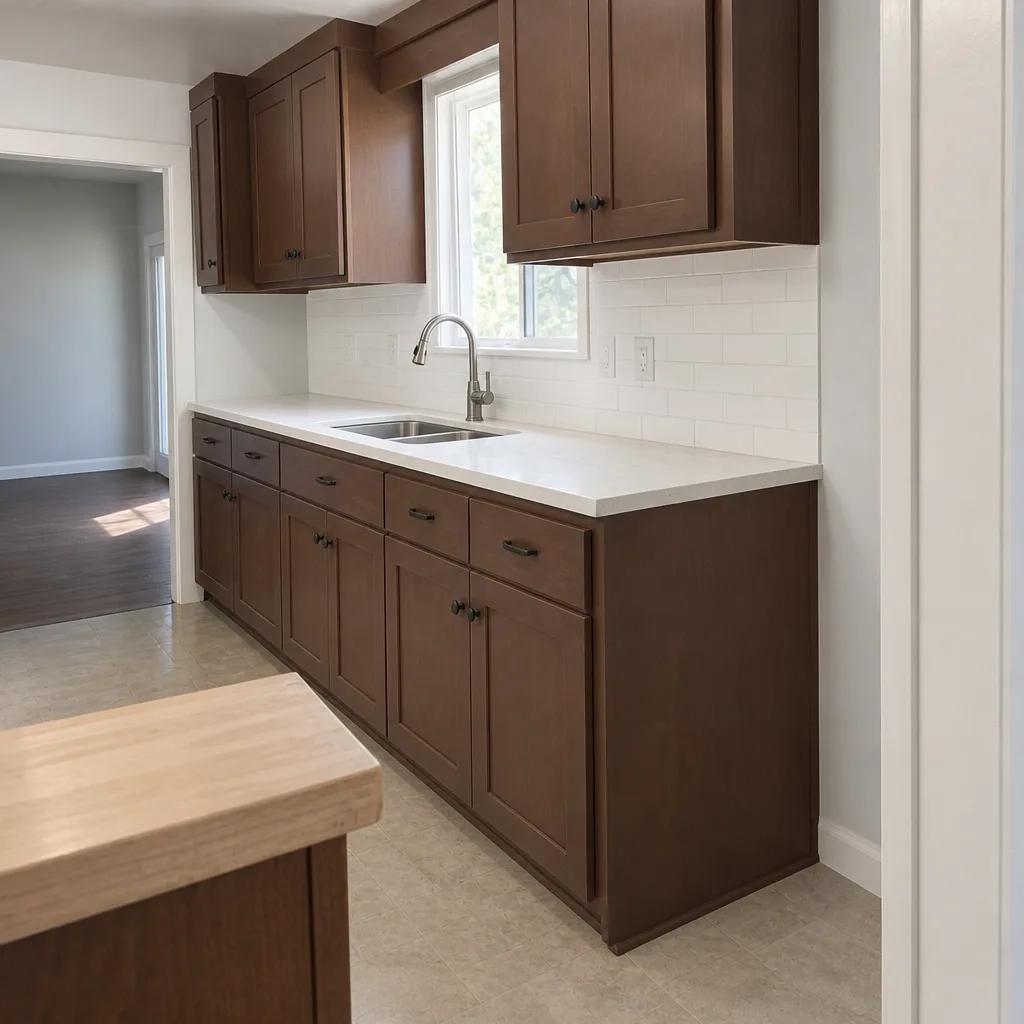 After
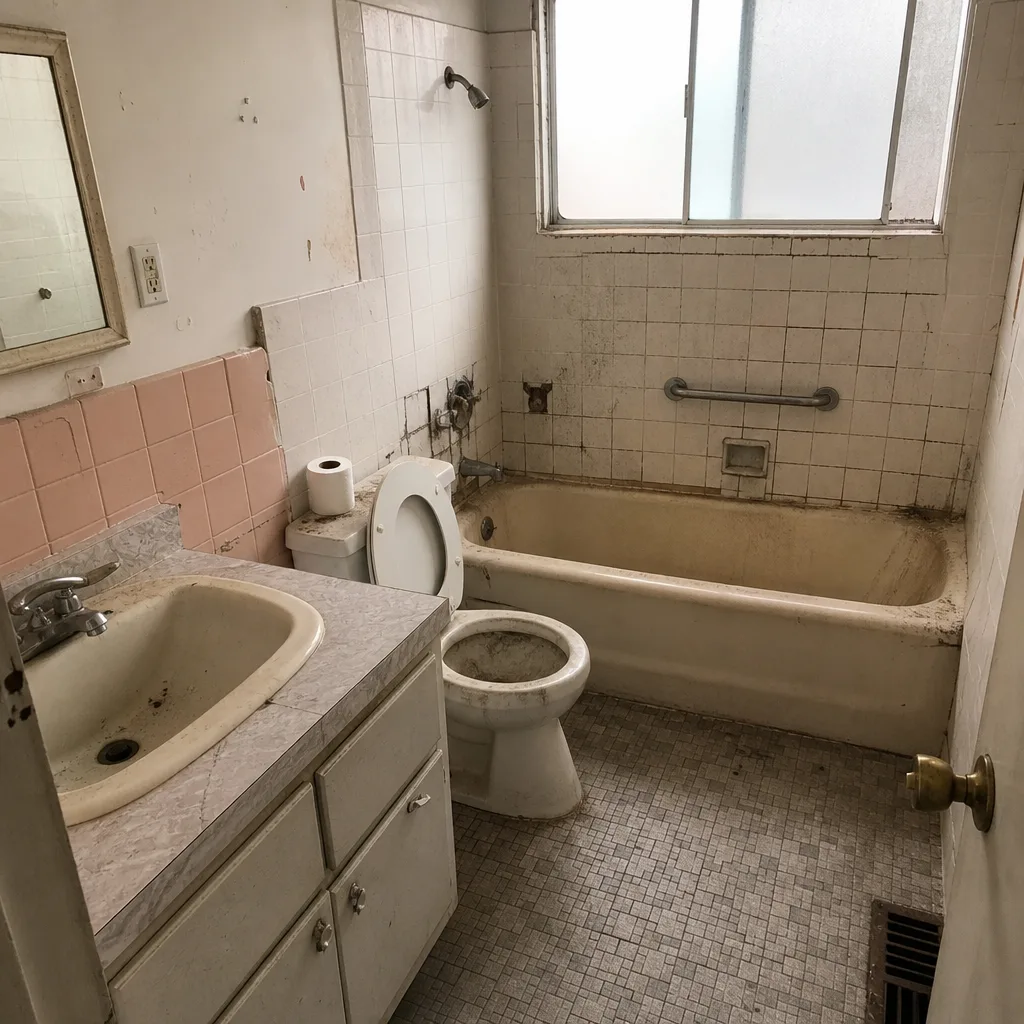 Before
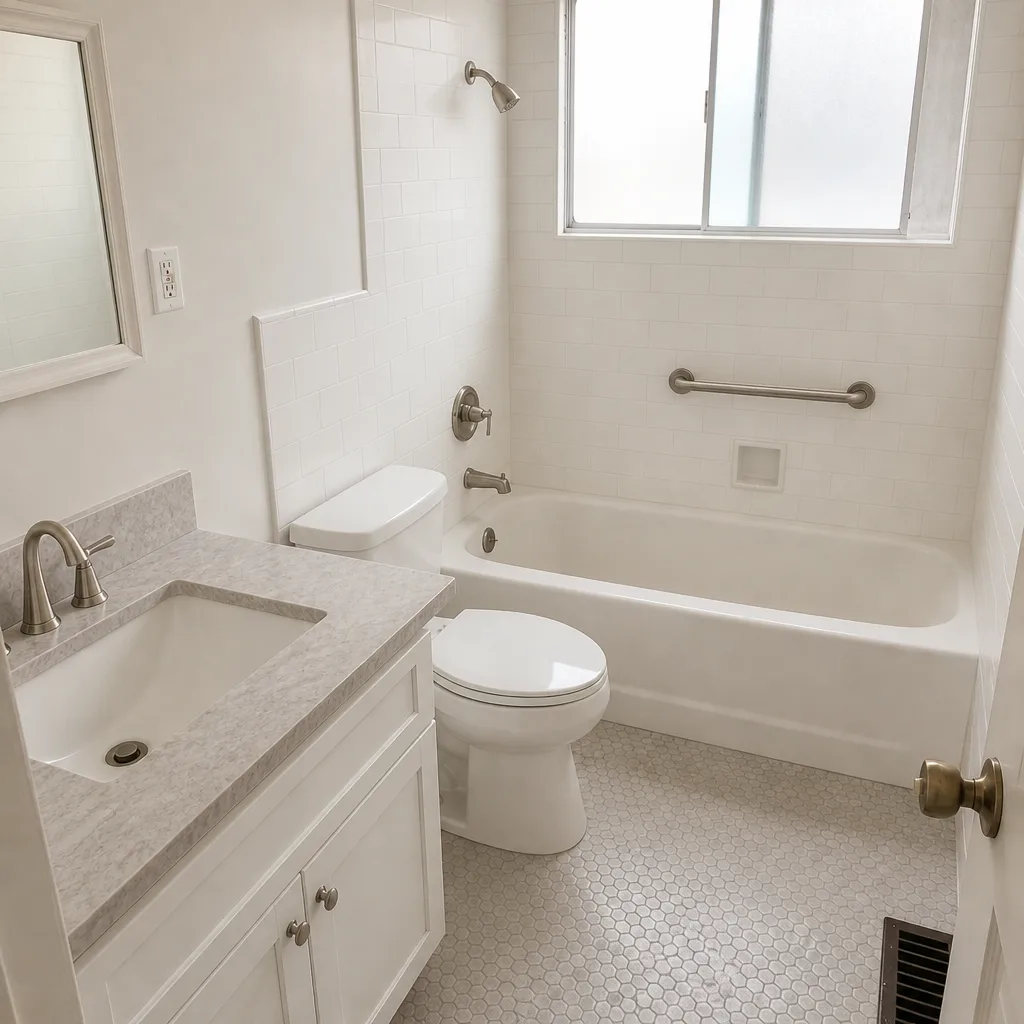 After
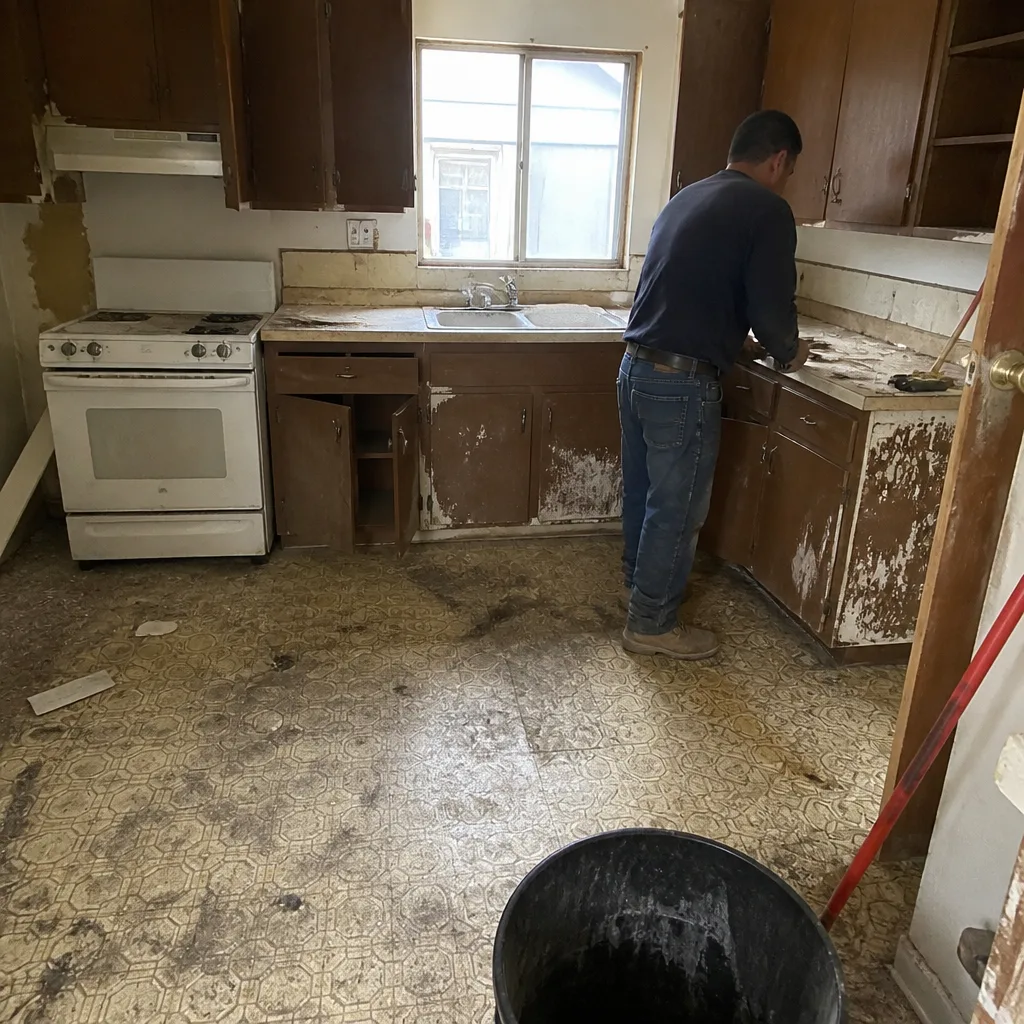 Before
 After
When to Call a Professional
Some warning signs are things you fix yourself. Hairline stucco cracks you can seal with elastomeric patch. A slightly low spot in a lawn after rain that dries within a day. A single paver that shifts. None of those need a contractor’s truck in your driveway.
Other signs need a trained eye and a licensed crew:
- Any crack in stucco wider than 1/8 inch, or any map cracking within the first year.
- Any standing water within 10 feet of the foundation 24 hours after a rain.
- Any framing concern – missing, cut, or notched structural members in a wall or ceiling.
- Foundation cracks that grow month over month, or any cracked or separated foundation crack repair attempt.
- Any post-completion leaking or separation at roof, window, or door transitions.
A fence is also worth a professional call if any posts lean more than a couple of degrees after the first rain. A proper fence installation in Downey using quality materials like Bufftech or ActiveYards vinyl should not show motion after a normal storm. If posts shift, the footings weren’t set right.
Groundwork Construction Co. of Downey offers free estimates in Downey, and we’ll walk the concern with you before any work starts. Call (888) 255-8179 to schedule. Calls are answered by a live person 24/7 – no voicemail, no waiting until Monday.
Frequently Asked Questions
Check for the first signs at 30 days, again at 90 days, and again after the first rainy season. The 30-day mark catches curing and settling issues while they’re still small. The rainy-season check is when stucco, grading, drainage, and roof transitions get their real test in Downey’s climate. If you see anything at any of those check-ins, document it immediately with dated photos and a written message to the contractor.
Hairline cracks under 1/32 of an inch at corners and openings are normal and cosmetic. A crack wide enough to slide a credit card into, or spiderweb “map” cracking across a wall within the first year, is a warning sign of an improper mix or a bad application. Any diagonal crack radiating from a window or door corner deserves a professional look, especially on a wall that was finished in the last two years. Call (888) 255-8179 for a free inspection if you’re unsure – estimates are free.
Yes, and you should check your contract to confirm you have that right in writing. Legitimate contracts name the contractor responsible for the work and require written approval for any subcontractor substitution. If a crew you didn’t vet shows up, you can stop work on that basis alone – document the substitution in writing before the crew does anything. In Downey, this is one of the most common protections missing from residential contracts. Ask for it before signing.
You should receive a signed final inspection card from the City of Downey, the written workmanship warranty, a material list with brands and model numbers, all change orders signed by both parties, and a record of any permits pulled with their final status. If any of those are missing, that’s a warning sign in itself. Get every document before you release the final payment – once the check clears, your leverage drops fast. Call (888) 255-8179 to schedule a free estimate if you’re planning a project and want a written line-item scope up front.
Check the City of Downey’s online permit portal – the address in your contract will show active or closed permits by type (framing, electrical, plumbing, final). The permit should be in the contractor’s name or yours, not a stranger’s. If you can’t find it, call the city’s building department and ask directly. Any contractor who tells you “we don’t need a permit for that” on work that requires one is telling you they don’t plan to have the job inspected.
A good workmanship warranty is written, specific about what’s covered and for how long, and documented at project close – not described verbally at the initial bid. Ambiguous “lifetime workmanship” language with no written terms is the most common trap in residential construction. A concrete, dated commitment matters far more than a marketing line. Groundwork Construction Co. of Downey backs every project with the 730-Day Done Right Promise: if it’s not done right, we make it right, in writing, for two full years. Call (888) 255-8179 for a free estimate with a written warranty delivered alongside the bid.
The Bottom Line
The most expensive construction problems in Downey are not the ones that happen before the contract. They happen in the work itself, and they get explained away before a homeowner knows what they’re looking at. Pre-pour footing and rebar checks. Subcontractor substitution. A paper trail that quietly stops appearing. Stucco map cracking within the first year. Water pooling against the foundation after the first rain. Every one of those signs is visible, documentable, and fixable – if you catch it in time. Write everything down. Photograph everything. Keep the paper trail. And when something looks wrong, follow the sequence: document, write, hold the work, then confront.
If you’re planning a project in Downey and want the kind of contractor whose inspections get recorded, whose substitutions don’t happen, and whose warranty is written in dates, not adjectives, call Groundwork Construction Co. of Downey at (888) 255-8179 for a free estimate. We bring the finish line in writing – from foundation to finish line, backed in writing.
Written by the team at Groundwork Construction Co. of Downey.