Last updated November 17, 2026
Free written scope consultation - allowances, timeline, and change-order rules on paper before a single trade is scheduled
DIY vs Professional Bathroom Remodeling: What’s Safe to Do Yourself
A YouTube tutorial can teach you to tile a wall. It won’t teach you that one wrong cut into a shower pan membrane can cause $15,000 in subfloor rot before you see a single drop of water. That’s the gap most DIY guides ignore. The real question in a bathroom remodel isn’t whether you’re handy enough. It’s which tasks carry hidden consequences when they fail, and which ones are genuinely low-stakes. This guide draws that line by consequence, not difficulty, with specifics for Downey homeowners working in older housing stock, under California code, and inside a resale market that checks permits.
Quick Answer
Safe DIY bathroom tasks are the ones where a mistake costs you a little time and maybe a few hundred dollars: painting, swapping a vanity top, hanging a mirror, replacing faucets and hardware, installing accessories. Leave the plumbing rough-in, waterproofing, and any electrical work inside wet zones to a licensed contractor, because those failures are slow, hidden, and expensive. Everything in between falls to a hybrid approach, where you do the cosmetic work and a pro handles the systems that protect the house.
Styles & brands we work with
- Kitchen remodeling
- Bathroom remodeling
- Home additions & ADU
- Roofing
- Windows & doors
- Driveway & pavers
- Fence
Table of Contents
- The Consequence Matrix: Ranking Bathroom Tasks by Risk
- Five Bathroom Tasks That Are Genuinely Safe for a Capable DIYer
- Why Plumbing Rough-In Is Not a Weekend Project
- Waterproofing: The Invisible Failure That Costs the Most
- Electrical in Wet Zones: Why California Code Draws a Hard Line
- The Hybrid Approach: How to Split a Project and Actually Save Money
- What Unpermitted Bathroom Work Does to Your Insurance and Resale in Downey
- The Tool and Time Reality Check Before You Start
The Consequence Matrix: Ranking Bathroom Tasks by Risk
Most DIY advice ranks tasks by difficulty. That’s the wrong axis. A difficult task you can practice until it looks right; a simple task with a hidden failure mode can quietly destroy your house. We rank bathroom work on two scales at once: how much skill the task demands, and how much damage a mistake releases six months down the line.
Here’s how the common bathroom tasks sort out.
- Low skill, low consequence: Painting walls and trim, replacing a toilet seat, swapping cabinet hardware, hanging a mirror or towel bars, installing a new showerhead. A mistake is a cosmetic redo.
- Low skill, medium consequence: Swapping a vanity (not moving plumbing), replacing a faucet on existing supply lines, setting a new light fixture on an existing switch. Mistakes show up fast and are usually fixable without opening a wall.
- Medium skill, high consequence: Tiling a shower wall, installing a curbless shower base, setting a tile floor over a membrane. A small error can let water travel where it shouldn’t, and you won’t know for months.
- High skill, high consequence: Moving drain lines, relocating a toilet or shower valve, opening a wet wall, running new electrical to a jet tub or heated floor. These are the tasks where a phone call is cheaper than the fix.
In our experience working through Downey bathrooms, the failures we get called back for are almost never at the top of the skill list. They’re in that middle tier, where a homeowner did a job that looked right for a year and then started to smell damp. The matrix isn’t about what you can physically do. It’s about which tasks have a grace period, and which ones don’t.
Five Bathroom Tasks That Are Genuinely Safe for a Capable DIYer
If you’re planning a bathroom remodel in Downey and want to keep the labor cost down, there’s real money in doing the finish work yourself. These five tasks carry almost no hidden risk, and mistakes cost you time, not structural damage.
- Paint everything the moisture won’t ruin. Walls, ceiling, trim, and a properly prepped vanity cabinet. Use a bathroom-specific paint with a satin or semi-gloss sheen, wait for full cure before the room goes back into service, and budget two coats over a primer. A weekend job that saves a few hundred dollars and shows up beautifully on the after photos.
- Swap the vanity without moving plumbing. If the new vanity fits the existing supply and drain locations, a competent DIYer can pull one cabinet and set the next. The moment the new design requires the drain to move even a few inches, the plumbing stops being a swap and becomes rough-in work.
- Replace the faucet and showerhead on existing valves. Handles and fixtures on existing supply lines are a straightforward swap. New trim kits for brands like Kohler or Moen are covered by installation instructions that assume a homeowner is holding the wrench.
- Hang mirrors, shelving, and accessories. Want the biggest perceived upgrade for the least money? New mirror, towel bar, robe hooks, and a couple of floating shelves. Measure for the studs, use appropriate anchors, and don’t hang anything heavy on drywall alone.
- Upgrade hardware and lighting trim. Cabinet pulls, toilet paper holder, new light fixture on an existing switch with the breaker off. These take an hour each and change how the room reads.
What separates these from the riskier tasks isn’t that they’re easy. It’s that every failure mode is visible and immediate. A crooked shelf, a drip you can tighten, a paint line you can recut. You’ll know within a day. Nothing here waits six months to reveal itself.
Why Plumbing Rough-In Is Not a Weekend Project
Plumbing rough-in is what happens before any finished surface goes on: supply lines, drain lines, venting, valve locations. In California, moving or rerouting these lines is work regulated under the state plumbing code, and most municipalities require a permit and licensed contractor for anything beyond a fixture swap. The reason is not bureaucratic. It’s that rough-in failures are designed to be invisible.
A pinhole leak in a supply line or a drain joint that weeps slightly won’t flood the room. It will soak into the framing behind the tile, feed mold, and start degrading the subfloor from underneath. By the time you see evidence, the repair is not plumbing. It’s demolition and rebuild.
Three things about bathroom plumbing catch homeowners out specifically in Downey homes:
- Older galvanized supply lines. Many Downey houses built mid-century still have aging galvanized pipe in the walls. Disturbing it for a renovation often reveals it’s further gone than anyone expected, and the scope grows fast.
- Vent stack placement. Moving a toilet a few feet often requires re-cutting the venting behind the wall. That’s plumbing, drywall, and inspection, all tied together.
- Drain slope and trap alignment. Too shallow and the drain clogs slow. Too steep and the water outruns the waste. The specs are precise and the failure is gradual.
If your remodel is a true replacement of what’s already there, keep it. The moment the layout is changing, treat rough-in as professional work. That’s also why a real quote breaks out plumbing as its own line item, so you know exactly what you’re paying for.
Waterproofing: The Invisible Failure That Costs the Most
Waterproofing is the task that separates a bathroom that feels new for a decade from one that starts to smell in year two. Every shower needs a continuous, seamless barrier behind the tile and a properly sloped shower pan. Cut the membrane during a drain install, miss a seam at a corner, or skip the pre-slope underneath the pan, and water finds a path it will keep taking.
The damage isn’t dramatic. It’s a subfloor slowly turning to mush under a shower that looks fine from above. We’ve walked into Downey bathrooms where the shower looked less than five years old and the joist below was soft to the touch. In almost every case the waterproofing step had been rushed, skipped, or done without a permit inspection.
This is also the one place where a “great” tutorial actively hurts. Videos show a membrane going over a pre-sloped base. What they often gloss over is how flat the base has to be before the membrane goes down. If the floor is out of level by a quarter inch across the shower, the water pools at one edge of the pan and the barrier is working harder than it was ever meant to.
Here’s what you should verify whether you hire or DIY:
- The pre-slope exists and drains. Test with water. If it pools anywhere, it’s wrong.
- The membrane is continuous. No cuts, no punctures, joints lapped in the direction water flows.
- Flood test it. Fill the pan and let it sit for 24 hours. If the level drops on the subfloor below, you found the leak before you paid for tile.
- Use a backer board approved for wet areas. Standard drywall in a shower is a teardown waiting to be scheduled.
Waterproofing is one of those tasks where you can do the surface-level work and still need a pro for the layer that matters. The honest split is: a trained professional sets the membrane, you finish everything above it. Our full-scope bathroom remodeling service covers this step as a matter of course, and we don’t consider the job done until the flood test passes and the inspection clears.
Electrical in Wet Zones: Why California Code Draws a Hard Line
Electrical work in a bathroom isn’t like adding an outlet in a hallway. Any fixture or device inside a defined wet zone (near the tub, shower, or sink) is heavily regulated in California, and the reason is not abstract. Water plus electricity is a life-safety issue, and the failure mode is not a tripped breaker; it’s a shock.
Three things make bathroom electrical different:
- GFCI protection is mandatory. Every receptacle in a bathroom must be GFCI-protected. Retrofit work on old wiring often reveals downstream receptacles that were never GFCI-protected to begin with. That’s a code failure you inherit and have to fix.
- Wet-zone clearances are specific. Where a light fixture can be within reach of a shower, the fixture has to be rated for that location. Buy the wrong trim and an inspector will reject it during final.
- Ventilation has code requirements. Bath fans must be sized and vented to the exterior, not into the attic. Homes in Downey with older attic vents still route moist air into the roof cavity, and that shows up as mold on the underside of the sheathing years later.
Here’s the safe-DIY line for electrical: you can swap a light fixture on an existing circuit, replace a fan grille, or install a smart switch, all with the breaker off. The moment you’re running a new circuit, moving a device into a wet zone, or adding a heated floor, that’s licensed electrical work and worth the call. It’s also the work most likely to be flagged at inspection, and unpermitted electrical can be expensive to unwind at resale.
The Hybrid Approach: How to Split a Project and Actually Save Money
The real answer for most Downey homeowners isn’t DIY or professional. It’s both, split at the right line. Do the finish work yourself, hire out the systems work, and keep the contractor involved only where a permit, a warranty, or a life-safety concern is at stake. Done right, a hybrid remodel can save 15 to 25 percent of the total project cost without compounding risk.
The split we recommend, based on where the money and the risk intersect:
- Hire the licensed trades for the rough work. Plumbing rough-in, electrical in wet zones, and waterproofing. These are the tasks where a permit signature and an inspection protect you the most.
- Do the demolition yourself if you want to save labor. Tear-out is honest, low-stakes work. Wear eye protection, bag the debris, and confirm your contractor is okay with you doing demo (some want it done their way so they can see what’s inside the wall).
- Tile is a judgment call. A capable DIYer can tile a floor. A shower wall needs the waterproofing done first and a plan for layout. If you’ve never tiled, practice on a closet floor before a shower.
- You finish the finishes. Paint, fixtures, hardware, mirror, trim, and accessories. This is where the visible money is, and where mistakes are the least expensive.
- Keep one number to call. If the trades are hired separately, you’ll be coordinating schedules, inspections, and material deliveries. That coordination is a real cost whether you pay for it in money or in evenings and weekends.
What most hybrid plans get wrong is failing to write the split down. Once a homeowner and a contractor agree verbally on “you do the finishes,” someone moves a light fixture and suddenly the scope dispute is open. Put the split in a written scope so you’re not fighting over responsibility when something goes sideways.
What Unpermitted Bathroom Work Does to Your Insurance and Resale in Downey
Unpermitted bathroom work is the quiet liability that shows up years later, usually at the worst moment: during a sale, or after a leak. A bathroom remodel that moves plumbing, electrical, or a load-bearing wall almost always requires a permit in Downey, and skipping it doesn’t just risk a fine. It can cost you the sale.
Three concrete consequences:
- Insurance claims can be denied. If water damage traces back to unpermitted plumbing work, a carrier can deny the claim or cancel the policy. The homeowner is then paying for the fix out of pocket on top of the original remodel.
- Appraisal and inspection will flag it. Downey’s housing stock includes a lot of mid-century homes where the “updated bathroom” in the listing was actually an unpermitted conversion. Appraisers and inspectors look for the paper trail. Missing permits become a negotiating chip against you or a deal that falls through.
- You inherit someone else’s shortcut. If you bought a home with unpermitted work, the correction is on you. Permits, inspection, and sometimes opening walls to prove the work was done right.
Our rule of thumb: if the work involves anything behind the finish surface, pull the permit. It’s cheaper than the alternative, and it protects the value of the house. When we quote a full-scope bathroom remodel, permits and inspections are part of the write-up, and we don’t consider a project finished until they clear.
The Tool and Time Reality Check Before You Start
The tool question is where more DIY plans die than anywhere else. A DIYer picking up every required tool from scratch often spends more than they saved on labor. If you’re getting into a hybrid bathroom remodel in Downey, cost the tools before you commit.
A realistic starter list for the safe-DIY finish work:
- Drill and impact driver (one good set is fine)
- Level, tape measure, and stud finder
- Putty knife, caulk gun, and painter’s tape
- Bathroom-rated paint, primer, and good brushes and rollers
- Wrench set for faucet swaps
- Bucket, rags, and drop cloths (the unglamorous stuff that saves the floor)
What’s not on this list: the tile saw, the wet saw, the mixing paddle, and the waterproofing trowel. If those aren’t already in the garage, rent them for the days you need them and leave the shower waterproofing to the crew.
Time is the other honest check. A “two-weekend” bathroom remodel almost never is. Plan through the second week and give yourself room for a snag.
If your whole house is going through updates at once, related scopes are worth planning together so trades don’t step on each other. Our home additions and ADU service is often paired with bathroom work on additions, and coordinating permits and inspections across both scopes saves real time. Exterior schedules also matter if you’re renovating a bathroom off a driveway or entry you’re also redoing: driveway and pavers in Downey and fence installation in Downey come up in the same conversations with homeowners tackling a whole-property refresh. It helps to see the full plan before anyone starts swinging a hammer.
Common Mistakes to Avoid
- Skipping the permit to save a filing fee. The fee is small. The risk to your insurance and resale is not. Downey inspectors see unpermitted remodels often enough that a flagged scope now becomes a correction during sale.
- Cutting the shower pan membrane to fit the drain. This is the single most common DIY waterproofing failure we encounter. It’s the hidden step that turns a $3,000 shower into a $15,000 tear-out twelve months later.
- Running new electrical into a wet zone without a permit. The installation can look perfect and still fail code the day someone tests the GFCI. Fixing it after the tile goes up is expensive.
- Buying tile and fixtures before the layout is set. A great tile choice on a shower with the wrong drain placement turns into a return. Set the plan first, buy second.
- Relying on a video for waterproofing. Videos skip the pre-slope and the flood test. Those two steps are the whole job.
- Assuming the old Downey plumbing is fine to reuse. Disturbing 1950s galvanized pipe reveals more than anyone planned for. Get a plumber’s opinion before you commit to keeping it.
- Not writing down the DIY vs pro split. Verbal agreements on who does what are the source of most contractor-homeowner disputes, and the homeowner usually loses the argument by default when there’s nothing on paper.
See the difference
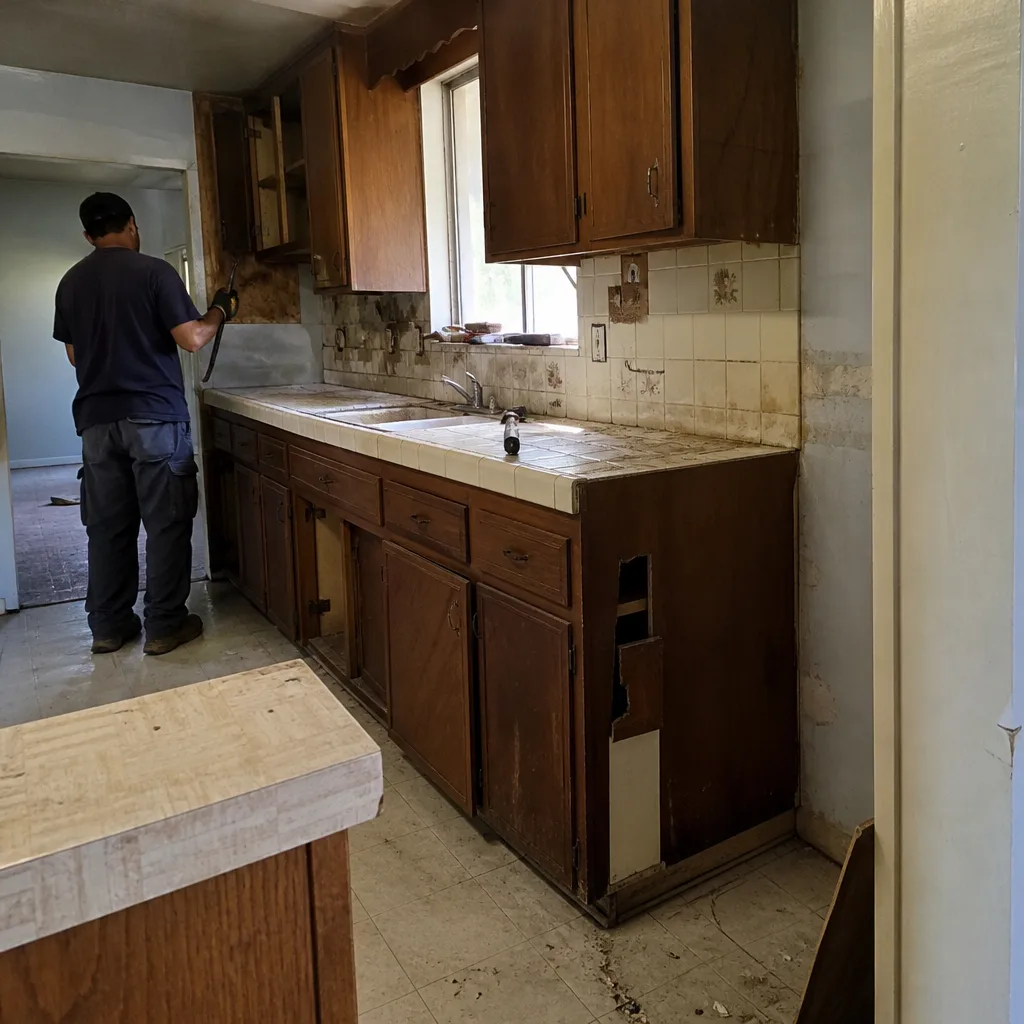 Before
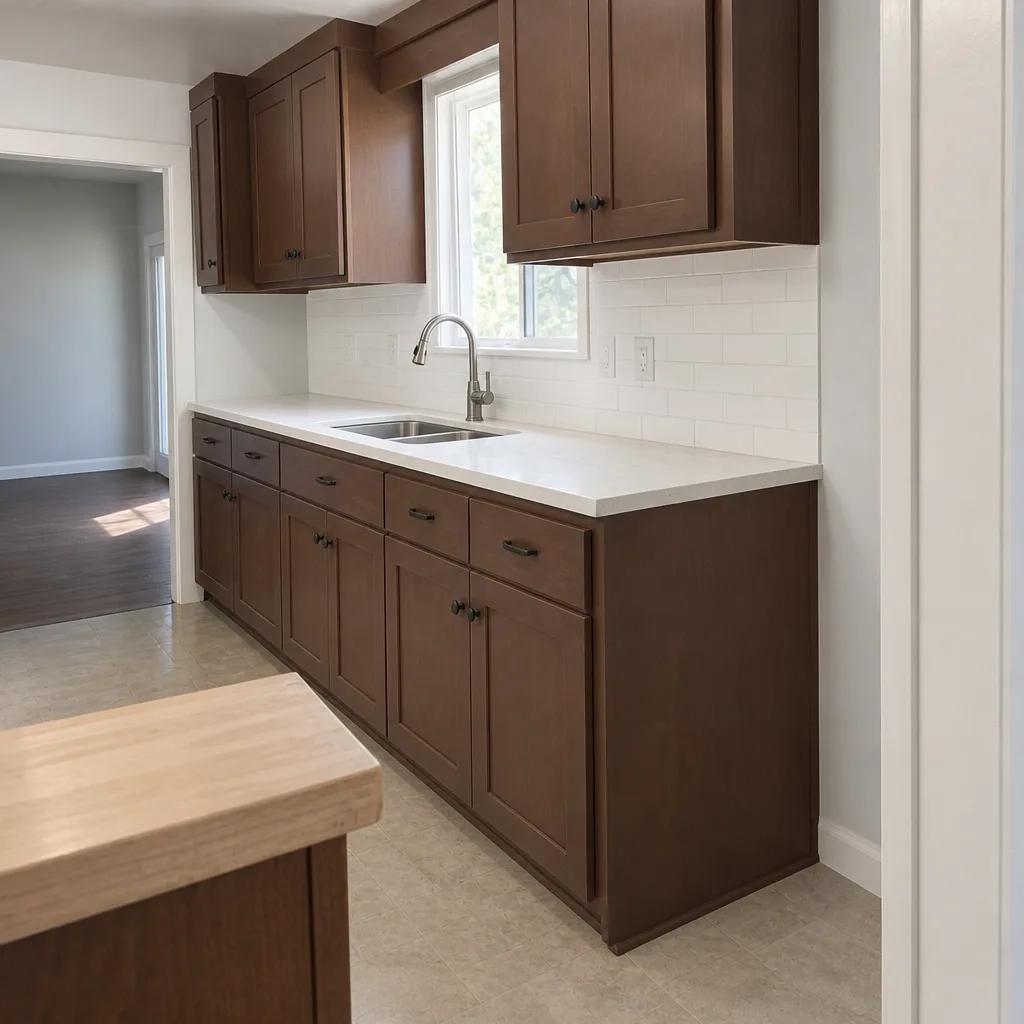 After
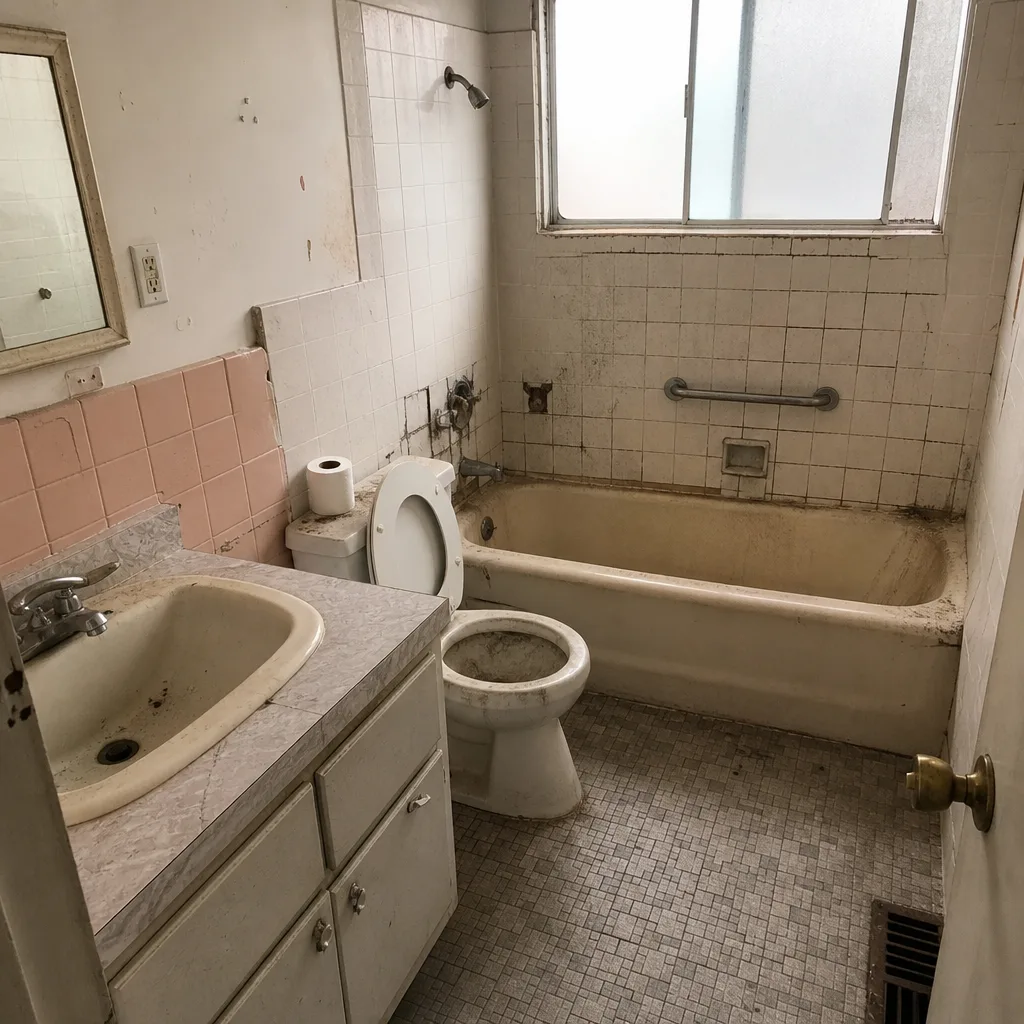 Before
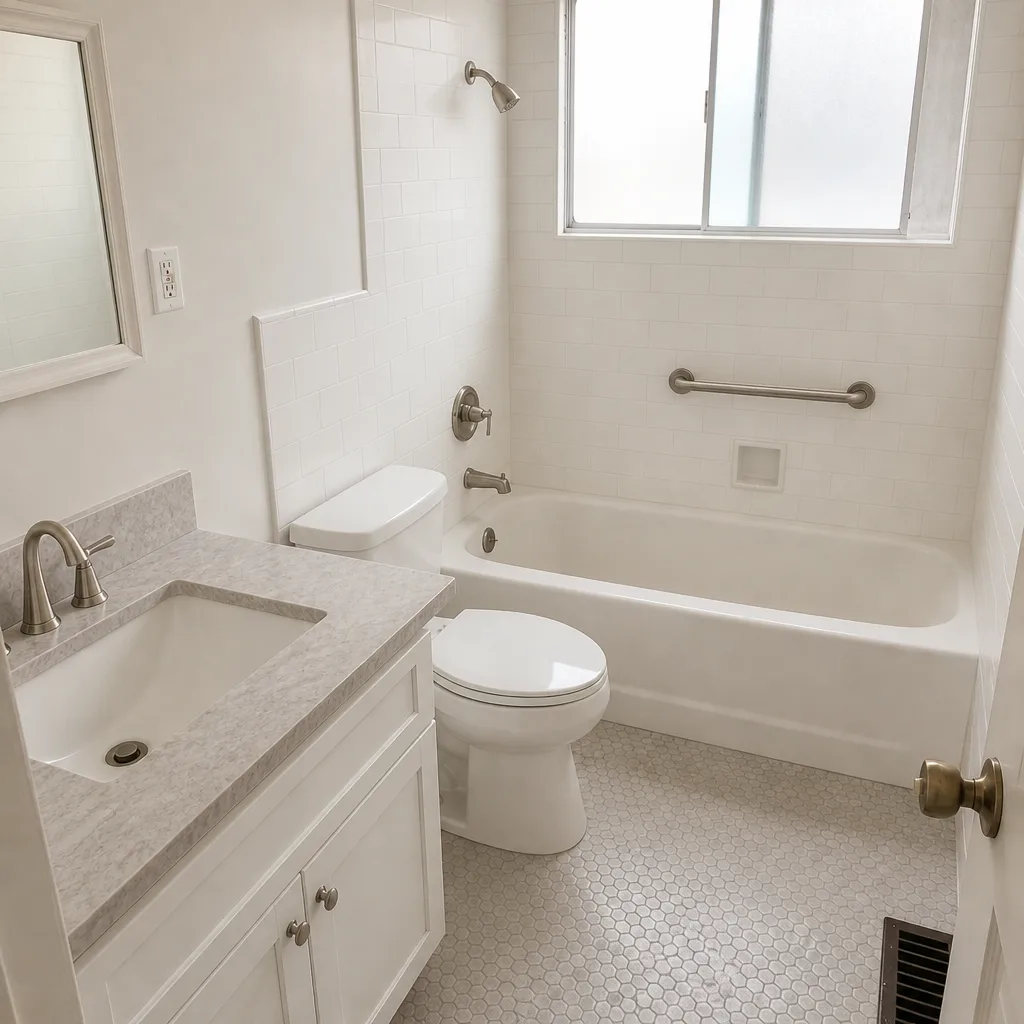 After
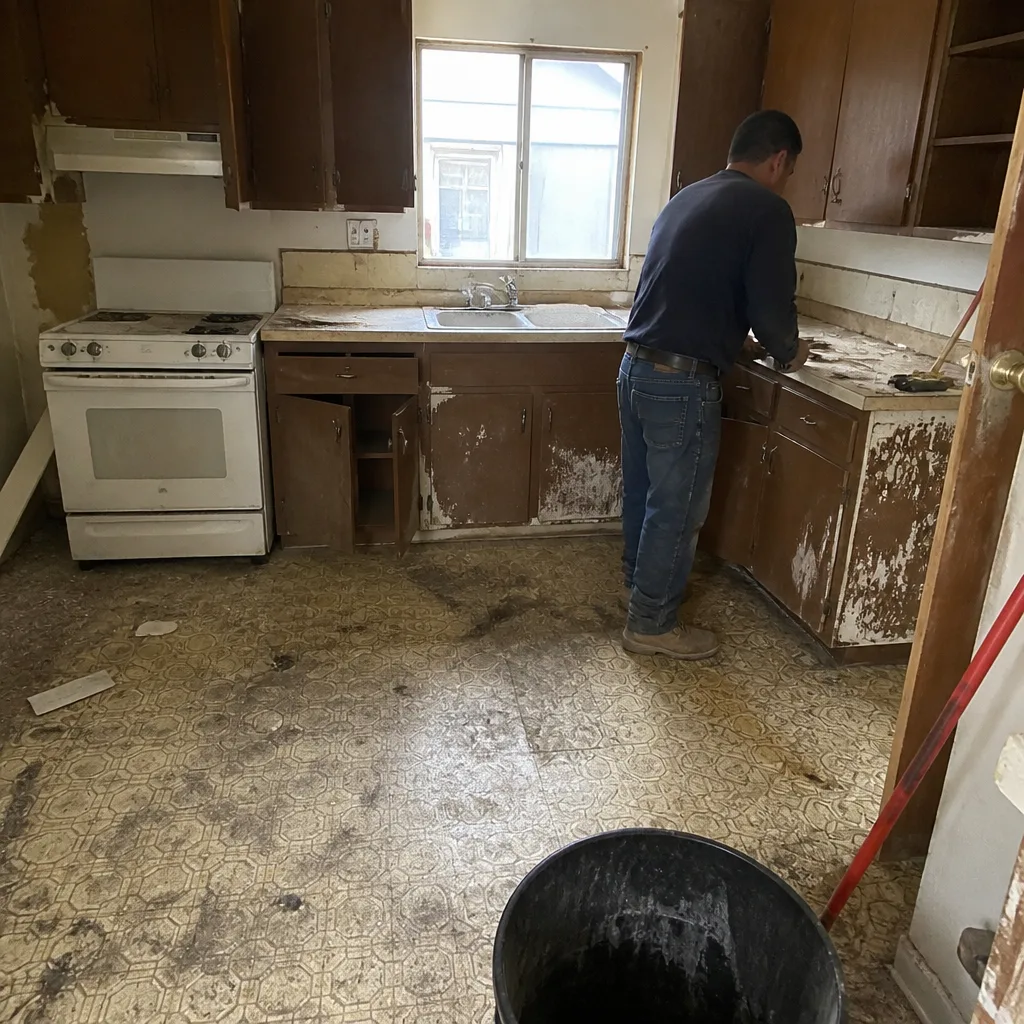 Before
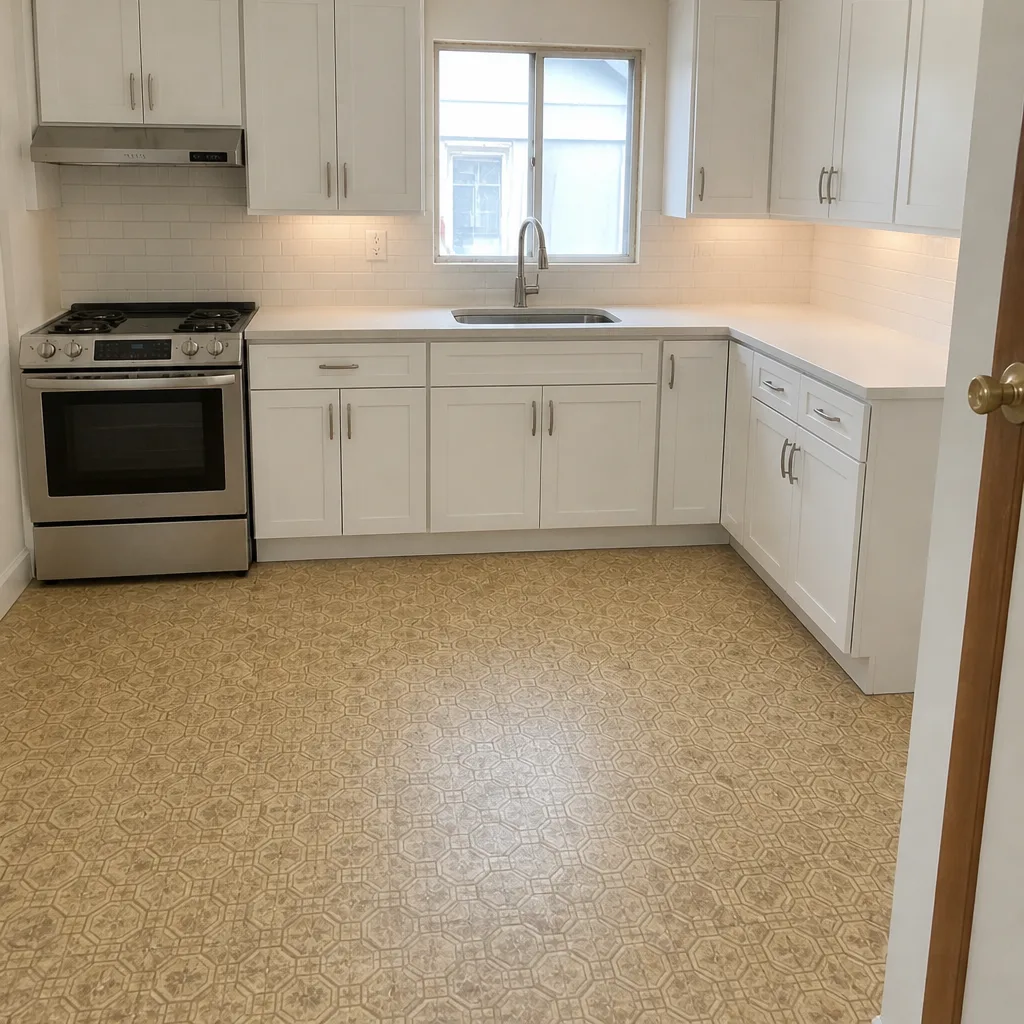 After
When to Call a Professional
Call a professional for any bathroom work that involves a permit, moves plumbing or electrical, touches the shower waterproofing, or reveals something unexpected once the walls come open. In Downey, that list includes moving a toilet, relocating a shower valve, adding a new circuit, cutting a shower pan membrane, and any work behind the finished surface of a wet zone. If you’ve found soft subfloor, mold, or aging galvanized pipe during demo, that’s the moment to stop and get a real scope in writing, because the cost of doing it twice is higher than the cost of doing it right the first time.
Groundwork Construction Co. of Downey offers free estimates in Downey – call (888) 255-8179. A written, upfront quote tells you exactly which parts of the project make sense to DIY and which don’t, and it protects you either way. Every job we run sits behind the 730-Day Done Right Promise – if it’s not done right, we make it right – and calls are answered by a live person 24/7, so you’re not waiting until Monday morning to get a straight answer.
Frequently Asked Questions
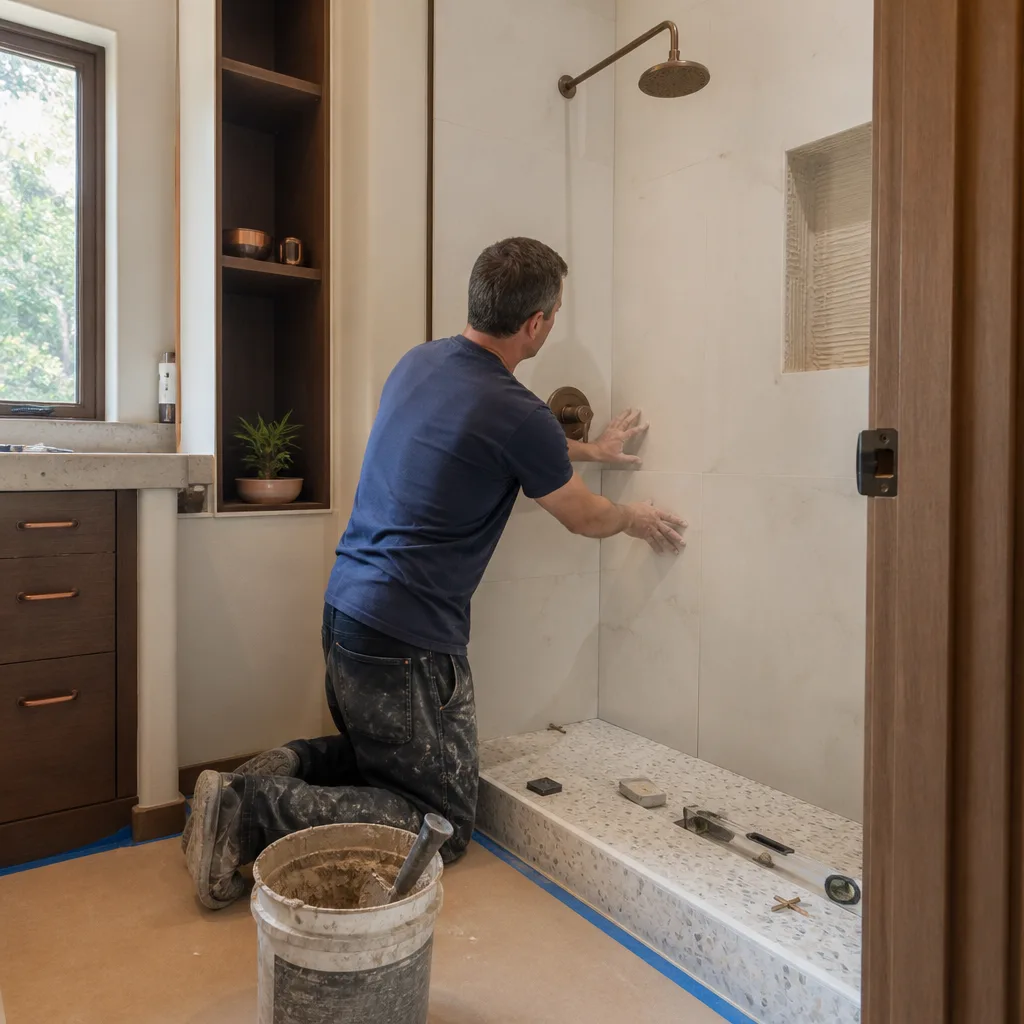
Painting, vanity swaps where plumbing doesn’t move, fixture and hardware swaps on existing supply lines, mirror and accessory installs, and light fixture swaps on existing circuits. Those are the tasks where a mistake costs time and a redo, not a flood or a shock. Anything involving plumbing rough-in, waterproofing, or electrical in a wet zone belongs to a licensed contractor under California code.
You can tile the surface, but you shouldn’t waterproof the shower yourself unless you’ve done it before and understand the pre-slope and flood test. The tile is not usually where showers fail. The barrier behind it is. In our experience, most DIY shower failures trace back to the waterproofing step, not the tile install, and the repair is a full tear-out. Call (888) 255-8179 for a free estimate if you’re unsure which half you want to keep.
Yes, whenever the work involves moving plumbing, electrical, mechanical, or a load-bearing wall. Cosmetic updates (paint, fixtures, surfacing) generally don’t, but the moment you’re opening a wall or rerouting a drain, you need a permit and inspection. Skipping it puts your insurance claims and your resale appraisal at risk. Our full-scope bathroom remodeling in Downey covers permits and inspections as part of the written scope.
The damage is almost always larger than the original cost of doing waterproofing correctly. Water travels under the tile, soaks the subfloor, and starts to degrade framing from beneath before any visible sign appears. By the time you smell it or see soft grout, the fix usually runs $8,000 to $15,000 or more, depending on how far the water traveled. Call (888) 255-8179 for a free estimate before that happens.
A realistic hybrid approach saves 15 to 25 percent of total project cost if you do the finish work and the contractor handles rough-in, waterproofing, and electrical. In Downey, where mid-century plumbing can surprise you during demo, the savings are real but the risk is highest exactly where most homeowners try to save. Doing the finishes yourself captures most of the savings without touching the parts that can quietly ruin the house.
Not if you’re replacing them in place without changing supply or drain locations. The moment you move either fixture, that’s rough-in work that needs a permit and licensed plumbing. If the plan includes moving a toilet even a few feet, plan on the permit. It’s cheaper than the correction at resale. First step: Groundwork Construction Co. of Downey home, where the full service list and free estimate options are laid out.
The Bottom Line
DIY vs professional bathroom remodeling isn’t a skill question. It’s a consequence question. Do the tasks where a mistake is visible and cheap: paint, fixtures, hardware, mirror installs, finish work. Leave the tasks where a mistake hides behind the tile and eats the subfloor for a year: waterproofing, plumbing rough-in, electrical in wet zones. The hybrid approach, where you do the finishes and a licensed contractor handles the systems, is the way to save real money in a Downey bathroom without compounding risk. Permits aren’t optional, and they protect the value of the house more than they cost in filing fees. When you’re splitting the scope, get it in writing. That’s how you actually save money on a remodel instead of paying for the same work twice.
If you want a second opinion on which parts of your Downey bathroom project are DIY-safe, call Groundwork Construction Co. of Downey at (888) 255-8179 for a free estimate. Upfront pricing, no surprises, and a team that’s backed by the 730-Day Done Right Promise. From foundation to finish line, built to last, backed in writing. Our technicians have up to 12 years of experience, and every project comes with background-checked, uniformed technicians and the brand partners you’d want on a job of this size, from Kohler to KraftMaid.
Written by the team at Groundwork Construction Co. of Downey.