Last updated November 17, 2026








Free written scope consultation - allowances, timeline, and change-order rules on paper before a single trade is scheduled
Bathroom Remodeling Warning Signs Every Homeowner Should Know
That musty smell you’ve been blaming on a damp towel? In a bathroom remodeled within the last five years, it’s one of three signs the waterproofing behind your tile is already failing. We’ve walked into Downey homes where a beautiful 2021 tile shower was quietly rotting the framing behind it, and the homeowner had no idea until a tile popped loose. Most bathroom remodel disasters don’t ambush you. They announce themselves weeks or months earlier through warning signs that get rationalized away. This guide names what to watch for, what each sign actually means, and when a small fix is still a small fix, and when you’re looking at demolition.
Quick Answer
The biggest bathroom remodeling warning signs are recurring musty smells, grout and caulk cracks that keep reopening, floor flex or soft spots, an exhaust fan that runs but doesn’t clear steam, and contractor behavior like skipping inspections or rushing waterproofing. Each one points to a specific failure: moisture behind tile, subfloor movement, or a project that was never built to code. Catching them early usually means a repair. Ignoring them usually means a rebuild.
Styles & brands we work with
- Kitchen remodeling
- Bathroom remodeling
- Home additions & ADU
- Roofing
- Windows & doors
- Driveway & pavers
- Fence
Table of Contents
- The Musty Smell That Isn’t Your Towel
- Cosmetic Settling vs. Structural Movement in Tile and Grout
- Why a “Working” Exhaust Fan Can Still Be Failing
- Floor Flex and Soft Spots: What They Reveal About Your Subfloor
- Surface Stain or Active Water Intrusion?
- Contractor Warning Signs During the Project
- Downey-Specific Risks: Climate, Code, and Older Housing Stock
- A Simple Timeline for Checking Your Own Bathroom
The Musty Smell That Isn’t Your Towel
A persistent musty smell in a bathroom is the single most overlooked warning sign we see in Downey. Homeowners convince themselves it’s the shower curtain, the bath mat, or the humidity. Sometimes it is. But if the smell returns within a day of cleaning and the bathroom was remodeled recently, it’s usually coming from behind the wall or under the floor.
Here’s what’s actually happening. Water gets past grout, caulk, or a failed waterproofing membrane and soaks into the substrate behind your tile, or into the wood subfloor beneath it. That trapped moisture feeds mold and mildew in a space with no airflow. You smell the result long before you see it.
Three things separate a real problem from a false alarm:
- Location. A smell concentrated near the shower floor, a specific wall, or the base of the toilet points to a hidden leak. A smell that fades after you run the fan points to surface humidity.
- Timing. A smell that’s stronger in the morning, before anyone showers, suggests moisture that’s been sitting overnight in a wall cavity.
- Persistence. A smell that survives a deep clean and a week of running the exhaust fan is not a towel problem.
In our experience, a musty smell in a shower built in the last five to seven years is frequently a failed shower pan or a waterproofing membrane that was installed over a damp substrate. The tile and grout can look perfect while the framing behind them is degrading. If you’ve already had one bathroom redone and the smell is back, don’t schedule another cosmetic refresh. Get the wall opened and the moisture source found first. This is exactly the kind of problem our Groundwork Construction Co. of Downey home team diagnoses before recommending any surface work.
Cosmetic Settling vs. Structural Movement in Tile and Grout
Not every crack means trouble. Every bathroom moves a little as it heats and cools, and a hairline crack in a grout joint near a corner or where two different materials meet is usually normal. The trick is telling benign settling apart from structural movement, because the fix for one is a $15 tube of caulk and the fix for the other runs into the thousands.
Cosmetic settling looks like this:
- Hairline cracks along the edges of the room or at inside corners
- Caulk that pulls away slightly but stays flexible
- Cracks that show up once and don’t grow
- No change in how the tile feels underfoot
Structural movement looks like this:
- Cracks that keep reopening after you repair them, sometimes within weeks
- Lippage, where one tile edge sits higher than the next
- Loss of adhesion: tiles that sound hollow when tapped, or that flex when pressed
- Cracks that run in a line across multiple tiles rather than following grout joints
- Doors or cabinets in the bathroom that suddenly don’t close right
A crack that reappears is the key signal. You can repair a perfectly stable surface and it stays repaired. If the same joint cracks three times in a year, something underneath is still moving, and caulk is treating the symptom, not the cause. Lingering lippage or hollow-sounding tile usually means the mortar bed or substrate under the tile has failed, or the tile was set over a surface that wasn’t flat or wasn’t dry. In Downey’s older homes, we’ve seen plenty of tile laid directly over drywall, which works until it doesn’t. When the wall behind tile gets wet and swells, the tile above it moves.
Why a “Working” Exhaust Fan Can Still Be Failing
An exhaust fan that spins and hums is not necessarily doing its job. The fan’s whole purpose is moving moisture out of the bathroom, and if it’s moving too little air or the ductwork is wrong, moisture stays behind and finds your walls and framing. A fan that “works fine” can still be the reason your paint peels and your mirror stays foggy for an hour after a shower.
You can test yours in about 60 seconds with the tissue test:
- Turn the fan on and let it run for a minute.
- Hold a single square of toilet tissue flat against the grille.
- If the tissue pulls tight and stays stuck, the fan is moving reasonable air. If it flutters, falls off, or barely moves, the fan is failing its job.
The tissue test isn’t a measurement, and a fan can pass the test and still be undersized. A few other signs point to a real problem:
- The mirror stays fogged more than 10 to 15 minutes after a shower
- Moisture beads on the walls or ceiling well after you’ve toweled off
- Paint peeling or bubbling near the ceiling
- The fan is noisy, which usually means a clogged or undersized duct, or a fan running under capacity
The hidden failure is the duct itself. A fan can’t move more air than its ductwork allows, and a duct that vents into the attic instead of outside dumps moisture straight into your roof structure. That’s a bigger warning sign than the fan alone because it’s damaging a part of the house you never look at. If your fan passes the tissue test but the mirror still fogs, the problem is likely the duct or the fan’s rated capacity, not the fan spinning. Our Home Additions & ADU in Downey crews see this constantly when adding on to older homes: the existing bath vent was never routed correctly in the first place.
Floor Flex and Soft Spots: What They Reveal About Your Subfloor
Press down on your bathroom floor with the heel of your foot, in the middle of the room and near the toilet. If the floor moves, or you hear a creak, or a spot feels spongy, you’re looking at a subfloor problem. What that means depends on what’s on top of the floor.
Under tile: Any noticeable flex is a warning. Tile and grout are rigid. A subfloor that moves even slightly will crack grout and pop tiles. Under a mortar bed, a soft spot usually means water has been soaking into the subfloor for a while, and the wood is swelling or beginning to rot. This is the pattern we see most in Downey homes with a tub or shower that’s had a slow leak under it for years.
Under vinyl or LVP: Flex is more forgiving, but soft spots are still a red flag. A spongy spot under sheet vinyl usually means moisture has gotten underneath, and the subfloor beneath is failing. You may also see discoloration or curling at the edges, which is the moisture wicking up.
Under a mortar bed (common in older Downey bathrooms): A properly built mortar bed is solid as a rock. If it feels hollow, cracked, or moves, the bed has cracked or debonded from the subfloor. That’s not a cosmetic issue, and it’s not something to lay a new floor over.
The reason this matters: a floor that flexes isn’t just a floor problem. It’s usually a sign that a leak under the tub or shower has been active longer than you’d guess. We’ve pulled up flooring in Downey and found subfloor joists softened to the point of needing sistered framing, all because a slow leak at a drain connection went unnoticed for years. If you feel flex or a soft spot, get underneath the bathroom and look at the subfloor from below if you can safely access it, or bring in a pro to check before you cover it with anything.
Surface Stain or Active Water Intrusion?
A stain on a bathroom ceiling or wall is common. The question that matters is whether it’s cosmetic or active. One tells you the leak was fixed and left a water mark. The other tells you water is still getting in, and it’s spreading quietly behind your walls.
Use this simple test to tell the difference:
- Check if it’s changing. Outline the stain with painter’s tape or take a dated photo. Check it again in two weeks. If the line has moved, water is still intruding.
- Press it. A soft, damp, or slightly raised plaster or drywall spot is active. A dry, firm, discolored spot is likely old.
- Look for rings. Water stains often show concentric rings, which mean multiple episodes. A single, diffuse mark is more likely a one-time event.
- Check the surrounding area. A stain near a shower, tub, or exterior wall in Downey after a rainy season points to an active source. A stain on a ceiling below the bathroom is usually a drain or supply line.
A stain that keeps coming back after repainting is the clearest sign water intrusion is active. Paint and primer don’t stop water; they hide it briefly and then fail. If you’ve painted over a bathroom ceiling more than once in a few years, stop painting it. That repeating stain is pointing you toward the real problem, which is usually a failed shower pan, a bad seal at the toilet flange, or a supply line that’s been seeping slowly.
One tricky case: discoloration around a drain connection or along a wall line that looks like a stain but is actually mineral deposit from slow evaporation. Mineral deposits are hard and dry. Active intrusion is soft and damp. When in doubt, treat it as active until proven otherwise. Our Fence Installation in Downey team sees the exterior version of this all the time: a fence stain near an irrigation line that turns out to be an active leak, not an old mark. The same logic applies inside the bathroom.
Contractor Warning Signs During the Project
Some of the most expensive bathroom remodel problems get seeded during the project, and the warning signs show up before the tile is grouted. Watch for these while work is underway, because they’re much easier to fix in the middle than after the final walkthrough.
Scope creep without documentation. “While we’re in there, we should also do X” is sometimes legitimate. The problem is when it happens verbally, without a written change order or updated price. Before any addition is made, ask for it in writing. A contractor who resists putting a change in writing is the one who’ll also resist putting a warranty in writing.
Skipping inspection sign-offs. In Downey, a bathroom remodel with plumbing or electrical work usually requires permits and inspections. If your contractor talks you out of pulling permits to “save time,” run. Unpermitted work is a problem both when you sell and when something fails later, because it’s often not built to code. A contractor who skips an inspection has skipped the one independent check on their work.
Rushing waterproofing dry time. This is the warning sign most homeowners never see because it happens at the wrong moment. Waterproofing membranes and liquid-applied coatings need a specific cure time before tile is set over them. A crew that sets tile over a membrane that’s still tacky is building a failure that shows up 2 to 5 years later as exactly the musty smell and loose tile we described earlier. Ask how long the membrane is curing and why.
A crew that won’t run the shower pan test. Standard practice for a tiled shower pan is a flood test: fill the pan with water and let it sit for 24 hours before setting tile. If your contractor skips this, you won’t know there’s a leak until it’s behind the wall.
Groundwork Construction Co. runs every project with written change orders, permits pulled and inspections passed, and a 730-Day Done Right Promise behind the workmanship. That’s the standard you should hold any contractor to, in Downey or anywhere.
Downey-Specific Risks: Climate, Code, and Older Housing Stock
Bathrooms in Downey fail a little differently than in other parts of the country, and knowing the local patterns helps you spot signs early. Three local factors matter most.
Dry summers meet wet winters. Downey’s climate is mild and dry most of the year, with a concentrated rainy season. That swing matters for bathrooms that share an exterior wall. A hairline crack at the exterior caulk line that opens up in summer can let water in during winter rain. The stain on your bathroom ceiling or exterior wall isn’t always a plumbing leak; sometimes it’s rain getting past failing exterior sealant around a window or vent penetration.
Older housing stock with drywall behind tile. A lot of Downey’s mid-century homes were built before modern waterproofing standards. Tile was often set over drywall with no moisture barrier. That construction works fine while the grout holds, but once moisture works its way in, the drywall swells and the tile above it loses its bond. This is why we see more failed tile showers in older Downey neighborhoods than in newer construction, and why “cosmetic settling” on a 1960s bathroom often isn’t settling at all.
Concrete slab construction. Many Downey homes sit on slab foundations, which changes how floor problems present. A slab bathroom with a soft spot or a damp smell often points to a leak under the floor rather than a subfloor issue, and drain line leaks under a slab are a bigger deal than under a wood subfloor. A slow leak at a tub drain can saturate the slab and wick into the framing over months before it’s obvious.
If you’re already planning work around the outside of your home, this is the same inspection mindset our Driveway & Pavers in Downey crews bring to hardscape: look at the edges and joints first, because that’s where failure starts. Bathrooms are no different.
A Simple Timeline for Checking Your Own Bathroom
You don’t need a contractor to do a first-pass inspection. A few minutes, twice a year, catches most of these signs before they become expensive. Use this routine.
Monthly (about 5 minutes):
- Run the tissue test on your exhaust fan.
- Look at all caulk lines around the tub, shower, and sink for pulling away or cracking.
- Check the grout on the shower floor and lower walls for cracks or missing pieces.
- Press your heel around the floor near the toilet and tub for flex or soft spots.
Twice a year (once in spring, once before winter):
- Look at the bathroom ceiling and exterior wall for new or growing stains.
- Check the base of the shower and tub for any movement or separation at the floor joint.
- Inspect the exterior sealant around any bathroom window or vent.
- Check under the bathroom in the crawlspace or slab area if you can safely access it for signs of moisture.
Any time you notice one of these:
- A crack that reopens after repair
- A musty smell that persists after a clean
- A soft spot on the floor
- A stain that’s changed since the last time you looked
- Tile that sounds hollow or feels loose
Any of those five is your cue to get a professional opinion before doing anything cosmetic. A quick diagnosis is cheap. Covering a failing shower pan with new tile is not.
Common Mistakes to Avoid
- Repainting over a recurring ceiling stain. Paint temporarily hides a water problem and lets it keep spreading. Find and fix the source first, then repaint. In Downey’s rainy season, that stain is likely to come right back if you skip this.
- Regrouting a shower that’s failing behind the tile. Fresh grout looks like a fix but traps moisture behind it. If the smell or tile movement is still there, regrouting delays a real repair and usually makes the eventual one more expensive.
- Laying new flooring over a soft subfloor. A new floor over a flexing or rotting subfloor will crack or warp within a year. Check the subfloor first, especially in older Downey homes where a slow leak may have been active for years.
- Hiring the lowest bid with no written change process. A bid that’s dramatically cheaper usually gets made up somewhere, often through undocumented changes. Ask for a written change order policy before signing.
- Letting a contractor skip permits to “save time.” Unpermitted plumbing and electrical work is a warning sign that shows up when you sell the home. Pull the permits.
- Ignoring a fan that runs but doesn’t clear steam. A fan that hums is not a fan that works. If the mirror fogs for 20 minutes after a shower, the fan is failing even if it’s spinning, and that moisture is going into your walls.
- Treating hollow-sounding tile as normal. Hollow tile means lost adhesion, which usually means moisture or a failed substrate underneath. It’s the sign most homeowners dismiss and most often regret.
See the difference
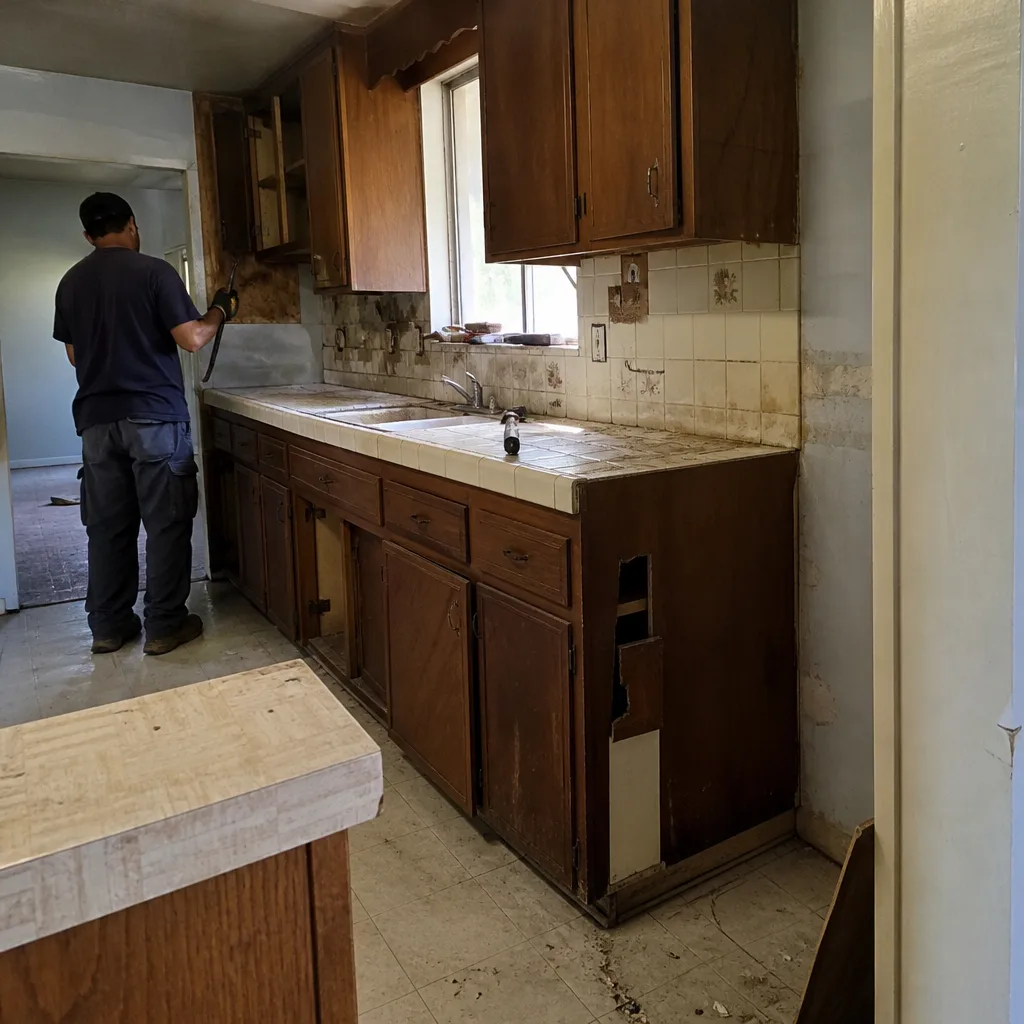 Before
 After
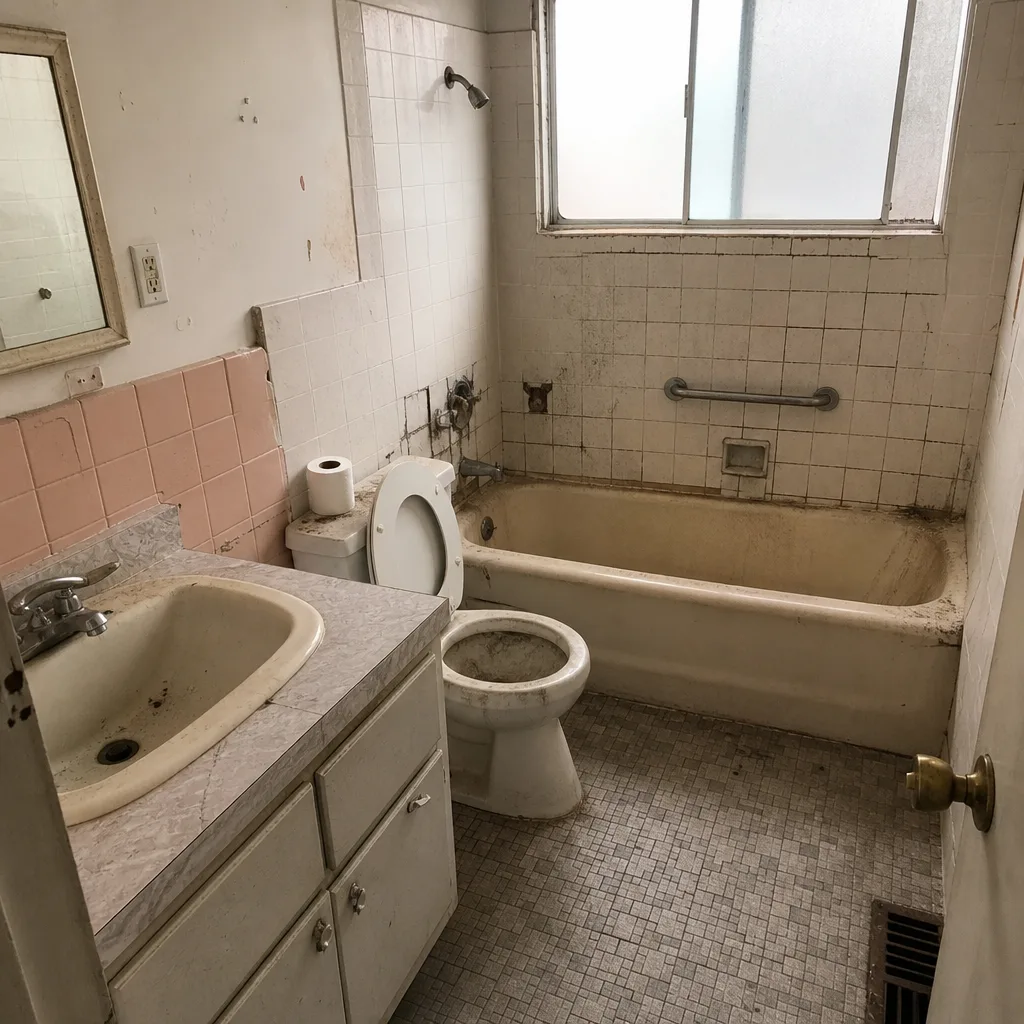 Before
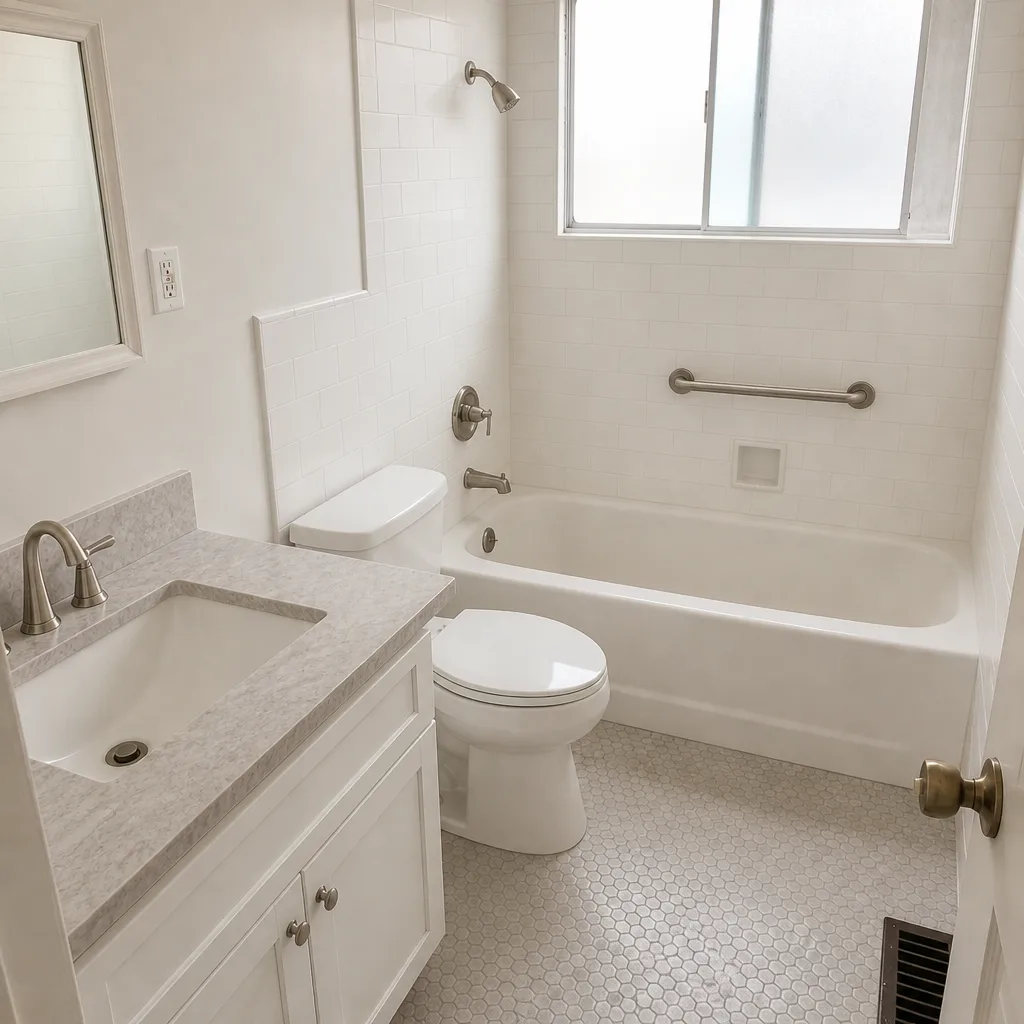 After
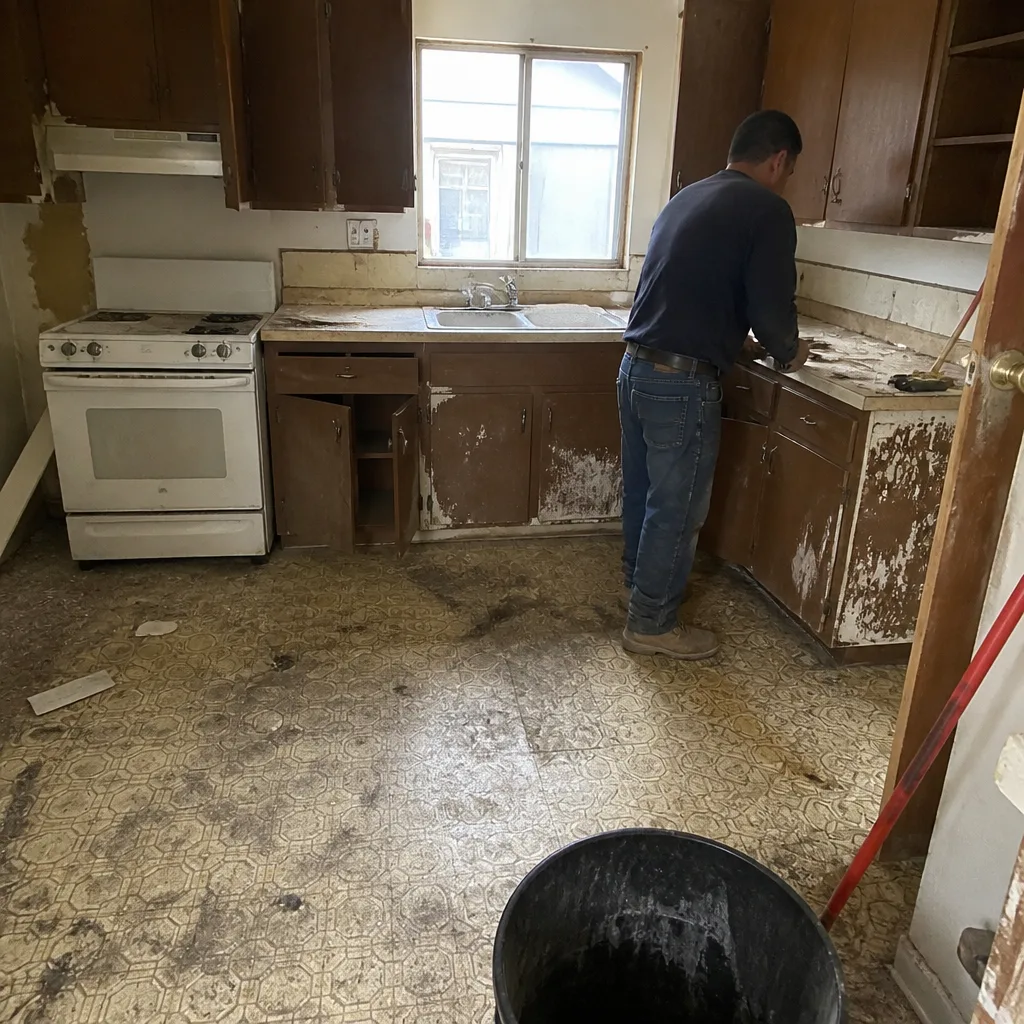 Before
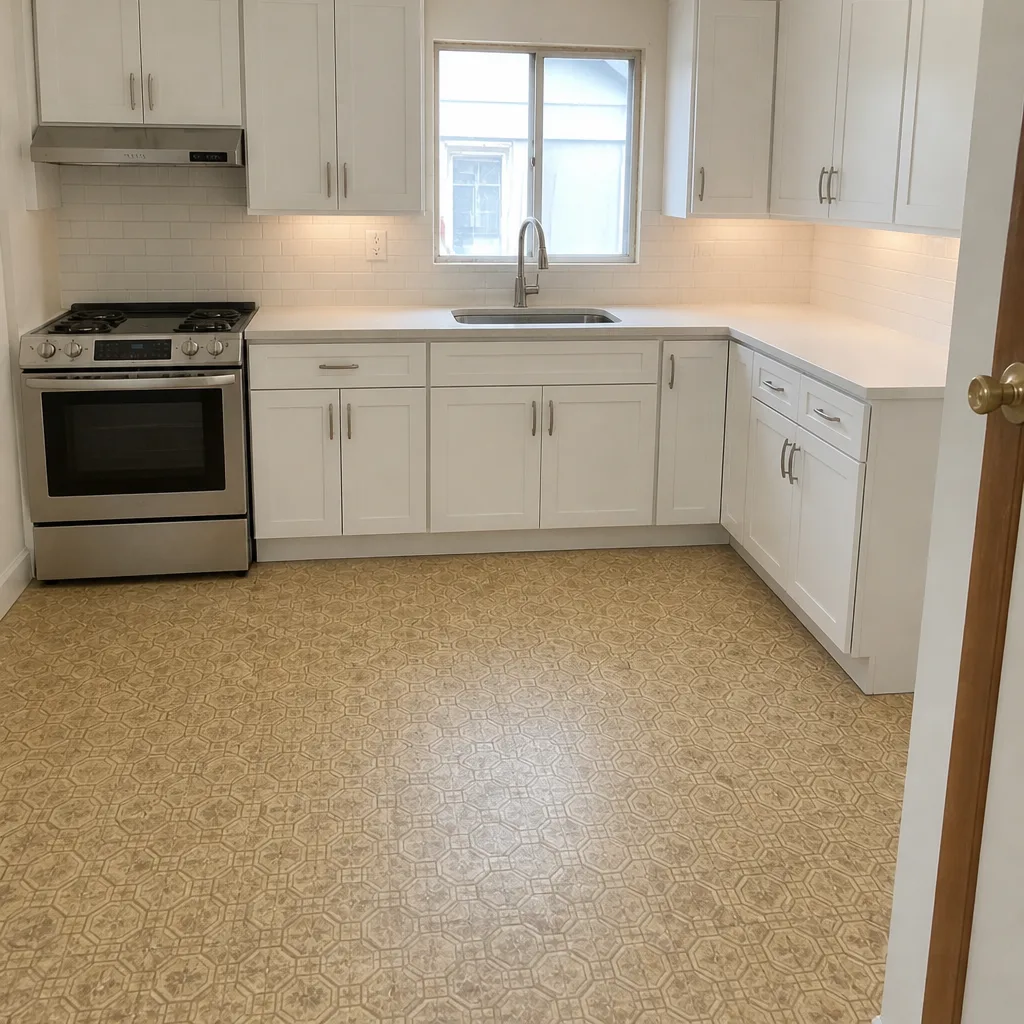 After
When to Call a Professional
Some of these signs you can watch with a twice-a-year routine. Others need a professional quickly. Call us when a crack keeps reopening after repair, when you feel flex or a soft spot, when a stain is changing, or when a musty smell returns despite cleaning. Call immediately if you see water pooling at the base of the shower, if a ceiling stain is soft or damp, or if your tile sounds hollow over a large area. The difference between a $300 repair and a five-figure rebuild usually comes down to how soon someone looks behind the surface. A bathroom that’s failing at the waterproofing level won’t fix itself, and covering it up costs more than diagnosing it.
Groundwork Construction Co. of Downey offers free estimates in Downey. Call (888) 255-8179 and a real person will answer, any time, any day, and help you figure out what’s actually going on.
Frequently Asked Questions

The clearest signs are recurring musty smells, cracks that reopen after repair, floor flex or soft spots, hollow-sounding tile, and a mirror that fogs for 20 minutes after a shower. Any one of these in a recently remodeled bathroom points to a construction failure behind the surface. Get it looked at before you do anything cosmetic.
Not always. A hairline crack in a corner or where two materials meet is usually normal settling. A crack that keeps reopening, or one that runs across multiple tiles, is a serious sign of movement underneath. Call (888) 255-8179 for a free estimate and a look before it spreads.
A musty smell that returns within a day usually means moisture is trapped behind the tile, under the floor, or in a wall cavity growing mold. Cleaning the surface doesn’t fix it because the source is hidden. In Downey, this is often a failed shower pan or a waterproofing membrane that was installed over a damp substrate.
Any bathroom remodel in Downey that involves plumbing or electrical changes, moving walls, or adding fixtures typically requires permits and inspections. A contractor who suggests skipping them to save time is a warning sign. Pull the permits, pass the inspections, and keep the paperwork.
Do the tissue test: turn the fan on and hold a square of toilet tissue against the grille. If the tissue pulls tight and sticks, the fan is moving reasonable air. If it flutters or falls, the fan is failing its job, even if it’s spinning. A fan can pass that test and still be undersized, so also watch how long your mirror stays fogged.
No. A soft or flexing floor means the subfloor underneath is failing, usually from moisture. Laying new tile over it will crack within months because the surface underneath is still moving. Fix the subfloor first, then finish the floor. Call (888) 255-8179 to get it checked.
The Bottom Line
Bathroom remodeling warning signs rarely appear without warning. A musty smell, a crack that reopens, a floor that flexes, a fan that runs but doesn’t clear steam, and a stain that keeps coming back are all saying the same thing: moisture is winning somewhere behind the surface. The homeowners who catch these early spend hundreds. The ones who cover them up spend thousands. In Downey, the older housing stock and the dry-to-wet seasonal swing make these signs even more worth watching. Keep the twice-a-year routine, trust your nose and your feet, and don’t repaint over a water stain. If something on this list matches what you’re seeing, get a free estimate from Groundwork Construction Co. of Downey at (888) 255-8179. Upfront pricing, permits pulled and inspections passed, and a 730-Day Done Right Promise behind the work.
Written by the team at Groundwork Construction Co. of Downey.